We’re looking forward to introducing you to Lelac Soderberg. Check out our conversation below.
Hi Lelac, thank you so much for taking time out of your busy day to share your story, experiences and insights with our readers. Let’s jump right in with an interesting one: Are you walking a path—or wandering?
Since graduating high school, I was walking (or what felt like tumbling) on a path to becoming a speech language pathologist. Taking an extra year in my undergraduate studies while I grieved the passing of my father, re-applying to graduate school over multiple years as a full-time barista… I knew the path I wanted to be on and I was taking steps left and right to get there while navigating life. In this moment, after reaching my goals of becoming a speech language pathologist, I feel like I am wandering. I knew for the longest time I wanted a career to give me consistency- whether it is hours worked, pay, or the demand of the job. And I found it. I got it. But now, I have created and wandered into another opportunity in my field by starting my own practice, Lilac Bee Speech Therapy, by providing speech. and language therapy to children and adults in their homes. Because I believe the best therapy happens where life does. As I wander into this new era, I am unsure of where it will take me; however I continue to create my own path.
Can you briefly introduce yourself and share what makes you or your brand unique?
My name is Lelac (pronounced like lilac-the flower) Badakian Soderberg, and I’m an Armenian-American speech language pathologist (SLP). As a first-gen college graduate born and raised in The Valley, I’m able to connect with diverse families by understanding the intricate roles of language and culture in communication development. My most recent business venture, Lilac Bee Speech Therapy, allows me to provided holistic and accessible speech and language services across the lifespan.
Appreciate your sharing that. Let’s talk about your life, growing up and some of topics and learnings around that. What did you believe about yourself as a child that you no longer believe?
As a child growing into adolescence, I watched adults make decisions constantly. How did my teacher know how to instruct a room full of 25 students? Where did my parents learn how to guide us through the daily demands of life? How did people around me know what they wanted to do for the rest of their lives? I used to believe adults knew all the answers and operated with complete certainty. As a functioning adult myself, I’ve quickly learned that we are all improvising as we go. The adversity I’ve faced has taught me that sometimes there is no right or wrong decision, but one must still be made to move forward.
What have been the defining wounds of your life—and how have you healed them?
Talking about death is often considered taboo, depending on your audience. I remember being in graduate school and taking a class called The Aging Population. A lot of what we talked about revolved around death and dying, or how to maneuver conversations around it. As someone who lost her dad to a slow and painful illness, I could not escape the topic of death because it was a part of me that I could never get rid of. Fast forward to 2021, my concept of death and grief was shaken when I tragically and unexpectedly lost my grandmother to COVID. The defining wounds caused by death were brought to the surface, except the tools I used to heal in the past were not working.
The defining wounds of my life continue to heal by leaving them open, apparent, and for everyone to see. Constantly talking about your wounds in my everyday life somehow makes them real, allowing me to heal through seeking comfort, sharing memories, and normalizing the conversation around death.
Sure, so let’s go deeper into your values and how you think. What are the biggest lies your industry tells itself?
A misconception surrounding the field of speech-language pathology is that we are the communication experts who simply “fix” communication. Crucially, a person’s communication often doesn’t need to be “fixed;” it needs to be affirmed and accepted, particularly by the neurotypical world they navigate. Speech-language pathology is so much more than verbal communication. While we certainly support individuals in improving specific speech sounds, language skills, and cognition, we are here to support the neurodivergent population by focusing on their communication access and advocacy.
Thank you so much for all of your openness so far. Maybe we can close with a future oriented question. When do you feel most at peace?
I feel most at peace in my career, and as a person, knowing I am advocating for communication as a human right. This means supporting neurodivergent clients to champion their needs and interests rather than conforming to a neurotypical mold. It also means providing life-changing opportunities, such as enabling a stroke patient to confidently order their favorite food at their favorite restaurant. As speech language pathologists, we constantly advocate for better state and federal legislation to support the education, funding, and protection of these communication rights. Actively involving myself in these advocacy opportunities provides me with the peace of knowing I am doing everything I can.
Contact Info:
- Website: https://lilacbeespeechtherapy.com
- Instagram: lilacbeespeechtherapy
- Facebook: Lilac Bee Speech Therapy

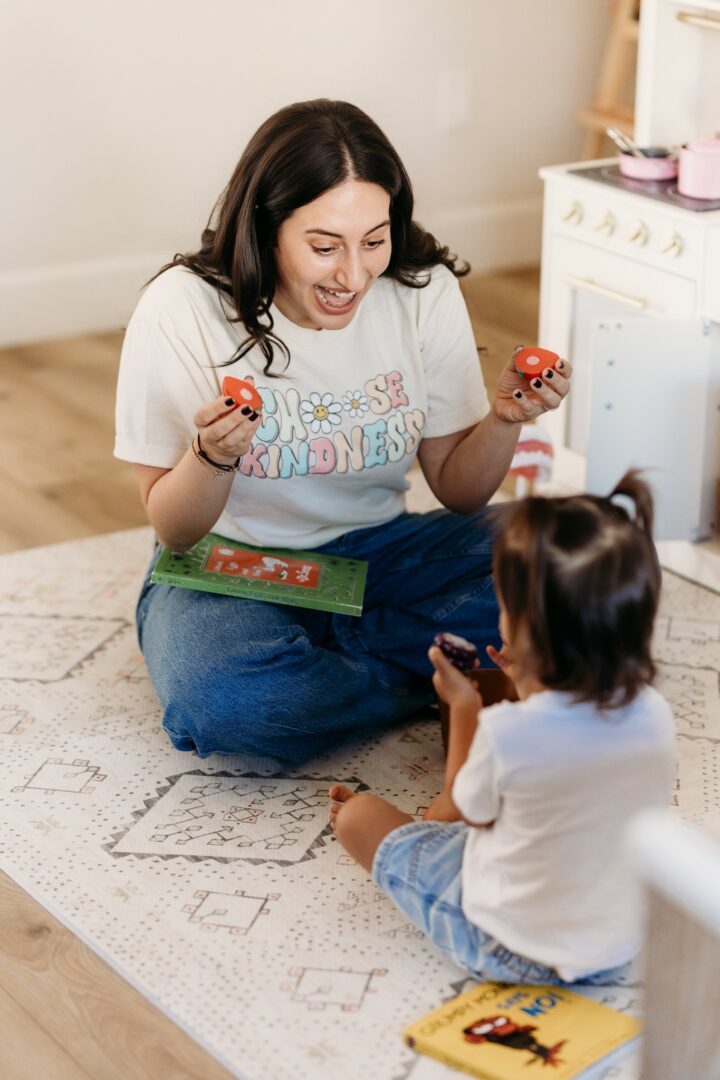


Image Credits
Image credits: Lavender + Honey Photography
so if you or someone you know deserves recognition please let us know here.