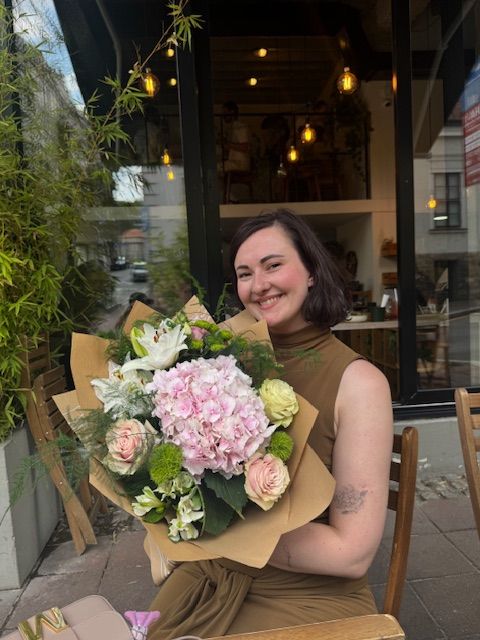
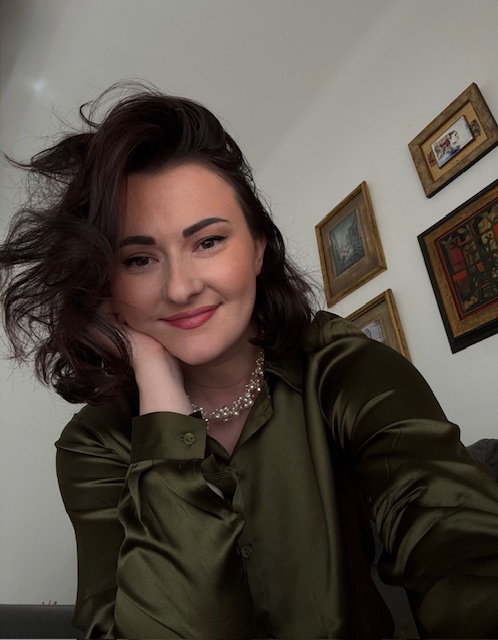
We recently had the chance to connect with Milica Krstic and have shared our conversation below.
Milica, we’re thrilled to have you with us today. Before we jump into your intro and the heart of the interview, let’s start with a bit of an ice breaker: What are you being called to do now, that you may have been afraid of before?
Right now I feel called to step into an even larger arena. For years my work was about building Safe Space and developing the Humanized Systems Index behind the scenes. I was comfortable working directly with communities and quietly designing frameworks for leaders. What I am being called to do now is to take that work to the global stage in a much more visible and decisive way.
In the past, I was afraid of taking up that space. I worried about being misunderstood or criticized, or about stepping too far out of my comfort zone as a psychologist and founder. I also felt a kind of humility that made me hesitate to claim authority in rooms full of world leaders and decision-makers. But the more I see the impact of broken systems, the more I realize that my responsibility is not just to build tools but to advocate for their use at the highest levels.
What I am stepping into now is a combination of strategy, policy, and public leadership. I am beginning to work with governments, institutions, and large organizations to integrate mental health and humanized systems into national strategies, budgets, and corporate cultures. I am also preparing to translate my research and frameworks into academic publications and doctoral-level work so that they can influence the next generation of leaders.
This is the work that once scared me because it requires visibility, courage, and a willingness to be the face of an idea. Today I am no longer afraid of that. I see it as the natural next step. The same principle that guided me from the beginning still applies: healing before creating. If I stay grounded in that, then stepping onto bigger stages and into bigger conversations is not about ego, it is about service.
Can you briefly introduce yourself and share what makes you or your brand unique?
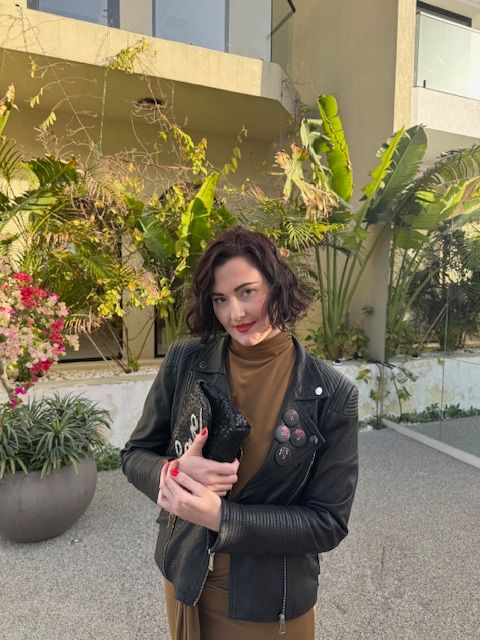
My name is Milica Krstic and I am a Global Mental Health Strategist. My work is dedicated to helping governments, organizations, and leaders design systems that protect human well-being. I often say that I did not choose this path, it was something life pushed me toward. I began my journey in psychology and integrative psychotherapy because I wanted to understand people and support them in moments of struggle. Along the way I also studied and worked in digital marketing, which gave me a completely different set of tools and a way to think about scale and communication. At the time my academic and professional path seemed fragmented, but today I see it as one of my greatest strengths. It allowed me to bridge human understanding with strategy and system design.
In 2020 my life changed when I lost two close friends to suicide. That loss became the deepest turning point of my life. I felt called to do something meaningful with my pain. Two years later, in 2022, I founded Safe Space, a nonprofit that grew into a global initiative. With a team of more than 150 volunteer psychotherapists we delivered over 30,000 free psychotherapy sessions in 12 languages. The impact was extraordinary, but the most important lesson for me was that healing is not only about individual therapy. Healing is also about the systems people live and work in every day. If schools, workplaces, or governments do not value dignity and safety, no amount of individual effort is enough.
That realization shaped the work I do today. Out of the lessons from Safe Space and from other successful initiatives, I developed the Humanized Systems Index. It is a framework that helps leaders measure values like access, safety, dignity, participation, and sustainability inside their organizations and policies. For me, this was a way to move from storytelling and good intentions to something practical and measurable. Leaders often talk about caring for people, but without tools they do not know where to start. The Index gives them that starting point and a path forward.
What makes my work unique is that it is grounded in both lived experience and systemic thinking. I began as a psychologist and psychotherapist, sitting with people in their hardest moments, and I have grown into a strategist who works with decision-makers at the highest levels. That bridge between the personal and the structural is what sets me apart. Many speak about mental health as something private or optional. I see it as a strategic and economic priority that determines whether societies can truly thrive.
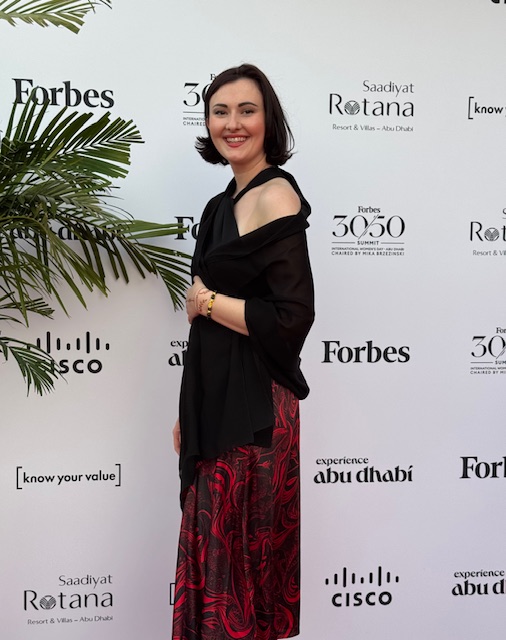
I am most proud of transforming personal tragedy into collective healing and of carrying this vision into global spaces. Being recognized by Forbes 30 Under 30, speaking at the Misk Global Forum in Saudi Arabia at the invitation of the Crown Prince Foundation, and sharing this work at international conferences are milestones that remind me how far this journey has taken me. But what I value most is knowing that this work has already touched lives and that it can influence the way leaders design the future.
What I want people to know about me and my work is simple. Healing before creating is essential. It is not weakness to prioritize well-being, it is strength. My mission is to make sure that principle is reflected in the systems that shape our lives. Whether through consulting, research, speaking, or building frameworks, everything I do is guided by the vision of a world where progress is measured not only in numbers, but in how safe, respected, and supported people feel.
Appreciate your sharing that. Let’s talk about your life, growing up and some of topics and learnings around that. What part of you has served its purpose and must now be released?
The part of me that has served its purpose and must now be released is the version of myself that believed she had to be everything for everyone. For a long time I carried the identity of the rescuer, the person who would hold everything together no matter the cost. That part of me was born from love and urgency. It helped me build Safe Space, mobilize hundreds of volunteers, and respond to crises with everything I had. Without it, I would not have achieved what I did.
But that part of me also carried exhaustion, guilt, and a quiet fear that if I slowed down everything would collapse. It was a mindset shaped by the systems I wanted to change. It mirrored the very culture of overwork and self-neglect that I now teach leaders to move beyond. I have realized that if I want to guide others toward healthier systems, I cannot lead from a place of depletion.
Letting go of that part of myself does not mean I care less. It means I am learning to lead differently. I am shifting from being the rescuer to being the strategist, from holding everything alone to building sustainable structures and partnerships. This release is not a loss, it is an evolution. It allows me to show up with clarity, to protect my own well-being, and to embody the principle I teach: healing before creating.
This is the part of me I am releasing now. It served its purpose, it taught me resilience and courage, and it gave me the foundation to stand where I am today. Now it is time for me to grow into a leader who builds from alignment, not urgency, and who models the very systems of care and sustainability that I want to see in the world.
When did you stop hiding your pain and start using it as power?
I stopped hiding my pain and started using it as power in 2020, when I lost two close friends to suicide. Until then I had always been the person who tried to hold everything together, who was strong for everyone else and who hid my own grief and struggles so that I could keep functioning. That year broke something open in me. The losses were too deep to compartmentalize, and for the first time I had to face my pain instead of pushing it down.
At first it was overwhelming. I felt sadness, anger, guilt, and a sense of urgency all at once. But slowly I began to see that my pain could be a source of clarity and courage rather than shame. It was the moment I realized that silence does not protect anyone, it only isolates us further. Out of that realization came the seeds of Safe Space. I wanted to build something that would make it easier for others to speak, to ask for help, and to feel seen.
That shift changed my entire approach to leadership and life. Instead of trying to look perfect or invulnerable, I began to speak openly about the realities of burnout, mental health, and systemic failure. People responded to that honesty, and it created deeper trust. My pain became a way to connect with others, to stand in solidarity rather than above them.
Using pain as power does not mean glorifying it. It means allowing it to guide you toward meaningful action. It became the foundation of everything I do today as a Global Mental Health Strategist. It is why I developed the Humanized Systems Index, why I speak to leaders about their responsibility to protect well-being, and why I emphasize healing before creating. My pain taught me empathy, urgency, and focus. By no longer hiding it, I was able to transform it into a force for change.
Alright, so if you are open to it, let’s explore some philosophical questions that touch on your values and worldview. What are the biggest lies your industry tells itself?
One of the biggest lies the mental health and wellness industry tells itself is that individual resilience is enough. We constantly hear messages about self-care, positive thinking, or personal responsibility, as if mental health challenges can be solved only through personal effort. While individual tools matter, they cannot fix systems that are broken. A person cannot meditate their way out of an abusive workplace, or journal their way through a government that denies them access to care. By focusing too much on individual solutions, the industry often ignores the structural realities that are making people sick in the first place.
Another lie is that mental health is separate from economics, policy, or leadership. Too often it is treated as a soft topic, something to address after profit or productivity goals are met. The truth is that mental health is one of the strongest predictors of long-term success, sustainability, and innovation. When leaders treat well-being as optional, they are actually harming their organizations and societies. Yet the industry often perpetuates the idea that mental health is a niche concern instead of the foundation of everything.
A third lie is that progress can be measured only in numbers like GDP growth, employee retention, or standardized test scores. These indicators matter, but they do not tell the full story. Real progress is also about how safe people feel, how respected they are, and how much dignity and participation they experience in their daily lives. By ignoring these human metrics, the industry keeps reinforcing systems that are efficient on paper but harmful in practice.
Finally, there is a lie that innovation in mental health must always look like a new app, a new product, or a new trend. True innovation is not always glamorous. Sometimes it looks like building structures that protect people from burnout, investing in community health workers, or writing policies that guarantee access to care. The industry often chases novelty while neglecting the basics that actually change lives.
What I want to see is an industry that is more honest about its limitations and more courageous about its responsibilities. We need to move away from the illusion that individuals can carry all the weight. We need to admit that mental health is a systemic issue that belongs at the center of our policies, budgets, and leadership practices.
Okay, so before we go, let’s tackle one more area. What do you understand deeply that most people don’t?
What I understand deeply that many people do not, is that systems shape us far more than we realize. Most people think of mental health as an individual matter, something that depends mainly on personal choices, discipline, or genetics. What I see clearly is that no amount of personal strength can fully protect someone from systems that are harmful. A person can be highly resilient and still break down if they are trapped in a culture of overwork, a school that measures worth only in grades, or a government that denies access to basic care.
Another truth I have come to understand is that well-being and progress are not opposites. For too long we have believed that in order to achieve growth we must sacrifice mental health, community, or dignity. In reality, protecting human well-being is what allows people and societies to innovate and thrive. When leaders finally understand that sustainability and care are strategic advantages, everything changes.
I also understand the weight of silence. Losing two close friends to suicide taught me that silence does not protect anyone. We often hide our pain because we are afraid of judgment, or because we think vulnerability makes us weak. In reality, silence isolates us. Speaking openly about pain is what transforms it into connection and even into power. That is why my work today is built not only on frameworks and strategies but also on honesty about human experience.
Most people think of mental health as something personal and invisible, but I see it as the most visible indicator of whether our systems are working. If a society has high rates of burnout, suicide, or disconnection, it is not an individual failure, it is a signal that the system is broken. That understanding is at the heart of the Humanized Systems Index. It is what guides me as a strategist, a founder, and a human being.
Contact Info:
- Website: https://www.milicakrstic.com
- Instagram: https://www.instagram.com/millicakrstic
- Linkedin: https://www.linkedin.com/in/milica-krstic888/
so if you or someone you know deserves recognition please let us know here.