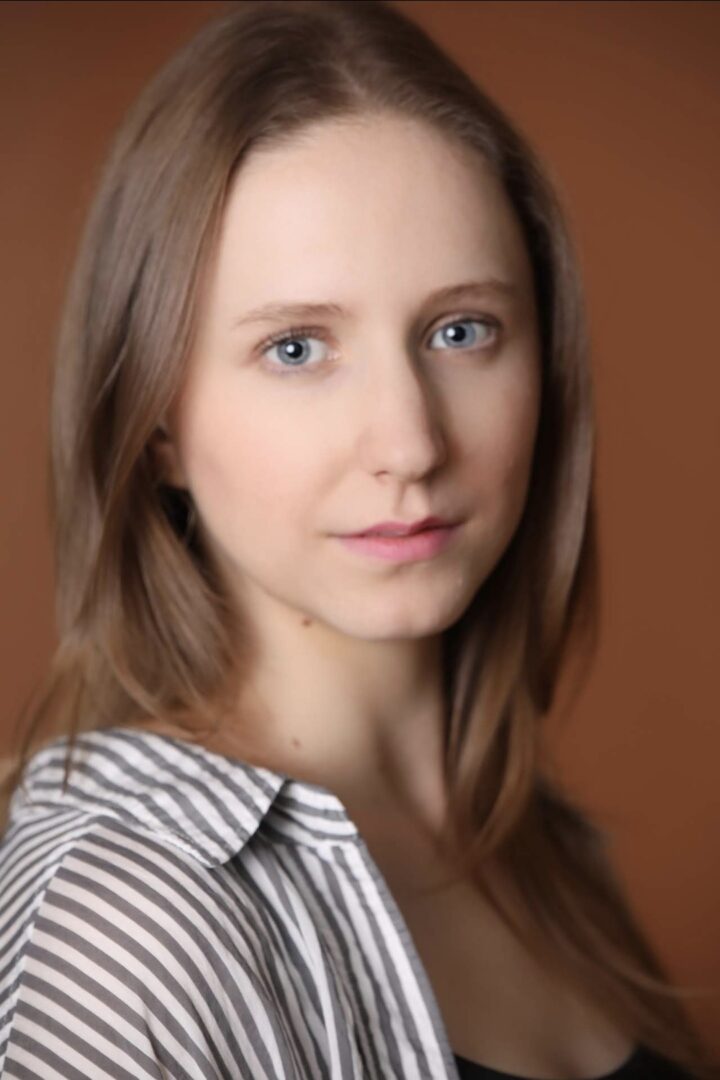
Paulina Ophelia Sophie shared their story and experiences with us recently and you can find our conversation below.
Hi Paulina, thank you for taking the time to reflect back on your journey with us. I think our readers are in for a real treat. There is so much we can all learn from each other and so thank you again for opening up with us. Let’s get into it: What is something outside of work that is bringing you joy lately?
Lately, Reformer Pilates has been bringing me so much joy — which is funny, because I originally started going as a way to force myself to exercise again. I’d done YouTube Pilates at home for years, so I knew some basics, but Reformer Pilates is an entirely different universe. It’s really hard — like a boot camp to quote Jennifer Lawrence.
I signed up at first because I knew if I didn’t go, I’d be charged a fee, and the idea of losing money was somehow the motivation I needed. But once I started, I realized how good it felt to have an instructor push me, gently but firmly.
What I love most is that during those 40–50 minutes, my brain actually turns off. When I run at the gym, I think about everything — conversations from the past, future plans, screenplay ideas, things I should’ve said differently. I’m physically moving, but mentally spiraling. Reformer Pilates is the opposite. It demands so much focus that I can’t think about anything else. It’s the only workout where I’m fully present, not analyzing, not worrying, not planning.
So even though it can get pricey and even though I sometimes dread going, I leave every class feeling lighter and clearer. It’s become a small but meaningful source of joy in my life — a place where, for once, I can just breathe, move, and not think.
Can you briefly introduce yourself and share what makes you or your brand unique?
My name is Paulina Ophelia Sophie , and I’m an actor and writer based in New York City. I was born and raised in Munich and moved to the U.S. to study Method acting at the Lee Strasberg Theatre & Film Institute—an experience that completely transformed me both artistically and personally. Since then, I’ve been building a career across theatre and film, performing in original plays, films, and festival projects.
My work—especially my writing—is deeply rooted in truth. That’s something that was ingrained in me during my Method training: the idea that honesty is the foundation of powerful storytelling. I recently finished my first full-length screenplay and am currently rewriting it to make it even more truthful to the characters and the emotional worlds they inhabit.
I’m drawn to stories that feel intimate, vulnerable, and real, and I strive to bring that same authenticity into every role I take on. Whether I’m on stage or in front of the camera, my goal is always to create work that resonates because it’s emotionally honest and grounded in the truth of human experience.
Appreciate your sharing that. Let’s talk about your life, growing up and some of topics and learnings around that. What part of you has served its purpose and must now be released?
The part of me that has served its purpose is the old “skin” I’ve been shedding over the last few years — the version of myself that wasn’t yet ready to face certain truths. For a long time, I carried emotional patterns and protective layers that helped me survive. They allowed me to move forward without having to look directly at things that were painful or overwhelming. That version of me wasn’t wrong; she simply wasn’t ready. It served a purpose at that time.
But through acting school, and through the work I’ve been doing as an actor and writer, I’ve grown in ways I couldn’t have imagined. The Method forced me to look inward, to be emotionally open, and to confront the parts of myself I had been avoiding. It taught me that you cannot tell the truth in your work if you’re not willing to tell the truth to yourself first.
So I’ve been peeling back those layers — working through my own traumas, understanding them, and no longer hiding from them. And in that process, I’ve outgrown an older version of myself. I’m not rejecting her; she’s part of me, and she helped me get here. But I don’t need her protective shell anymore. I’m stepping into a more open, honest, emotionally available version of who I am becoming.
Letting go of that old skin feels like both a release and an evolution. It’s not about erasing the past — it’s about acknowledging how far I’ve come and allowing myself to grow beyond it.
When did you stop hiding your pain and start using it as power?
I think I truly stopped hiding my pain when I realized that healing doesn’t mean erasing everything that ever hurt me. For a long time, I thought “working through it” meant eliminating the pain completely, as if that were the only way to move forward. But over time, especially through acting and writing, I learned that some experiences stay with you — not because you failed to heal, but because they shaped you in profound ways.
Acting school changed a lot for me. Through the emotional work we did, through the characters I stepped into, and through the writing I began to explore, I started to see the truth of what I had been carrying.
There are things from my childhood that I wish I could change, and there are moments I would never have chosen for myself. I was in a fire when I was young and was carried out of a burning hotel by a firefighter. It was incredibly traumatic and, of course, part of me wishes it never happened. But it also shaped how I respond to the world, how I feel, how I react in certain situations — and not always in negative ways. It made me more sensitive, more aware, and more connected to emotion.
So instead of trying to erase these parts of myself, I learned to use them. I realized that even painful experiences can become part of my artistic language. They give depth to my writing, truth to my characters, and honesty to the emotional worlds I step into. I don’t regret who I’ve become because of these experiences. I’ve learned that I can carry them, honor them, and still transform them into something meaningful in my professional life.
That’s when my pain stopped being something I hid and started becoming something I could draw strength from. In a strange way, it became part of my power as an artist.
Alright, so if you are open to it, let’s explore some philosophical questions that touch on your values and worldview. What’s a belief or project you’re committed to, no matter how long it takes?
The project I’m committed to, no matter how long it takes, is my screenplay. It’s something I’ve been writing and rewriting for years, and the process has taught me more about myself as an artist than almost anything else.
When I first began writing it, I was doing it purely for myself. I loved the story, the characters, the world — it came from a place of truth. But at some point, I started thinking too much about the outside world:
Will audiences like this? Can a character say that? Is this moment believable? Would someone buy this? Is this story even “allowed” to be told?
I overthought every line, every name, every choice. I started worrying about whether people might judge it or whether it fit the current cultural moment. And in doing that, I moved away from the original impulse — the truth that made me want to write it in the first place.
What I’ve learned, through acting school and through every teacher who pushed me toward authenticity, is that art isn’t created for approval. It’s created from personal truth. Quentin Tarantino talks a lot about making movies he wants to see — telling the stories he feels haven’t been told yet. And I realized that’s what I need to do too: write the film I want to watch, not the one I think someone might buy.
So now I’m committed to writing my screenplay for myself. I’m committed to telling the story the way it wants to be told, not the way I think it should be told to fit some imaginary audience or studio standard. And yes — I do believe it’s a story that’s important right now, with contrasting perspectives we don’t often see explored in this way. But even if no one else ever sees it, the act of writing it truthfully would still matter.
This is the project I will not rest on until I’m genuinely proud of it — for me. Not for the industry, not for expectations, not for external validation.
Just for myself, because that’s where all real storytelling begins.
Before we go, we’d love to hear your thoughts on some longer-run, legacy type questions. Have you ever gotten what you wanted, and found it did not satisfy you?
Yes, absolutely. I think we all have. It’s a very human experience: we spend years dreaming of something, believing that once we finally get it, we’ll feel completely fulfilled — and then we do get it, and realize that the feeling doesn’t last in the way we imagined. Humans always want more; external achievements can only satisfy us to a point. The rest comes from within.
For me, one of my biggest dreams was moving to the United States. I grew up imagining America through movies, through culture, through stories. I wanted to be here more than anything. And I did it — I lived in Pennsylvania, and I’ve now lived in New York for almost three years. I’m studying and working in a field I love. I’m living the dream I once thought was impossible.
And I am grateful. I love this country deeply. But I also learned that fulfilling a dream doesn’t exempt you from hardship. Happiness isn’t a constant state. Moving here didn’t magically erase everything else I was carrying.
The same was true with acting school. It was something I wanted since I was a child — to train in the U.S., to study Method acting, to be surrounded by artists. And I did it. It was one of the best years of my life. But it also came with challenges I didn’t expect. Personal hardships, emotional struggles, financial stress — things that existed right alongside the joy and growth.
So yes, I’ve achieved things that younger me would never believe possible. I’ve checked off so many “childhood dreams.” But they didn’t come wrapped in perfect happiness. They came with complexity, with reality, with lessons. And that’s not a bad thing it’s just life. Dreams can open doors, but fulfillment has to come from something deeper than simply getting what you once wanted.
And sometimes you realize that something you thought you wanted more than anything turns out not to be what you truly want once you finally have it — and that’s okay too. That’s an important lesson. Life shifts, priorities evolve, and new parts of yourself open when you least expect it. For me, even though I’ve always written here and there, acting school reopened a door I genuinely believed I had closed: writing. I always assumed acting would be my one and only priority, but through school — through the emotional work, the self-exploration, the characters — I discovered how deeply writing fulfills me. It became a place where I can let go of everything, a space that feels both freeing and grounding. I don’t know if I prefer it over acting, and maybe I don’t need to choose. But I didn’t realize that writing could be something I want just as much, and that realization only came after going through acting school.
Contact Info:
- Instagram: Paulina_ophelia_
so if you or someone you know deserves recognition please let us know here.