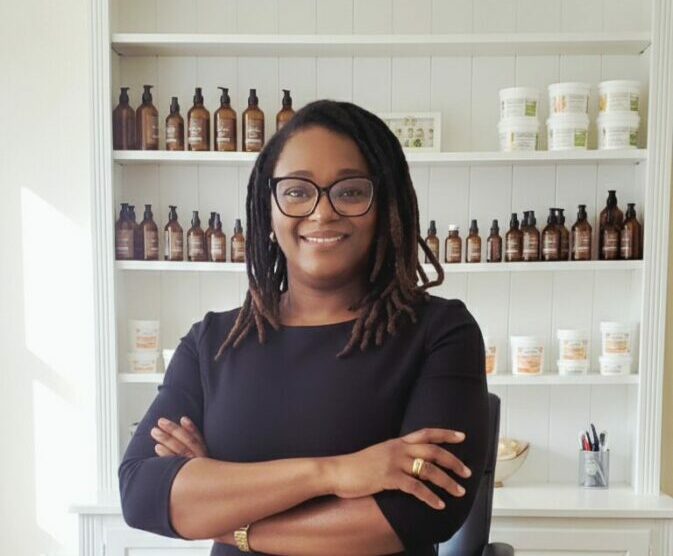
At the intersection of storytelling, personal growth, and wellness, Charlese Milford is building work that speaks to both the inner narrative and the physical realities of everyday life. Through her brand Hair We Grow, she reframes self‑care as essential maintenance rather than indulgence—creating intentional, results‑driven products designed for real bodies, real budgets, and real challenges. Alongside her psychologically rich writing, her entrepreneurial path reflects a commitment to healing with structure, honesty, and longevity, reminding people that caring for themselves is not something to earn, but something to sustain.
Hi Charlese, thank you so much for taking the time to share your journey with our readers — to start, can you tell us a bit about how storytelling, personal growth, and wellness came together for you, and how that intersection shaped both your creative work and your entrepreneurial path?
Storytelling was my first language. Before business, before wellness, I was always observing people — how they respond, how they break, and how they rebuild. Writing became a way to process life without outside interference. I’ve always been the kid who cut against the grain, and I learned very quickly the repercussions and discomfort that could ignite. Writing was not just an outlet; it was my safe space to be the organic version of myself.
My earlier writing reflected hurdles I didn’t initially recognize in my own life. It gave me the space to approach personal growth as a necessity, not an option. I had to acknowledge that healing and growth require structure, not just insight.
Wellness grew naturally from that same place. What we consume, how we care for our bodies, how we speak to ourselves, and our overall mindset shape our capacity to heal. My creative work and my entrepreneurial work are extensions of that realization. One speaks to the internal narrative; the other supports the physical and emotional environment that allows change to stick.
Hair We Grow is rooted in the idea that self-care is maintenance, not a luxury. What personal experiences or gaps you noticed in the wellness space inspired you to build a brand around that philosophy?
Hair We Grow was born from a very clear gap I noticed: wellness products often spoke at people, not to real lives. Self-care was marketed as indulgence, escapism, or a reward after burnout, never as essential maintenance. Maintenance sustains you. For most, indulgence is temporary.
In my own life, consistency mattered more. I didn’t see self-care as a reward; I saw it as a requirement mentally, emotionally, and physically. I needed products that worked, that fit into everyday routines, and into everyday budgets.
In my world, it’s often the people who work the hardest and show up for everyone else who rarely center themselves. Hair We Grow is built on the idea that taking care of yourself isn’t extra. It’s fundamental. When you treat self-care as maintenance, you stop waiting for permission or a reason to take care of yourself.
Your tagline, “Elevated Essentials. Because luxury should be the standard, not a status,” really stands out. How do you define luxury in a wellness context, and what do you want people to feel when they use your products?
Luxury, to me, is not about exclusivity. It’s about intention.
In wellness, luxury means thoughtfully formulated products, honest sourcing of trusted and effective ingredients, and results you can both see and feel, not just branding you can see.
I grew up using watered-down products, and at times products that weren’t safe for my body. It was what was available and affordable. They offered basic care, but rarely delivered real transformation. That experience shaped how I formulate today, especially for individuals managing eczema, sensitive skin, beard irritation, uneven tone, and medication-related hair loss.
Hair We Grow has expanded beyond growth oil into targeted scalp support, beard conditioning, tone-correcting solutions, and skin specific formulations designed for real, everyday challenges. In 2026, our men’s grooming line won the North Charleston Community Vote for Men’s Grooming, this was an affirmation that intentional, results-driven care resonates across genders.
I want people to feel the intention behind my products when they use Hair We Grow. I want them to experience visible improvement, to notice the difference in texture, strength, clarity, and confidence. The experience should feel elevated but normal, like something that belongs in your life, not something you have to earn.
Wellness should meet you where you are and raise the standard of everyday essentials for men, women, and children – especially those dealing with medical conditions that affect their hair and skin.
My first few clients were experiencing hair loss due to medication and medical treatments. That outcome had been presented to them as something they simply had to accept. I didn’t agree with that. Many had become hair product junkies, searching for resolution and control during a moment when their appearance felt unpredictable. Hair We Grow was able to restore that sense of stability.
They reinforced my belief that everyone deserves to look in the mirror and love the reflection looking back at them.
On the creative side, your books explore psychological themes, healing, and real-life struggles. What draws you to these deeper emotional narratives, and how do you hope readers feel after engaging with your stories?
I’m drawn to psychological and emotional depth because that’s where real change occurs. Surface-level storytelling rarely reflects how people actually live or heal. Life is complicated. Growth in environments where there is no room or resources for it can make change feel difficult and sometimes impossible.
I write about those gray areas and taboo thoughts because readers need to recognize themselves there. My hope is that readers feel seen without being overwhelmed. I don’t write to fix people. I write to normalize the questions they’re already asking themselves. If someone finishes a story feeling less alone, more honest with themselves, or more willing to confront their own truth, then my work has done its job.
You’re currently expanding both Hair We Grow and your writing career at the same time. What has it been like balancing brand-building with creative expression, and how do the two continue to inform and strengthen each other?
Balancing the two requires discipline and clarity. Brand-building is structured, strategic, and execution-driven. Writing is intuitive and emotional. At first, they felt like opposing forces. Over time, I realized they sharpen each other. The brand keeps me grounded in systems and sustainability. Writing keeps me connected to meaning. Together, they prevent burnout and keep my work authentic. Hair We Grow benefits from the empathy I bring as a writer, and my writing benefits from the boundaries and confidence I’ve developed as a business owner.
Looking ahead, what does growth look like for you right now — both for Hair We Grow as a wellness brand and for your work as an author — and what are you most excited to build next?
Growth right now looks like refinement and scale and for the first time, I can finally say I’m not rushing. I am taking the time, the courses, the feedback- everything needed to continue to produce intentional and affordable products. For Hair We Grow, that means expanding distribution thoughtfully, strengthening education around scalp and skin health, and continuing to build a brand people trust long-term. I’m focused on sustainability, not hype. My goal is to create a product line that supports both the internal and external experience of the user. I’m also working toward incorporating affirmations into my website and product packaging to reinforce mindset alongside maintenance.
As an author, growth means deeper storytelling, broader reach, and expanding into formats that allow stories to live beyond the page. I’m excited about building an ecosystem where wellness and narrative intersect. Everything I’m creating now is about longevity, impact, and leaving something solid behind.
Links: