We recently had the chance to connect with Greg Gerber and have shared our conversation below.
Good morning Greg, it’s such a great way to kick off the day – I think our readers will love hearing your stories, experiences and about how you think about life and work. Let’s jump right in? What are you being called to do now, that you may have been afraid of before?
For me, I have always been fearful of producing video content. I have a face for radio, and every attempt I have made to create video content has been challenging because I felt the need to make it absolutely perfect.
Yet, I realize people today prefer authenticity and do not relate well with “perfect” people. So, I am testing video editing software to see how I can share some outstanding interviews with others online.
I have encountered dozens of people who have built huge audiences with video content most people would consider to be less than ideal.
My audience, people over 50, seem to prefer video over written or even spoken content. So, I’m pushing my ego and fears aside and embracing video as a way to reach more people.
Can you briefly introduce yourself and share what makes you or your brand unique?
I am a former journalist who covered the recreation vehicle (RV) industry for nearly two decades. The final 10 years were spent managing my own online publication. But, when that business was no longer fun and every day seemed to be a chore, I shut it down.
However, because my life and identity had been tied to my work as a journalist, I struggled to figure out what to do with my life in order to have meaning and purpose. The COVID isolation and related shutdowns did little to help in that regard.
That’s when a mentor, Vincent Pugliese, noticed I seemed to be caught in a dark place and he offered to talk about it. We discussed my state of mind as well as my natural talent, learned skills and unique life experiences. I told him what I really liked to do and what gave me joy.
My mentor told me he suspected many people over 50 felt the same way I did. They were forced out of jobs they loved, or opted to retire while they still felt they could contribute in meaningful ways. What they needed was a little nudge and encouragement to take that vital first step toward a new, more fulfilling life.
While brainstorming, I remembered I had registered the domain forwardfrom50.com many years earlier without knowing what I would do with it. My mentor suggested that would be a great niche for me. The more research I did, the more I realized how I could make a difference in the lives of others, just as my mentor made a difference in mine.
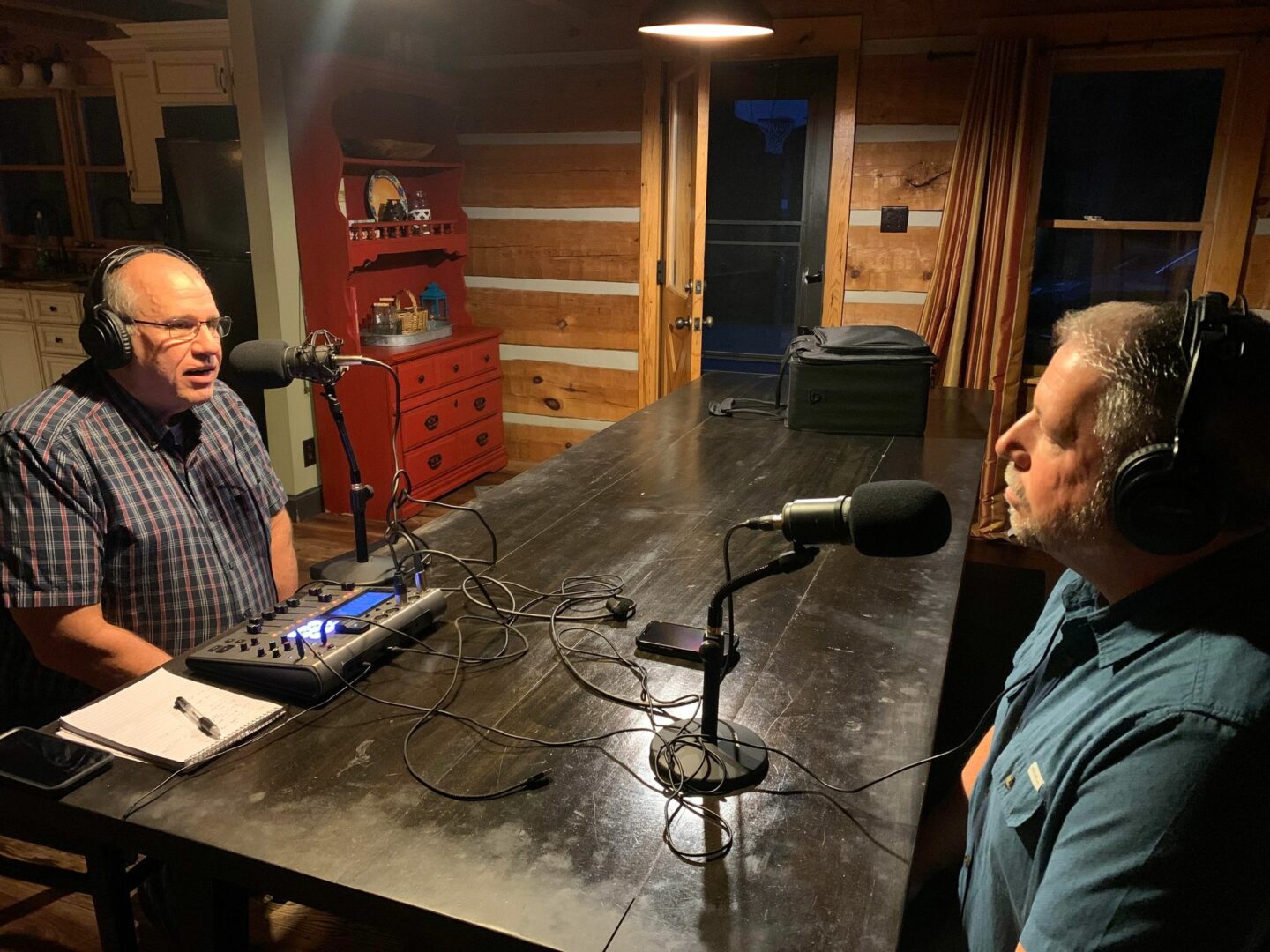
I posted about the idea on Facebook, and nearly 20 seasoned citizens volunteered to be interviewed about what they did which gave their lives meaning and purpose or new direction. That launched a weekly podcast where I have interviewed nearly 150 people from all walks of life.
Just hearing how others are so motivated to make a difference by pursuing things they are passionate about, is tremendously uplifting and encouraging for me, too.
People over 50 love to talk about what lights them up. Early in my podcasting career, which started in 2014, people I interviewed for business would talk for 20 to 30 minutes. Today, when talking about what they are truly passionate about, my guests can often talk for 45 minutes to an hour.
As the podcast grows, so does the waiting list of people wanting to be interviewed. With 72 people on the waiting list for my weekly podcast, I decided to increase the frequency to two per week to clear the backlog.
Okay, so here’s a deep one: Who saw you clearly before you could see yourself?
I give all credit for my career as a journalist and writer to my 11th grade English teacher, Keith Larson. He saw something in me that I did not know existed.
As a teenager, I really struggled with grammar and English in general. Because my study hall coincided with his planning period, Mr. Larson met with me several times to explain the intricacies of language and to drill me on the principles of grammar.
I distinctly remember when everything just clicked and I could clearly identify nouns, verbs, adjectives, etc. I spent the rest of that day reading textbooks in other classes as I noticed sentence structure and composition. But, once I mastered grammar, Mr. Larson really pushed me to excel in creative writing.
He introduced me to a thesaurus and showed me how different words can alter the flow and meaning of a sentence. Writing became a true outlet for my creativity.
However, well-meaning relatives and friends encouraged me to pursue “more practical” careers. So, I spent time in law enforcement, restaurant management, photography, public relations and fund development. Yet, all of those experiences did little to really excite me. There was a passion still smoldering within me.
During that time, I joined the U.S. Air Force as a public affairs specialist. At my first duty assignment, I was tasked to become the editor of our weekly base newspaper. Within two years, it was recognized as the second best in the Tactical Air Command. That’s when I realized I may have a calling as a journalist.
A few years after my discharge, I returned to college to get my degree in public relations and found a job working as a reporter and photographer for a local weekly newspaper. That experience, as well as my job in the military, opened the door for me to become the editor-in-chief of a monthly business-to-business magazine serving the RV industry. That’s where I truly found my groove.
When the owners of the magazine I edited did not see how the internet would impact publishing in general, I jumped ship and started the RV industry’s first online publication. Many people told me there was not enough news in our little industry to warrant a daily publication. Ironically, within a year of launching, all of my magazine competitors were forced to start online newsletters, too.
But, thanks to the patience and encouragement from my mentor, the vision for my success, was forged in 1977 while sitting in a tiny office underneath the B-wing stairs at LaFollette High School in Madison, Wis.
Was there ever a time you almost gave up?
Absolutely! That was in 2021. Like I noted before, I was forced to close my online publication after I wrote a series of editorials about major problems facing the RV industry.
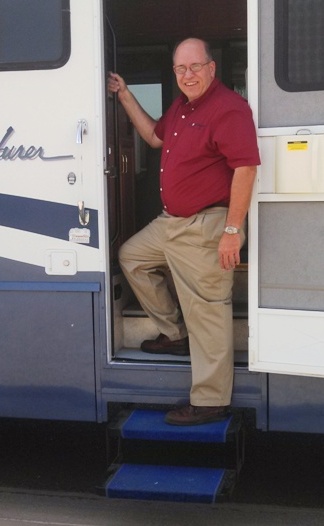
Back in 2014, I worked from home in front of a computer screen every day. I realized I could do that wherever I had an internet connection and electricity. So, I opted to buy a motorhome to live and work in it as I traveled the country attending trade shows and interviewing RV dealers, manufacturers, suppliers, campground owners and RV owners.
I thought for sure it would be the crowning achievement of my career. I would become the RV industry’s first journalist and business podcast producer to cover the industry while using the industry’s products and services.
During a three-year-period, I visited all 48 lower states at least once, and was well recognized as a thought-provoking journalist.
But, the experience also opened my eyes to some critical problems within the industry. Product quality was horrible and getting worse. People could not get RVs fixed easily and often had to wait months for service appointments. The experiences people faced in crowded campgrounds, where the next RV was fingertip to fingertip away, was vastly different from the commercials the industry created to promote the lifestyle as a way to enjoy freedom and travel.
Because the RV industry had meant so much to me personally, I wrote a series of editorials addressing big problems created by manufacturers, suppliers, dealers, campgrounds, associations, media and even RV owners, who reluctantly tolerated the declines in quality and service.
I titled the series, “The RV Industry Death Spiral,” and suggested the industry had 20-years of viability remaining if the problems were not resolved. More than 250,000 people read all or parts of the series.
But, it ticked off just the right power brokers in the industry, especially a major manufacturer and big box retailer.
The CEOs of those companies told my advertisers that, if they continued to support me, the companies would not buy their products to install on new RVs or to sell in retail stores.
My income dropped from $250,000 per year to under $100,000 annually within two months. I tried to sell the publication in 2018, but the new owners were quickly pulled into many directions with a big, successful project of their own. As readership declined, they offered to sell the publication back to me in January 2019, and I accepted.
But, God had told me he wanted me to go in a completely different direction with my life, where I would be a writer instead of a journalist. Opportunities evaporated and doors closed. The joy of being back in the editor’s seat quickly dissipated and every day was non-stop drudgery.
Finally, in June 2019, I pulled the plug and blew up the publication. Remnants and mentions of RV Daily Report can still be found online, but little remains of what was once considered the industry’s No. 1 publication for many years.
While I was forced to give up on that dream and I felt like quitting entirely, it opened the door for me to have an even truly greater impact.
Instead of meeting the information needs of 16,000 business professionals who comprised my audience as a journalist, I could impact far more people over 50 who were struggling to identify things to do that would give their lives more meaning and purpose.
So a lot of these questions go deep, but if you are open to it, we’ve got a few more questions that we’d love to get your take on. Is the public version of you the real you?
Yes, indeed. I realized early in my career as a journalist that it was important to be an authentic storyteller. While authenticity was not really admired in the military, it certainly was in the newspapers and magazines I worked at for many years.
I felt it was important that people who read my material every day encounter the same spirit and personality at trade shows or industry events when meeting me in person.
Authenticity is one of the absolute best traits that define people over 50. Many times, they no longer care what other people think about them. When seasoned citizens realize they can be authentic and still be likeable and professional, it is a game-changing moment.
That authenticity opens doors that would generally remain closed because others know for sure who they are dealing with, and they like it. People like to do business with people the know, trust and like. They are skeptical of people who hide behind professional-manicured or AI-created avatars.
Social media may allow people to perfect a public persona, yet it quickly evaporates outside of an arena where every word and photograph is carefully edited to convey a specific message. Outside of the controlled environment, people trapped in that way of life often find themselves suffering from impostor syndrome.
Instead of needing to be liked by “everyone,” seasoned citizens find themselves to be much happier by being authentic around a small group of followers who respect them for their authenticity and honesty.
Before we go, we’d love to hear your thoughts on some longer-run, legacy type questions. What do you understand deeply that most people don’t?
That stories are important and your story matters deeply to others.
More than ever, I am convinced that if you locked two people into a room who were polar opposites of each other that they would emerge later with a greater appreciation and understanding of the other.
They will discover they had shared aspirations in their youth or have a common interest in music, books, movies, travel or hobbies. They have interesting stories about how their lives were shaped by mentors or negatively impacted by bullies and broken relationships.
While the media and social media seek to isolate us into silos that become echo chambers of the same thoughts, I have found that sharing stories and listening to people tell them brings us closer together and gives us more empathy for others.
That’s why it is essential for seasoned citizens to capture and preserve their life stories!
Face it, do you really know your great grandparents or great-great grandparents? Yet, things that happened to them altered the trajectory of their lives to put them into situations where you became a possibility.
Lessons they were taught and individual experiences impacted them in many ways. Those were passed down in terms of behaviors, beliefs and personality quirks that eventually shaped you, too.
Even 50 years ago, it was challenging for people to capture and preserve their important life stories. They could always tell stories around the dinner table and hope they would be remembered and accurately repeated decades later.
They could write stories on a tablet and hope they weren’t lost in a move or natural disaster. Or, people could convince a traditional book publisher to preserve the story, but only if profit could be made.
Thankfully, technology was developed to make it easy for people to capture and preserve their life stories. Tape recorders in the 60s let people capture their own voice, provided the tape was never damaged or lost.
Word processors and desktop publishing software in the early 1990s opened the door for everyone to write and preserve stories provided backup copies were not destroyed.
Then e-books created affordable options to mass produce those stories, but publishers were still reluctant to produce them unless they could be sold.
Fortunately, technology exists today for people to capture their own stories in their own words and make multiple copies. The same is true for photographs.
It is not uncommon for people to die and leave behind boxes of photos, or carousels of slides and even old reel-to-reel films of often unidentified people or the stories behind the images.
Today, digital images and videos can be identified with stories included in the captions. People can record their own voice and have artificial intelligence transcribe it as well as clean up grammar and spelling.
Best of all, the stories can be preserved indefinitely in the cloud and shared to ensure every family member has a copy. Self-publishing makes it possible for anyone to create a book or manuscript and make it available even in different languages.
Every seasoned citizen has a lifetime of experiences that taught them important, sometimes painful, lessons. Your descendants deserve to know what influenced your life so they can learn how it shaped theirs.
Contact Info:
- Website: https://www.forwardfrom50..com
- Instagram: https://www.instagram.com/greggerber99
- Linkedin: https://www.linkedin.com/in/greg-gerber
- Twitter: https://x.com/greggerber99
- Facebook: https://www.facebook.com/greg.gerber.7
- Youtube: https://www.youtube.com/@greggerber
- Other: Medium = https://greggerber.medium.com

so if you or someone you know deserves recognition please let us know here.