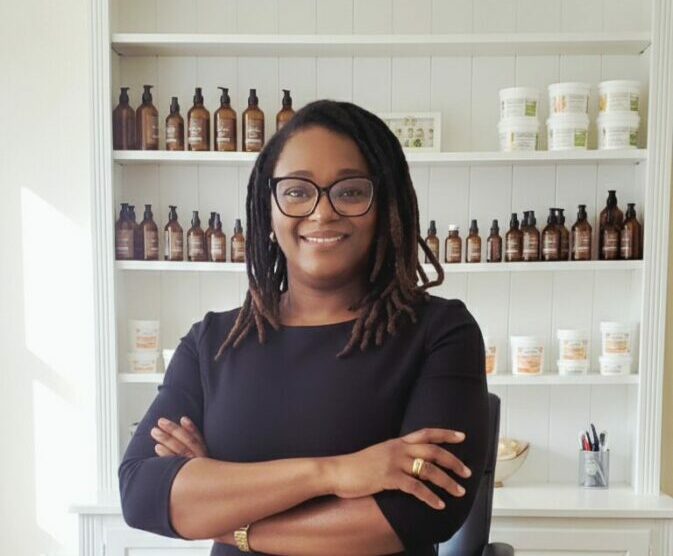
As a writer and solo founder, Hannah Macready came to AI not as a novelty, but as a necessary expansion of capacity. After years of carrying every operational and creative task herself, large language models offered leverage without burnout — and raised urgent questions about who gets a voice in shaping tools that directly affect writers’ livelihoods. Now building an AI writing startup at Melora, she advocates for systems that treat writing as a craft, not a disposable output. For Hannah, the future of creative work isn’t about replacement, but collaboration: using AI to reduce mechanical labor so human taste, judgment, and imagination can matter more — not less.
Hannah, you’re a writer launching an AI writing startup in a moment when conversations around AI are especially charged — what motivated you to step into this space, and why does this work feel important to you right now?
For me it started very practically. I was running a one person company. Every email, every pitch, every invoice, every piece of copy ran through me. LLMs were the first technology that genuinely expanded my capacity instead of just organizing it. I could produce more without burning out, and that alone made it impossible to ignore.
But writing is how I think. It’s how I build a living. When tools start reshaping the economics and mechanics of writing, that’s personal. Writers are often the last people invited into conversations about the systems that shape our work. Engineers build them. Corporations deploy them. But I wanted to be inside the room early, helping design tools that respect the craft instead of treating writing as a disposable output.
I also spent years running a marketing agency that serviced small businesses. I got to see first-hand how eager these people were to build a positive future for themselves and their families, and how difficult it was to do that with limited resources. So many smart founders stall out not because they lack ideas, but because they lack bandwidth. They’re exhausted. They’re doing five jobs at once. If a tool can shoulder part of that load and let them focus on the work that actually grows the business, that’s massive. I joined Melora because I wanted to give those clients the kind of leverage they were dreaming of.
This work feels important right now because we’re at a moment where access is being renegotiated. Who gets to compete. Who gets to create. Who gets to sound polished and professional in public. I want to help build tools that tilt that balance toward small operators and independent creatives.
AI often gets framed as a threat to creativity — what are some of the biggest myths you see around AI and writing that you’d love to challenge or reframe?
Oh, gosh, where do I start. First of all, I think it’s important to remember that this thing we’re calling “AI” is not really “AI” at all. It is not an artificial intelligence, it is simply a highly powerful computing system. I actually think this level of computing is something the general population has been wanting for a really, really long time.
For example, the entire promise of Google was “don’t make me dig, just give me the answer.” Autocomplete exists because we don’t want to finish typing our own sentences. GPS exists because we don’t want to memorize directions anymore. Streaming platforms predict what we want to watch before we know what we want to watch. Every step of modern software has been about reducing friction between a question and a result.
Now, we finally have tools that can do all that and more, and people are divided (at least in the West). Go figure.
In terms of myths, there are a few big ones.
One common claim is that AI is uniquely destroying the environment. Large language models do use a lot of energy, but they run in the same data centers that power search, streaming, social media, banking, and most of the modern internet. There isn’t a separate system just for AI. The servers running AI are often the same ones running everything else online.
That said, AI demand is growing fast. New computing loads are being added quicker than many power grids are getting cleaner. So the concern isn’t imaginary. But AI isn’t a separate environmental problem from the rest of the internet. It’s part of a larger question about how we power an increasingly digital world.
Another myth is that AI is going to replace creativity. I just don’t buy that. The reason we care about art is because there’s a human on the other side of it. We’re fascinated by what another person can do with the same 24 hours we have. When I see Meryl Streep step into a scene as Miranda Priestly, I’m thinking to myself: how is it that another human, who in many ways is just like me, can pull that off—especially when I know I can’t! The same goes for music, art, and writing. I just don’t think we’ll ever be quite as fascinated by art created by a machine, because it lacks the discipline, commitment, and time that a human would put into the same output.
Then, obviously, there’s the concern about LLMs being trained on the work of other artists, which many people view as theft. This one is so tricky. I totally understand how raw and frustrating it feels. However, like most things in life it comes down to something a bit simple: we, as a society, did not fully understand what it meant to make our work available online.
The courts have already decided that the training these LLMs received fell under fair use guidelines. What that means in practice is that the models are not storing books or paintings or articles and handing them back intact. They’re analyzing patterns across massive amounts of material in order to learn how language works. Legally, that process has been treated more like studying than copying. It’s closer to a person reading thousands of novels to understand style than a machine redistributing a pirated library.
Still, I get that those rulings are unsatisfactory to the artists who spent decades honing their craft, only to see it chewed up and spit out by a machine. And obviously, there are obvious cases where an artist’s work has been clearly repeated by an LLM and I don’t agree with that practice. The law is the law, but it doesn’t erase the human impact there.
Still, at this point what’s done is done. I think what will happen, from this point on, is we will all be more careful about what we let be published online. If everything there is fair use, people will think harder about things like ownership, paywalls, and licensing. In a strange way, AI might force creators to finally treat digital work with the same boundaries we’ve always understood in physical spaces. You wouldn’t leave a box of original paintings on a sidewalk and expect total control over what happens to them. We thought online spaces were different, but now we’re realizing they are the same.
Do any of these points mean you should avoid using AI? I don’t think so. It’s one of the most powerful tools we’ve ever seen as a species. The use cases in fields like medicine are quite frankly, world changing, and it would be a shame to give up on that kind of progress. Should we still hold people in power accountable for instances of mistrust and misuse? Of course. Should we discard the tech completely? I don’t think so at all.
From your perspective as a freelance writer, how has your own work evolved alongside new technology, and what have you gained (or had to unlearn) in the process?
I was an early adopter of LLMs. I’m a writer but I’m also an entrepreneur. A small business owner. For years, I was the only person in my company and so every task, big, medium, small, was on my plate. LLMs gave me a way to increase my output without increasing my headcount. It’s that simple.
I use AI constantly in my copywriting workflow. I’ll test headline ideas. I’ll paste in a draft I already wrote and ask it to tighten clunky sections. I’ll ask whether an angle works or doesn’t work and force it to explain why. As an independent freelancer, LLMs are like having someone at the next desk who I can bounce ideas off of. That’s been incredibly useful when you’re building things alone.
What surprised me is how much it’s helped me grow as a writer. I know, I know… that’s not what you’re hearing from the masses, but hear me out.
I worked at a literary magazine for eight years, and one of the best parts of that job was reading an enormous volume of submissions. You absorb patterns when you read that much. You see ten ways to approach the same emotional beat. LLMs recreate a version of that environment. I’ll think a piece should move in one direction, it suggests another. Suddenly we’re in a third place that I may not have reached independently. I find that insanely useful.
There are some things I don’t use it for. Journalism, for one, where privacy for my sources is paramount, as well as fiction and creative writing, as well. Because, well, I don’t do that for output, I do it for fun. But for marketing and entrepreneurship, it’s incredibly useful.
How do you envision AI functioning as a tool for writers rather than a replacement, and where do you think the healthiest collaborations between humans and AI actually happen?
I think humans should be in the loop right now, even if only to review. We know there are hallucinations. We know there are factual mistakes. We need discerning eyes to be able to catch those things, and humans are the ones holding that context, especially in business teams. That’s just the reality of where the technology is today.
Long term, I actually hope we reach a point where a lot more can be automated safely. There’s nothing noble about spending hours on mechanical tasks that don’t require taste or insight. If machines can absorb more of that load, writers get to spend a higher percentage of their time on the parts that are more creative and artistic. That’s a future I’m excited about.
Looking ahead, what excites you most about the future of writing and creative work as AI continues to develop?
One thing I really want people to remember is that every hot take you see online usually traces back to an institution, a market interest, or a political interest that benefits from that angle spreading. There are groups who want rapid adoption. There are groups who want to slow it down. There are countries competing for advantage. There are industries protecting themselves. Ordinary people end up swimming in narratives that feel personal but are often strategic. That doesn’t mean concerns are fake. It means the conversation is bigger than any single post or opinion.
What excites me is the possibility of stepping outside the noise and actually asking what writers can build with this. When the panic settles, we’re left with a tool that dramatically lowers the friction between an idea and a finished piece.
I think we’re going to see an explosion of hybrid work. Writers who are also designers. Founders who are also storytellers. Small teams producing output that used to require entire departments. The interesting question stops being “can a machine write” and starts being “what can humans make when the mechanical parts get lighter.”
Hopefully, writing becomes more accessible without becoming less valuable. Hopefully, human voices get stronger. Hopefully, writers have a chance to make a better living. To be in bigger rooms. To help shape the digital world more fully. That’s what I’m working towards.