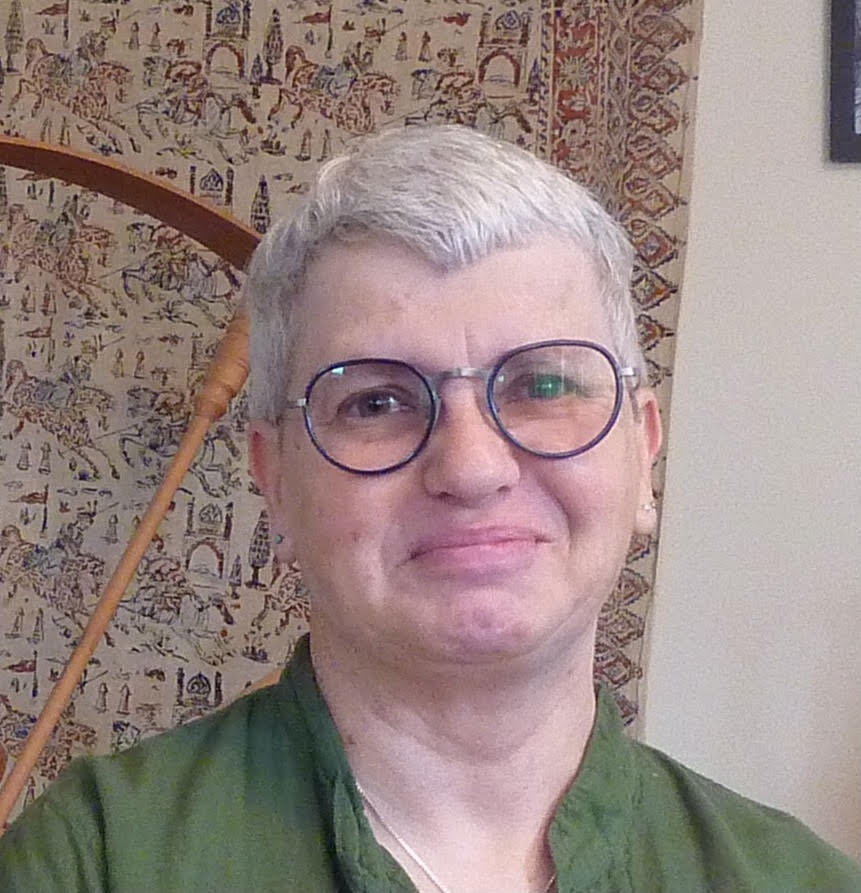
We’re looking forward to introducing you to Deb BRANDON. Check out our conversation below.
Deb, we’re thrilled to have you with us today. Before we jump into your intro and the heart of the interview, let’s start with a bit of an ice breaker: What is something outside of work that is bringing you joy lately?
Throughout my adult life and much of my childhood, I’ve dabbled with the textile arts, from knitting and embroidery, to weaving and spinning yarn. Recently, I discovered Japanese sashiko embroidery.
Sashiko is a form of decorative reinforcement stitching (or functional embroidery) from Japan. Traditional sashiko was used to reinforce points of wear, or to repair worn places or tears with patches. Traditional sashiko artisans use white cotton thread on indigo blue cloth.
When I first learned of it, I was in awe of the beauty of this technique, the stunning effect of white running stitch embroidery on my favorite type of fabric—indigo-dyed cotton. Though I was interested, I didn’t start my first sashiko piece until a couple of months ago, when I came across a sashiko kit depicting a dragon. I’m big on dragons. No—I’m huge on dragons. I used to be an avid dragon boater and anything to do with dragons tugs at my inner being. I’m also a big indigo fan. The color is fabulous, and the dye process is magical.
Mere days later, I found myself reclining on the sofa, threaded needle in one hand and the patterned piece of fabric in the other. I poked the needle into the fabric.
In and out, a running stitch. In and out of the fabric, following the pattern. Occasionally, I’d pause to admire the dragon emerging onto the fabric. I took it slowly—I wanted to savor this project.
Finally, my dragon was complete. As I unfurled it, I felt a smile spread across my cheeks. The smile stayed with me the rest of the day, off and on. Pride and joy filled me whenever I caught sight of it on the coffee table. I happily showed it to anyone who came by, soaking in their compliments.
It is glorious.
Can you briefly introduce yourself and share what makes you or your brand unique?
I’m a university brat—growing up, we traveled a lot as a family. I was born in Cambridge, England. When I was three years old, we moved to Switzerland for three years, and then moved to Israel. I grew up in Israel, traveling abroad here and there. When I was twenty-four years old, I moved to the U.S., originally to study mathematics. Ph.D. in hand, instead of returning to Israel, I got married and stayed in the U.S., working as an academic, a mathematics professor.
At the age of forty-six, I experience a couple of hemorrhagic strokes. I was diagnosed with a rare vascular disease—cavernous angioma. I have several clusters of malformed blood vessels scattered throughout my brain. Thin walled, they can bleed. My first bleeds only caused minor and fleeting deficits. But a year later, I experienced bleeds that left me with permanent neuro-deficits. Subsequently, I underwent three brain surgeries to prevent future bleeds, to reclaim my life. Though there is no full recovery from severe brain injury, those surgeries marked the starting point on my road to recovery. The ongoing healing process is filled with pitfalls. But I wouldn’t change my journey for the world—I am better for my brain injury. I have grown markedly as a person along the way. Yes, I am limited by my disabilities, but my life is richer, fuller that it was before my bleeds. My priorities have changed. I am a more compassionate than I used to be. I am also a more authentic version of myself. I take more joy in life.
To understand the enormity of what happened, shortly after my surgeries,I started writing about my journey to recovery. With the help of a wonderful writing coach, my journal-type manuscript transformed into an award winning book, “But My Brain Had Other Ideas: A Memoir of Recovery From Brain Injury.”
On my path to publication, I came to recognize the storyteller in me. I moved on to write a book about traditional textiles (one of my passions), which also won awards. I am now in the process of writing even more manuscripts. The one that is closest to being publication-ready is a collaboration between myself, as a brain injury survivor, and an author friend, who is a caregiver (for her husband, who is also a survivor of brain injury). The book is about our parallel paths through brain injury and how it has affected us in our different roles.
I’m also writing a sequel to my first memoir. Instead of focusing on my recovery, I am writing about living with brain injury and how it has changed my perception of the world. I am also writing about my journey to adulthood, including my travels and my life in Israel.
Once I retired from my job as a professor at Carnegie Mellon University, writing had my full attention.
Appreciate your sharing that. Let’s talk about your life, growing up and some of topics and learnings around that. What’s a moment that really shaped how you see the world?
I can’t reduce it to a point. It was more of an event that stretched over several months when I was forty-seven years old, after my acute brain bleeds followed by my brain surgeries. Once I returned home from hospital and my journey to recovery began, so did my growth as a person, and with it the changes in my perception of the world.
As I healed, I became more aware in general and more self-aware in particular. It became easier to expose my vulnerabilities and ask for help. I was now able to read the subtlest of social cues. I transformed from a shy introvert to an eager extrovert. I was more compassionate. I became a more authentic version of myself. I was more content, more comfortable in my own skin.
Where the old Deb kept socialization to a minimum, I now sought out social interactions and enjoyed getting to know people at a deeper level. My teaching skills improved, and I now took more joy in teaching. My creativity now blossomed, and I discovered the storyteller in me. Writing became another passion. Also as a maker, my textiles were more inspired, more meaningful, and more beautiful.
In addition, I finally acknowledged my sexuality and acquired a girlfriend. Eventually, a decade or so into my recovery, I moved in with her and two years later, we got married.
When did you stop hiding your pain and start using it as power?
A couple of years into my recovery from brain injury, I stopped trying to hide it from anyone outside my little bubble of close friends and relations. I’d been afraid to expose my vulnerabilities. I was especially reluctant to speak of my difficulties to my colleagues and my students at Carnegie Mellon. I was afraid that they would regard me as incompetent, as less.
During my first year back in the classroom, I struggled mainly with high volumes of sensory input, which in turn exacerbated other neuro-deficits. In particular, I was easily distracted and had trouble staying on track. In order to improve the teaching and learning environment, I decided to discuss my brain injury with my students and explain my deficits.
My original goal was to convince my students that I needed them to be quiet. But I found that I achieved so much more. I started my “confession” by asking them, “How many of you have had a brain injury, including concussions?”
As the hands went up (fifteen to twenty percent of the students), they looked around the room. I realized that I was conveying an unexpected message—brain injury is more pervasive than one would think. Also, they were seeing that survivors can look like them, that they are not less.
I then proceeded to tell them my story and about my deficits. I also spoke about how it affected me psychologically, that I now suffered from severe depression and have experienced suicidal ideation.
To my surprise, my explanation was an effective ice breaker. They were engaged, and asked for more details about my injury and my deficits. More importantly, from that day on, throughout the rest of the semester and beyond, several students came by my office to tell me about their own struggles with brain injury. Some felt comfortable speaking of their issues with mental health. And others popped in just to talk about their studies and their lives. Most seemed to want someone to listen and provide a shoulder, and others asked for advice.
Since then, I repeated the experience at the beginning of each of the following semesters with the same results. Not only was I raising awareness about brain injury, but I was helping many of them. My relationships with my students were now at a deeper level than they’d been in the past. Teaching became one of my true joys, partly because I enjoyed teaching but mostly because of my students.
Several of them invited me to give presentations about my story to a variety of audiences, broadening my reach.
I’m still in contact with some of my students, five years since my retirement. I feel that I have fulfilled my role as a teacher effectively, at so many levels. I feel fortunate that I had the opportunity to make a difference.
Next, maybe we can discuss some of your foundational philosophies and views? What’s a belief you used to hold tightly but now think was naive or wrong?
Before my brain injury, I believed that my job as a teacher involved merely passing on an understanding of the material (mathematics). I felt that those teachers who tried to bond with their students at any level, were wasting their time, time that they didn’t have—there was so much material that they had to cover within a semester.
But after I started to tell my students about my brain injury, I understood that I was wrong. Teaching should involve so much more than conveying information. I look back and wonder how I could have been so dense. At the very least, forming bonds with students improves the learning and teaching environment. I became a better teacher, and they became better learners. Most importantly, teaching should also be about making a difference, about guiding them, about helping the students grow and become more confident in themselves, better people.
I am thankful for my brain injury for many reasons, including teaching me to see the bigger picture, making me a better person and more effective teacher.
Before we go, we’d love to hear your thoughts on some longer-run, legacy type questions. When do you feel most at peace?
I am at peace when I am creating. More specifically, when I am immersed in my persona as a textile artist, especially when it involves a rhythmic repetitive motion.
When I sit at my loom, weaving, throwing the shuttle to and fro, my eyes resting on my handiwork, watchinng the patterns emerge onto the virgin warp, my mind wanders. I feel connected to weavers near and far, past and present. I dream of the future of the finished textile. I wonder what use it will have. Should I use it as purely decorative, as a wall hanging? Should I use it as a bedspread? Perhaps a blanket? If it is intended as a gift, will they feel that it contains a piece of my soul? Maybe they’ll just put it in a drawer somewhere, never to see the light of day.
When I knit, I stare off into space, my needles clacking away, I feel each stitch as it passes via my fingers from one needle to the other, reveling in the texture of the yarn. When I spin fiber into yarn, my eyes half closed, I focus on the softness of the fiber as I hold it in my left hand. I gaze down to watch the fiber as it forms into yarn.
I am at peace.
Contact Info:
- Website: https://debbrandon.com/
- Instagram: https://www.instagram.com/deb_brandon1/
- Linkedin: https://www.linkedin.com/in/deb-brandon-07986b28/
- Facebook: https://www.facebook.com/deb.brandon.author
- Youtube: https://www.youtube.com/@debbrandon2833
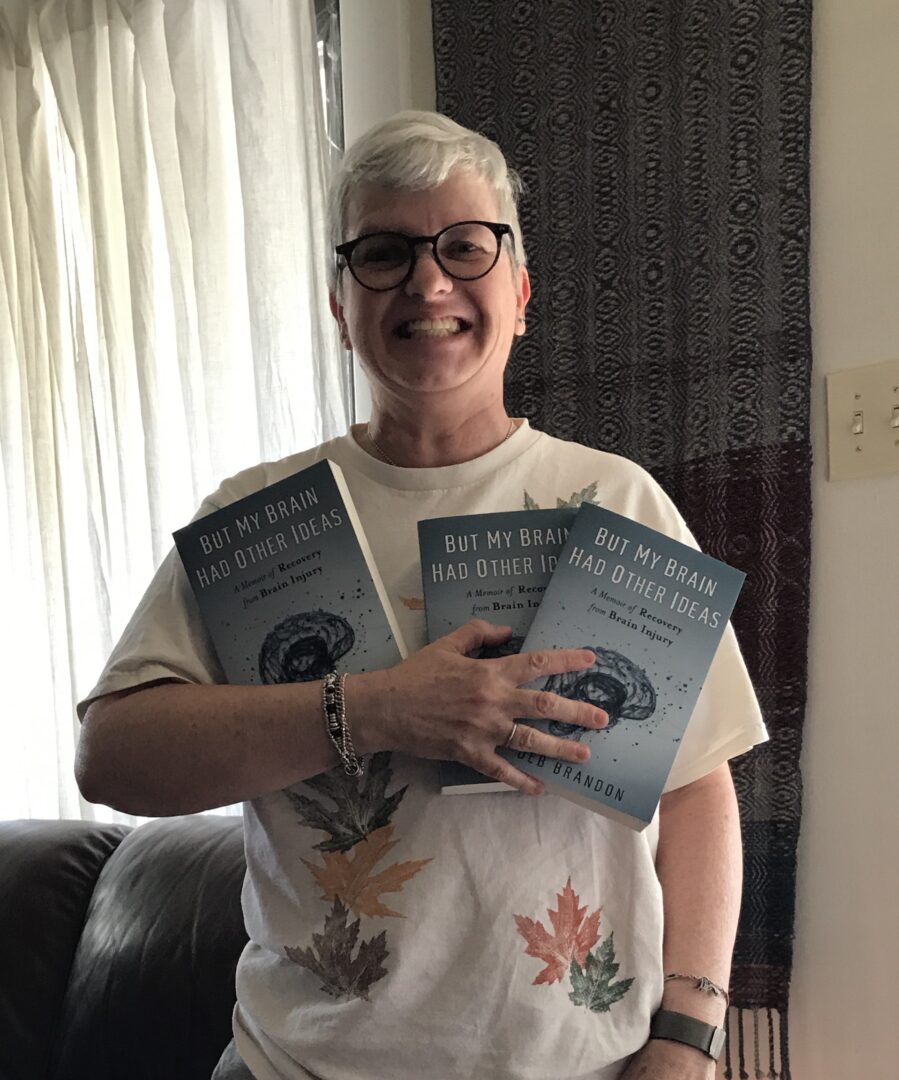
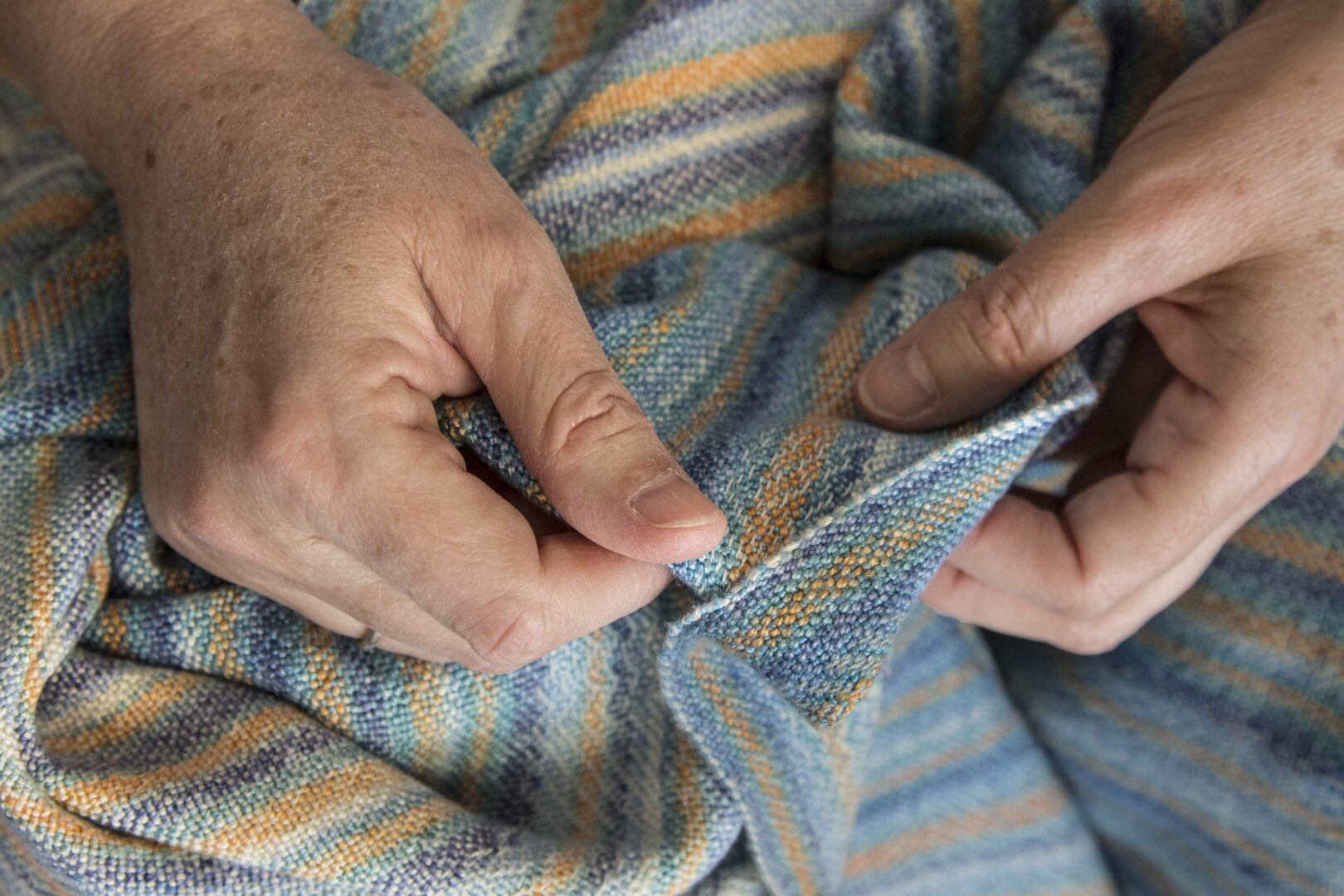
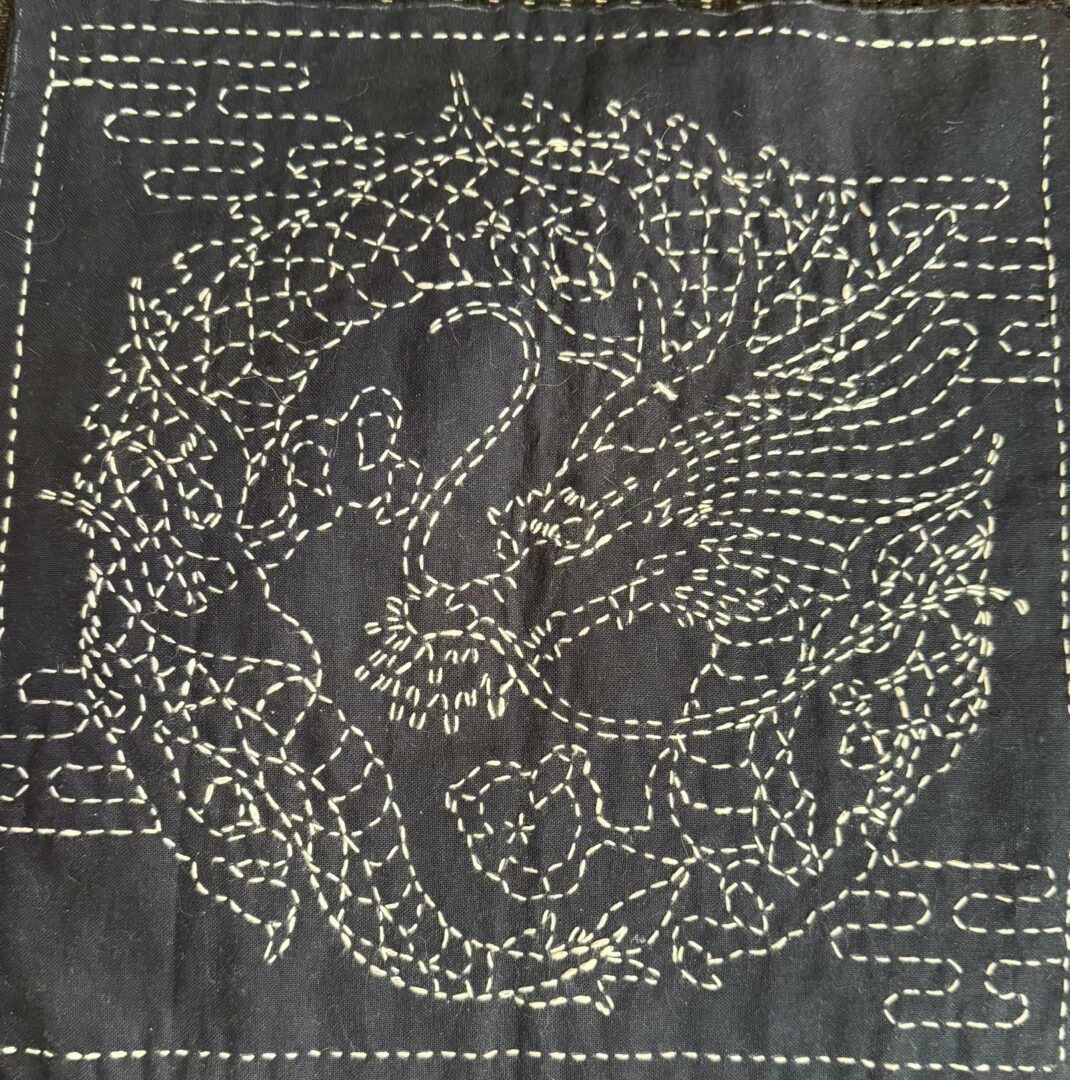
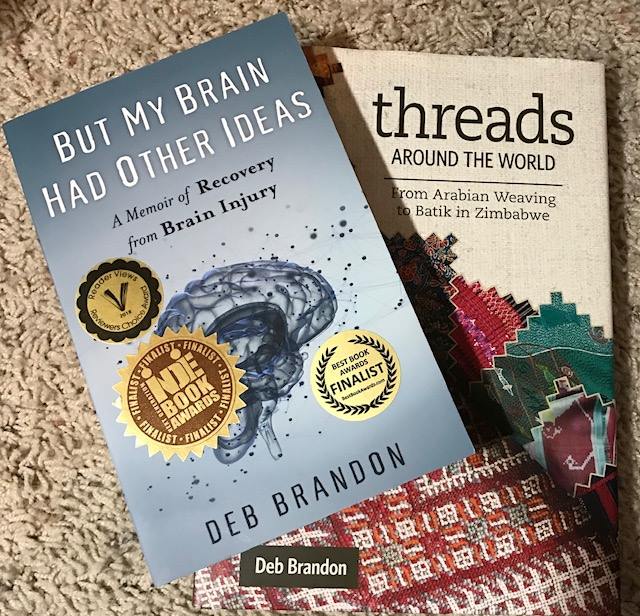
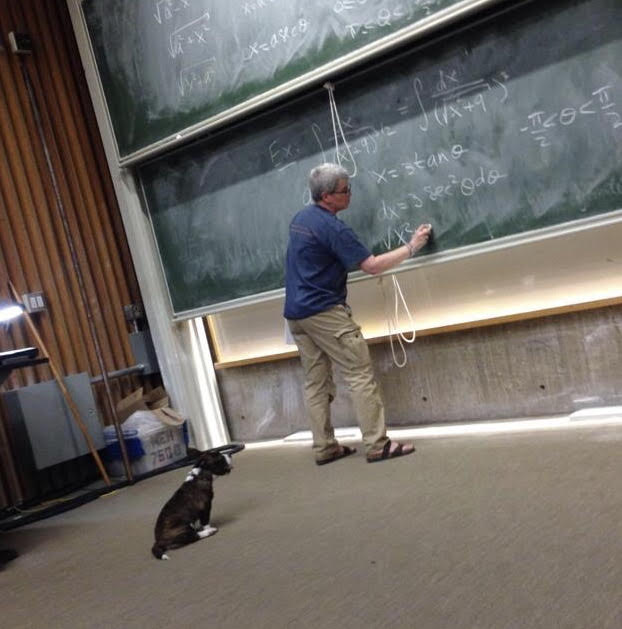
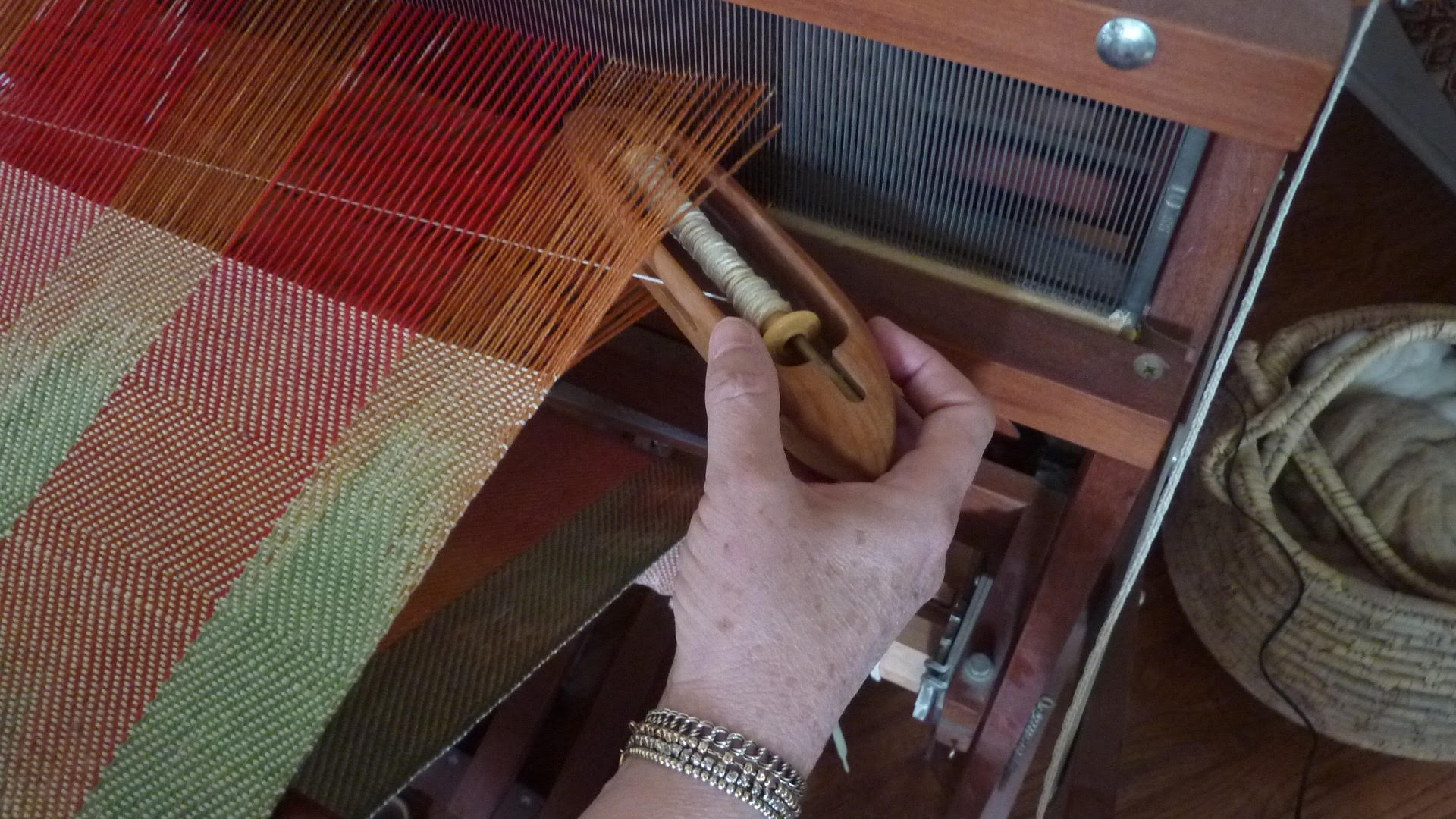
Image Credits
Deb Brandon
Brendan Wiant
Judy Fort Brenneman
so if you or someone you know deserves recognition please let us know here.