
We recently had the chance to connect with Dr. Shveata Mishra and have shared our conversation below.
Good morning Shveata, we’re so happy to have you here with us and we’d love to explore your story and how you think about life and legacy and so much more. So let’s start with a question we often ask: What are you most proud of building — that nobody sees?
What I’m most proud of building is an internal architecture, a way of living, working, and responding that didn’t exist naturally for me, but had to be learned slowly and intentionally.
Much of my work is visible: the books, the research, the teaching, the performances, the public conversations around music, psychology, and healing. But what people don’t see is the quieter structure underneath it all, the discipline of emotional regulation, the ability to sit with complexity without rushing to resolve it, and the capacity to hold space for others without abandoning myself in the process.
As a music psychologist and therapist, I’m often invited into people’s most vulnerable inner worlds. Over time, I realized that credibility doesn’t come only from degrees or experience, but from how well you can stay grounded when things are uncertain, intense, or unresolved. I’ve spent years building that steadiness learning when to speak and when to remain silent, when to act and when to wait, when to offer guidance and when to simply witness.
I’m also proud of building a life where intellect, creativity, and care coexist without competing. Integrating scholarship with music, therapy with aesthetics, and rigor with intuition isn’t easy. It requires restraint, patience, and a willingness to move slowly in a world that rewards speed. Much of that integration happens privately in how I structure my days, protect my energy, and make decisions that favor long-term integrity over short-term visibility.
What nobody sees is how much of my work is about not doing not reacting impulsively, not over-explaining, not chasing every opportunity, not diluting my voice. That inner filtering system took years to build, and it continues to evolve.
I’m proud of that invisible foundation, because everything meaningful I create rests on it.
Can you briefly introduce yourself and share what makes you or your brand unique?
I’m Dr. Shveata Mishra, a music psychologist, therapist, Indian classical vocalist, author, educator, and speaker. My work sits at the intersection of the psychology of music, sound, vibration, aesthetics, and emotional regulation, exploring how human beings are shaped not only by what they think, but by what they repeatedly hear, feel, wear, and embody.
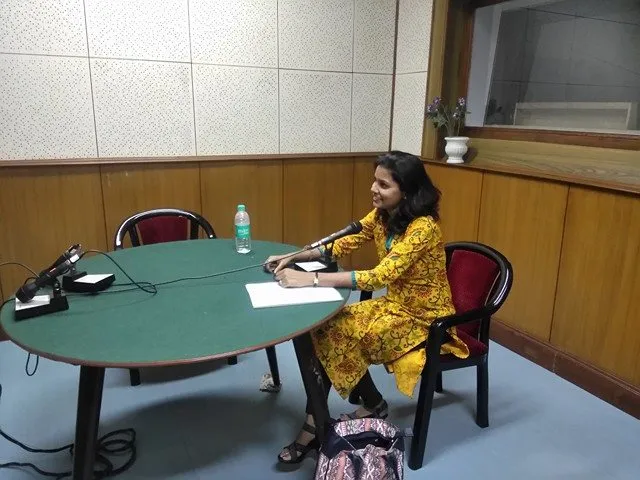
I hold a Ph.D. in the Psychology of Music and have spent over a decade teaching, researching, and working across academic, artistic, and therapeutic spaces. I’m currently an adjunct faculty member at Banasthali Vidyapith and have taught internationally, while also maintaining an active creative life as a graded artist with All India Radio. Over the years, I’ve authored multiple books and peer-reviewed publications examining how music, rhythm, and sensory experience influence personality, behavior, stress, and emotional well-being.
What makes my work distinctive is its interdisciplinary nature. Rather than treating music as entertainment or therapy in isolation, I study and apply it as biological and psychological instruction something the nervous system responds to before the mind has words. I’m equally interested in how aesthetics, personal style, and ritual function as emotional cues, shaping confidence, identity, and inner coherence. Through my personal brand, Shveata Mishra SM, I bring these elements together to help individuals and professionals understand themselves more deeply and live with greater alignment.
My work spans research, teaching, writing, therapy, and public scholarship. I collaborate with universities, institutions, and media platforms, and I also design structured programs, courses, and workshops that translate complex psychological ideas into practical, embodied tools. Whether I’m working with students, professionals, artists, or organizations, my focus remains the same: helping people regulate their inner world so their outer life feels intentional rather than reactive.
At this stage of my journey, I’m especially focused on building long-form educational work courses, writing, and frameworks that allow people to engage with emotional health, creativity, and self-expression in a grounded, non-performative way. I’m less interested in quick fixes and more committed to depth, integrity, and work that holds up over time.
Everything I do is guided by one core belief: when sound, psychology, and aesthetics are aligned, transformation doesn’t have to be forced, it unfolds naturally.
Thanks for sharing that. Would love to go back in time and hear about how your past might have impacted who you are today. Who saw you clearly before you could see yourself?
The first person who saw me clearly was my father. Long before I had the language for psychology, music, or identity, he recognized my inclination toward depth, discipline, and inner focus. He didn’t push me toward visibility or achievement for its own sake; instead, he quietly emphasized commitment, sincerity, and the importance of doing things properly, even when no one is watching. That early grounding shaped how I relate to work and responsibility to this day.
As I grew, that early recognition was reinforced by my gurus in Indian classical music. They taught me to listen before I performed, to respect silence as much as sound, and to understand that sensitivity is not weakness if it is trained with rigor. They saw that I absorbed not just notes, but emotion, intention, and atmosphere and instead of asking me to simplify that sensitivity, they helped me refine it. Much of how I work with people now, psychologically and therapeutically, comes from that training.
During my doctoral journey, my Ph.D. supervisor and mentors saw something else clearly: that my thinking did not belong neatly to one discipline. At a time when interdisciplinary work required courage, she supported my instinct to bridge music, psychology, and lived human experience. She didn’t ask me to narrow my questions; she encouraged me to deepen them. That affirmation was pivotal in helping me trust my intellectual voice.
Later, my husband became another important presence in this lineage of seeing. In a different way, he recognized my inner intensity and need for purpose, even when I was still learning how to balance ambition with steadiness. His support brought structure and grounding to a life that is deeply reflective and inwardly active, allowing me the space to grow without having to fragment myself.
What connects all these people is that none of them tried to make me louder or faster. They helped me become more precise, more rooted, and more patient with complexity. Because I was seen early for depth rather than display, I’ve been able to build a life and body of work that values integrity over imitation and that continues to guide me as I evolve.
What did suffering teach you that success never could?
Suffering taught me restraint.
Success can be energizing, affirming, and expansive but it doesn’t always teach discernment. Periods of difficulty, uncertainty, and inner friction forced me to slow down and listen more carefully to myself and to others. They taught me that not every problem needs an immediate solution, and not every emotion needs to be resolved in order to be understood.
Through challenging phases, I learned how much of human distress comes not from pain itself, but from the pressure to appear unaffected by it. As a music psychologist and therapist, this realization fundamentally shaped how I work. I stopped seeing resilience as toughness or endurance, and began to understand it as the ability to stay present without becoming reactive or self-abandoning.
Suffering also clarified the difference between control and regulation. You can’t control life, circumstances, or even emotional responses but you can learn how to regulate your inner state, choose your pace, and protect your nervous system. That insight became central to both my personal life and my professional work with sound, rhythm, and emotional regulation.
Perhaps most importantly, difficult periods taught me humility the kind that success rarely demands. They reminded me that depth is built quietly, that clarity takes time, and that meaningful work often grows beneath the surface long before it becomes visible.
That understanding continues to guide how I teach, write, and create. I’m less interested in overcoming struggle than in learning how to meet it with steadiness, intelligence, and care.
I think our readers would appreciate hearing more about your values and what you think matters in life and career, etc. So our next question is along those lines. What important truth do very few people agree with you on?
One truth I’ve come to hold and that not everyone agrees with is that emotional well-being cannot be solved purely through insight or information. Understanding why you feel a certain way is helpful, but it’s often not enough to change how you actually live, respond, or regulate yourself.
Through my work in music psychology and therapy, I’ve seen that the nervous system learns through repetition, rhythm, tone, and sensory cues long before it responds to logic or intention. People often believe that once they “understand” their patterns, change should naturally follow. In reality, lasting change usually happens when the body is given new experiences of safety, regulation, and coherence not just new explanations.
This is why I place so much emphasis on sound, timing, environment, and aesthetics as psychological tools, not accessories. The music you live with, the pace of your day, the way you present yourself, and the sensory world you inhabit all quietly train your emotional responses over time. These elements shape behavior as powerfully as beliefs do, even though they’re rarely addressed in conventional conversations about mental health.
I’ve learned that transformation doesn’t always come from effort or self-analysis. Often, it comes from designing conditions that allow the nervous system to settle, adapt, and reorganize naturally. That perspective isn’t always popular in a culture that values speed and constant self-improvement but it’s one I continue to stand by, because I’ve seen how deeply it works.
Thank you so much for all of your openness so far. Maybe we can close with a future oriented question. If you laid down your name, role, and possessions—what would remain?
What would remain is attentiveness.
Long before titles or roles, I learned to listen to sound, to silence, to people, and to the spaces between what is said and what is felt. That quality has stayed with me across every phase of my life, whether as a student, artist, researcher, teacher, or therapist.
If everything external were removed, what would remain is the ability to stay present with complexity without needing to rush toward conclusions. A respect for process over performance. A commitment to depth, even when it is slower and less visible.
At my core, I’m someone who observes carefully, works patiently, and believes that meaningful change happens quietly, through consistency and integrity rather than force. I value steadiness over spectacle, understanding over explanation, and alignment over achievement.
Beyond names and possessions, what remains is the intention to leave people and spaces more regulated, more aware, and more connected to themselves than they were before. That has guided my work across disciplines, and it’s what I hope continues to move through whatever I create next.
Contact Info:
- Website: https://www.shveatamishra.com/
- Instagram: https://www.instagram.com/dr.shveatamishra/
- Linkedin: https://www.linkedin.com/in/dr-shveata-mishra/

so if you or someone you know deserves recognition please let us know here.