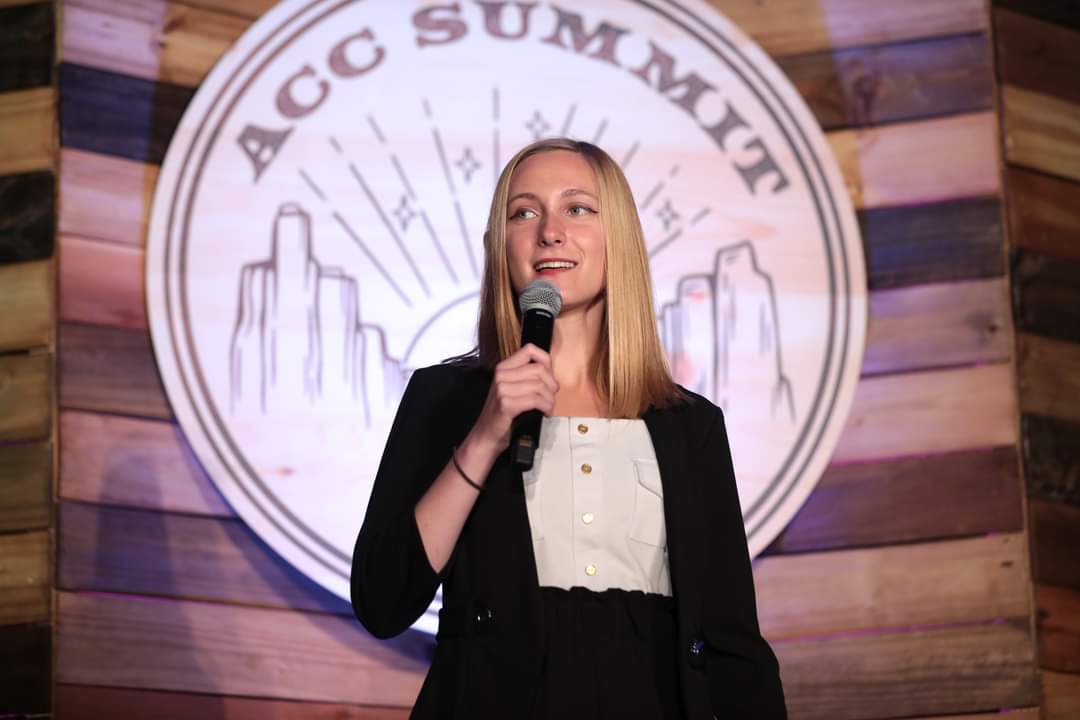
Kate Wexell shared their story and experiences with us recently and you can find our conversation below.
Hi Kate, thank you so much for taking time out of your busy day to share your story, experiences and insights with our readers. Let’s jump right in with an interesting one: Have any recent moments made you laugh or feel proud?
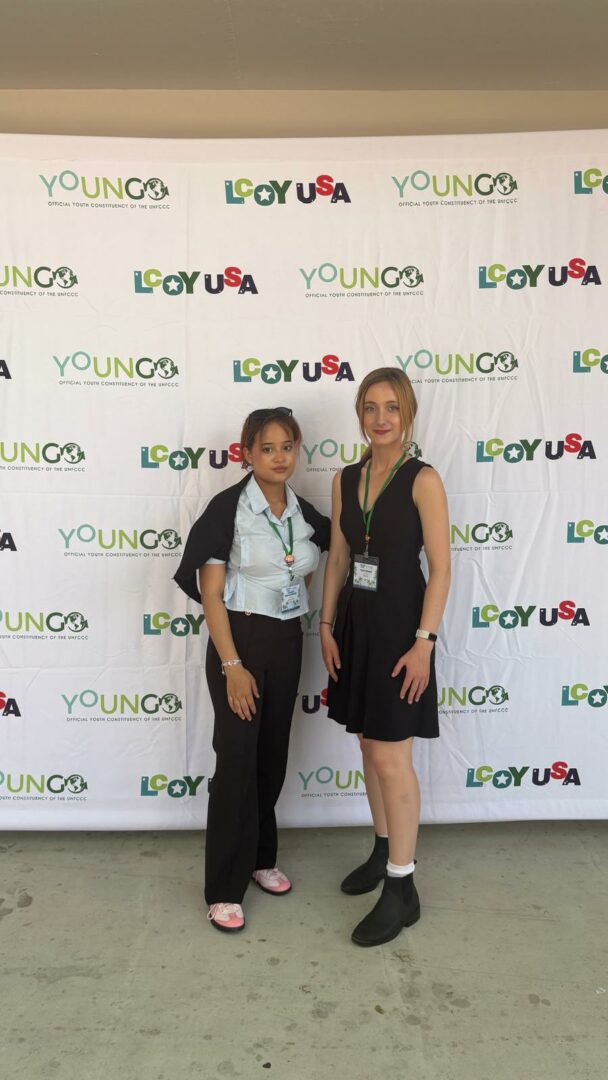
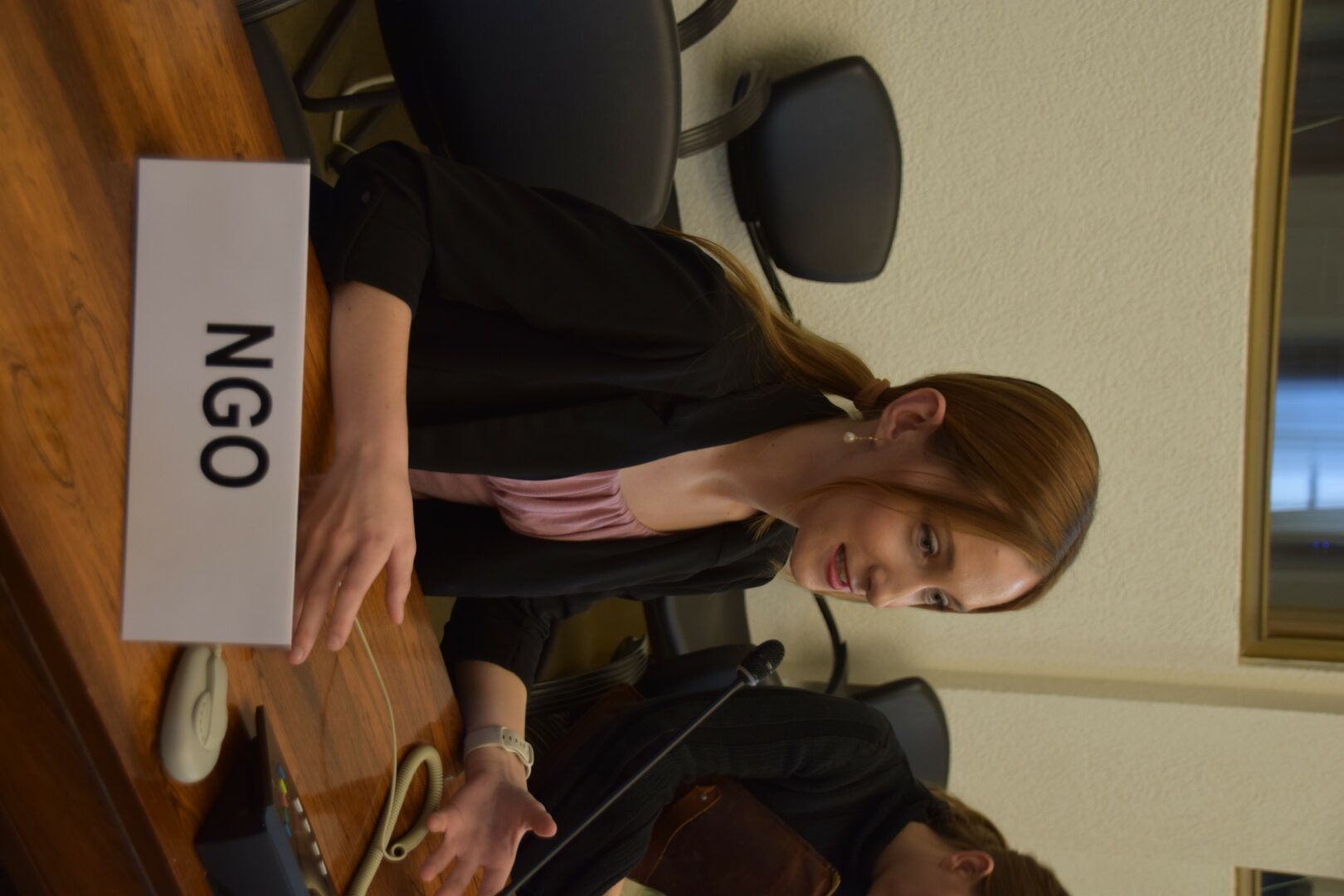
A few weeks ago, I was selected to go to the United Nations Headquarters in Geneva, Switzerland, for the Social Forum on Human Rights. This conference brought together global delegates to discuss educational issues.
Having previously run an educational nonprofit, The Compass Online, I was ecstatic to discuss better ways to approach education from a sustainability lens. I was glad to talk and examine how many of the United Nations policy frameworks make broad recommendations, but don’t focus on a specific action plan or step-by-step guide. The argument is always that “every country is unique.” However, there are universal truths about how people react to educational formats across cultures.
During high school, I was the president of the Model United Nations team. It may not have been as fun as pretending to nuke China during our fake simulations, but it was an incredible moment to stand in the actual Palais de Nations only a few years later, talking to delegates.
Can you briefly introduce yourself and share what makes you or your brand unique?
Having worked with over ten non-profits in the sustainability space, I always hear, “We don’t have the money to fund projects that are designed to help people.”
That is why I am writing the upcoming book, Fundraising for a Cooler Planet.
At nineteen, I graduated from college and began working in nonprofit fundraising in Silicon Valley. I became the youngest professional employee for Scouting America in the country, and one of the youngest fundraising professionals in the world. Over one year, I raised $750K through grants, hosting galas and 5K races, and through asking individuals for large donations. Since then, I have completed freelance work with several Bay Area nonprofits to establish and strategize their fundraising systems.
Now, I am studying an MSc in Climate Change, Management, and Finance at Imperial College London, the #2 university in the world. My goal is to share step-by-step financing mechanisms with people working on sustainability projects, whether it’s children completing a school project, a small nonprofit, or a social innovation startup.
We need more people working in the climate space to solve these problems. I want to help people branch out beyond grants and consider alternative funding to make a cooler future a reality.
Amazing, so let’s take a moment to go back in time. What did you believe about yourself as a child that you no longer believe?
When I was a child, I believed that I hated STEM. While I had fun memorizing the periodic table of elements, I remember feeling frustrated with my group for my robotics team and despising making diagrams of the stages of mitosis and meiosis.
Then, on the weekends, I would participate in conservation projects through Scouting. I would help to cut down invasive honeysuckle, teach little girls about recycling, or run workshops about water. I did enjoy STEM, but just didn’t know that was its label.
I realized that to solve climate change, we need people to understand numbers. Whether it’s building projections for climate models, training artificial intelligence to optimize systems, or being an engineer to construct new energy technology, it revolves around numbers.
Even if somebody isn’t a numbers person, being able to understand basic balance sheets and financial concepts is key! So much work happens through funding and policy initiatives that are data-driven to ensure leaders are making sound decisions for their stakeholders.
What did suffering teach you that success never could?
When I was nineteen, I left my college campus in Columbia, Missouri. I packed four suitcases, bought a container of pepper spray, and moved to the Tenderloin of San Francisco. Known as one of the worst drug-dealing neighborhoods in America, I was chased by fentanyl addicts and catcalled almost daily.
Over the course of two years living in San Francisco, I moved seven times and struggled to live on a student salary. However, the struggle pushed me harder, taught me how the vast majority of people live, and encouraged me to solve societal problems.
About 80% of Americans live paycheck to paycheck. The worry I felt about my bank account when I received a $100 parking ticket was the same worry that most people struggle with. Handling landlord disputes at the age of 20 showed me how to humanize people around the world going through conflict. Even being chased by drug addicts encouraged me to join a social entrepreneurship group in San Francisco that worked to solve homelessness in San Francisco and learn more about why people end up on the streets.
If I am going to make a difference in policy, I need to understand how most people think. That is what suffering taught me.
It also encouraged me to find alternatives in life. I couldn’t afford to pay for college tuition, so I decided to take an average of 24 credit hours per semester and finish my bachelor’s degree in two years. I graduated at nineteen years old in May of 2024 and have been giving back by helping over a dozen students apply to college each year.
So a lot of these questions go deep, but if you are open to it, we’ve got a few more questions that we’d love to get your take on. What’s a belief or project you’re committed to, no matter how long it takes?
I genuinely believe that humanity will not be devastated by climate change. I will work as hard as possible to prevent suffering from climate change in the future.
Sometimes, it feels like people are polarized when it comes to climate issues. People either believe that nothing is happening or they believe that we are doomed. The reality is in the middle: there will be about twenty-five more years until we hit a 2C warming. However, companies are rapidly decarbonizing, nuclear fusion is coming online in the next five years, and new grid technologies are making it easier to store and deploy renewable energy.
I think that we will see a transition in the near future that requires a firm balance of policy and financing. We have the technology we need to decarbonize our world, such as nuclear batteries, nuclear fission, and nuclear fusion. However, we need to make it easier for people to construct nuclear power plants in a short timeframe and finance projects to further nuclear development.
Before we go, we’d love to hear your thoughts on some longer-run, legacy type questions. What is the story you hope people tell about you when you’re gone?
I hope people remember me for the quality of help I could provide. I want to work on solving climate change and helping people live more balanced, productive lives.
My goal is to build a cleantech company in the energy space that can revolutionize the way people live. With the proceeds, I want to give back to the nonprofits and new leaders that have helped me along the way through seed-stage impact investing and operating a foundation.
I hope to use my platform to help people with early career guidance, discovering their passions, personal finance, and fundraising to create their own innovations. I believe that everybody has their own unique role in the world and that we can do anything we’re designed for, so long as we understand the steps necessary to achieve our goals.
Contact Info:
- Website: https://katewexell.com/
- Instagram: https://www.instagram.com/kate.h.wexell/
- Linkedin: https://www.linkedin.com/in/katewexell/
- Twitter: https://x.com/katehwexell
so if you or someone you know deserves recognition please let us know here.