Rick Steinburg shared their story and experiences with us recently and you can find our conversation below.
Hi Rick , thank you so much for joining us today. We’re thrilled to learn more about your journey, values and what you are currently working on. Let’s start with an ice breaker: Have you ever been glad you didn’t act fast?
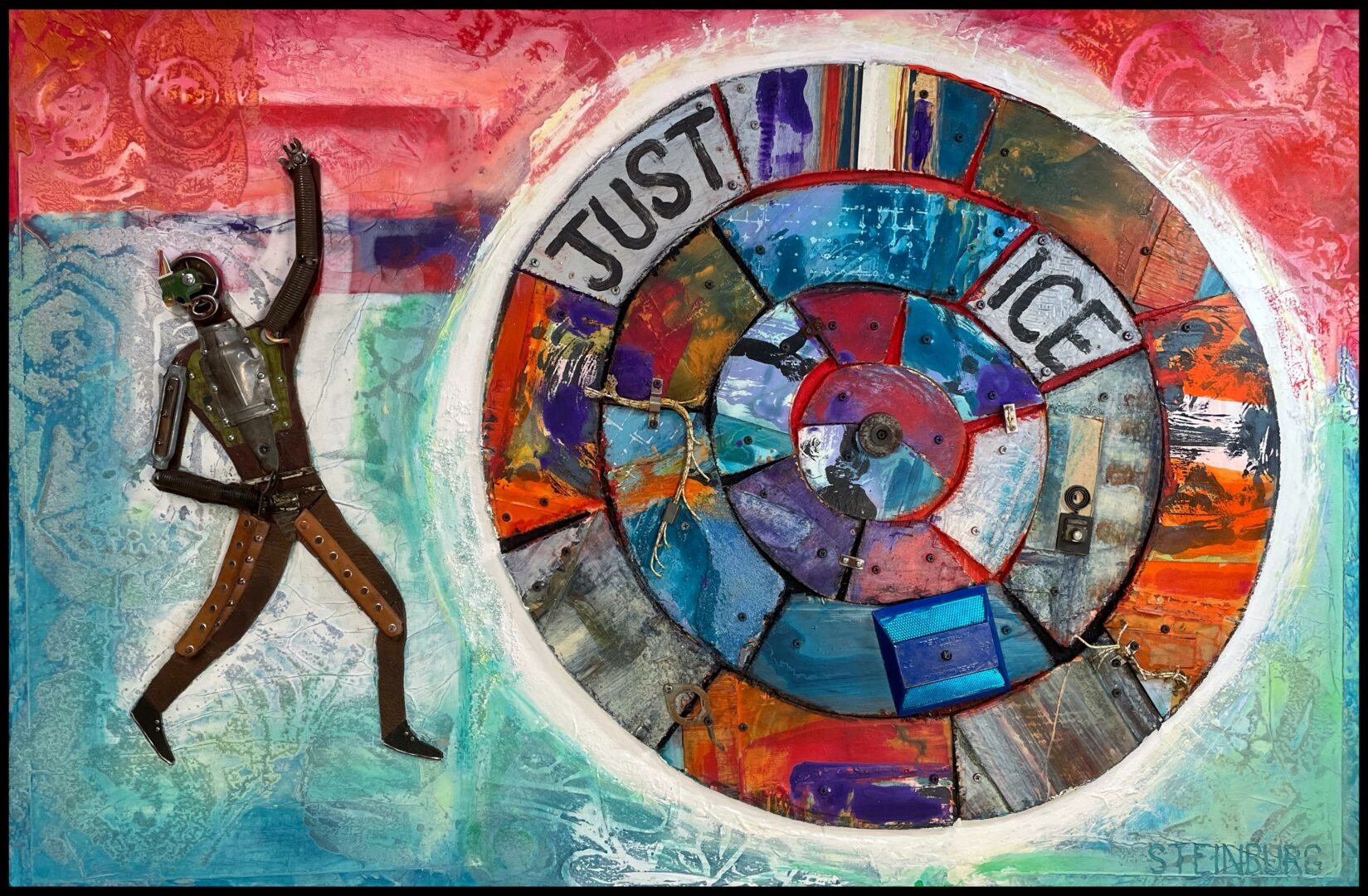
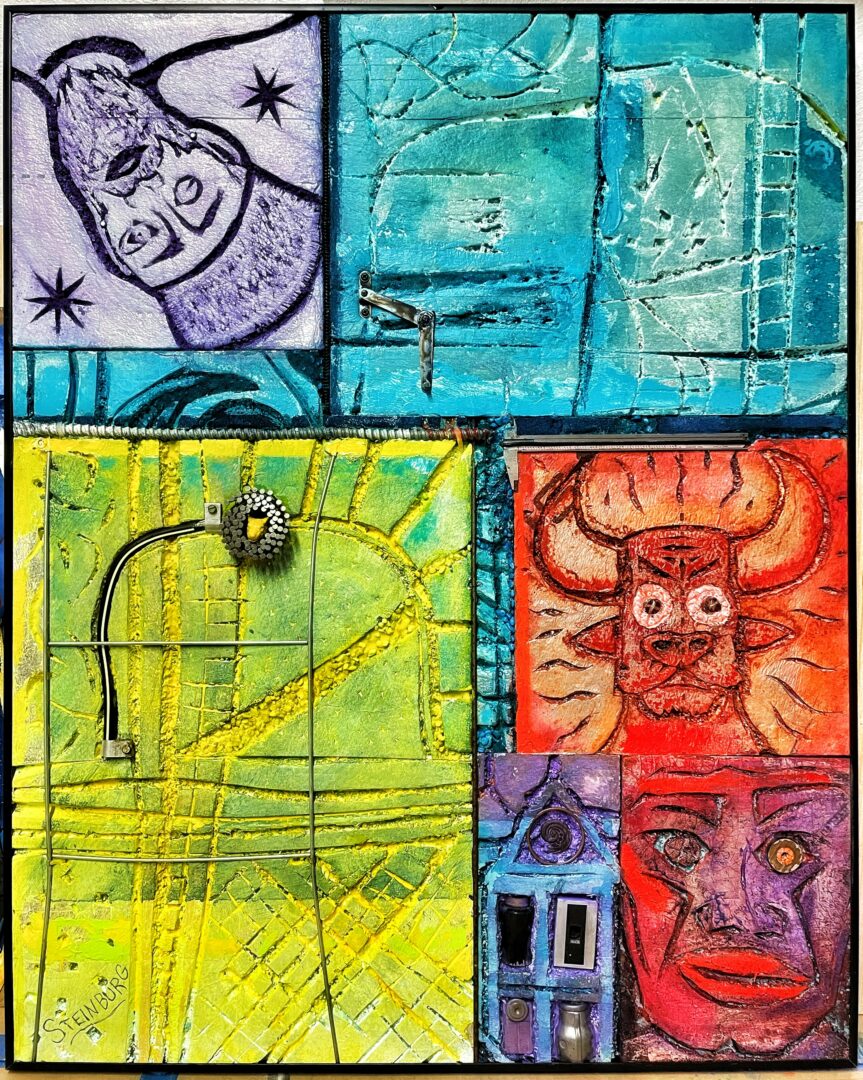
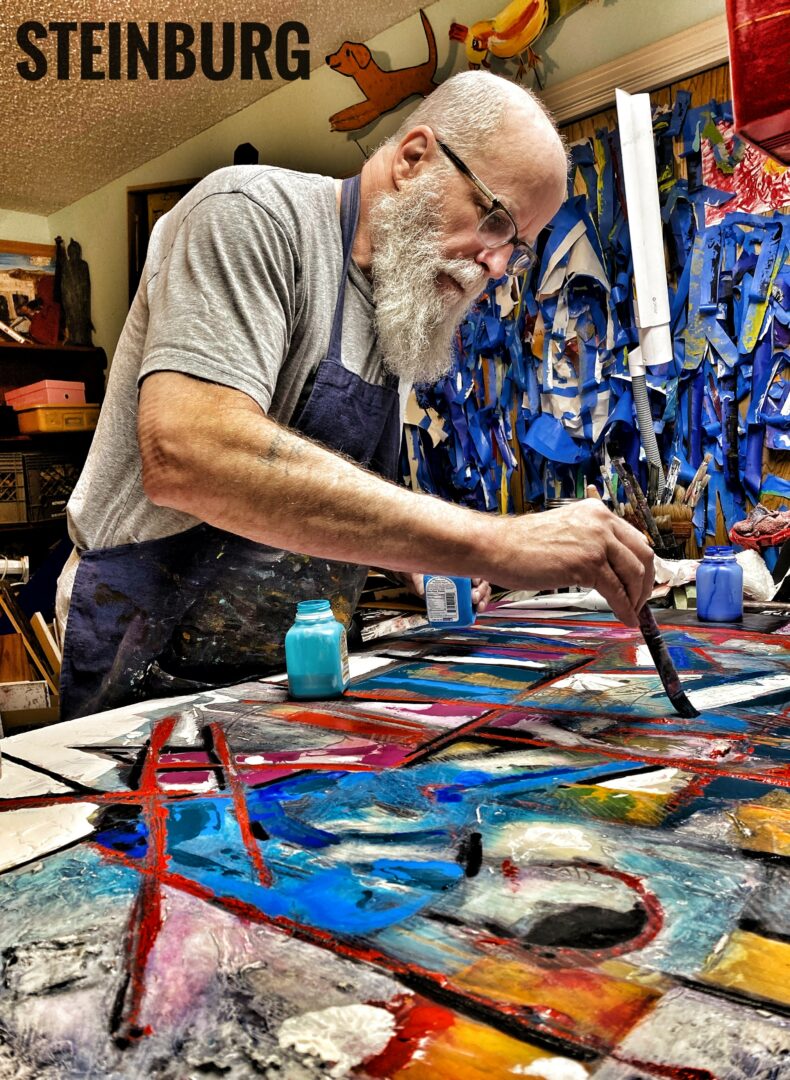
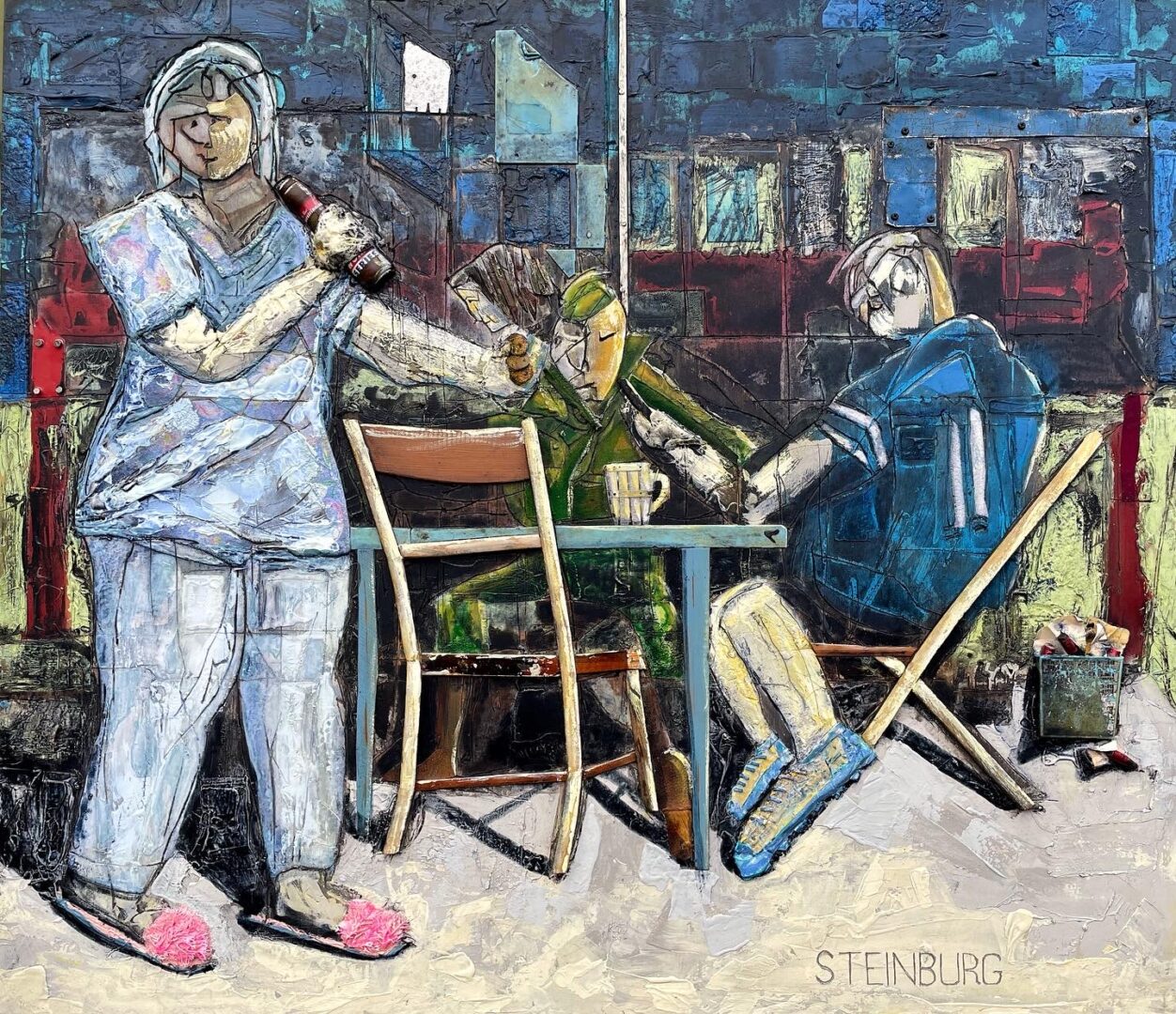
Yes, many times I have been glad that I didn’t act quickly to resolve something. When we moved to San Marcos, we needed a fence for our dogs, but we needed to wait until we had sold our house in Austin. We had planned to fence in the backyard area directly behind our house. We soon noticed that the deer moved across the yard to get to a wooded area that was part of our property. We had gotten a temporary fence which made a small grassy area for our dogs, which didn’t disturb the deer. We left water for the deer and enjoyed watching their daily activity. When we had a permanent fence built, it was a bit larger to give the dogs room to run, but still left plenty of room for the deer. If we had moved more quickly we probably wouldn’t have been happy with the results. This attitude of consideration before taking action also works well in my creative process. Sometimes the flow of working on a new artwork goes quickly and everything falls into place; but many times I will come to a place where I’m not sure where the process needs to go next. Then it’s time to slow down and consider the possibilities. It’s very important then to take a good look at where the piece is and listen to what it is telling you about what it needs to move forward. Sometimes I use digital photos of the piece in progress and make use of editing tools to manipulate the color and other visual elements that exist at that point. Many times this will suggest the direction that the piece needs to go to move forward. If I’m using repurposed materials or found objects, it’s important to consider things like color and texture, as well as how these materials relate to the atmosphere or narrative that I’m trying to create. I enjoy this part of the process, and I find that the time spent contemplating my options many times elevates the artwork beyond what I may have originally envisioned.
Can you briefly introduce yourself and share what makes you or your brand unique?
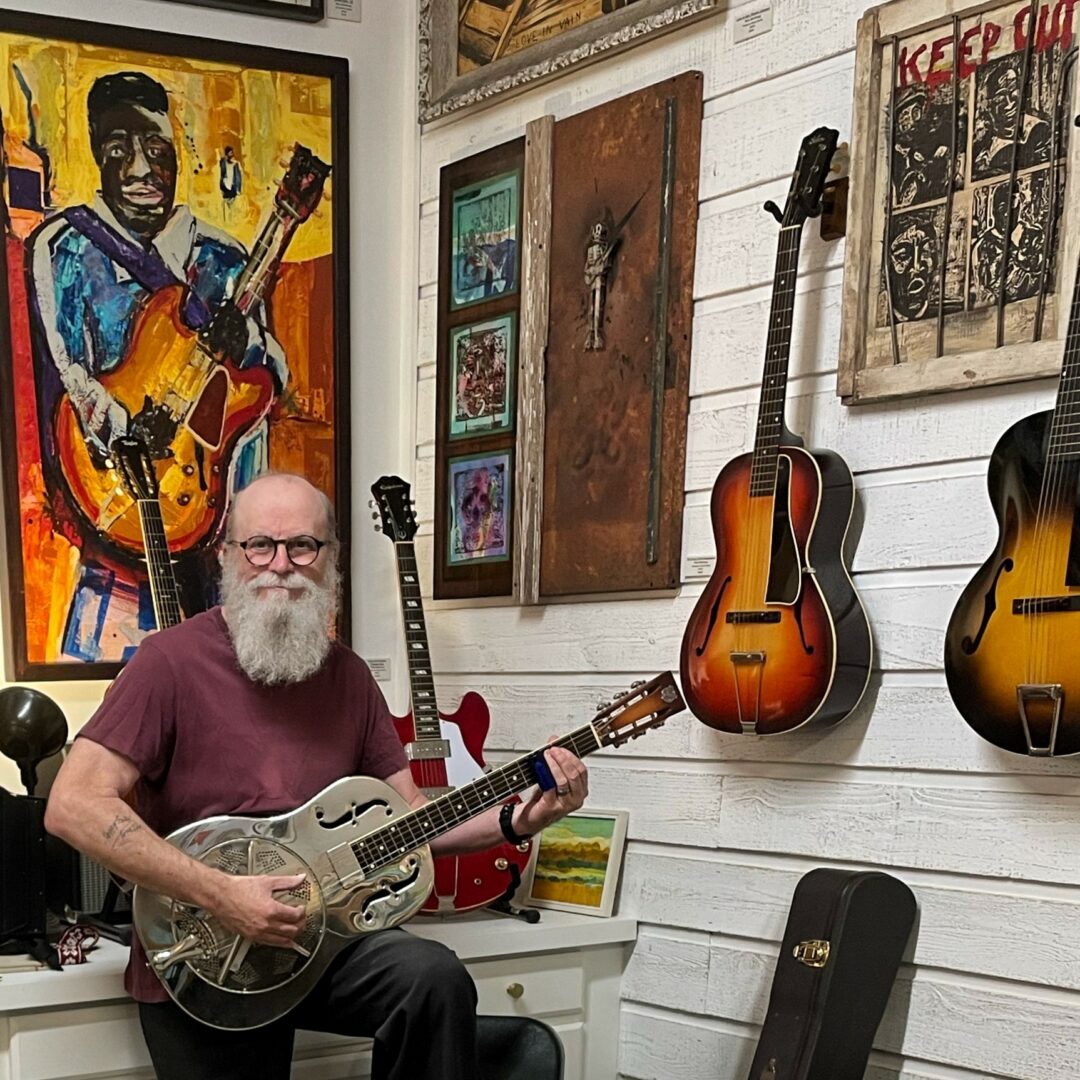
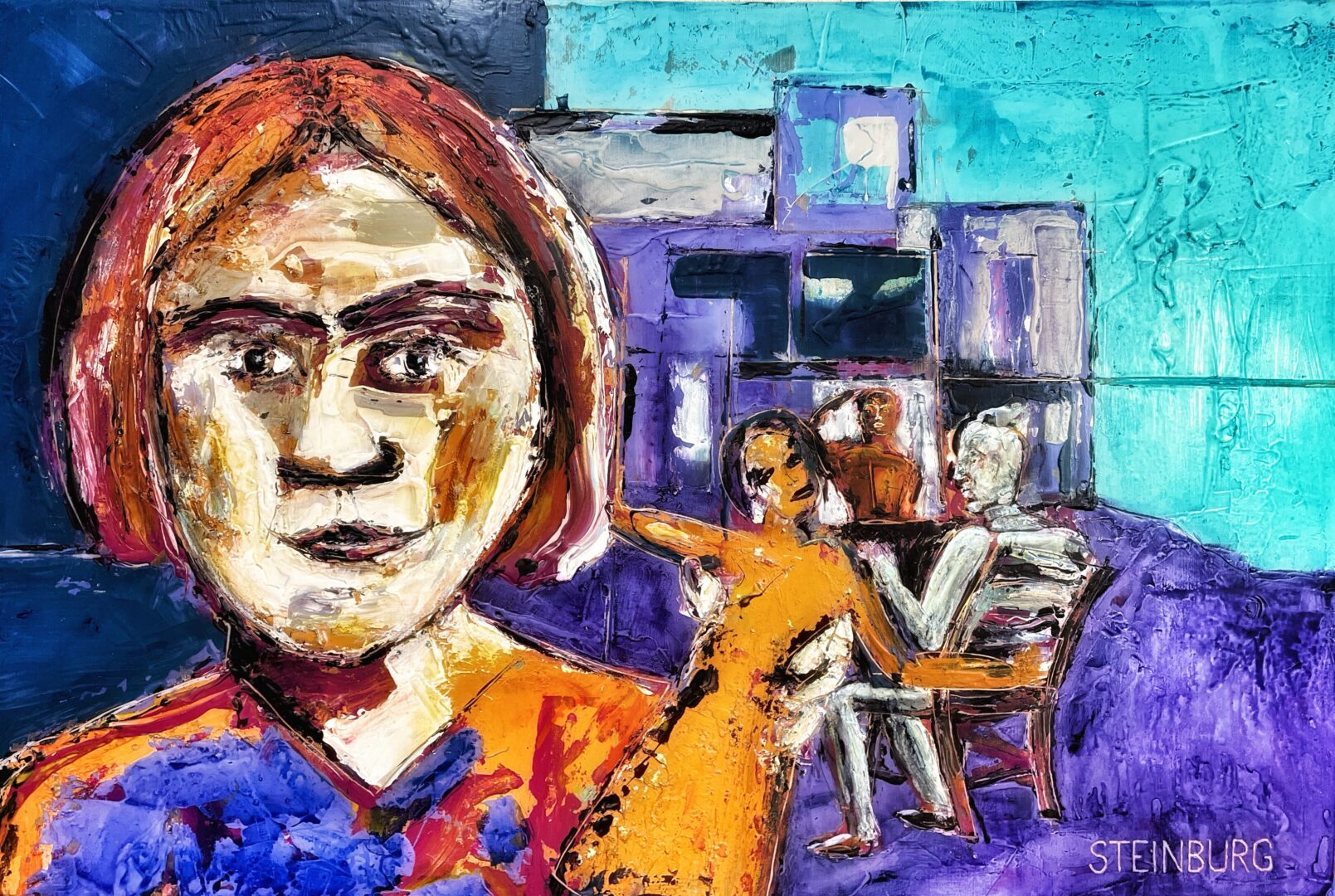
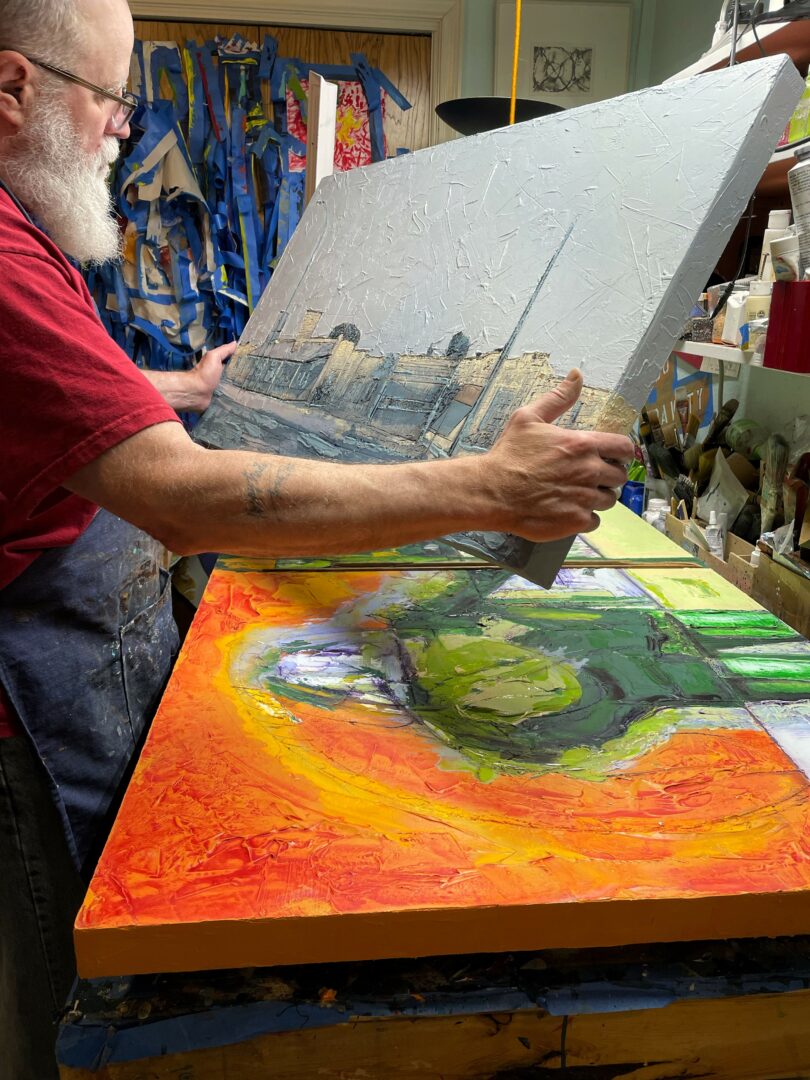
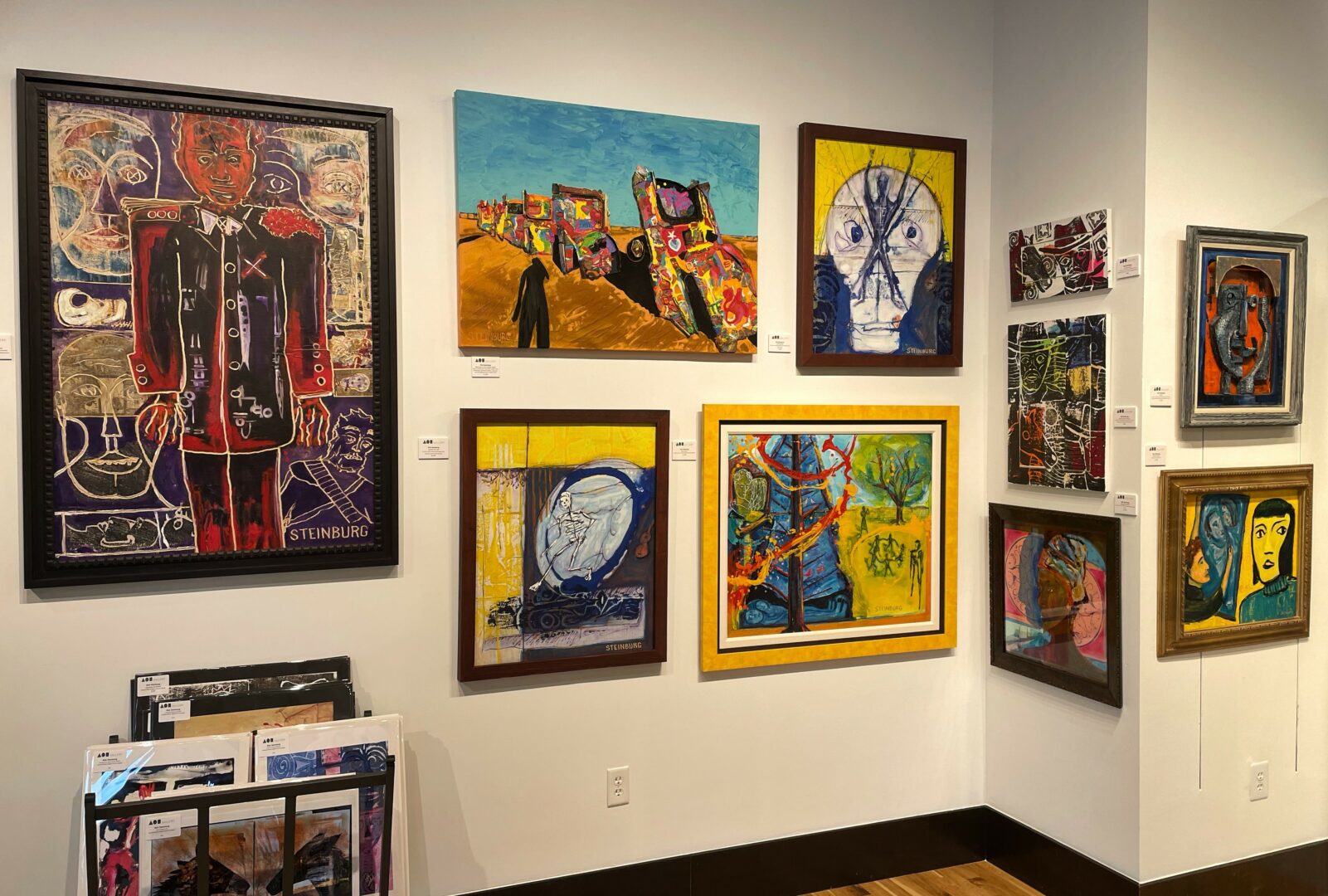
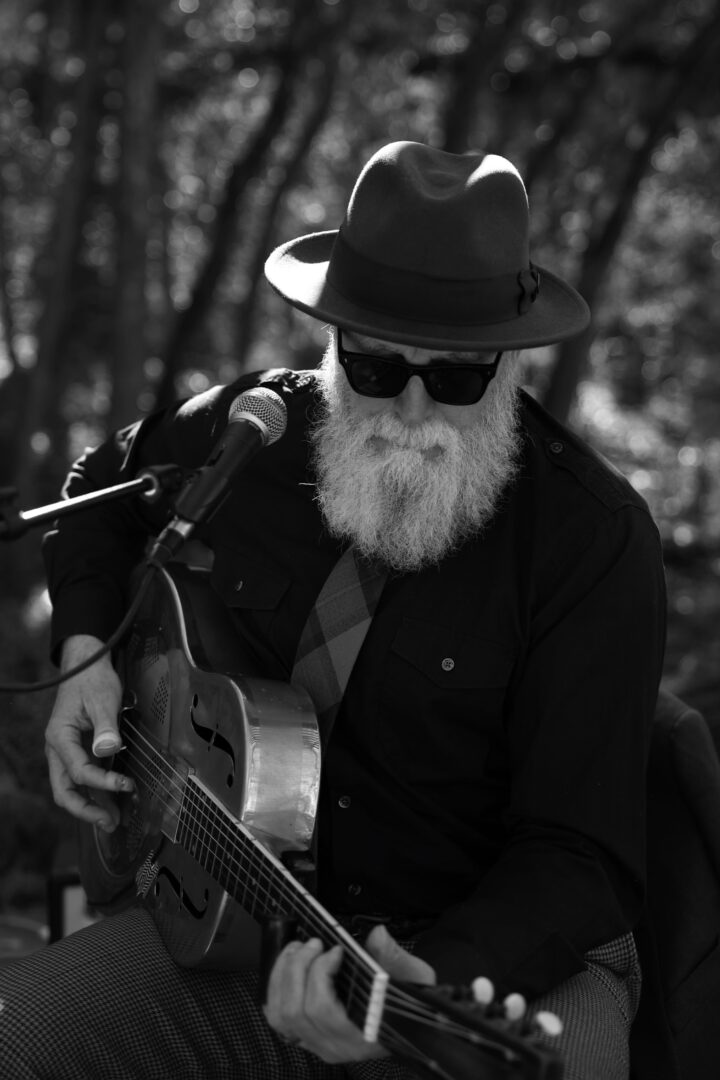
I am a San Marcos, Texas based visual artist and musician. After 43 years in Austin, we relocated to San Marcos. I had a studio added on to our house, which was completed in April, and I have been working there ever since. As an artist, I create compositions that combine painting with the use of found objects, printmaking, and collage. As a musician, I am a roots blues singer/songwriter who plays guitar and harmonica; sometimes under the name Stone House. I have recently begun to play the button accordion, which I plan to incorporate into my repertoire in the future. I spent 34 years teaching art and music to elementary school students. That experience helped me develop a strong sense of the creative process that enables me to produce music and visual artworks. I have been a fairly prolific artist for nine years, with a body of work that numbers around 400 completed artworks. I have been fortunate to have opportunities to exhibit my work in a number of venues in and out of Texas.
Thanks for sharing that. Would love to go back in time and hear about how your past might have impacted who you are today. Who were you before the world told you who you had to be?
I feel like I spent most of my adult life rebelling against anyone who told me who I had to be. After a childhood where I felt somewhat afraid to express myself, I discovered my creativity near the end of high school and that carried me into college with a love of art and music. My father encouraged me to consider teaching; citing the uncertainty of being able to make a living as an artist. It was one bit of advice that I listened to. He was a professor of painting at Illinois State University and an Abstract Expressionist painter. I had seen how his commercial success as an artist ebbed and flowed through the years even though the quality of his work was consistently good. On the other hand, he had the freedom to create as he saw fit, so there was a balance which he was satisfied with. Fortunately, I liked teaching, especially the younger students who tended to be naturally creative. I knew that I wanted to have a family, so steady employment was essential. I managed to keep my personal creativity alive during the years that I taught by making art and playing music; and before I knew it, my children were grown and it was time for retirement. So now I am an artist and musician, which means I’m still learning and growing every day. So I feel like I resisted giving up my childlike wonder of life, while at the same time answering the responsibilities of being a public school teacher, a father, a husband, and a citizen. For me, I needed that balance to get to where I wanted to be. I have a wonderful family; and the freedom to be creative with my art and music.
What fear has held you back the most in your life?
The overarching fear that I have had since childhood is the fear of doing something wrong. This fear eats away at my self confidence; it makes me afraid of making mistakes. It also introduces guilt where it has no place in reality; where past mistakes can color current situations, making me feel guilt for failures that I had no active part in creating. Problems that I have no control over can make me feel guilty as if the failure is due to my shortcomings. In the past, the way this played out in creating art and music was that every good idea that I started with could get bogged down in worrying about failing in the next steps that are needed to bring the creation to fruition. I used to be consumed with the fear of messing up something In the process of finishing it. This would cause me to freeze up and stop making progress towards completing the project. How I got past this started when I saw the film: The Mystery of Picasso (Le mystère Picasso). In this film you watch the artist creating various artworks, which you see happening in real time or through stop action sequences. The thing that made the biggest impression on me was Picasso’s fearlessness. He would create a beautiful scene and in the middle of the process, he would paint over what he had created. Sometimes he used sketches on paper to collage over the existing artwork. In one real time ink drawing that he created, he painted what looked like cactus flowers; then painted a fish around the flowers. He then turned the fish into a rooster, and finally he covered the entire thing with a whimsical face. When I started producing artwork on a near daily basis, after retiring from teaching, I developed some changes in my attitude toward the fears that had plagued me in the past. My father, who was an artistic mentor to me, had passed away six months before I retired. I started making art with the thought of honoring my dad with making a few pieces somewhat in the manner of my father’s work, but it quickly became a daily part of my life. Sometimes I started with a definite idea and a plan to create an artwork that reflected that idea. But I always let the artwork guide me as I went along even if it was not part of my original plan. This worked well for me. If I saw a problem when I evaluated the piece in progress, and had an idea of how to resolve it, then I followed through with that. If the problem remained after my changes, I might have a second idea to solve it. But after two or three attempts to correct the problem, I knew that something bigger was keeping the piece from working. At this point something more radical needed to happen which was going to be a major change and would probably wreck part or all of what I had done so far on the piece. This involved pouring paint, adding collage elements or upcycled materials which covered or altered parts of the existing work. I had to accept that I couldn’t think much about protecting what I had in place. This made me much more fearless about proceeding. Every time I made this decision to radically change the piece, I ended up being much happier with the results and the artwork became much more interesting and closer to what I was looking for. Plus I felt better about my process. I was escaping my old anxieties about how to finish a piece. There was a freedom that I hadn’t experienced in my creative process before. I was unafraid of trying things without worrying about ruining a piece. My thinking became; If the artwork wasn’t working, it was already ruined. Sometimes a little time is needed for a piece to reveal what is needed. Sometimes I keep it within sight until the answer comes along. I call this letting it simmer. After completing several hundred finished artworks in the last ten years, I know that the solution to an unresolved piece will come in time, and the result will be much better than if I had kept hammering away at it without taking the time to consider the problem and the possibilities at hand. I actually enjoy the contemplation involved in cracking the code for any given artwork in progress.
Sure, so let’s go deeper into your values and how you think. Is the public version of you the real you?
For the most part, I think I’m pretty much the same whether in public or not; but I am more polite in most public situations. I tend to show up on time, look put together, watch my language, try not to talk too much, and be friendly. The circumstance where I am the most out there is when I’m playing music in public. Of course, because it is a performance. In my case, I want to be true to the roots style blues that is my main repertoire. In a way performing music is an extension of my life as a teacher. To be interesting to young children, you have to be a bit of a performer. And I enjoyed that part of my job. In that situation, I am more overtly enthusiastic and dramatic to try to get people excited about something.
Okay, so let’s keep going with one more question that means a lot to us: What is the story you hope people tell about you when you’re gone?
Well, it would be nice if a story about me including some of my better qualities. I hope to be a person who is Kind, truthful, fair minded, dependable; but also affectionate, playful, musical, creative, loving , and fun. These are my daily goals for every part of life. More specific to my calling to art and music would be a story of a life spent involving myself in the creative process. Starting with the exposure to the arts at a young age and an education heavy in the fine arts, I moved into a career teaching art and music. After thirty four years of teaching mostly elementary students; bringing my passion for art and music to the children of my community. I was also raising my own three daughters in that community where my wife and I taught and our girls attended school. The years when they went to elementary school with us were some of the best times we had as a family. Those years were spent working with the creative process with my students, my family, and in my personal development as an artist and musician. And I managed to weave these elements of my life together; when my music started taking me away from my family too much for my liking, I decided to work on having a family band. My family was naturally moving towards us playing music together; we just became a bit more purposeful about it. We did this for a dozen years and it took us to a lot of places we wouldn’t have visited without the music; and we met many friends along the way because of our little summer tours and local shows.
I retired from teaching shortly after my father died. I had looked forward to being able to spend more time with my parents in Illinois , but it played out differently than I had planned for. I had interviewed my dad the year before he passed and he was enthusiastic in talking about his art and process. He went right back into his college professor mode. I edited a ten minute segment of his thoughts on painting which I posted on YouTube. Our conversation in interviewing him really spoke to our perspective of the creative process. I was so lucky to have had the opportunity to record those conversations. The next thing I knew, he was gone and my world had changed. When retirement came I knew I wanted to do some visual art as a way to honor my father’s work. Ten years later, I had completed nearly four hundred finished artworks and had really road tested my creative process. During this time, there was lots of exhibitions, some success with juried shows, and a lot of rejections from shows and galleries along the way. I have exhibited with several galleries and enjoyed seeing a number of my pieces presented together in a professional setting. But the story is not over. After 42 years of living and working in Austin, we relocated to San Marcos in 2023. It took a while to get a new studio up and running, but I now have a great space to work and grow in and I have new surroundings to inspire me. In looking back, I’ve determined that continuing to learn and grow is my top goal for my creative work. I may have retired from full time teaching, but I look forward to continuing to work on my art and music. So, to sum up my story; I’m compelled by an elemental need to create.
Contact Info:
- Website: https://artworksricksteinburg.com/
- Instagram: ricksteinburgartworks stonehouseblues
- Facebook: ricksteinburgartworks stonehouseblues
- Youtube: https://www.youtube.com/@stonecastlemusic
so if you or someone you know deserves recognition please let us know here.