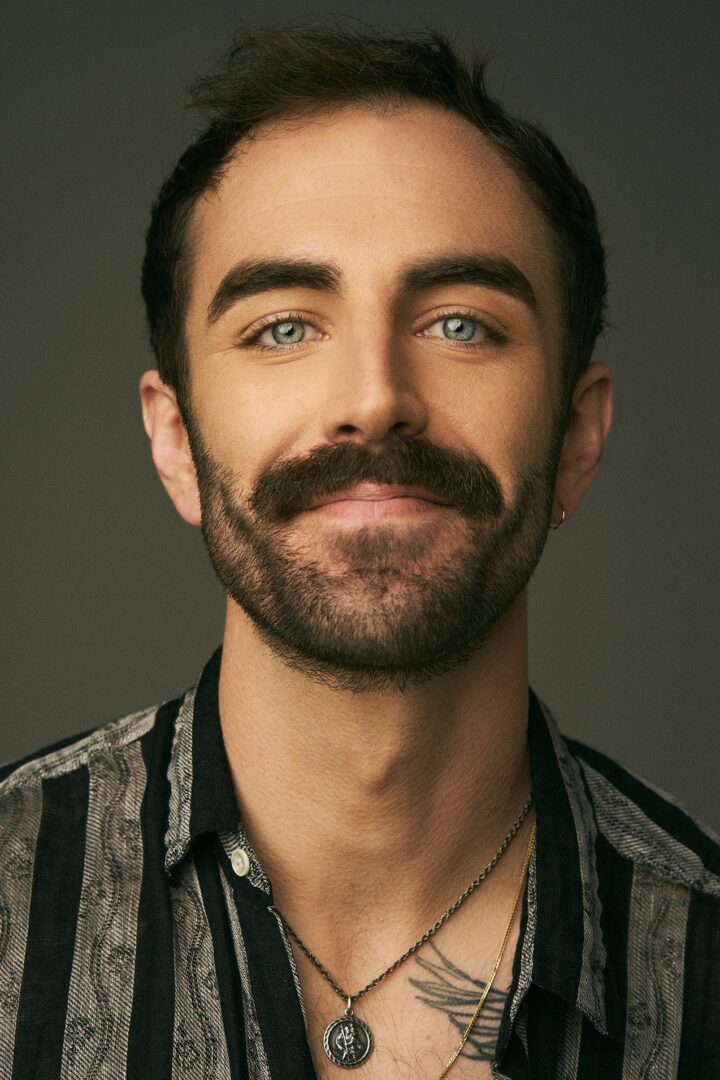
We recently connected with Aaron Cammack and have shared our conversation below.
Aaron, sincerely appreciate your selflessness in agreeing to discuss your mental health journey and how you overcame and persisted despite the challenges. Please share with our readers how you overcame. For readers, please note this is not medical advice, we are not doctors, you should always consult professionals for advice and that this is merely one person sharing their story and experience.
I am a person with an abject case of substance use disorder, and my “drugs of choice” were self-administered using a hypodermic needle. I’ve been sober since May 8, 2019.
First let me say this: that addiction — which for a long time now has been recognized as a health issue — is not ONLY a mental health problem. It’s a psychophysical problem that behaves as a spiritual tapeworm. It is a corrosive power that eats away at a person in much the same way other very serious biological diseases do. But a person with cancer or diabetes will typically be received with grace and kindness, with compassion and understanding. He’ll be encouraged toward healing and willingly supported by those in his life. Not so with addiction to substances.
All that to say, overcoming addictions can be a particularly lonely ordeal. By the time I had my last hoorah, I’d repelled everybody around me and isolated myself entirely. I’d been arrested six times in relatively quick succession, I’d lost my job, my home, my educational opportunities, my friends, my sense of dignity, and in many ways the will to continue on! But they say it tends to be darkest just before dawn, and that ended up true for me. Once I got sober, my system was simple. For the first couple years, I kept my head down, finished probation, centered my recovery, and focused on rebuilding what I had destroyed. I had to shift several long-standing paradigms, too, that just seemed to keep me stuck. It had always been a habit, for instance, to go into each moment thinking “what can I get out of this?” I was encouraged by a member of my treatment team to turn that thinking on its head and ask “what can I contribute” in each moment. Those shifts — however simple they read — were the key to my success.
More than five years from that last needle, precious relationships have been built or rebuilt, I’ve re-established my own stability emotionally, mentally, financially, and otherwise, and my work as an actor has suddenly become possible again.
Life is more beautiful than I ever thought possible.
And that’s the part we leave out so often when we talk about addiction. ROCK BOTTOM isn’t the only requisite to real, lasting change. Another vital ingredient is that the person believes that life can be BETTER on the other side.
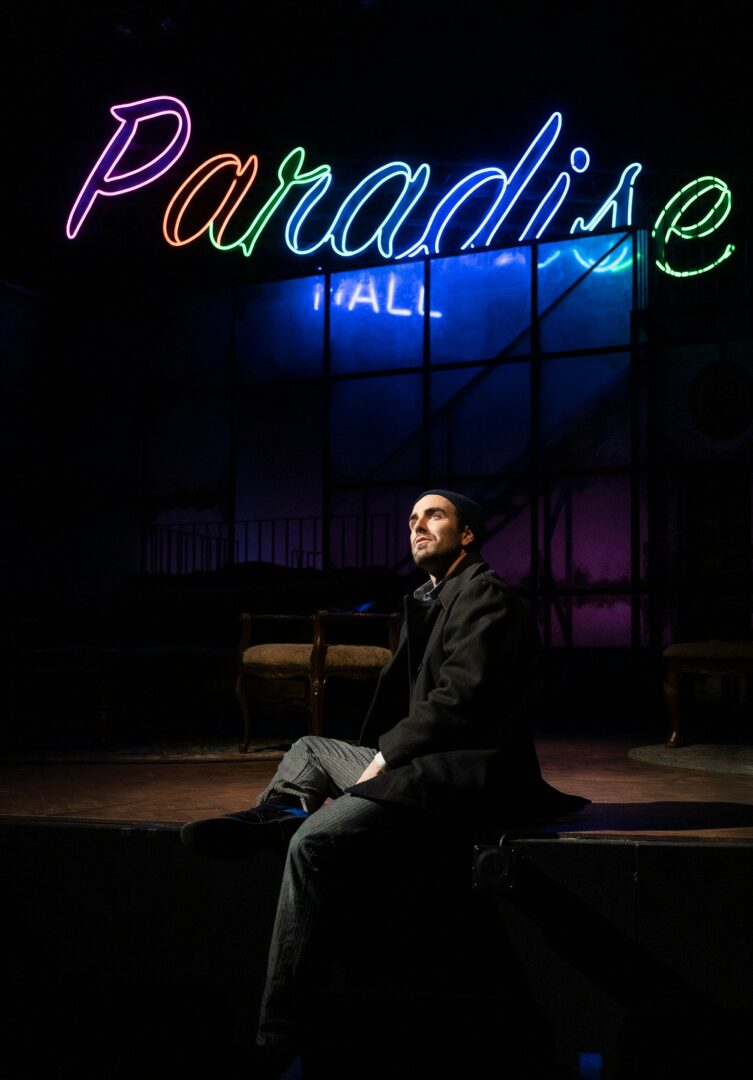
Aaron Cammack in Arizona Theatre Company’s The Glass Menagerie. Photo by Tim Fuller
Thanks, so before we move on maybe you can share a bit more about yourself?
WHAT I DO: I am an actor, and a teacher of acting.
When I hear non-actors talk about acting – about what it means, or what they suspect our job entails – I hear a lot about pretending. But one of my earliest mentors would say, “Acting isn’t about putting on a mask or becoming somebody else. It’s about chipping away at yourself to reveal something inside of you that was there the whole time.”
One of the most fundamental acknowledgements that a great actor will make in some way is this: that we are all capable of anything, if the conditions are right. What this means is, although I’m not somebody who has done XYZ, I have to be able to see from their perspective. A bad actor will judge the character by his actions. He’ll look at the character, say to himself “I’d never do that! How awful!” and then play the character in two dimensions, unrealized. On the other hand, a good actor who has acknowledged how alike we all are, can avoid judging the character’s actions and instead work to justify the intentions. By doing that, he really puts himself in the shoes of the character and behaves truthfully under the circumstances of the story.
The work of an actor is incredibly important in today’s world, though understanding why can be elusive. What we do, at its most basic level, is an exercise in empathy. We put ourselves fully into the shoes of another person and behave as they would, under the circumstances. When we do this, when we embody another person and behave truthfully under imaginary circumstances, we are providing an invaluable service – a gift! – to ourselves, our collaborators, and those watching. What’s the gift? The gift is a living, breathing, fully dimensional person whose humanity is put on display so that we can all wonder together why we are the way we are, and how we become who we’d like to be. Put very simply: the gift we give is the Courage to Change.
Current and upcoming projects:
-Currently working at a major regional theatre in Salt Lake City, UT: Pioneer Theatre Company. We’re doing a show called “DIAL M FOR MURDER”. The show is a co-production with Arizona Theatre Company. I play Lesgate, a man with a checkered past, who gets blackmailed into murdering another man’s wife. But things don’t go according to plan.
-Up next: I’m teaching intermediate acting for stage and screen at Pima College in Tucson, AZ, and privately teaching two workshops through Arizona Theatre Company. I’ll also be helping out behind the table with “BOB & JEAN: A Love Story” at ATC, and performing in a show called “MS. HOLMES & MS WATSON APT 2B” in the early summer.
 Aaron Cammack and Tracey N. Bonner in Arizona Theatre Company’s Intimate Apparel. Photo by Tim Fuller
There is so much advice out there about all the different skills and qualities folks need to develop in order to succeed in today’s highly competitive environment and often it can feel overwhelming. So, if we had to break it down to just the three that matter most, which three skills or qualities would you focus on?
Three qualities/skills/areas of knowledge:
1: DISCIPLINE. There are layers to this, of course. Firstly, discipline manifests in just showing up to do what you purport to want to do. Walk it like you talk it! I always tell actors “It’s not about who’s the best – it’s about who’s left.” So first step in developing discipline is just to show up. Prove to yourself that you really want what you say you want by getting there. The rest will follow. Something else to bear in mind here: without some sense of what you want, it’s useless to try and figure out how to get there! Stanislavski – a great acting teacher known as the father of modern realism – once said “‘In General’ is the antithesis of art.” Get specific!
2: CURIOSITY. Surround yourself with seekers, with question-askers, with people who you want to know more and experience more and get deeper. Good art-making and good LIVING comes from asking good questions, NOT from presuming to know all the answers. Side note: True curiosity is not performative.
3: DISCERNMENT & COURAGE. These go hand in hand. What is true, and what am I blowing out of proportion? What is useful and what is not? I’m always a big proponent of the sheer power of choice – and therefore of change. So any worldview that shuts choice off is uninteresting to me. For example, a lot of weight tends to be given to what HAPPENED to us in our lives. But usually that ends up meaning that what happened somehow controls how we ARE…and that’s too deterministic for me. For me it’s less about what happened, and more about the meaning I ascribe to what happened. Because then, I have more agency over my life. And I am free to change – so long as I have the courage to do so.
**I also have to mention KINDNESS. You asked for three, but just a quick point here: kindness is the foundation for everything. Kindness is NOT niceness. It’s NOT being needlessly sycophantic. It’s not working for approval. What it really means is coming to know, for yourself, that what you bring has intrinsic value. When you really know that, you can be guided by love and curiosity, NOT by your compulsion to win or “rise to the top”.
As we end our chat, is there a book you can leave people with that’s been meaningful to you and your development?
I recently read “PEAK: Secrets from the New Science of Expertise” by Anders Ericsson and Robert Pool. In it, they report on a new field of research that seeks to clarify how to become exceptional at whatever skill you want to build. They identify a concept known as “deliberate practice” as the gold standard for training. The characteristics that qualify a practice method as “deliberate practice” are very intense…but I suppose they should be if the aim is to train toward true mastery or “expertise”.
The main researcher Anders shares an anecdote about the beginnings of their work. The limits of our short-term memory have been widely known for quite some time. When it comes to hearing random digits for example, most people max out at about 7 digits. For example, if I told you to remember a number and started spouting out random digits, most people can do 7 comfortably. 5-2-1-6-0-6-7. But beyond that, with any regularity, it becomes very difficult. They wanted to test their hypotheses regarding the “deliberate practice” model of training, so they hired a young man named Steve Faloon to be their research subject. Steve was a highly disciplined college student and competitive runner. They brought him in for training once a week for 18 months. At the end of 18 months, Steve could listen to and repeat back 81 digits, read aloud at one per second. THE HUMAN BRAIN SHOULD NOT BE ABLE TO DO THAT! But then, neither should a basketball player be able to shoot with the percentage of Steph Curry, or golf with the accuracy of Tiger Woods, or play blind chess matches on 64 chess boards simultaneously…but somehow these exceptional performers make the impossible possible.
The book debunks the notion of “talent”, of giftedness. It champions the idea that hard work – SMART hard work – on a consistent basis for years and years and years, is what it takes to become an expert in any field. It makes great performance possible to anybody. The only requirement is the willingness to do the work.
Contact Info:
- Website: https://aaroncammack.com
- Instagram: @aaron.cammack
- Facebook: Aaron Cammack
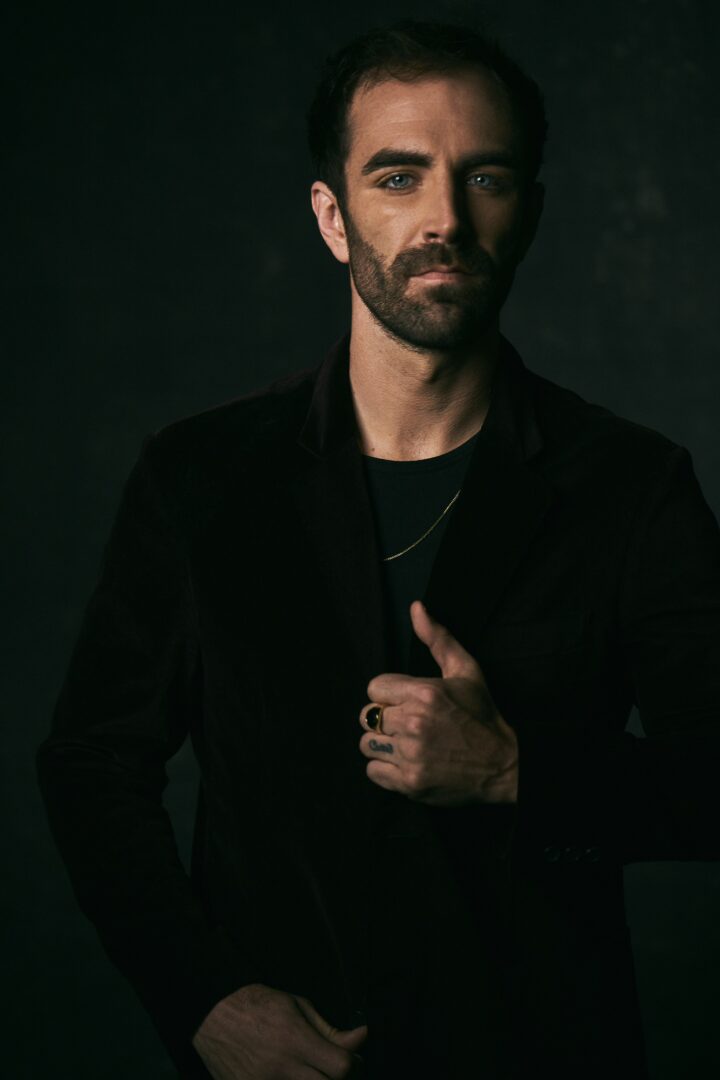
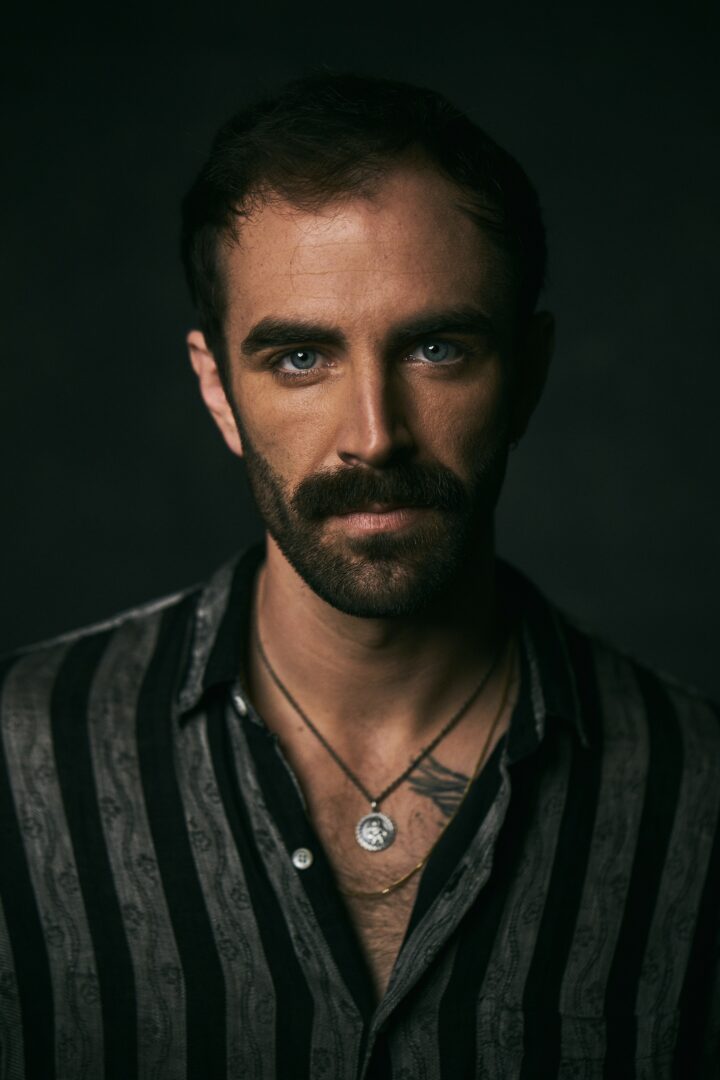
Image Credits
Ben Cope, photographer
so if you or someone you know deserves recognition please let us know here.