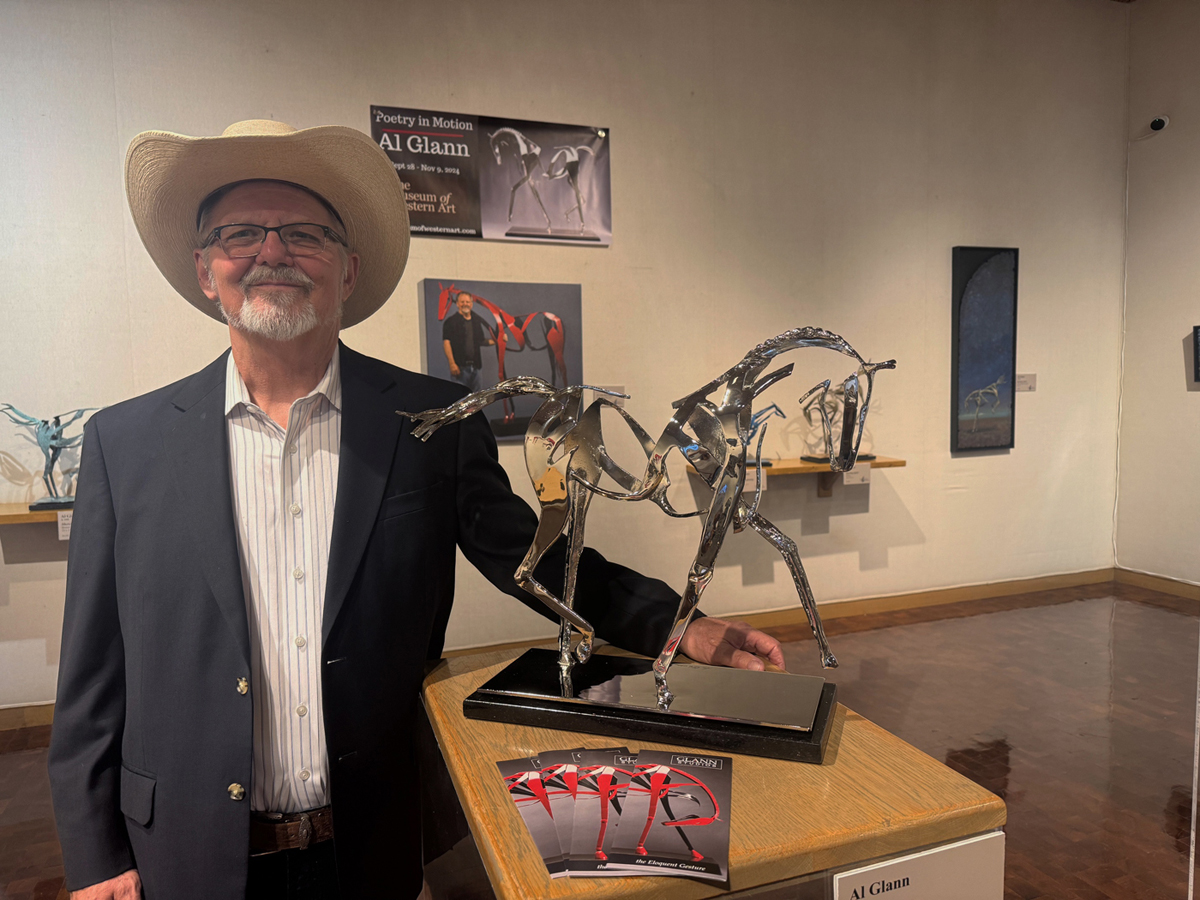
Alright – so today we’ve got the honor of introducing you to Al Glann. We think you’ll enjoy our conversation, we’ve shared it below.
Hi Al, thanks for sharing your insights with our community today. Part of your success, no doubt, is due to your work ethic and so we’d love if you could open up about where you got your work ethic from?
I grew up on a farm in central Ohio, the only son in the family. I learned at an early age that I was going to learn how to do farm work at an early age and you better learn quickly or there will be consequences. I was driving tractor at 10 and driving a farm truck at 13. (bigger than a pickup) I practically had to stand on the clutch to change gears. You learn that yes, you can do adult work at a young age and find ways to solve problems on your own. Growing up I had to find creative ways to have fun and make what you wanted because you couldn’t go down to the store and buy it and no one else was going to do it for you.
My family did have support for my artistic talents as child but it was not until I took a night class in my senior of high school in a neighboring town that I began to see some of the possibilities one could follow as a creative artist.
When I finally found an art college to go to, they really pushed everyone to buckle down to seriously learn art and design. I think we all loved it and enjoyed the challenge, We as students would compete with each other to see who could create the best assignment for each class. We fed off that creative energy and helped each other find solutions.
I have carried that work ethic with me my entire life and I have pushed my students of 30 years to strive for best they can achieve. Many times they would go far beyond what they thought they could do, that’s when the magic begins to happen. When you fail you learn a lot more than if you were successful all the time. Failure is not a bad thing, it is a teaching tool.
I didn’t become a full time artist until I was 60, even then I was unsure if I could really to it. Up until that time I taught and consistently made art as time allowed. I kept at it 6 days a week 50 weeks a year. It is persistance, believing, trusting in yourself and not being afraid of failure.


Let’s take a small detour – maybe you can share a bit about yourself before we dive back into some of the other questions we had for you?
I am a full-time Sculptor. I am a retired Professor of Art and Design, I spent my early career as an Illustrator / Graphic Designer which I did for 7 years full time. At that I know I couldn’t sit at a desk from 8-5, five days a week. I decided to go and teach what I had learned in the field and pursue my own fine art. When I started teaching at Columbus College of Art & Design I realized that I had access to facilities and other artists and art students to work with.
This really set me on my path as a sculptor and allowed me the time to focus on my direction. Being able to take classes and learn from my fellow teachers but also fellow students created a very positive community. Having spent time working in the design field gave me the skill set to present and promote my work easily.
As time went on I was always trying to get as much information from other successful artists and how they went about developing their career. When I went full time as a sculpture it was challenge and it took over two years of working on my art, doing shows, and promoting my work for it to take off and become a successful business/career.
My focus as a sculptor is defining the energy, the essence, and the personality of whatever I am working on. Most of my work in past 12 years has dealt with horses and birds of prey. In developing these sculptures I am looking to create unique gestural versions of horses and birds in the moment.
I recently installed a public art sculpture on the Loop in Tucson, “Wild Spirit” Steel 148″ x 98″ x 19″


Looking back, what do you think were the three qualities, skills, or areas of knowledge that were most impactful in your journey? What advice do you have for folks who are early in their journey in terms of how they can best develop or improve on these?
Not being afraid of change, it you want to make it happen you have to get out there and do it and get out of your comfort zone. If you’re not sure where to start, go talk to other artists that that have done it. I took a marketing class at the Community College from a very successful artist in Mesa, AZand I have kept in touch for the last 15 years. When I moved to Tucson, AZ I didn’t know any artists there but I made it a point to find out who some of the successful artists were and went and talked to them. When I started to look for galleries to put my work in, I would go in, look at the gallery and the work they represented to see if my art would complement that was there. If I felt it would be a good fit I would talk to the gallery director. I would say that more than half the time they were interested. The art world is ever changing and you have to be flexible enough to know that you may have to move on.If one door closes another will open, have faith in your work and yourself.


How would you spend the next decade if you somehow knew that it was your last?
As a sculptor that has made a major commitment to working in bronze, i think the current environment for bronze artists very challenging. Since pandemic a number of foundries have closed for a variety of reasons, including retirement, being bought out for their property, and one burned down. One of the biggest issues is the cost of bronze, my foundry costs have tripled in the last six years, I can triple my prices but then I will have priced myself out the market. It has become a very challenging issue for a number of bronze artists including myself.
Contact Info:
- Website: https://www.alglannsculptor.com/
- Instagram: alglann
- Facebook: Al Glann
- Linkedin: Al Glann


Image Credits
4. J. Brown
8. J. Brown
so if you or someone you know deserves recognition please let us know here.