
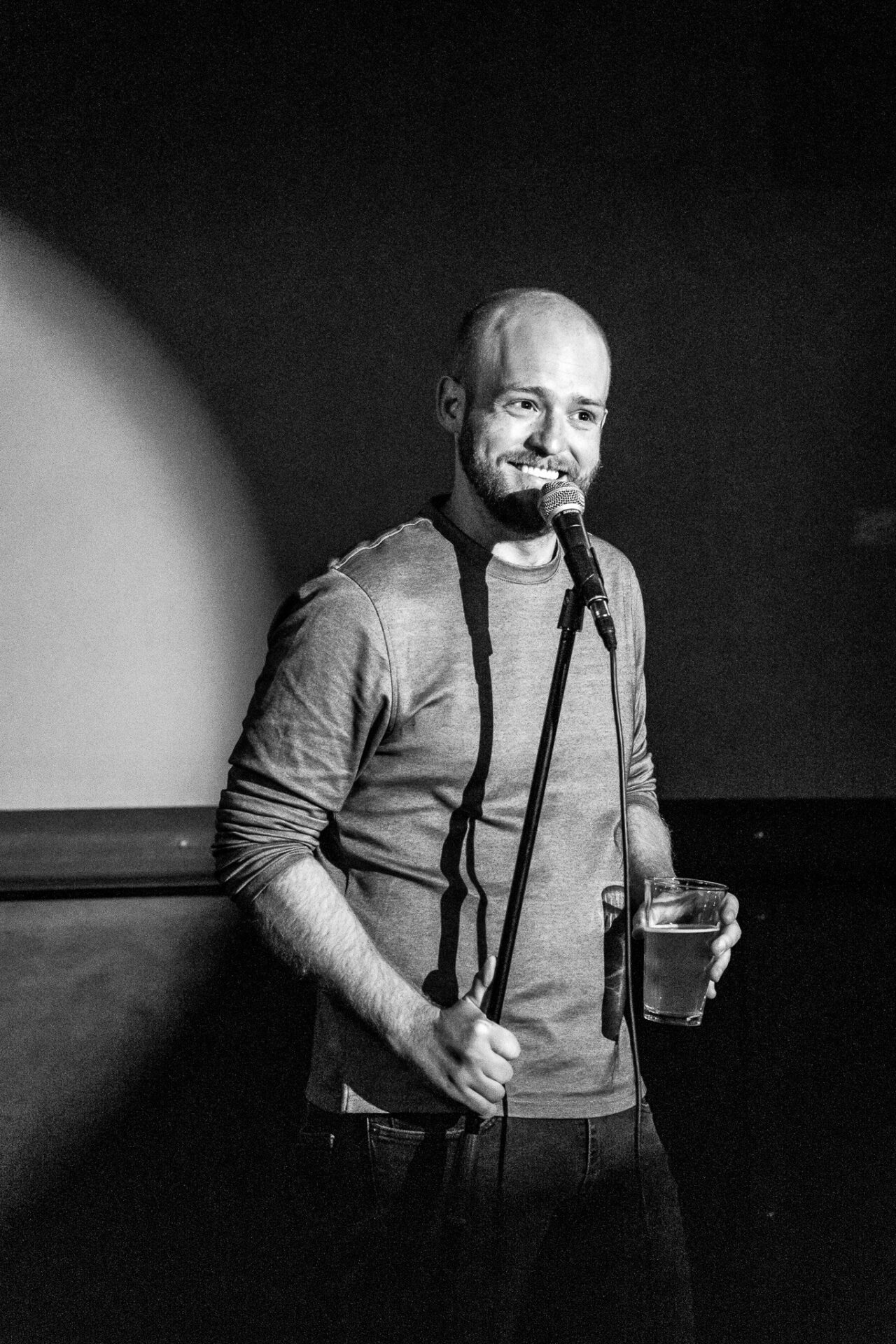
We were lucky to catch up with Alan Bromwell recently and have shared our conversation below.
Alan, so great to have you with us and we want to jump right into a really important question. In recent years, it’s become so clear that we’re living through a time where so many folks are lacking self-confidence and self-esteem. So, we’d love to hear about your journey and how you developed your self-confidence and self-esteem.
When I started in comedy I really had no idea whether I’d be able to do it or not. But after a few weeks I saw that I was capable of getting a laugh and capable of improving. That capability gave me confidence to keep moving forward. Eventually I had small pieces of material that worked reliably and the fact that I had these couple of lines in my back pocket gave me more confidence. My confidence nowadays comes from the fact that I’ve built myself into this role essentially from nothing. Knowing that I created this life for myself reminds me that I can create the next chapter as I see fit.
As for self-esteem, I spent many years seeking the approval of audiences and comedians I respected. Eventually I realized that their esteem wasn’t ever correlated with my ability or even my performance level. To believe in myself or to feel good about myself is always my choice. Because of the way I conceive of this craft, I feel better about myself when I’m working, taking risks, and expanding. So when I feel growth, I give myself esteem.
Appreciate the insights and wisdom. Before we dig deeper and ask you about the skills that matter and more, maybe you can tell our readers about yourself?
I’m a comedian from Denver, Colorado. I travel the country performing my act and developing new material. My comedy is a response to the way society categorized me. I was supposed to be an engineer. I felt that my mind would be wasted in that domain. And more importantly it brought me no joy. I found myself by shedding that identity and most everything I’d been told. My comedy is about breaking images and social identities. They only limited me and I see people limiting themselves every day to fulfill these abstractions. I try to make light of everything that holds power over us in our culture. Many people who are under the influence of these constructions consider me to be “offensive” or “contrarian”, but I think that’s just what it looks like to speak from the heart in an era of disinformation and ideological failure.
If you had to pick three qualities that are most important to develop, which three would you say matter most?
The most important quality I possess is perseverance. The comedy business is a fickle and volatile thing, and it’s only by being relentless that I’ve achieved anything.
Next would be intuition, which I think is invaluable to any artist (or professional), because the people around you and the culture cannot create what you’re meant to, or tell you how to do it. Your inner voice knows. Spend time listening to yourself. Learn to discern what you really feel and what’s someone else talking in your head.
Lastly, give yourself the freedom to be wrong, to make mistakes, and therefore to grow. Allow yourself to move, to make decisions, to take action. Most everything I know is from doing the opposite and observing the result. We’re all experimenting out here. Fear of failure leads to paralysis. Grant yourself the liberty of trying whatever comes to mind.
What would you advise – going all in on your strengths or investing on areas where you aren’t as strong to be more well-rounded?
I think the present culture and education system encourage people to “do what they’re good at”, especially if it is a skill valued in the economy. But I watched, after my generation was told video games were a waste of time, the incredible rise of the professional streamer. I think the economy will eventually adapt to value what we value individually. So whatever it is you value, that brings you joy, pursue that. Whether you’re objectively “strong” at it doesn’t matter. Many great artists were not considered skilled or even proficient when they began. When we only cultivate what we are inherently or genetically advantaged to do, we create a rather boring monoculture. Great innovation and creative novelty come from mentally and physically diverse approaches. Many comedians talk about nobody listening to them when they were young. They were not strong speakers. Now they are.
Contact Info:
- Website: https://alanbromwell.com
- Instagram: @alan.bromwell
- Twitter: @alanbromwell
- Youtube: https://www.youtube.com/channel/UC2Y15W_DnzkDFsi39yvwnDg


