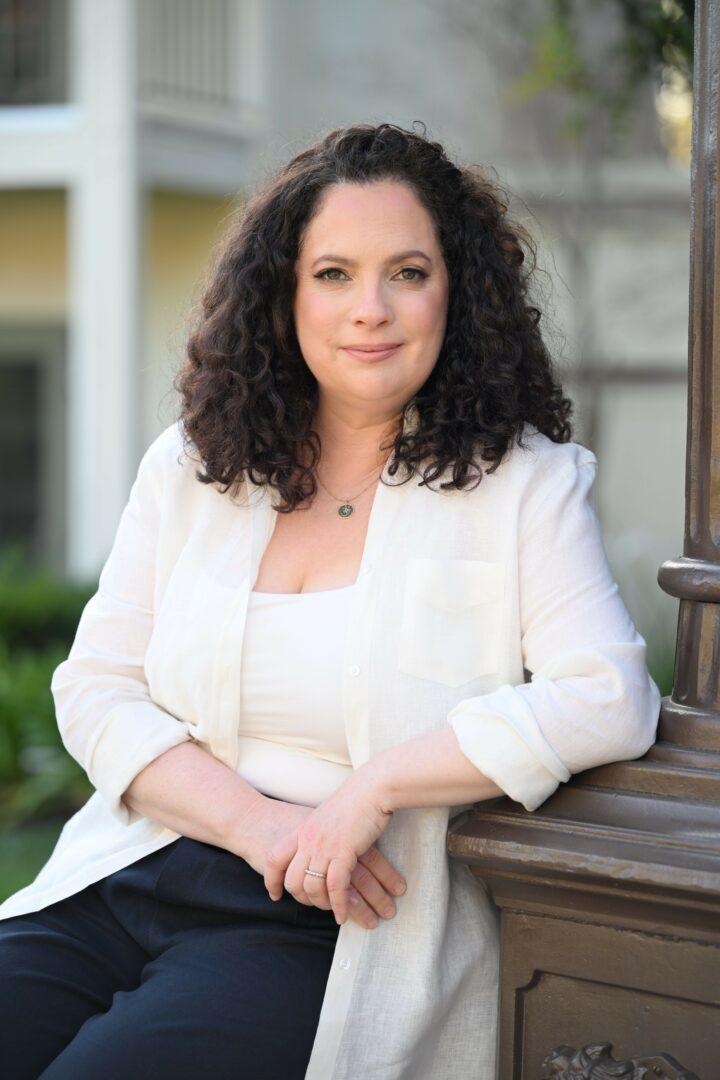
We’re excited to introduce you to the always interesting and insightful Alexandra Tarakanov Plax. We hope you’ll enjoy our conversation with Alexandra below.
Alexandra, first a big thank you for taking the time to share your thoughts and insights with us today. I’m sure many of our readers will benefit from your wisdom, and one of the areas where we think your insight might be most helpful is related to imposter syndrome. Imposter syndrome is holding so many people back from reaching their true and highest potential and so we’d love to hear about your journey and how you overcame imposter syndrome.
The first time I was called to the stage in my Hypnotherapy 101 class, my hands were shaking so badly I had to hide them behind my back. I clasped one hand over the other and held on tight so no one would notice.
I had just watched the teacher demonstrate an induction, and my stomach was in knots. I remember sitting in my chair thinking, “Oh my God, they’re going to call someone up there. What if it’s me? Can I really do this? This takes so much skill, so much power over another person’s state of mind — I don’t think I’m capable of it.” When no one volunteered, the teacher began calling on us one by one. When my turn came, I walked to the front of the room. My fellow student — a man well over seventy who was starting his own new chapter — sat in the chair as my practice client.
I began the induction I had memorized word for word. My voice was steady and calm — authoritative but caring, exactly as we’d been taught. Inside, I was trembling. By the time we finished, my back was drenched in sweat, soaking through my shirt.
Then the teacher asked my client, “How was that for you?”
He said, “It was very good. She’s so confident. She has an amazing hypnotic voice. I
really enjoyed that.”
The teacher turned to me. “How was it for you?”
“I was terrified the entire time,” I said. “I’m still shaking.”
She looked surprised, then asked the class: “Did anyone notice she was nervous?” No one had.
That moment taught me something essential: the fear inside was just fear. It didn’t have to define what I delivered. I could feel it and still do the work. That realization didn’t eliminate imposter syndrome overnight, but it cracked the door open.
•••
What followed were years of building real competence through deliberate, relentless practice. I committed to finding the highest-quality education I could reach — hypnotherapy school, multiple modalities of energy work, counseling, NLP, and eventually the spiritual regression work inspired by Dolores Cannon. I didn’t wait to feel confident before acting; I let confidence
follow effort.
When I started practicing spiritual regression about fifteen years ago, it wasn’t widely practiced. Very few people in my area were doing it. I needed practice partners — not just my mom and my husband, who were gracious enough to let me work with them, but people who didn’t know me personally, and ideally practitioners with hundreds of sessions of their own experience.
One day, I found a colleague visiting Los Angeles who was willing to exchange sessions. I called my husband to tell him I’d be unavailable for the next four or five hours. When I mentioned the neighborhood, he did a quick search and called me back: “My dear, I’d really prefer you don’t even drive there. Don’t park there. And absolutely don’t go into a stranger’s place in that area — especially not when you’ll be in such a vulnerable state during a session. It’s not safe.”
I went anyway. In my mind, I was doing sacred work, and nothing could happen to me.
Nothing did — except an extraordinary practice session that sharpened my craft. But looking back, I realize what that story reveals about the level of dedication that was driving me. The mission was so compelling that it blinded me to basic safety considerations. That’s how powerfully the sense of purpose can override everything else — including common sense.
•••
Along the way, two things steadily dissolved my imposter syndrome.
The first was tracking real impact. When clients began sharing their results — chronic physical conditions improving, relationships healing, people making aligned career and life choices — that evidence became more powerful than any inner doubt. I learned to let client outcomes, not self-judgment, define my competence.
The second was reframing my role. In my work, I don’t position myself as the all-knowing expert. I’m collaborating with my clients’ higher selves and, at times, with spiritual guides. There’s no hierarchy — we’re all working as one extended team. That shift dissolved the pressure at the heart of imposter syndrome: the feeling that I’m pretending to be something I’m not. I wasn’t pretending. I was facilitating something larger than myself, in service to another person’s healing.
I also discovered that my earlier careers — as an engineer, a researcher, an educator running an art school — weren’t wrong turns. They were preparation. Every one of those experiences
had built skills I use every day in this work. Once I saw my entire path as connected, the “imposter” story stopped making sense.
•••
From trembling hands hidden behind my back in that first class to now — thousands of sessions later, speaking at conferences, teaching hypnotherapy and hypnotic coaching, leading group regressions — the gap is fifteen years wide and filled with practice, service, and the steady accumulation of evidence that I belong here.
If I were to distill the practices that helped me overcome imposter syndrome, they would be these:
• Relentless, high-standard learning and practice — not waiting to feel ready, but letting readiness emerge from doing the work.
• Peer collaboration and session exchanges — normalizing that everyone is still learning, and refining skills through honest practice with colleagues.
• Anchoring in a mission of service — shifting from “Am I good enough?” to “This work is bigger than me, and I’m devoted to it.”
• Seeing myself as part of a larger team — both human and spiritual — which removed the pressure to be perfect alone.
• Letting real-world results speak louder than self-doubt — measuring impact, not insecurity.
That combination didn’t make the imposter voice disappear overnight. But it gradually made it irrelevant, because my daily actions and their impact told a very different story.
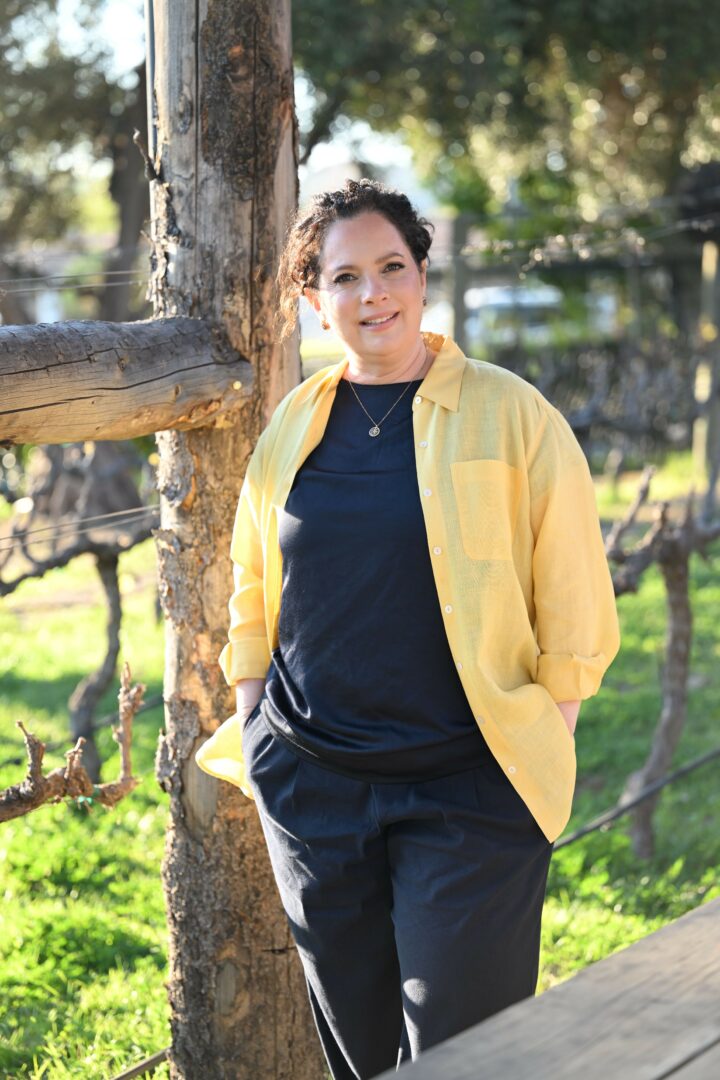
Let’s take a small detour – maybe you can share a bit about yourself before we dive back into some of the other questions we had for you?
I am a spiritual hypnotherapist, and the simplest way to describe what I do is this: I help people see their own magnificence.
In a session, I guide my clients into a deep hypnotic state — a trance — where they can connect to their true self: their higher self, their intuition, their spirit guides, their spiritual teachers, even ascended masters. But here is what makes this work different from advice or coaching: once we reach that space, the client’s own soul takes over. I am simply the facilitator who opens the door. From there, their higher self guides the session.
I believe deeply that no human being — no matter how wise or well-intentioned — can see the full picture of another person’s life. We can’t see all the levels, all the dimensions, all the reasons behind someone’s choices, struggles, or discomforts. Even we ourselves often don’t fully understand why we behave the way we do, why our bodies create certain conditions, or why we feel stuck at a crossroads. Only from that higher, multidimensional perspective can we truly see clearly — the bigger picture of what is actually happening — and from there, make our own choices, our own decisions, and create our own changes.
That is what I help people do: become empowered to create their own transformation.
•••
I offer individual spiritual regression sessions, group clinical hypnotherapy sessions — where clients connect to their spirit guides, explore past lives, and receive guidance from their soul — and I also teach self-hypnosis classes so people can develop these skills on their own. That last part is especially important to me. I don’t want anyone to depend on me. I want them to know they have access to this wisdom themselves.
•••
This work has also profoundly changed how I see other people. It taught me not to interfere and not to judge.
When we look at someone’s life from the outside — a difficult relationship, a painful situation — it’s tempting to think we know what’s best for them. But through this work I’ve learned that every soul is moving through choices and lessons that were deliberately chosen before this lifetime. We simply cannot see, from our limited vantage point, what is truly happening at the
soul level. A relationship that looks unhappy from the outside may be exactly where two souls are doing their most important work.
So instead of judging, I’ve learned to shift into deep respect. When I meet someone carrying a heavy life — someone who has brought many conditions and challenges into this existence — I see a soul that chose a courageous path, one loaded with lessons. That perspective has changed everything about how I show up, both as a practitioner and as a person.
•••
What I help people understand is: Why am I here? What is my soul’s mission? What is the purpose of the relationships, the struggles, the patterns in my life? And then it’s entirely their choice whether they want to step into that alignment. Everything is free will.
For those who do choose to step in, something beautiful happens. After sessions, people often begin developing spiritual gifts naturally — the ability to channel their higher self or beings from other dimensions, spontaneous energy healing abilities, clairaudience, clairvoyance, claircognizance, clairsentience. These aren’t things I give them. These gifts emerge because, as I see it, humanity is ready. We are moving into a new capacity to look beyond the veil and connect to our true, expanded selves — the part of us that is bigger, wiser, and deeply connected to our purpose.
This is what excites me most about my work: helping people step into their true magnificence — not because I tell them who they are, but because they finally see it for themselves.
There is so much advice out there about all the different skills and qualities folks need to develop in order to succeed in today’s highly competitive environment and often it can feel overwhelming. So, if we had to break it down to just the three that matter most, which three skills or qualities would you focus on?
Looking back across my journey — from engineering and academia to running an art school to becoming a spiritual hypnotherapist — three qualities have shaped everything. They aren’t technical skills. They’re deeper than that. And I believe they apply to anyone, in any profession or pursuit.
1. Find Your Passion — and Act on It
I know this sounds like a cliché. We all tell our children, “Find what you love.” But having lived it, I can tell you it makes all the difference — not just emotionally, but practically.
Here is why: your passion is usually connected to what your soul is intended to do here. And when you begin stepping into that purpose, something shifts. Resources start flowing toward you. Energy shows up that wasn’t there before. Doors open. Opportunities appear. It’s not magic in the abstract sense — it’s what happens when you align with something bigger than yourself.
But finding your passion isn’t enough. You have to act on it. Make choices. Take steps. Move toward it, even when the path isn’t fully clear. The clarity comes from walking, not from waiting.
2. Trust — and Then Take Action
The second quality is trust. Not just trust in yourself — though that matters — but trust in a bigger picture. Trust that you are where you’re supposed to be. Trust that this passion you feel will take you where you’re meant to go.
Trust that everything will be supported. Trust that you can do it — little by little, step by step. Trust that you will be invited. Trust that you will be provided for.
This kind of trust is what carries you through the hard chapters — the self-doubt, the slow seasons, the moments when the gap between where you are and where you want to be feels enormous. Trust doesn’t eliminate those moments, but it gives you the ground to keep walking through them.
And I want to be clear: trust alone is not enough. Action is essential. Trust without action is just a nice feeling. Trust with action is a force.
3. Let Go of Perfectionism
The third quality — and this one may be the most liberating — is releasing the need to be perfect.
Here is what I’ve learned: what looks like mastery to you at the beginning of your path will not look like mastery once you arrive there. Every time you reach a level you once thought was the peak, a new vista opens up. There is always another horizon.
I think of a client of mine — a ballroom dancing champion — who came to me because she wanted to improve her performance. During her session, her higher self showed her a memory: herself as a little girl, just starting at the dance studio, looking at the older girls and seeing them as goddesses. Their level seemed impossibly far away. Completely unreachable. And yet — as her higher self gently reminded her — she had not only reached that level, she had surpassed it long ago.
But now she was looking ahead again, at a new standard that felt just as unreachable as the one that little girl had once admired. Her higher self was showing her the pattern: step by step, through consistent practice and dedication, she had already achieved what once seemed impossible. And she would do it again. That’s the nature of growth — there is always, always another level. And that isn’t a failure. It’s proof that you are alive and evolving.
Stopping is stagnation. We are meant to keep developing, keep evolving. When you reach what seems like the end of the road, you’ll see another chapter waiting — and another one after that. Perfectionism tries to freeze you at one level. Growth asks you to keep moving.
•••
My advice for anyone early in their journey, in any field: find what lights you up and follow it with real action. Trust the path, even when you can’t see the whole staircase. And let go of the idea that you need to be perfect before you begin — because the horizon will always be moving, and that’s exactly as it should be.
Thanks so much for sharing all these insights with us today. Before we go, is there a book that’s played in important role in your development?
The book that changed everything for me is Only Love Is Real by Brian Weiss.
Brian Weiss is a psychologist who uses hypnosis in his practice. The book tells the true story of two of his clients — a young man and a young woman who didn’t know each other. Through their separate sessions, each of them described many past lifetimes, and as Weiss listened, he began to realize that these two souls had been together across many of those lifetimes. In this life, both were lonely, both searching for fulfillment and a partner — and yet he couldn’t tell either one about the other because of client confidentiality.
I won’t say how it ends — it’s too beautiful to spoil. But the story reads as if it were divinely orchestrated. I remember being astonished that it was real, that these were actual sessions with actual people, because the way it all comes together feels like something only a soul’s intelligence could arrange.
•••
The deepest nugget of wisdom I took from that book was this: the life we are living right now is just one chapter of a much larger story — a story that has no beginning and no end.
Before reading it, I held the belief that most of us are taught: there is nothing before we are born, and there will be nothing after we die. This book shattered that for me. It took time — it wasn’t an overnight shift — but gradually my entire belief system changed. I began to understand that so much happens between lifetimes, and so much has happened before and will happen after this one. When I truly absorbed that, it changed the way I see the now. Every relationship, every challenge, every choice took on a different weight and meaning.
The book also planted a seed about the multidimensional nature of who we are — that we are far more than this one physical life, and that there are layers to our existence we are only beginning to access.
•••
But more than any single idea, Only Love Is Real helped me remember what I am here for. It put me on my path. Even now, thinking about that story, I feel emotional — because at its
heart, the book is about what we as souls are here to do: to live, to empower each other, to help each other see and step into our calling.
That is exactly what this book did for me. And I know it has done the same for many, many others. So this is the book I want to share with you.
Contact Info:
- Website: https://www.AlexandraTarakanov.com
- Instagram: @school_of_selfmastery
- Facebook: Alexandra Tarakanov Reiki Master, Hypnotherapist, QHHT Practitioner Level 3
- Youtube: @alexandrasashatarakanovpla3847
- Yelp: Alexandra Sasha Tarakanov Plax
Image Credits
Nina Kits Photography
so if you or someone you know deserves recognition please let us know here.