We were lucky to catch up with Amy Gross recently and have shared our conversation below.
Hi Amy, appreciate you sitting with us today to share your wisdom with our readers. So, let’s start with resilience – where do you get your resilience from?
One of the major discoveries I have made is that your story makes sense to you only by looking back into your past. All your decisions and choices and detours, even the ones that seemed the most random and disappointing, are condensed into a well marked trail that has placed you where you are now. When I look back at my starts and stops, and there were more than a few, I realize that every “no” said to me was far more impactful than all of the affirmations. And I started off with most of the “yes” built in. I was incredibly fortunate to be born into a family of artists, so when it became clear that I was going to be one as well there was no push back – making things was the family business. My father Charles was a painter and muralist and textile designer, my Mom Norma musical. I was taught that there were ways to make a living and raise a family through creativity, skills that you could use to push the cliches to the periphery. Being a young artist, the artist at home, at school, amongst my friends, on painting trips and museum visits, was central to my identity, an identity built on praise and affirmation. But when I was accepted to my dream art college – Cooper Union, in New York City, in the extroverted and flashy 1980’s, I was almost immediately confronted with the fact that there were so many other aspiring kids more interesting and experienced and original. And the world I wanted to be a part of, in the company of artists I dreamed about, was an intimidating environment of struggle and opportunism and grit. I wasn’t ready, especially during the restrictive days before the internet. Every no was personal, and stripped more of me away. I could not see who I was anymore. I began saying no to myself.
I became a freelance surface designer, not the painter I wanted to be. And I am deeply grateful for every sleeping bag and infant bed set and plush toy and beach towel I designed. Because I learned to depersonalize rejection, and do things over and over. I learned that making things was as much about putting in the hours as the inspiration. I ran my textile company for 23 years before I made the jump back into art making. I lived life, had experiences, traveled, fell in love with nature. I stopped thinking of myself as an artist. When I started making personal work again, sculptures made of beads and thread and paper and wire, I was making them because I needed to. I had to find a way to reconcile the intricacies of the natural world with my place in it all. I had to leave a path, in a way. The art I made was intrinsically mine now, born from my life lived. The inevitable ‘”no’s” that came from sending work out into the world become less disappointing because I had to make my sculptures irregardless. If I hadn’t remade my expectations, stopped requiring affirmation as my reason to create, I wouldn’t be in love with my life as a full time artist now. The word “no” led me to multiple forms of Yes.
Great, so let’s take a few minutes and cover your story. What should folks know about you and what you do?
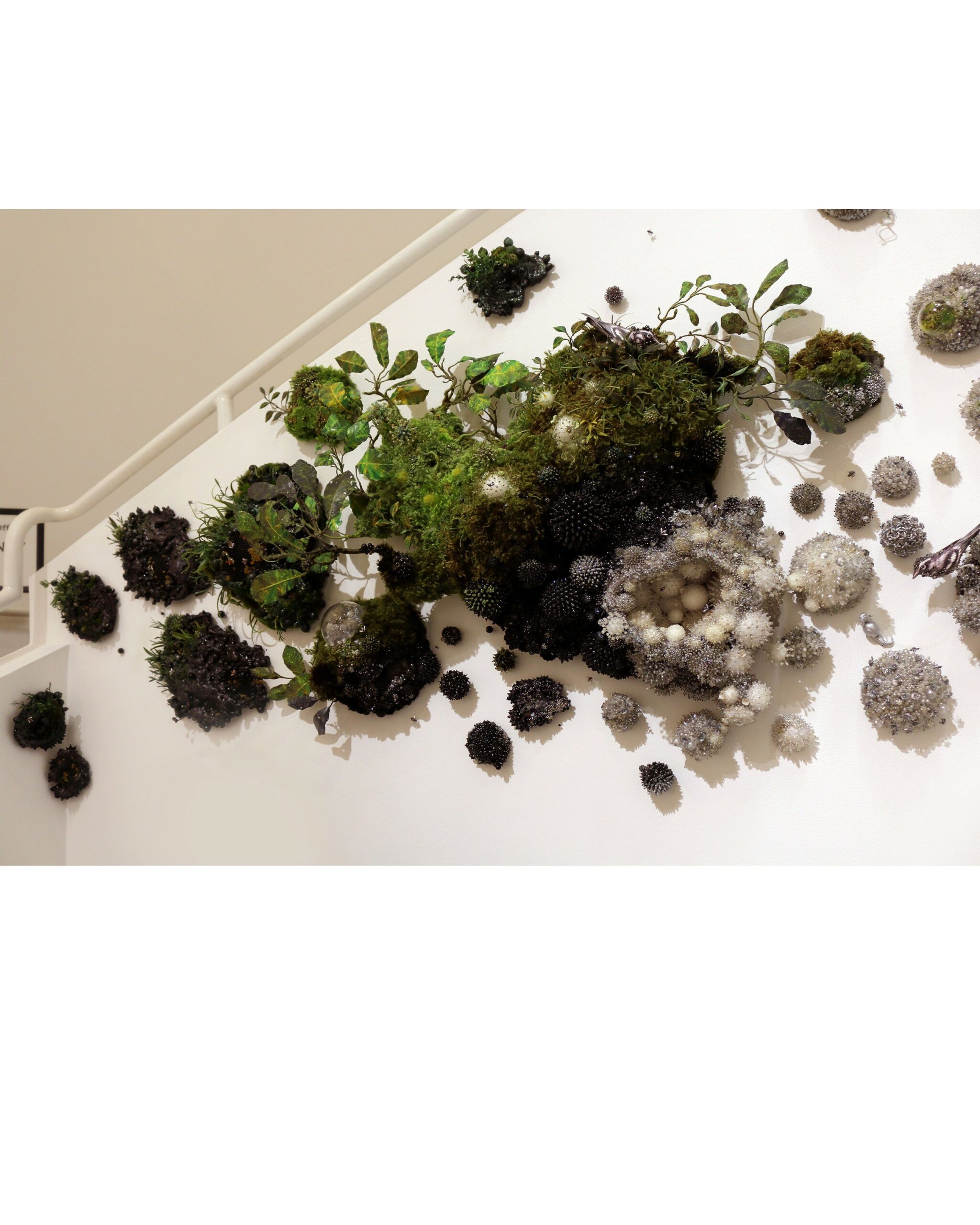
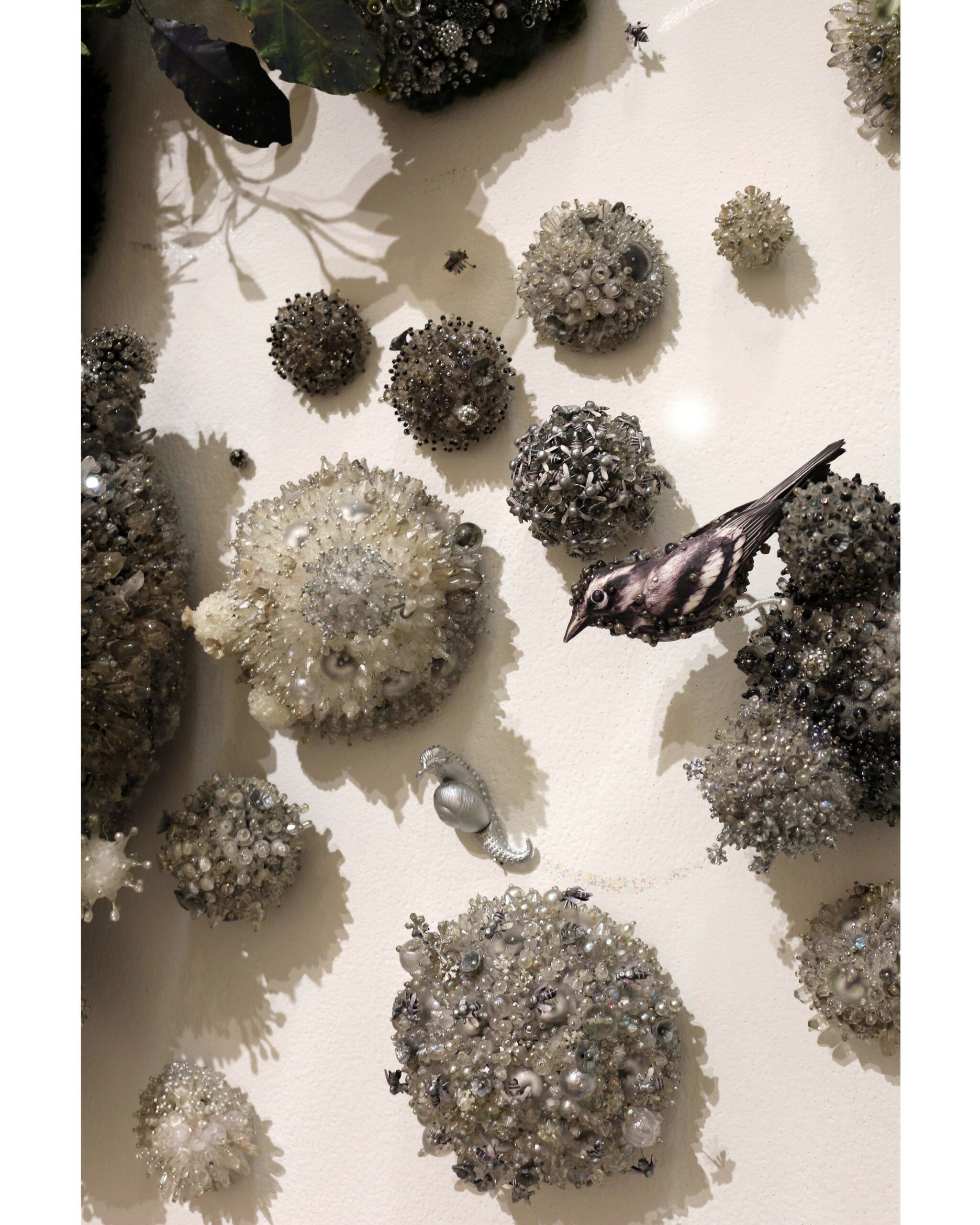
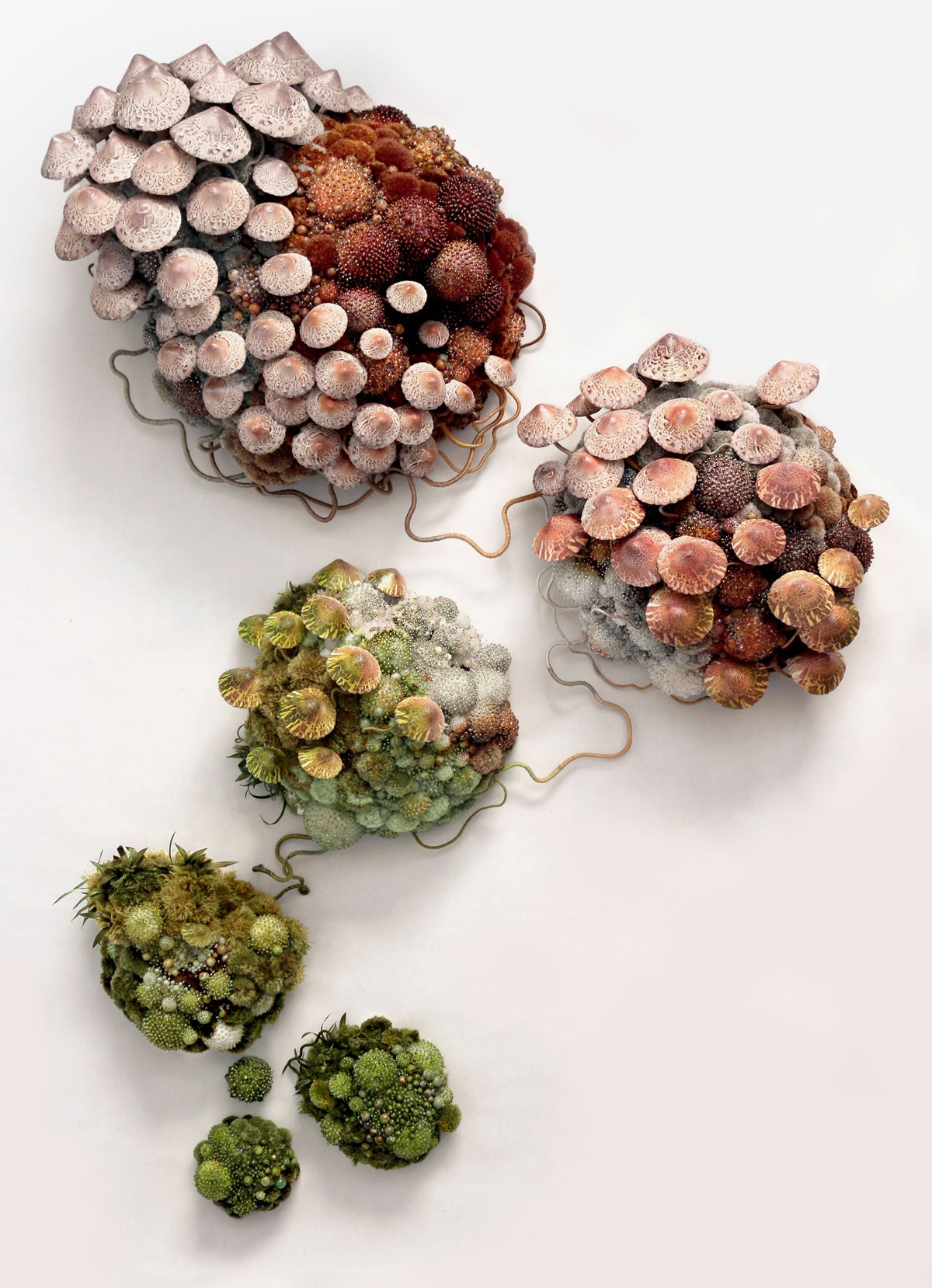
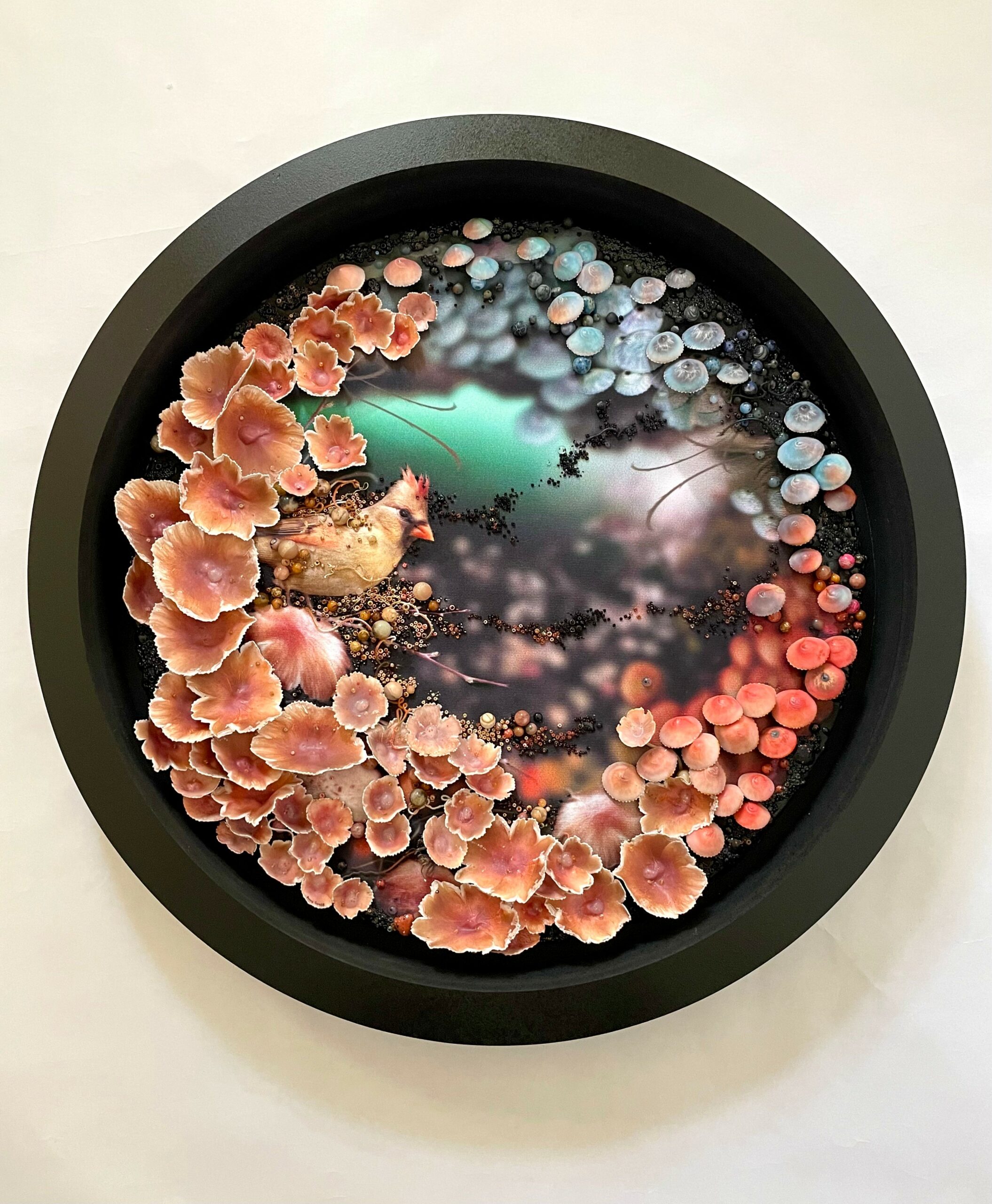
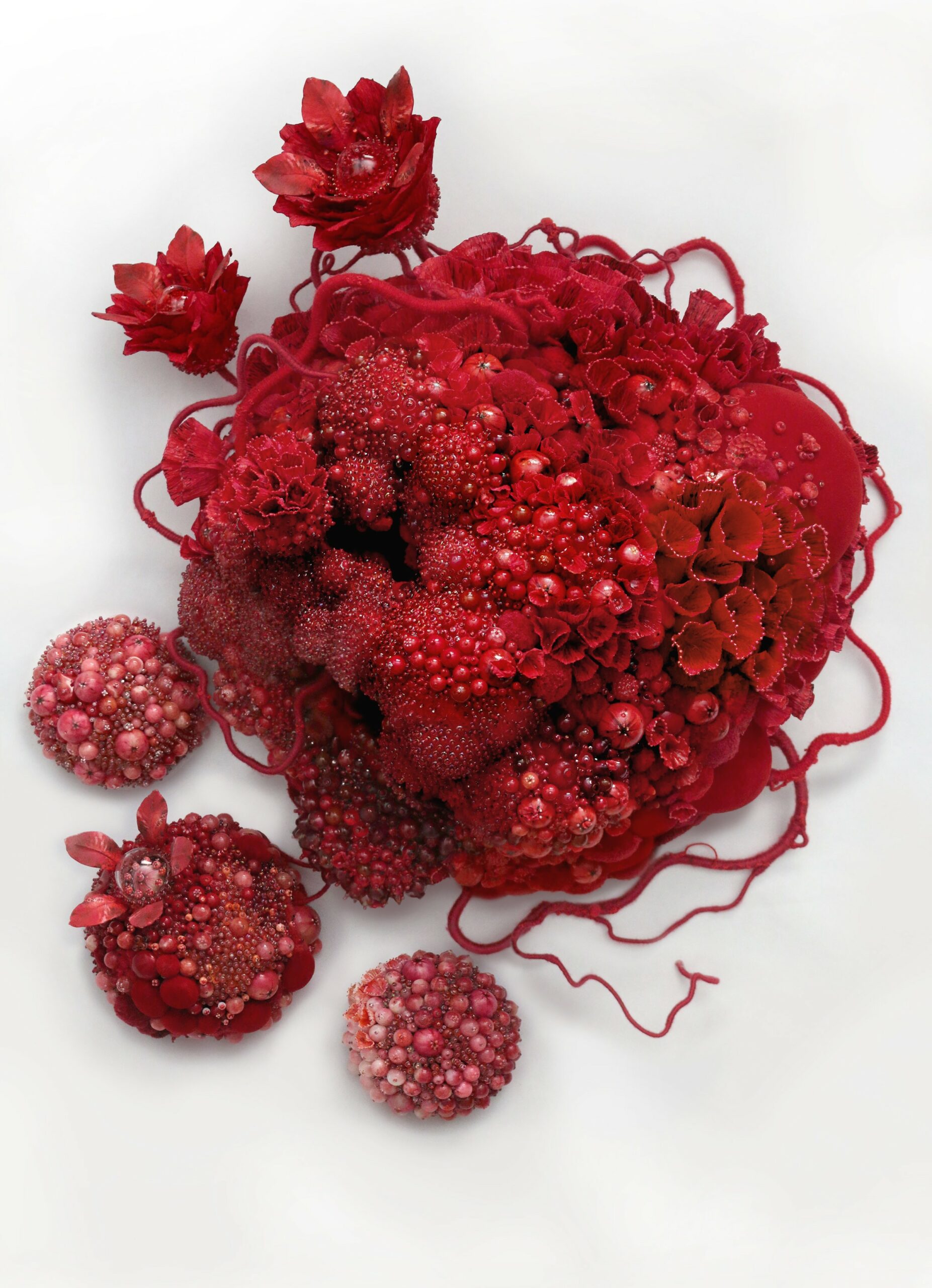
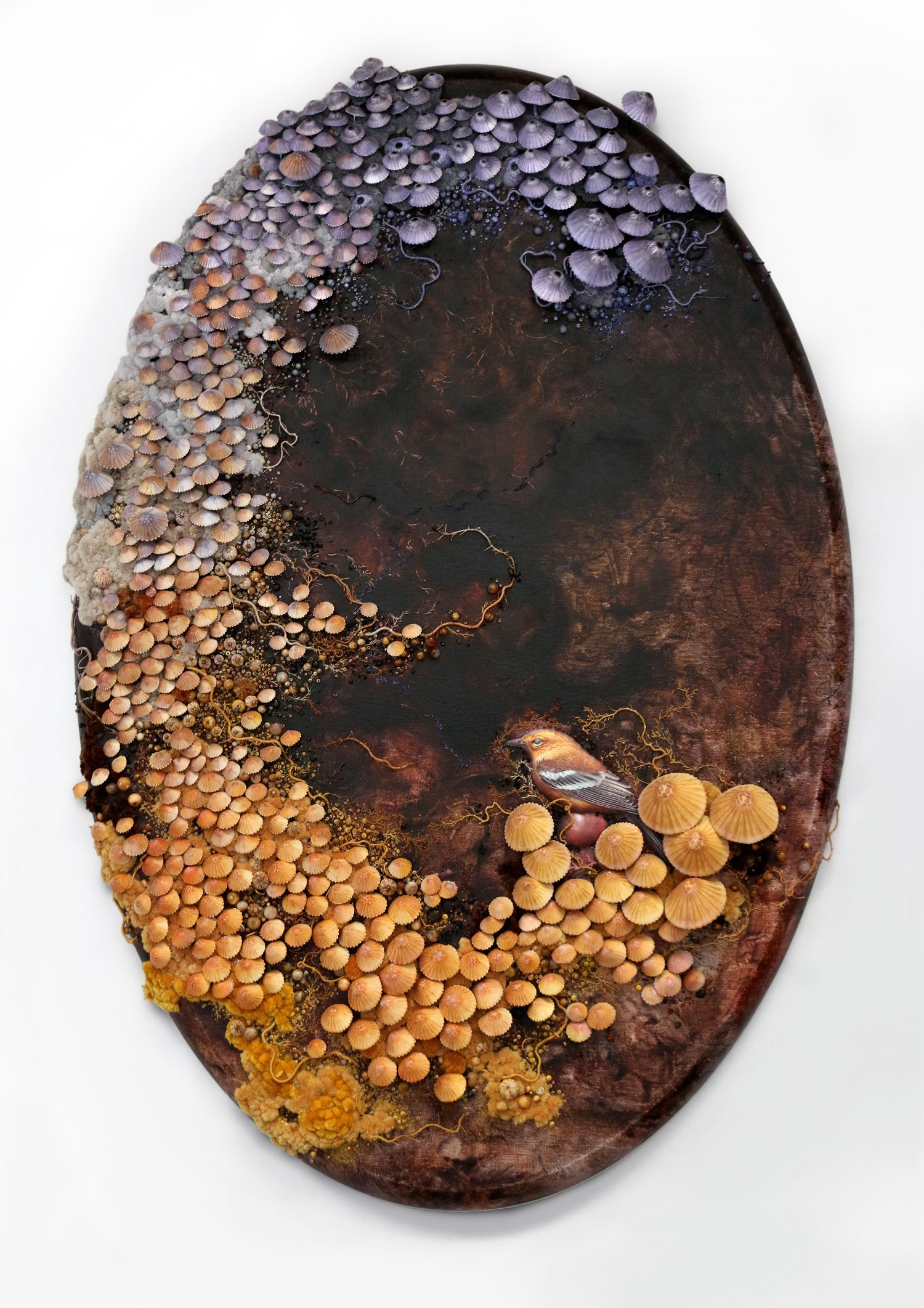
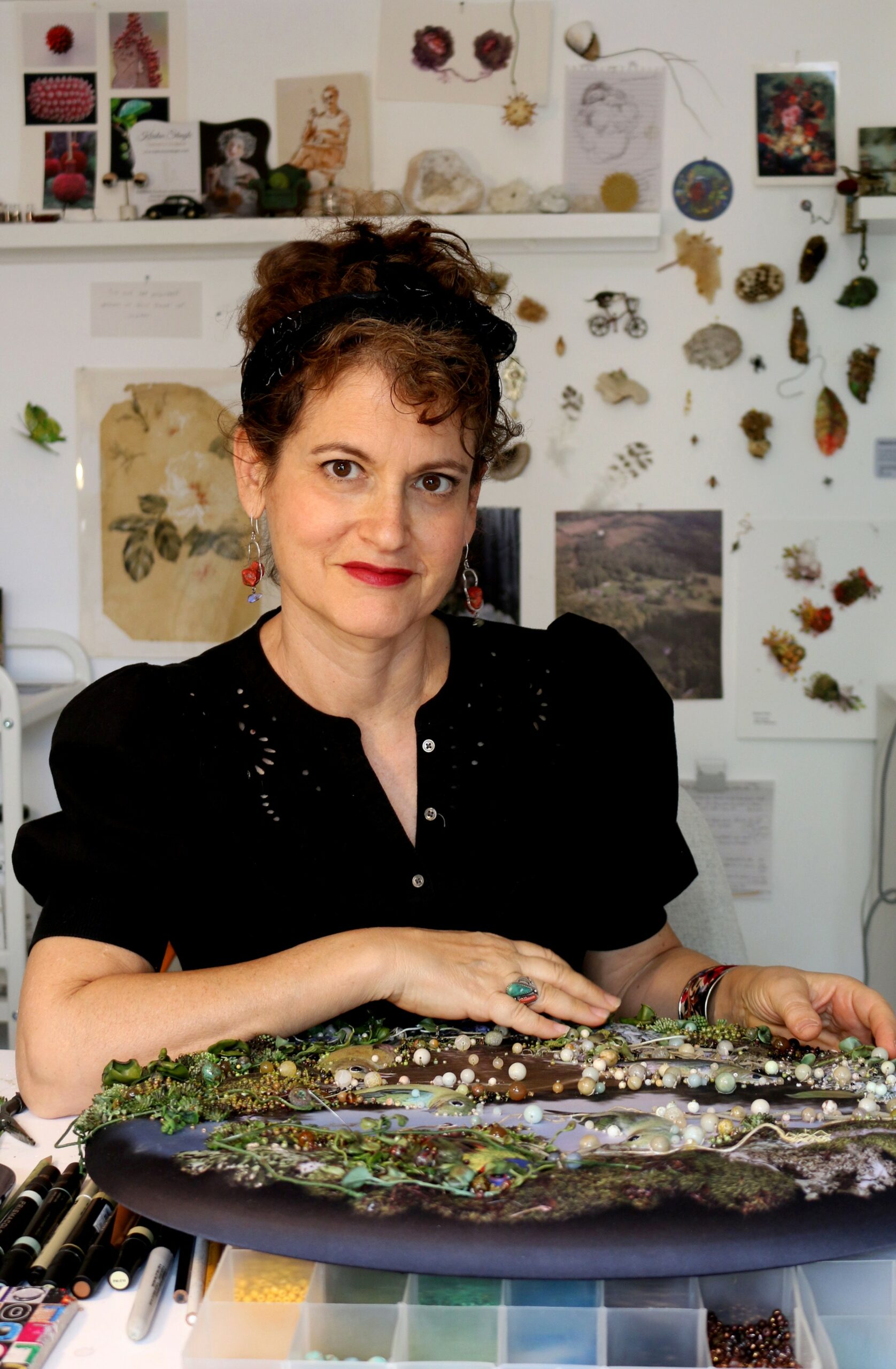
I make sculptures that are the result of my sieving the natural world through my imagination and experiences. They’re hybrids of what I see in nature and what I can’t see, so in each the microscopic merges with the visible. Over ninety percent of the life forms on Earth are smaller than we are, and so much of the world’s precious balance is dependent on the health of the tiniest things. In my work the elements are in constant states of symbiosis, intertwining and altering, in bloom and disintegration. When I first began making them I was very interested in parallels in our own bodies’ ecosystems, especially because my parents were getting older. Because of that, I was very interested in time passing, how quickly life changes, and how we can’t slow or stop time. I now feel this way about the environment, as many of us do.
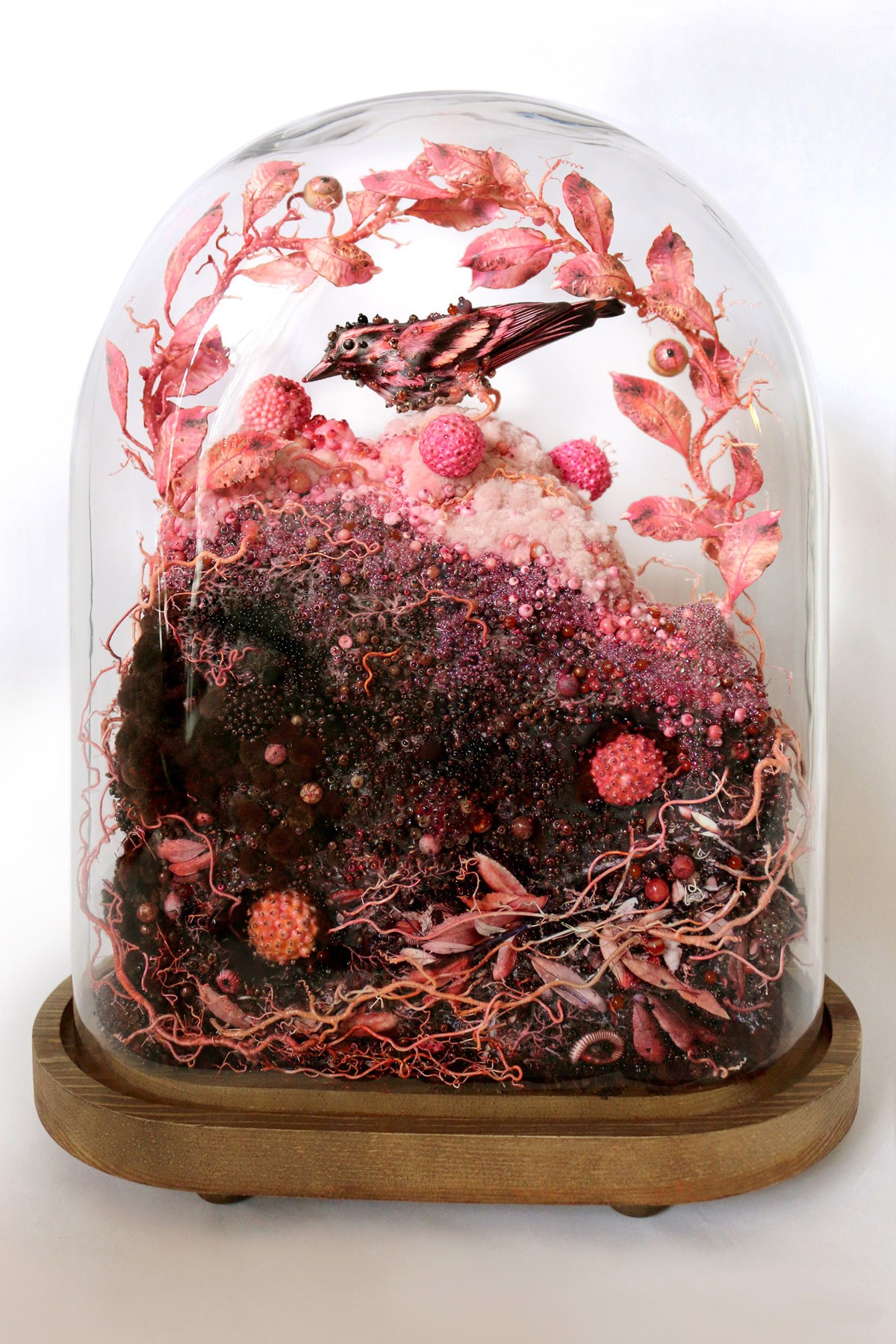
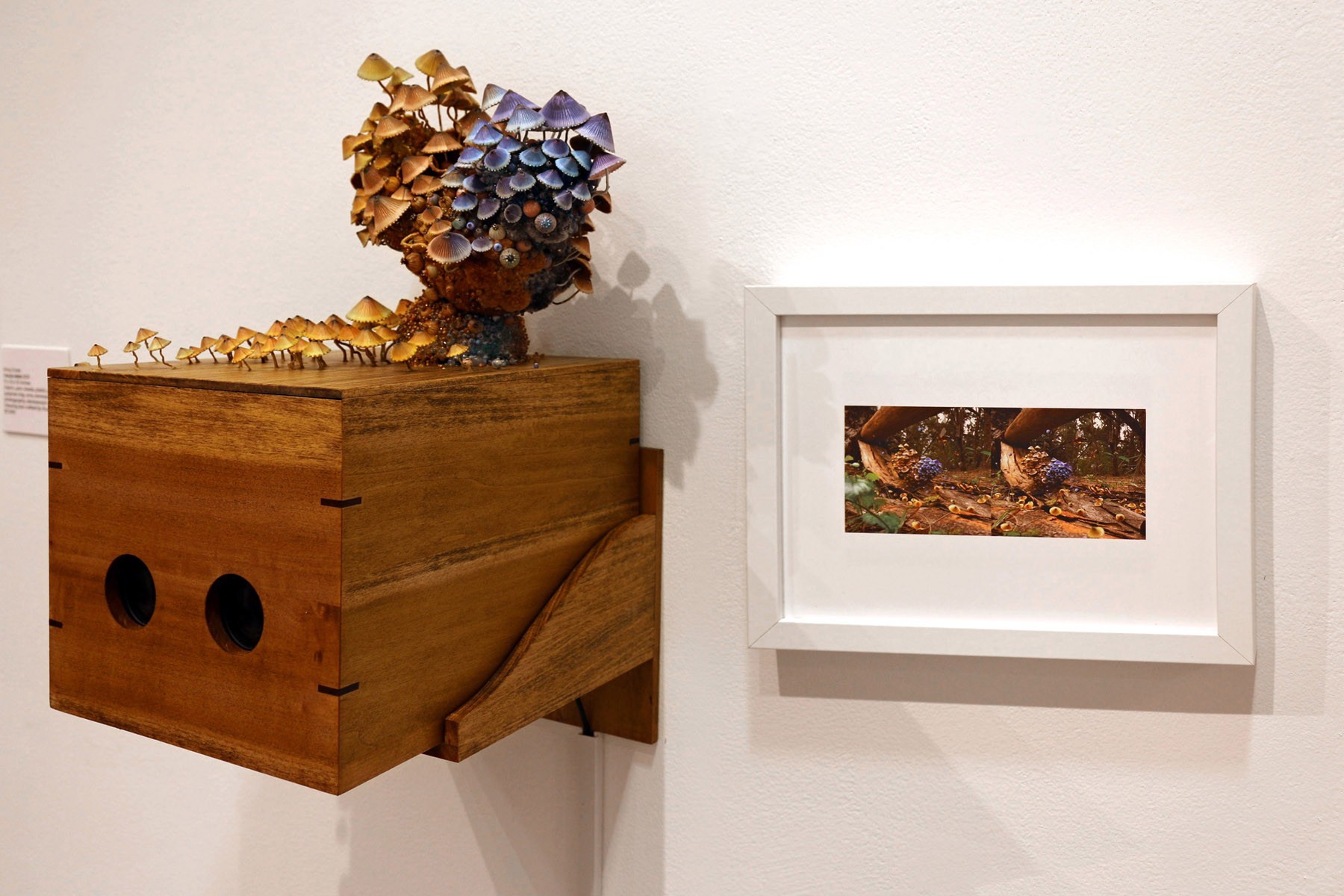
Unlike actual life forms, my sculptures and objects are not made of anything living or once alive, and so, in a way, stop time for me. I make them from manufactured materials – fabric, beads, yarn, wire, paper, plastic, glass, ribbon, polyfoam, all things meant to be used for very specific things, and generally disposable. I remake them into invented plants and moss and fungi and cells and seeds and spores and birds and insects and honeycomb, all interacting, figuring out ways to overcome and thrive. I was one of those kids turning stones over and building tiny villages around tree trunks, later constructing doll houses that I still work on today. I was always trying to create microcosms of the larger world, making it personal, discovering later on that the personal is universal.
My work speaks about the importance of the natural world by describing my experiences both walking the trails in Florida and digging in my own tiny backyard. Every inch contains multitudes, as we do. So along with the bees and the leaves and mushrooms and roots in my sculptures there are human eyes, and even smaller worlds under domes. My work climbs walls but also lives under glass cloches, sits on shelves and in circular frames. I’ve made installations of stereoscopic light boxes and another that “grew” over a period of six months. There’s a emphasis on the miniature and on detail, so I can encourage people to stop for a bit and lean in close – this stopping and leaning in is an important way to get people to notice and fall in love with the life forms that support the lives we live. The more you notice, the more you love, the more it matters to you that we preserve as much of the natural world as we can.
I’m a recipient of a South Florida Cultural Consortium Grant and an Artist Innovation Fellow, was the 2019 SouthArts State Fellow for Florida and the Finalist, and exhibit throughout the South and the United States. I’m part of the newly released book Stitched Journeys with Birds by Martha Sielman. Presently my work is appearing in the four-person exhibit Southeast Contemporary at the Macon Museum of Arts and Sciences in Macon, Georgia. I’m represented by Momentum Gallery in Asheville, North Carolina.
Looking back, what do you think were the three qualities, skills, or areas of knowledge that were most impactful in your journey? What advice do you have for folks who are early in their journey in terms of how they can best develop or improve on these?
Perseverance, first and foremost. Life throws so many obstacles in our way, just getting through a day accomplishing a quarter of what we plan to do is a big thing. But if it’s something you must do, don’t expect the conditions to be perfect. When I was a surface designer I worked 10 hour days designing on average, and I had no space to make personal work. But I cleared a little space on my coffee table, crammed myself into the gap between it and the sofa, turned the tv on and stitched away on a canvas for as long as I could keep my eyes open. Sometimes that was not very long, and I was asleep on the couch with my cat on me after an hour. But these hours added up.
Being open. To the usual things you love, yes, easy. But to things you don’t know much about: books about subjects you’re not familiar with, places you haven’t been to yet, podcasts about stuff you don’t know. I’m not a science person, but taking classes at a planetarium changed my entire world and universe view. I’ve had ideas pop up while listening to scientists talk about theories and facts that I absolutely do not understand. Get up way earlier than usual (once in a while, I mean), because that walk you usually take can be entirely different in the morning (the deer that ran towards me instead of away, the tree filled with 17 pink Roseate Spoonbills, the sky that was filled with hundreds of vultures). I know the last one sounded not so great, but it was truly fascinating.
Find your people. I’m generally an introvert but finding people who love what you love is invaluable. They open your eyes to ideas that would never occur to you, they join you on adventures you may not have taken alone, they help you when you need advice and are more supportive and generous than you could imagine. I came of age in a very competitive time and place, when artists tended to hold their opportunities close, so I was stunned when I began meeting other artists in and outside my community and found them to be so open hearted.
Any advice for folks feeling overwhelmed?
A situation I find frequently overwhelming is something that often comes with any kind of success-being asked to speak about what I do in front of a large group of people. I love making things and writing about things, but talking out loud about making things, not so much. Yet being asked to speak is a wonderful thing, a great compliment, and I always, without exception, say yes. Then I flash back to freezing during my high school Thespian”s Club monologue – all I wanted to do was paint sets! – and I’m 15 again. I immediately assume I won’t be able to remember my name or what I do or why I’m there. I’m certain that I will feel this way for the rest of my life, I don’t think I will ever feel totally comfortable. So I take out my notes. And I explain to the audience that without them they will see my eyes start to wander to the upper right and I will slowly drift off into a vapor of tangents and digressions, and that wouldn’t be good for anybody. People understand this, since a large proportion of the audience would feel exactly the same way. And it turns out, every time, that my life preserver of notes are only there to anchor me to earth, and I actually can speak freely and happily. So the lesson learned is that you don’t have to conform to an ideal of a performance, you can actually do you, and will most likely be the best you can be by being so.
Contact Info:
- Website: amygross.com
- Instagram: amyla174
- Other: momentumgallery.com