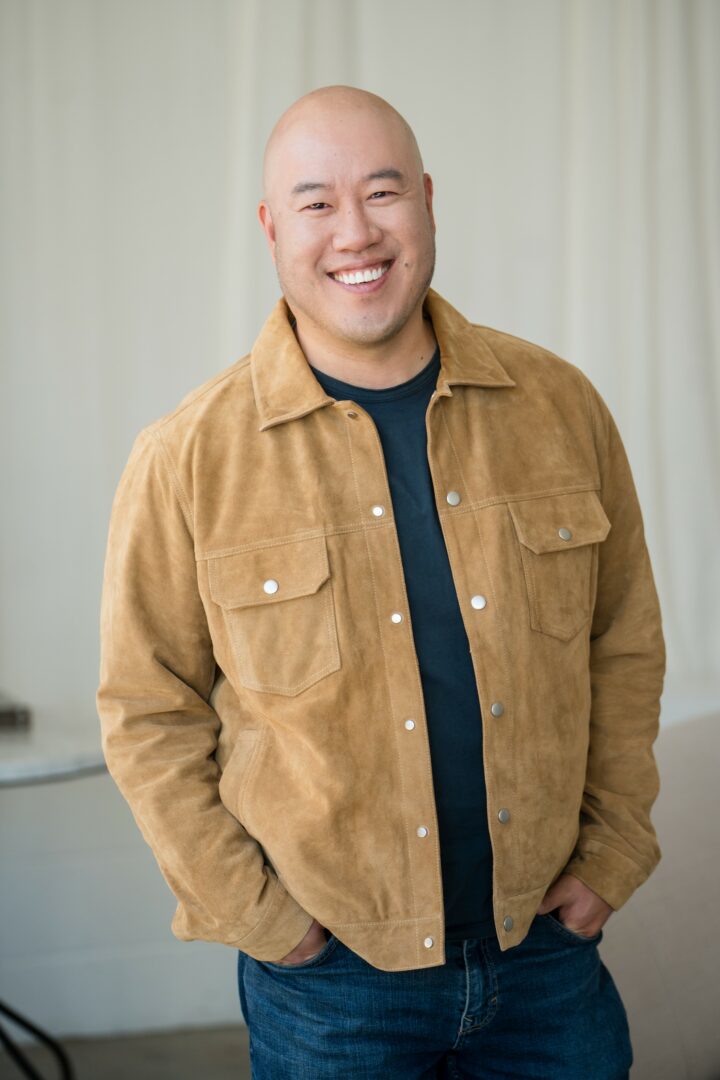
Alright – so today we’ve got the honor of introducing you to Andy Yang. We think you’ll enjoy our conversation, we’ve shared it below.
Andy, so good to have you with us today. We’ve got so much planned, so let’s jump right into it. We live in such a diverse world, and in many ways the world is getting better and more understanding but it’s far from perfect. There are so many times where folks find themselves in rooms or situations where they are the only ones that look like them – that might mean being the only woman of color in the room or the only person who grew up in a certain environment etc. Can you talk to us about how you’ve managed to thrive even in situations where you were the only one in the room?
Through my own therapy and trauma work, I’ve learned to take ownership over my worth, that I am worthy, and that I belong.
As a Korean-American I had to learn how to marry my individuality with my collectivist mentality and heart.
In terms of individuality, I had to first resolve the pain of racism and discrimination and understand it will never really go away. This took many years to accept. In both cultures I had to learn to love myself and understand that I could not control or satisfy perception of others. I had to adjust expectations that fit me, be a blend of both cultures knowing I wouldn’t fit cleanly in either and be secure in that.
Finding the value of a blended self carried naturally into the importance of my collectivist mindset and heart. I value other people in the room and their views, opinions, and talents. Together, we can achieve desires, but I care more about how we support one another not just productivity or outcomes. When the support is felt and reciprocated it fosters sustainability and that to me is more effective and successful regardless of how I look.
Thanks, so before we move on maybe you can share a bit more about yourself?
I’ve been a mental health therapist for the last 12 years.
I started my career in community mental health and worked with foster families and adoptive families. I transitioned into a group private practice and then launched my own business that has thrived.
I market towards and work with kids, adolescence, men, and highly sensitive people, though I will work with anyone who needs help and feels that I am a good fit for them.
I really enjoy my work because it never gets stale. Everyone goes through hardship and every story is unique, yet everyone’s experiences are shared by many. I really enjoy tailoring therapy to each person’s hobbies, interests, strengths, and passions.
I am building a coaching business that I am excited to launch soon which would allow me to pursue other interests and help people in different ways around the country and beyond.
If you had to pick three qualities that are most important to develop, which three would you say matter most?
One skill that I developed in graduate school that I still use today was annually, identifying areas to develop professionally and in my character. I pick a topic to study, seek mentoring or networking, track growth, and I look to integrate it into my personal professional life. To me this balances staying sharp with remaining humble, knowledgeable, and teachable.
To maintain my license, I need to achieve a certain number of hours of continuing education every two years. I really appreciate the constant accountability and opportunity to grow in skill and knowledge. I think that it is a valuable quality to have in any job.
The third skill that I’ve had to develop is self-care and compartmentalization. Without it, I would risk burnout, and it would my impact my ability to be the kind of human being I want to be to my family and friends outside of work. I’ve learned to pay attention to what energizes me versus starts to drain me that used to be good for me. I try to be open to trying new things to have a sense of novelty and vitality sprinkled throughout different parts of my life.
We’ve all got limited resources, time, energy, focus etc – so if you had to choose between going all in on your strengths or working on areas where you aren’t as strong, what would you choose?
I think this depends somewhat on what you are pursuing. But generally, I feel it is better to be a well-rounded person. If you go all in for your strength then you eventually limit what you offer. That’s not necessarily a bad thing, but over the course of life, your strengths may change. Your strengths are finite literally and figuratively. The growing pains and transition time going from strength to strength can be excruciating. If you were more well-rounded, addressing the areas that needed improving is its own form of strength.
Staying comfortable in your strengths is easy and does not require discomfort. Being more well-rounded teaches you to be comfortable with starting from new, develop resiliency and pliability, and can set you up for diversification and open different kinds of doors of opportunities that strength-focused may not. Change is a guarantee, and there will come a time when your strength is no longer serviceable. It’s a matter of when not if. Being well-rounded sets you up for adaptability to changes that come. That’s worth investing in to keep giving yourself options.
Contact Info:
- Website: https://andyyangcounseling.com
Image Credits
Andrea Flanagan
Courtney Huenergardt
so if you or someone you know deserves recognition please let us know here.