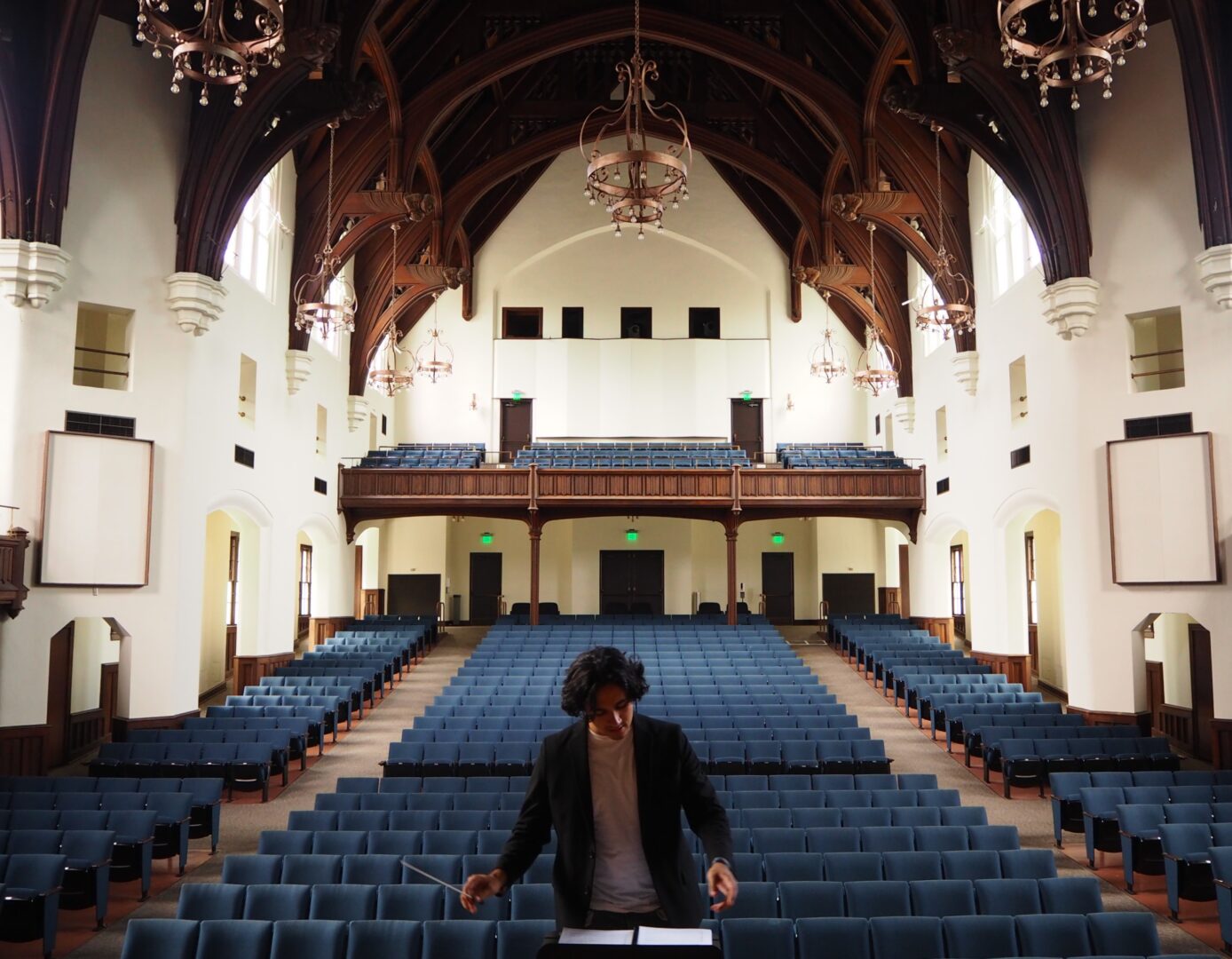
Alright – so today we’ve got the honor of introducing you to Axel Castro. We think you’ll enjoy our conversation, we’ve shared it below.
Axel, thank you so much for taking the time to share your lessons learned with us and we’re sure your wisdom will help many. So, one question that comes up often and that we’re hoping you can shed some light on is keeping creativity alive over long stretches – how do you keep your creativity alive?
I think most artists go through periods of less inspiration, but in the world of media scoring, there isn’t really time to wait for the muse, with deadlines being so short and so strict, especially for composers.
I generally have two things I like to do whenever these droughts come my way. The first thing I always have in mind is not to be afraid to restart. I try to “keep the kitchen open” for as long as possible to allow myself to rewrite if needed. Sometimes, I will have written music that I don’t think works for the film, and I just need to tell myself that it’s okay to delete it and start fresh. I think this gives me a new perspective on whatever scene I may be working on at the time. I now know what I tried before doesn’t work, and can adjust as needed to solve the problem. Of course, this technique means you have some sort of reasonable deadline for the project, and is assuming you aren’t in an extreme rush to get things done, but when I do have the luxury to do this, it works really well!
Another thing I like to do is just take a step back and write something completely irrelevant to the story that is only for me. For example, I write a lot of music for film, and that world has musical choices that are idiomatic to that style of writing. However, there was a film where I just couldn’t come up with something that I liked, and I stepped back, and wrote a country tune to wash away the doubt that was starting to build up. I don’t really like country music, but giving myself a chance to write something with no judgment was really helpful, and serves as a kind of palate cleanser to go back and try again. What also ends up happening a lot of the time is as I am writing that unrelated piece of music, a small musical idea will stick out to me. This could be a specific harmony, or it could just be two notes, but somehow it’ll inspire me to immediately go back and continue working on what I was doing. I find this is the most helpful thing I can do whenever I feel stuck. I usually just delete the piece after I am done and don’t bother to think about it again. It served its purpose and is no longer needed! (Most of the time)
Appreciate the insights and wisdom. Before we dig deeper and ask you about the skills that matter and more, maybe you can tell our readers about yourself?
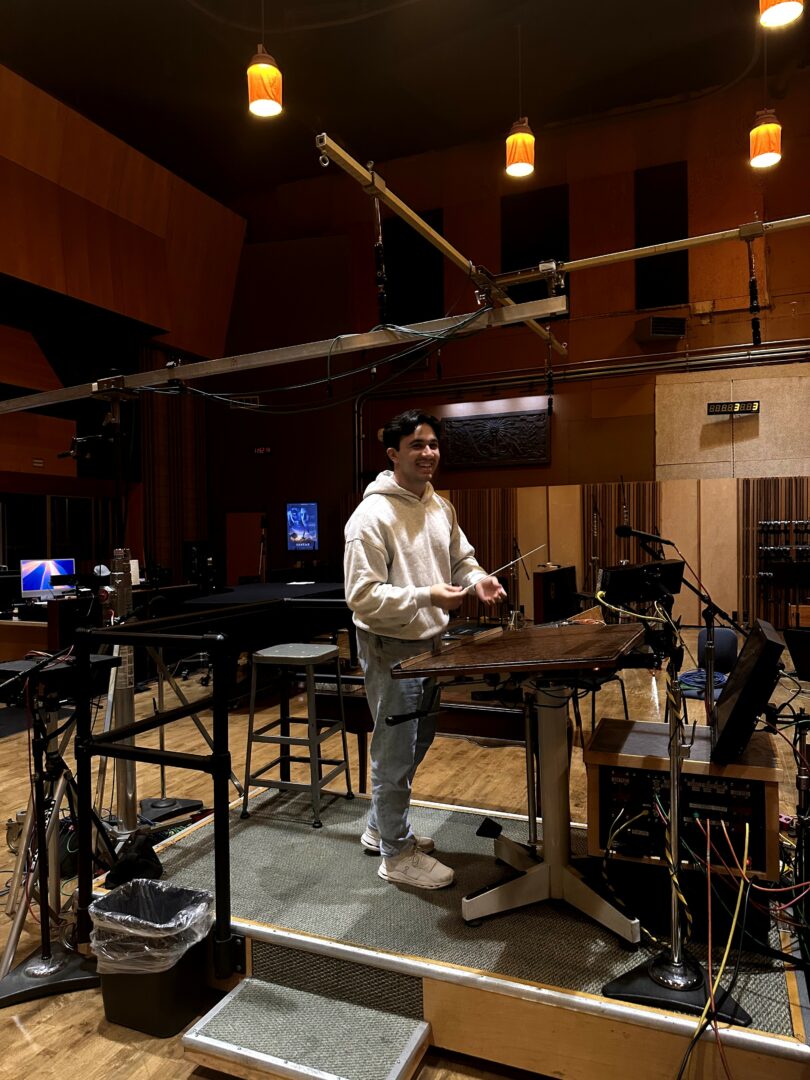
I write film music. There is something really amazing about taking someone’s story and vision and creating a musical counterpart to the visuals on screen. I have no idea how the brain does it, to take a visual and convert it to music, but I think that’s what’s kind of unique about this job. Other types of composing, jazz, concert music, pop, etc. are really great, but the music is truly created out of the inspiration of the individual writing the music with no strings attached. I personally like the idea that film music is still immensely creative, but I find it to be very similar to solving a puzzle. You might write a great musical idea, but when you go to lay it over the film, suddenly we find out that the bad guy got away three seconds too early, and the story doesn’t have as much impact. As a film composer, my job is to cut and edit my musical ideas in such a way that they line up with the important story points in the film while still feeling musical and like one coherent idea. That is where the puzzle comes in, and when a film really starts to feel like magic. That is easily what excites me the most about this job.
Lately, I have been working on several films, and I have had great success with directors calling me back to work on more projects with them. It has been wonderful to build such great relationships with such amazing creatives. Using my film scoring knowledge, I also just had the opportunity to work on an upcoming musical that has high hopes to go on Broadway in the near future. Overall things have really been moving forward lately!
If you had to pick three qualities that are most important to develop, which three would you say matter most?
I think the first big thing is just knowing you aren’t alone. This is a big one for me because I think everyone feels this in one way or another, including myself.
There is an infinite number of ways to create success in the music industry, and while that can be helpful, it can also be alienating since often times you might be creating a new path to success that hasn’t been walked on before. Sometimes I think my music is not good enough, or I am not personable enough, or I don’t know the right people, but if I really take a step back, most people are really in the same boat. I think there has been a hyper fixation on the top 1% of people that surround our person, whether it be some of our friends we see every day, or our favorite influencer on social media, they can make the “average” road to success feel insignificant. We see these people and think they’ve had it figured out since day one. That may be the case, but most people don’t. I think there is some comfort to be had in that. It’s going to be okay, you’re just doing things your way, and that’s probably all you need.
The second thing is to do whatever you do the best you can.
In my first year at Berklee, I took on way too many things at once. This was with the best intentions to bolster my resume and make myself seem important to those who didn’t know me. While my desired outcome did somewhat come to fruition, I look back at the music I wrote, and I can’t honestly say it’s my best work. I was spread out too thin for too long to give the dedication that I could have given otherwise. My point is, instead of taking my time to make something that I was truly proud of and could present to anyone at any time, I was so focused on moving quickly and pumping out content that I now look back wondering what could have been of those scores. Granted, some of my sentiments about my old music are also due to my skills improving dramatically over the last few years, but I think there is something to be said about making sure that you find a balance between doing a lot of work and doing it well.
The last thing is to just be honest.
I find I write my best music when I am not trying to imitate or live up to expectations. Whenever I sit down and write something that I think feels right with the given restrictions set by the filmmaker, it really is amazing what comes together. I think this applies to most things. There is no need to try and follow the footsteps of the greats that came before. Of course, learning from them and respecting them is a wonderful thing to do, but they have already made their mark in their industry. I think in general, people don’t really want a carbon copy of what came before, and are much more interested in something new that works in a way that hasn’t been seen before. I think this goes along with the thing musicians so commonly struggle with, which is “finding your voice”. I have never been too stressed about figuring that out, not because I am better than everyone else, but because I think this is something that takes time, and can only really come to when I write music that is honest and true to my own experiences.
As we end our chat, is there a book you can leave people with that’s been meaningful to you and your development?
By far, the two most influential books I have read are “The Confident Mind” by Nate Zinsser, and “How to Win Friends and Influence People” by Dale Carnegie.
“The Confident Mind” is an excellent book. It was written by a professor at West Point Military Academy who helps students deal with the mental aspect of the tough military training at the school. He goes deeply into the anatomy of confidence and how it works in the brain. A great piece of advice I take from this book is “to love the plateau is to love success”. Zinsser writes in his book about how anyone trying to achieve something great will experience plateaus in their development, and that these moments are when most people quit. We have all experienced that beginner’s luck moment when playing a game or when trying something out for the first time. Then, as you get hooked with your great first experience and start to learn more techniques, you realize you have a lot to learn and not much to show for it. This is incredibly frustrating. According to Zinsser, just keep going. You are giving time for your brain and body to absorb all the new information you are receiving and molding it to create the right idea. This leads to the next big jump in improvement and up to the next plateau, and so on.
“How to Win Friends and Influence People” is also an incredible read. This was written by the great business tycoon Dale Carnegie in 1936, and nearly 100 years later, its ideas still hold up. I think the greatest wisdom I got from reading this is that in order to win people over, you must understand that the game is about what they want. We are all more selfish than we care to admit, and it is those people who can play to this weakness that find their way to success a whole lot easier. His point is rather than trying to convince someone as to why they should satisfy your request, you are much better off explaining how your request will benefit the person you need a favor from. This is a simple rule, but it is one that many people, including myself, overlook far too often.
Contact Info:

so if you or someone you know deserves recognition please let us know here.