Alright – so today we’ve got the honor of introducing you to Brittany Capozzi. We think you’ll enjoy our conversation, we’ve shared it below.
Brittany, first a big thank you for taking the time to share your thoughts and insights with us today. I’m sure many of our readers will benefit from your wisdom, and one of the areas where we think your insight might be most helpful is related to imposter syndrome. Imposter syndrome is holding so many people back from reaching their true and highest potential and so we’d love to hear about your journey and how you overcame imposter syndrome.
I’ve found that coming back to my computer each morning to build my networking foundation and revise marketing ads really quiets that part of myself that feels as though I’m not a business leader. Building relationships with other female entrepreneurs simmers down that part of my brain that thinks “Only if you have an official business degree and suit can you be a business leader, otherwise you’re just not enough –you’re not real.” I think that most of us have a hard time saying and feeling “I’m enough.” And that belief, or lack of belief, follows into our work environment when there’s really a difference when we say “I’m not skilled enough” or “I’m not experienced enough.” We build skills and we build experience. These things are not who we are, there’s a separation between who we are and what skills and experiences we acquire. It takes time to understand that separation, and then it may take more time to feel that separation, to feel what we know. Dealing with impostor syndrome comes with a giant learning curve. And sometimes I even picture the learning curve as this big boomerang coming back time after time. This happens when I’m unsure of something only to remember “Oh, yeah, I’ve got this, I forgot!” Part of that is just making sure I can keep up with myself so boomerangs find me less.
I highly suggest finding a routine where you’re sharing what you’ve learned. I’m a lifelong learner before anything else and I LOVE educating others by writing personal essays that include what I’m making connections about and how it can support us. For instance, I’ll share on either FB networking or town pages that belly dancing can help improve breast health or even the writing life.
The more I write and share what I learn, the more creative and in my own element I feel. I’m being authentic. Another way that I’m being authentic is when I reach out to places that excite me and speak the same language that I do. For instance, I’ve talked to PTs, OTs, and Mental Health Counselors. We don’t all do the same thing, but we all support healing through trauma and can in turn, refer and support each other when it comes to progressing clients in their journey.
Thanks, so before we move on maybe you can share a bit more about yourself?
We all experience trauma in our life and it’s said by multiple mental health organizations that women are twice as likely as men to develop PTSD, in part due to genetics and coping strategies. As a yoga therapist who supports (mainly) women dealing with the effects of trauma, I have seen modalities such as breathwork, movement guided-rest, and even tools from belly dance and writing become a pathway to resolve trauma and lead to decreased anxiety and depression. This opens the possibility for achieving career goals and finding new and supportive relationships.
There’s a difference between taking yoga classes and having yoga therapy sessions. In yoga therapy, the focus is tailored to one’s health situation, needs, and goals whereas a class – whether private or group – is not tailored to someone’s entire being of who they are and how the yoga tools can support them in a given context with a goal. That’s actually what I love about yoga therapy, you really get to see and know the person. In a yoga class, as a teacher, I am keeping an eye on my students and the environment, but I’m not able to zoom in on how each person’s nervous system is doing and meet their healing needs under a specific situation, something that is done in yoga therapy sessions.
What I can do, whether it’s in a trauma-informed class or session, is discuss how we get to choose the direction of our breath, movement, and stillness. We have stories that stay in our bodies and we have the capability to change these stories. I refer to this as fostering “C.H.O.I.C.E.S.:” Control, Honest movement, Opportunities, Internal sensations, Creativity, External sensations, and Self compassion. When we give ourselves permission to explore new ways of moving forward, we are empowered and can find safety.
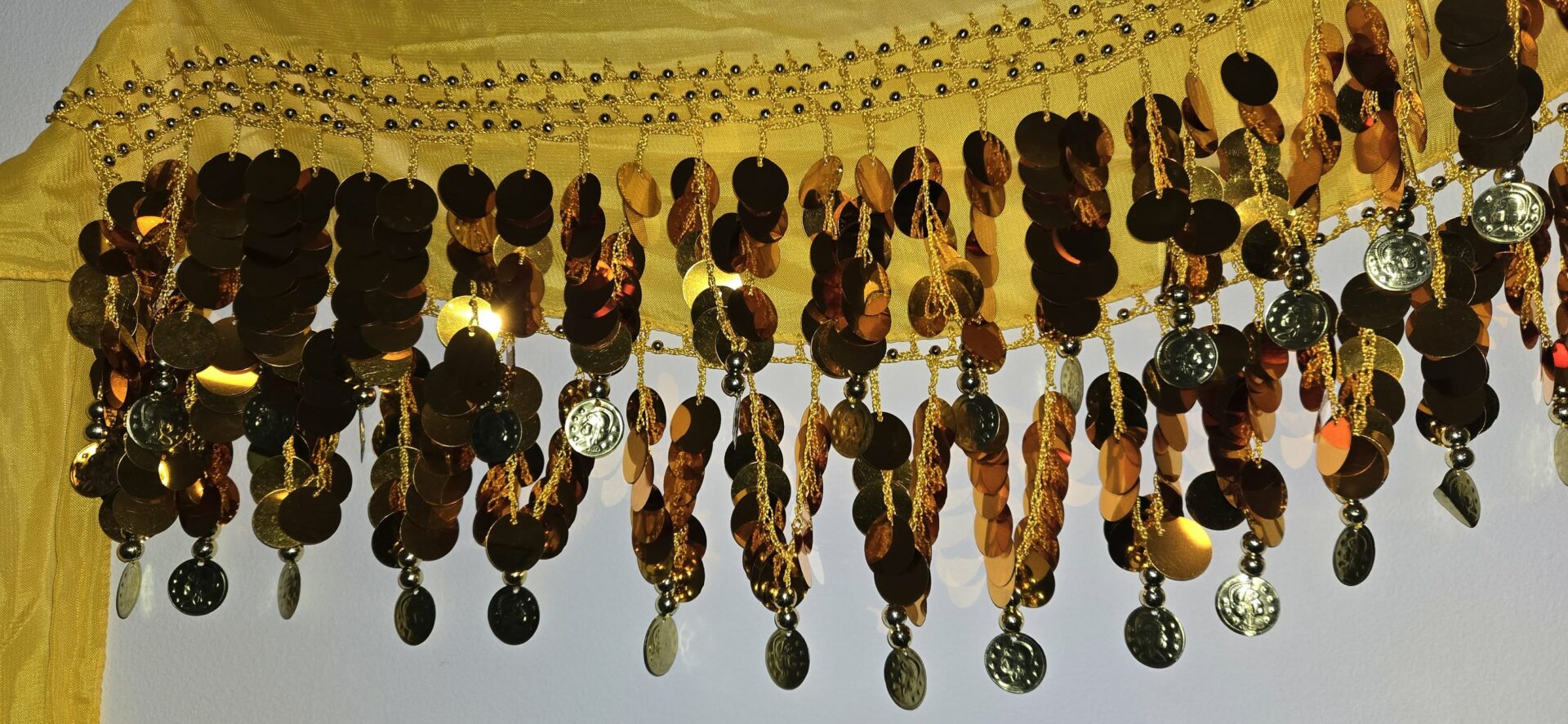
Something unique and cool about how I educate is that I use belly dance tools. If and when it’s appropriate, I use a hip scarf with coins with clients. This offers them a felt-sense of their movement, where they are in space, and what’s happening internally. All of these things together can cultivate control, especially if this hasn’t been a familiar or safe concept prior to exploring.
I also bring in self-care writing called Trust Fall Writing. The roots of this practice are based on Laurie Wagner’s Wild Writing. I was fortunate enough to take Wild Writing Teacher Training with the beautiful Laurie Wagner last year. In Wild Writing, we write as fast as is comfortable after hearing a piece of writing (typically a poem) and being offered a prompt to start writing from. This quick and constant writing allows us to bypass our inner-critic. My process is a bit different as we don’t share our writing, but I instead ask reflective questions about the voice that’s on the page. I call it Trust Fall Writing because we are catching anything that comes-parts of stories, parts of sentences, imperfections, realities of the mind. And the reflective questions toward our words allow us space to visit how we treat ourselves and the world around us. For instance, one question is, “Is there kindness or judgment in your voice on the page?” Before learning about our movement, breath, rest (including meditation), we need to cultivate a practice with our own ethics and restraints. I see that as the beginning of yoga practice. If you look up Patanjali’s 8 limbs of yoga, ethics is the first part that we cultivate. And it’s the first part for a reason, if we start right into movement and breathing without understanding how we think and treat our body, we can end up harming ourselves, even others. I think of Trust Fall Writing as practicing yoga in a very different way than how we see it in society. I do hope that as more people practice this writing, our individual morals and outlooks become healthier, and in turn, we create healthier morals in our community.
I’m currently creating some short clips for my “Understory of a Yoga Therapist” newsletter that demonstrates how we can learn from the hip scarf teaching tool. I call these clips “Coin for thought” instead of “food for thought,” another way of digesting something to think about.
My most recent writing piece has actually just launched on Belly Dance New England’s website: “My Breasts are Not Verbs.” We were able to get it up in time for Breast Cancer Awareness Month, which I also see as Breast HEALTH Awareness Month. The piece is about how belly dance promotes breast and immune health and invites us to become more aware of our daily movement and stillness patterns when there’s stagnation in the lymph system. It was a really personal piece to write and it’s meant to be uplifting for anyone who reads it. I sort of pretended to be my own yoga therapy client as I put it together, growing my awareness during and after exploring exercises and noticing correlations (not “causations”) between my habits and health.


Looking back, what do you think were the three qualities, skills, or areas of knowledge that were most impactful in your journey? What advice do you have for folks who are early in their journey in terms of how they can best develop or improve on these?
What comes to mind with that question is how I’ve learned to be with two skills or two opposing skills at the same time. I know I need to keep educating myself and staying up-to-date with what’s happening in my field and my clients with their situations, and yet, the more I learn, the more I need to remind myself to have that “beginner’s mind” because we won’t know everything and I don’t want my knowing to get in the way of my lifelong learning nature. That is, I don’t want to be done absorbing new things and tell others what I know is true all around, because it may not be. This is also a humble reminder to stay in my own lane when working with a client’s health situation – I don’t diagnose anyone or tell them what they should or should not be doing. What I do is offer ways of being curious so they can learn about where they are in their journey and what they need. I’m constantly coming back to how someone is doing in the moment and am constantly evaluating where we can go from there based on what information I get from them. It’s truly about finding more opportunities for growth each time I see someone -whether that’s physical, emotional, mental, spiritual, or all of the above. This is why I just love the beginner’s mind concept so much. Everything is open, there’s no judgment while being curious.
Staying curious has also impacted my journey on building my business. There’s a poem called “You Just Never Know” by Gloria Heffernan and she puts it so beautifully: “when I feel inclined to roll my eyes/at the woman in the supermarket/holding up the line while she fumbles/with a bundle of coupons–/You just never know if her children/had enough to eat last night.” I keep this image in my back pocket because meeting people where they are is exactly that – being open and present to whatever they’re moving with and through in life. Cultivating a more nonjudgmental nature, constantly practicing kindness toward myself makes all the difference in supporting others in the business world…and I mean clients and other business leaders. As I network, I stay curious and excited about their creativity. I believe that they sense my enthusiasm and that positive space supports both of us.
We’re all human going through things when it comes down to it. We need to remember this first in order to succeed in any and all relationships.

What was the most impactful thing your parents did for you?
Each parent impacted the way I do and see my work in different ways.
Whenever my mom needed to make phone calls for appointments or house projects, she’d have a notepad and any information needed in front of her at the kitchen table. I’d hear her ask questions and then she’d write down the details of the call. And I hadn’t realized how much I was paying attention to her process until I had my first job working in a law office and I was doing the same thing on calls. At the time, I thought of it as “being your own advocate” and doing your research. That’s sort of evolved as I listen, watch, and take notes in my therapy sessions. I’m brought back to how important it is to ask questions without judgment and gain clarity. I also think of this when marketing and networking. I bring my questions and make sure that I inform people of what I do and how because I’m still needing to be my own advocate at the most basic level. My mom and her calls taught me how showing up makes a difference for everyone involved in the process, regardless of what the situation is.
My dad would sit on the edge of my bed on nights I couldn’t fall back to sleep. He’d have me imagine a field or meadow with cute animals. I don’t think I knew much about meadows at 6 or 7 years old, but that imagery eventually relaxed me enough to stay still and fall back asleep. And this, like with my mom making phone calls, evolved over the years and I see the “being relaxed back to sleep” as shifting my focus from something that isn’t working to something that is working. For instance, if I have a flyer on a library bulletin board that doesn’t draw in potential or prospective clients, I won’t keep advertising at the library. I’ll find other venues that may be more relevant that do attract people to my work. Focusing on something that’s not working is like looking at the clock while you’re having trouble falling asleep.
My mom taught me presence and my dad taught me perspective. The two are essential for building and creating anything from a business to a piece of art, to a healing relationship in therapy. Both qualities are meant to add support, a foundation. My two pillars gave me two other pillars to work with.
Contact Info:
- Website: https://www.understoryyogatherapy.com/
- Linkedin: https://www.linkedin.com/in/brittany-capozzi-808236131
- Youtube: https://www.youtube.com/@understoryyogatherapy
- Other: https://substack.com/@brittanycapozzi
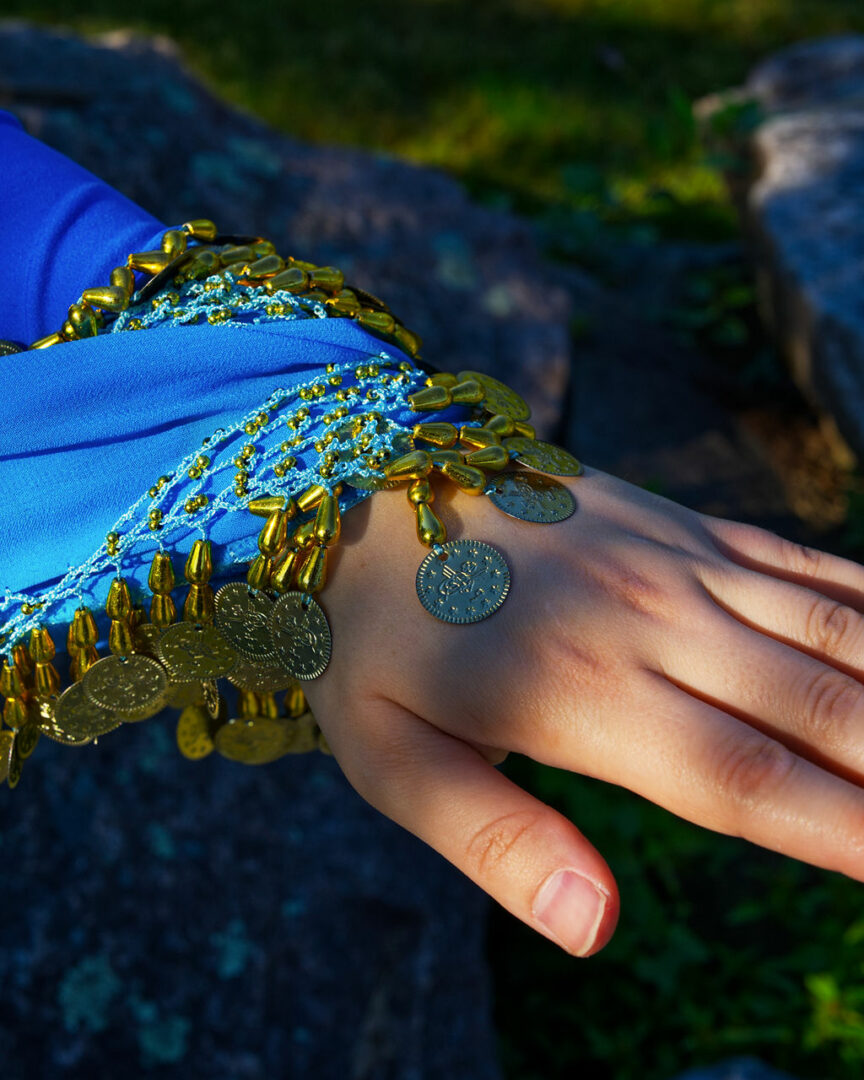
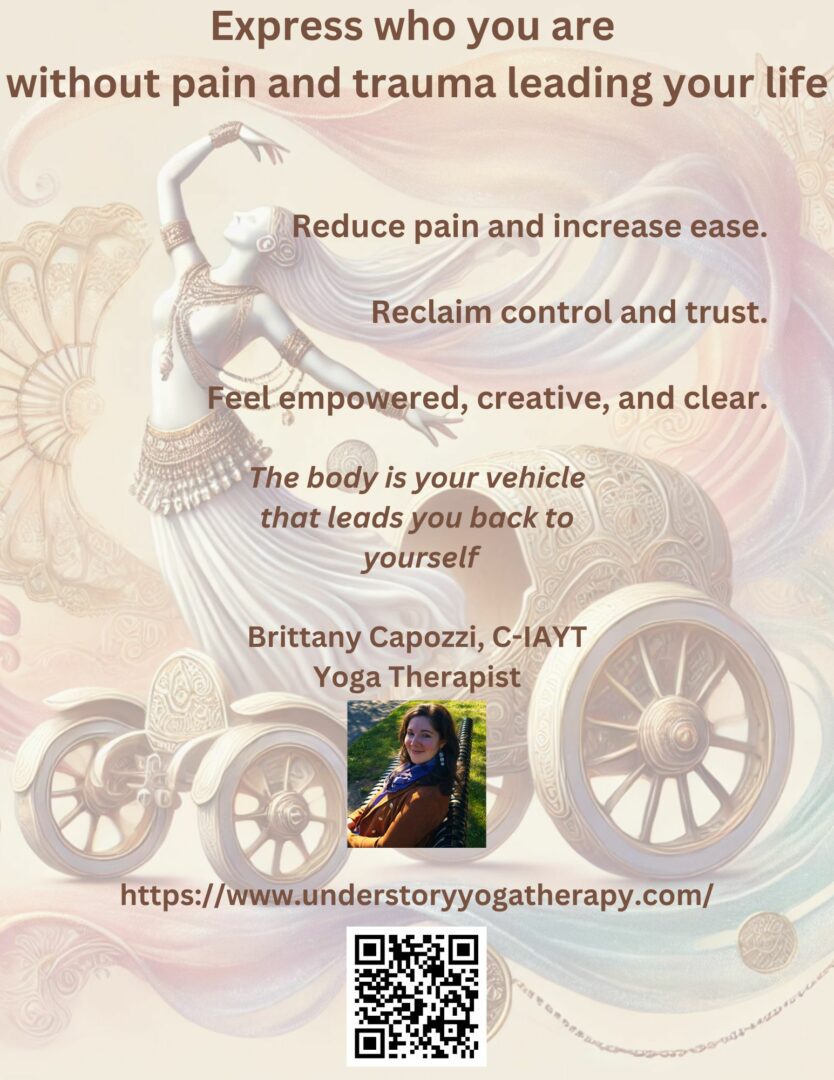
Image Credits
Jailene De La Cruz
Shannon Matos
so if you or someone you know deserves recognition please let us know here.