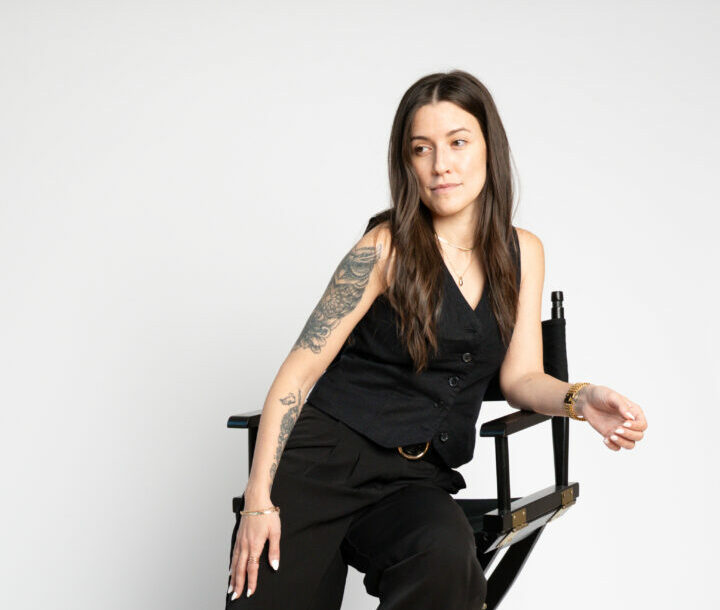
Alright – so today we’ve got the honor of introducing you to Brooke Major. We think you’ll enjoy our conversation, we’ve shared it below.
Hi Brooke , thanks for sharing your insights with our community today. Part of your success, no doubt, is due to your work ethic and so we’d love if you could open up about where you got your work ethic from?
My work ethic was shaped by the example of my parents, both of whom demonstrated throughout their lives that meaningful work is something to embrace, not avoid. Growing up, I watched two people who didn’t simply work hard—they genuinely loved what they did. Their dedication and passion taught me that when you find the right calling, work stops feeling like an obligation and becomes a purpose.
My father has always been an extraordinary example of perseverance and commitment. For many years he worked in real estate, and today he owns and manages a nursing home that employs about forty staff members. In addition to that responsibility, he also runs a drive-in theater and Airbnbs. Managing several businesses at once requires constant attention, organization, and resilience. What inspires me most is that he continues to do this at the ripe age of eighty and still loves working every day. Watching him approach each day with energy and enthusiasm taught me that work can be a lifelong source of fulfillment when it is done with passion and purpose.
My mother shared that same devotion to her career. She was a flight attendant with Delta Airlines for fifty years and often said she loved every second of her time in the air. Even after retiring, she expressed that she missed it deeply because it brought her so much joy. Her career showed me that when someone truly loves their profession, the years pass quickly and the work itself becomes a meaningful part of their identity.
Thanks to my parents, I grew up believing that work should never feel like a burden. I believe that when you find what you love to do, work is no longer simply “work”—it becomes a passion. That belief shapes how I live and how I approach my art every day.
My routine reflects the discipline and dedication I learned from them. I usually wake up between five and six in the morning and begin the day with my morning pages, clearing my thoughts and focusing my intentions. From there, I spend time working with horses, carefully studying their movements, anatomy, and energy. Observing them closely allows me to understand their muscles, posture, and form in a way that photographs alone cannot capture. I then return to my studio to paint, applying what I have learned from being around them. Later in the day, I often return to the horses again to continue observing and learning before going back to my paintings.
This rhythm of observation, practice, and creation is central to my process. The horses teach me how their bodies move and how their muscles shift with each step. My paintings become a reflection of that study, allowing me to portray their strength, structure, and spirit with greater accuracy.
In many ways, my work ethic is a direct reflection of my parents’ example. They showed me that dedication, curiosity, and passion can sustain a lifetime of work. Their love for what they did taught me that the most meaningful careers are the ones driven by genuine enthusiasm. I approach my own work with the same mindset: to wake up each day ready to learn, to practice, and to create with passion.


Thanks, so before we move on maybe you can share a bit more about yourself?
My career as an artist has always been driven by a deep fascination with horses and a desire to capture their power, movement, and presence in a way that feels both sculptural and timeless. I work in sculpted oil painting, a monochromatic style that allows me to focus intensely on form, light, and anatomy. Rather than relying on color, I build the image through layers of oil paint, shaping the surface so that the muscles, structure, and movement of the horse emerge almost like a sculpture on the canvas. The result is a work that sits somewhere between painting and relief, where light interacts with the raised paint to bring the subject to life.
What excites me most about my career is the continual process of learning from the horses themselves. My work begins long before I step into the studio. I spend time observing and working around horses, studying how their muscles move, how their bodies shift with every stride, and how their energy translates into form. That understanding then guides my painting process. Each piece becomes a study of structure, movement, and spirit, allowing me to translate what I see and feel into the sculpted surface of the painting.
Working in a monochromatic palette has become central to my artistic voice. By removing color, the viewer’s attention is drawn entirely to the physical presence of the horse—the curve of a neck, the tension of a shoulder, the rhythm of movement. The sculpted oil surface catches the light in a way that constantly changes depending on where the viewer stands, giving the painting a dynamic and almost living quality.
It is incredibly rewarding to see this work reach audiences through galleries and exhibitions. I am currently represented by numerous galleries throughout the United States as well as one in the United Kingdom, which has also become my art agent. This growing network has allowed my work to travel widely and connect with collectors who share a passion for horses and equestrian culture.
There are several exciting events coming up this year. My work will be featured at multiple art fairs in the United Kingdom, expanding my presence there through my UK representation. I am also honored that my artwork has been selected to be displayed in the VIP Lounge at the Kentucky Three-Day Event, one of the most prestigious equestrian competitions in the world as I have recently been accepted into Cross Gate Gallery in Lexington, Kentucky, a respected gallery known internationally for equestrian art.
Other upcoming exhibitions include an opening at Whiteside Art Gallery in North Carolina, as well as group exhibitions that will take place throughout the year in Charleston, South Carolina; Saratoga Springs, New York; and Atlanta, Georgia. These opportunities allow my work to be seen by diverse audiences and collectors across the country.
What continues to make this career feel special to me is the combination of artistic exploration and connection with the equestrian world. Each painting is not just an image but a physical interpretation of the horse’s strength and elegance. Sharing that vision through galleries, exhibitions, and international events allows me to keep pushing the work forward while connecting with people who appreciate the beauty and spirit of these extraordinary animals. For more about my work and current projects, visitors can explore my portfolio at www.brooke-major.com.


If you had to pick three qualities that are most important to develop, which three would you say matter most?
Looking back on my journey as an artist, there are three qualities that have had the greatest impact on my development and success: discipline, deep observation, and authenticity of vision. These are the foundations that have allowed me to grow both technically and creatively, and they are also the qualities I encourage other artists to cultivate in their own paths.
1. Discipline and Consistency
Artistic growth does not happen by chance—it happens through daily commitment. For me, discipline has meant structuring my days around both study and creation. I often begin early in the morning, clearing my mind and preparing for the day before spending time with the horses I study and paint. That consistent rhythm of observing, learning, and then returning to the studio has been essential in developing my craft.
My advice to artists is to treat their work with the seriousness of any profession. Inspiration is wonderful, but consistency is what builds skill and confidence over time. Showing up every day, even when the process feels challenging, is what ultimately allows an artist to refine their voice.
2. The Power of Observation
Because my work focuses on horses, observation has become one of the most important skills I have developed. Understanding the anatomy, movement, and energy of a horse requires time and patience. I spend a great deal of time studying how their muscles shift with movement, how their posture changes, and how their physical presence translates into form.
For any artist, learning to truly observe the subject is transformative. Whether someone paints animals, landscapes, or people, the deeper the observation, the stronger the work becomes. My advice is to slow down and spend time with the subject itself. Photography can be helpful, but nothing replaces direct experience and close study.
3. Authenticity and Artistic Voice
The third quality that has been vital to my journey is staying true to my own artistic vision. My sculpted oil paintings are monochromatic and highly textured, focusing on form and structure rather than color. This approach evolved naturally through my fascination with anatomy and movement, and it has become a signature part of my work.
For artists, developing an authentic voice takes time. It often requires experimenting, taking risks, and trusting your instincts. My advice is not to chase trends or try to imitate what others are doing. Instead, focus on what genuinely fascinates you. When your work comes from a place of passion and curiosity, it will resonate far more deeply with others.
Ultimately, these three elements—discipline, observation, and authenticity—work together. Discipline keeps you moving forward, observation deepens your understanding of your subject, and authenticity ensures that the work you create is truly your own. For me, these qualities have shaped my entire journey as an artist, and they continue to guide how I approach every painting I create.


Before we go, any advice you can share with people who are feeling overwhelmed?
Feeling overwhelmed is something every artist experiences at some point, especially when their career begins to grow and the demands of galleries, collectors, commissions, and logistics all start happening at once. For me, I’ve learned that feeling overwhelmed is often a sign that things are expanding, but it also means I need to return to the structure and mindset that keep me grounded.
The first thing I do when I feel overwhelmed is return to the work itself. My relationship with the horses and the process of painting is the center of everything I do. Spending time observing horses, studying their movement, and working in the studio brings me back to the reason I started this journey in the first place. When I reconnect with that purpose, the outside pressures feel much more manageable.
Another strategy that has helped me is creating clear boundaries and organization around the business side of art. As an artist working with multiple galleries and collectors, there are many personalities, expectations, and timelines involved. I’ve learned that it’s important to communicate clearly, prioritize projects, and not feel pressured to say yes to everything immediately. Taking the time to structure deadlines, schedule work realistically, and sometimes pause before responding allows me to approach decisions with clarity rather than stress.
I also remind myself that growth naturally brings complexity. When an artist begins to show in many galleries, participate in exhibitions, and receive commissions, the logistics and communication can become intense. Instead of seeing that as chaos, I try to see it as a sign that the work is reaching more people. At the same time, it reinforces the importance of building the right support systems—whether that means trusted gallery partners, representation, or simply better systems for managing communication.
My advice to other artists who feel overwhelmed is to return to your foundation. Ask yourself why you started creating in the first place. When the noise of business and expectations becomes too loud, reconnecting with the creative process can bring clarity and calm. It’s also important to pace yourself, stay organized, and remember that you are allowed to shape your career in a way that protects both your creativity and your well-being.
In the end, the goal is to keep the passion for the work alive. The administrative side of an art career will always have challenges, but when you stay connected to the creative heart of what you do, it becomes much easier to navigate everything else with perspective and balance.
Contact Info:
- Website: https://www.brooke-major.com
- Instagram: https://www.instagram.com/brookeseeart
- Linkedin: https://www.linkedin.com/in/brooke-major-86356058/


so if you or someone you know deserves recognition please let us know here.