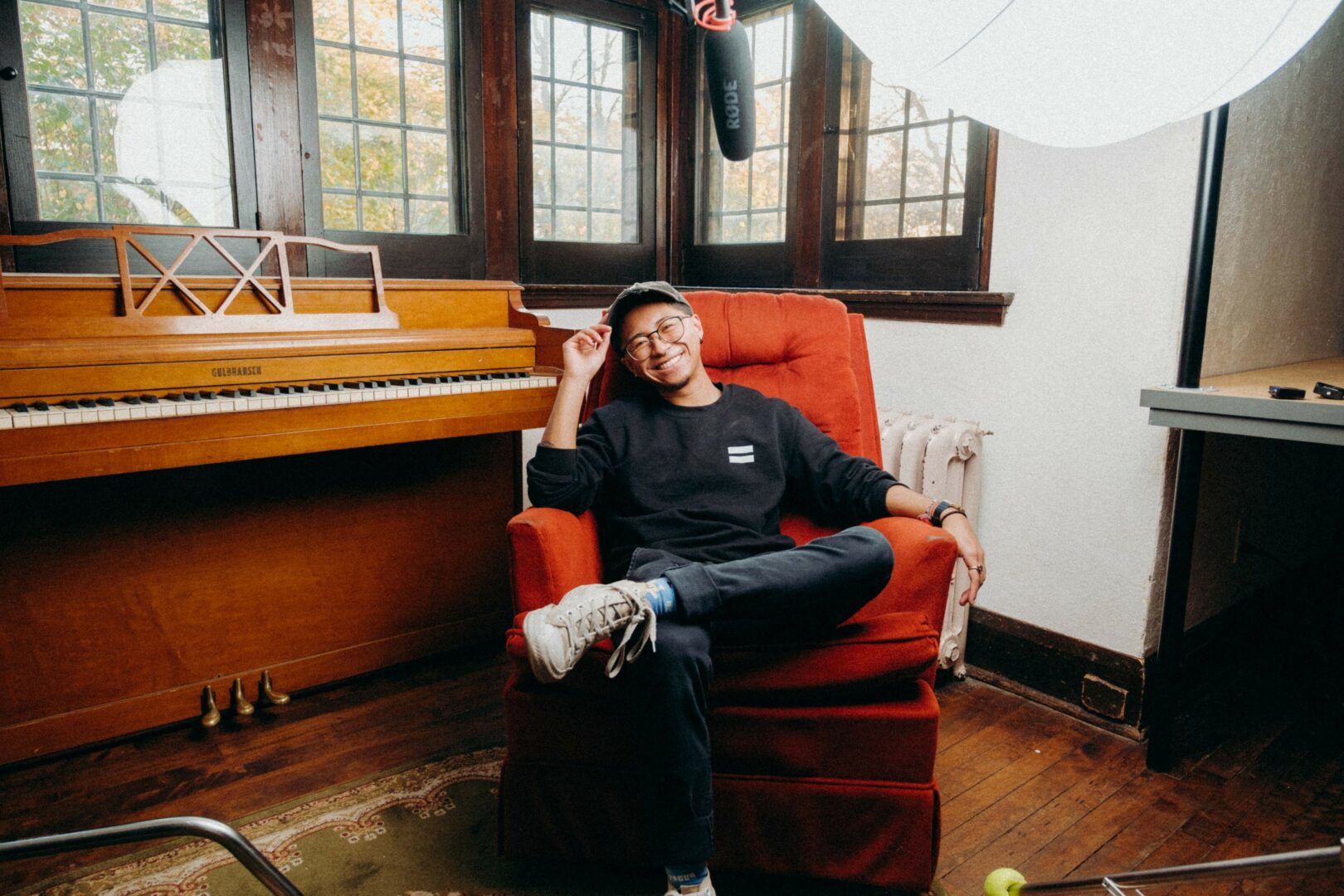
We’re excited to introduce you to the always interesting and insightful Cal Campos (they/them). We hope you’ll enjoy our conversation with Cal below.
Hi Cal, great to have you with us today and excited to have you share your wisdom with our readers. Over the years, after speaking with countless do-ers, makers, builders, entrepreneurs, artists and more we’ve noticed that the ability to take risks is central to almost all stories of triumph and so we’re really interested in hearing about your journey with risk and how you developed your risk-taking ability.
Before I begin, I want to note: please read with care! This share talks about heavy and personal topics including homophobia, suicidal ideation, mental illness, existentialism, death, sobriety, and family trauma. Feel free to skip ahead to the next question if that feels right in your body. 🖤
My ability to take risks has stemmed from a lot of different places. The two main spaces I would say it stems from is my childhood, and my thirst for a life that “I chose.”
I was forced at a young age to question the world as it’s been handed to me. I grew up in an oppressive and homophobic household, school system, and religious community. At around 4 years old, I had my first crush on a girl, and a few years later came to terms with being a lesbian.
From this point on, my life became all about how to erase this part of myself. That put me through a very tumultuous 18 years of childhood: almost losing my origin family, suicidal ideation, profound depression and self-hatred, and not having hope for what my adult life could look like.
Ever since, it has felt like taking risks has been a pillar of my life. Thematically, I’ve had no choice except to think outside of the box, sometimes while in Survival Mode. On one hand, that has left me with quite a bit of trauma, medication for my mental illness, and a hefty therapy bill (jokes aside, therapy is amazing and life-changing). On the other hand, I got to see the world through an incredibly unique lens and had no choice except to take risks as a part of my life.
This brings me to my next point. Because I spent so much of my life hating myself, I have aggressively been wanting to Be Alive and to spend my time on earth doing what I want to do.
I wouldn’t describe myself as a morbid person, but I would describe myself as a philosophical person. A reflective person. An intentional person.
I think about this often: one day I will die. And when I’m on my deathbed, what do I want to look back on? Do I want to look back and wish I had done more? How do I mitigate regret? It’s been quite clear to me that life moves fast, and I don’t want to waste a moment doing something that doesn’t feel right for me. It’s a way to honour my 13-year-old self, my current self, and my future self.
So I often remind myself that I would rather live 30 years of life doing exactly what I want, than live 75 years of life being alive but not living. And that has been my driving force behind taking risks.
Here is a non-exhaustive list of risks that I have taken. It might sound like a list of many traumas, but bear with me – I have some takeaways from it:
Coming out of the closet as a lesbian at 13, even though it meant being rejected by my parents
Starting a YouTube channel at 13 where I sang covers (even though singing in front of others was a huge fear of mine)
Continuing to go to highschool when I was forced out of the closet and experienced severe bullying
Coming to terms with being transgender
Changing my name
Changing my pronouns (despite being misgendered daily)
Going on hormone replacement therapy
Starting a media business during a worldwide pandemic when disposable income was not accessible for most
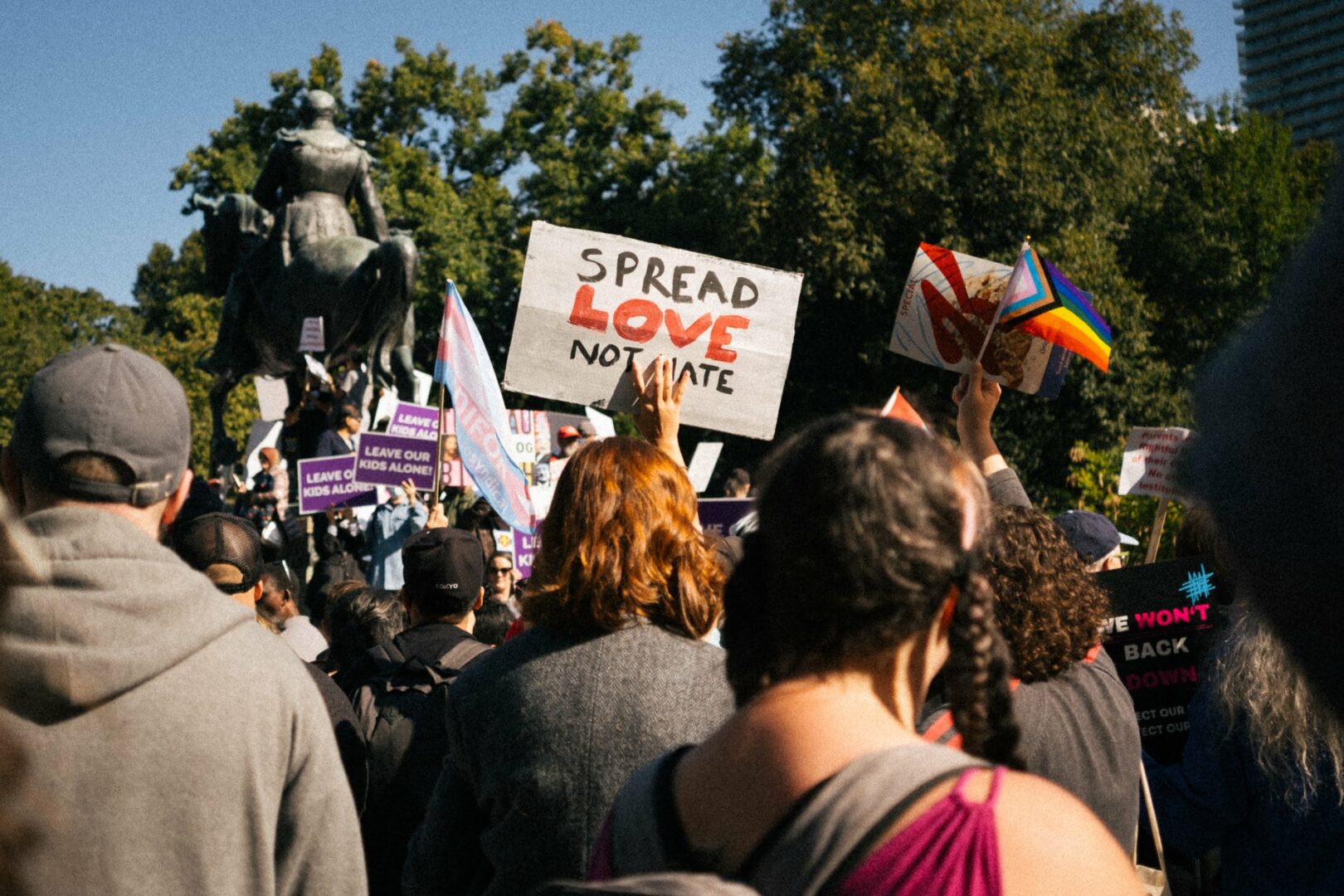
Being visible as a Queer, Transgender Media Producer despite the incredible violence that the Transgender community is experiencing
Going fully sober (now almost 3 years!) and having mini challenges with myself on how many cups of water I can drink in a night of partying
Going skydiving
Forcing myself to go to events that I feel intimidated in (e.g. community events where I know no one)
Going on LOTS of solo dates
Eating dinner alone at restaurants (yum)
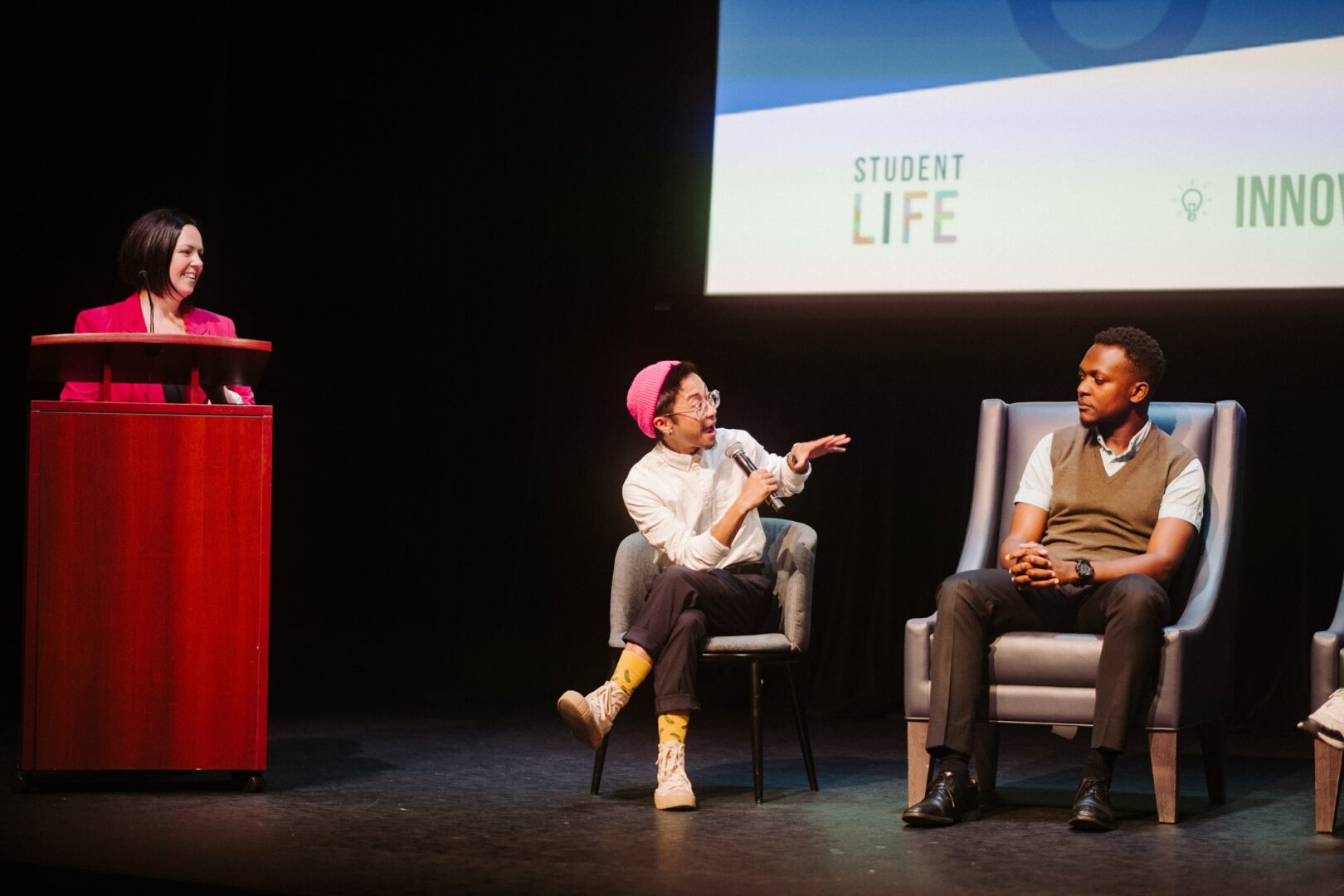
This list has taken me to places 13-year-old me would be sobbing and screaming to hear. I’m now a professional public speaker speaking to students across Canada on why self-love, inclusion and kindness is important; I’ve produced a documentary with the University of Toronto (working on our second one as I type this!); I run a media business where I create space for 2SLGBTQ+, BIPOC, and marginalized folks to be braver as themselves; I’ve shared my story with CBC, Canada’s 2SLGBTQI+ Chamber of Commerce, over 50,000 students across Canada, Marching Arts Education in America… the list goes on.
(I hope) My risks have made me the adult that 13-year-old me needed.
Okay, so takeaways: You might see that as time has passed, my risks have actually gotten less risky. I think being forced to take a risk at such a young age has made me rethink my life and what I want to do with my time. And Being Alive is centered in some values: calculated risk, empathy, and kindness.
In its own way, the experiences I’ve had are reclaimed curses.
You may also notice as my list continues and there are less severe risks happening in my life, I am making opportunities to take risks. Skydiving. Being sober. Going out and eating dinner alone at a restaurant.
So if you’re wondering how to get better at taking risks, take a baby step outside of your comfort zone. Go to an event that slightly intimidates you. Start a new project. Post yourself singing on YouTube. The more you get comfortable with being uncomfortable, the more you’ll find yourself taking risks and hopefully finding incredible rewards from it.
Being comfortable with taking risks is a practice, and I hope I continue pushing myself out of my comfort zone to strengthen my Risk Taking Muscle, and continue being Alive.
Let’s take a small detour – maybe you can share a bit about yourself before we dive back into some of the other questions we had for you?
I shared so much of myself and didn’t even introduce who I was! Hi fellow reader! My name is Cal Campos and I use they/them pronouns. I am a Queer, Transgender, Filipinx Media Producer and Public Speaker from Toronto, Canada. My aim is to create Braver spaces in storytelling and my north star is helping people feel less alone.
I have been doing advocacy work since I was 15-years-old and playing around with a camera since around the same time. Since then, I’ve gone professional with both streams and have been self-employed since 2020.
The most important part of my business is being able to work outside of the systems that we are in.
A lot of the systems built tend to focus more on gain than human wellbeing. I think there is a much more empathetic, intersectional, and anti-oppressive approach that is actually beneficial for every single person that I work with, no matter which background they come from.
This is inspired by my passion to uplift marginalized voices, but as mentioned, empathy and care are beneficial for every single person in society. I know that it is a privilege to be able to slow down and consider this, and so I have much gratitude for the work I do.
I’m thankful for a recent project of mine: producing and directing a documentary with the University of Toronto. It is titled “International Students: First 48 hours in Canada.” There have been three internal University of Toronto screenings at each of the campuses, and by the time this article comes out, there will have been the public premiere of it on University of Toronto’s YouTube channel. I have been so grateful to see this documentary be featured on CP24, CBC’s Metro Morning and iHeart Radio.
Learn more about First 48 Hours here: uoft.me/first48hours
I’m currently working on a second documentary with them highlighting the stories of international students after graduation as well. 2025 is hopefully full of more amazing stories we don’t get to see in mainstream media, more Community and facilitation work in my Speaking realm, and personal projects exploring human relationships and experiences.
I’m excited to meet even more folks who have similar values and interests about what our world can look like – a world that’s more inclusive, caring, loving, and one rooted in Collective Liberation.

If you had to pick three qualities that are most important to develop, which three would you say matter most?
Three qualities that have been most impactful for me are: courage, empathy, and asking for support.
I do share advice below, but please know that this is a lifelong process for me and I love that I am forever a work-in-progress!
1. Courage to step out of your comfort zone and show up even when you’re terrified. To develop this, take lots of baby steps out of your comfort zone. I take myself on solo dates which helps me practice trusting myself and honouring my interests. I also go out of my way to talk to strangers, acknowledge my weaknesses, and try out activities I’ve never done before. My comfort zone has expanded wider than I could have ever imagined!
2. Empathy for yourself and others as you navigate a pathway that might not be mainstream. This work has made me face some truths that I wouldn’t have to face otherwise. Something I remind myself time and time again is that I cannot hate myself into loving myself, and so I work on forgiving my mistakes often. This is a lifelong practice. My advice is to keep surrounding yourself with people who make you feel safe, can hold emotional space for you and also keep you accountable. Keep practicing speaking to yourself as you would your best friend.
3. Ask support from others. It is hard to ask for support especially if you’re someone who has historically been independent. Something I wish I did more when I started on my solopreneurship journey was go for coffee with more folks doing the things I want to do. Pick their brains! Know that there’s not one way to go about your dreams. There are infinite possibilities, and your story will probably look different than someone else’s. Learn a lot from diverse experiences and find what works for you in that. We rise together.
Who is your ideal client or what sort of characteristics would make someone an ideal client for you?
My ideal work connection is someone who shares the same values as me: inclusion, integrity, and compassion.
I think it’s great when people speak to me and share that something I said resonated with them. I want to connect with people who feel connected to me, the things I talk about and my mission.
It’s important to me to surround myself with those who believe storytelling and care for people are a priority. They honour the fact that I am transgender, non-binary, queer and Filipinx – and how that plays into the way I experience the world.
My ideal work connection believes that mental health is important. They are conscious of the ways they communicate to honour their boundaries and also be kind to others in the process.
I want to meet people ready to explore, play, and enjoy while working together. Work can be stressful, but I believe that we can tackle problems as a team and find supportive solutions to make stressful times balanced with joy.
Finally, my ideal work connection allows me to be a human by being a human too.
When I think about the work I do, it truly is rooted in Community and anti-oppression. At the end of the day, I want to enjoy making a positive difference in the world with others who feel the same way. When I get to the end of my life, I want to be overwhelmed with the number of amazing, kind and caring communities and people I got to interact with.
Contact Info:
- Website: https://calvincampos.com
- Instagram: https://www.instagram.com/calvin.campos/
- Facebook: https://www.facebook.com/calvincamposmedia
- Linkedin: https://www.linkedin.com/in/calvincampos/
- Youtube: https://www.youtube.com/calcampos
- Other: IMDB: https://www.imdb.com/name/nm13712899/?ref_=ttfc_fc_cr6
Email: [email protected]
Image Credits
Evan Rowell
Elsie Castro
Calvin Campos
so if you or someone you know deserves recognition please let us know here.