We caught up with the brilliant and insightful Carlos Kelly a few weeks ago and have shared our conversation below.
Hi Carlos, really happy you were able to join us today and we’re looking forward to sharing your story and insights with our readers. Let’s start with the heart of it all – purpose. How did you find your purpose?
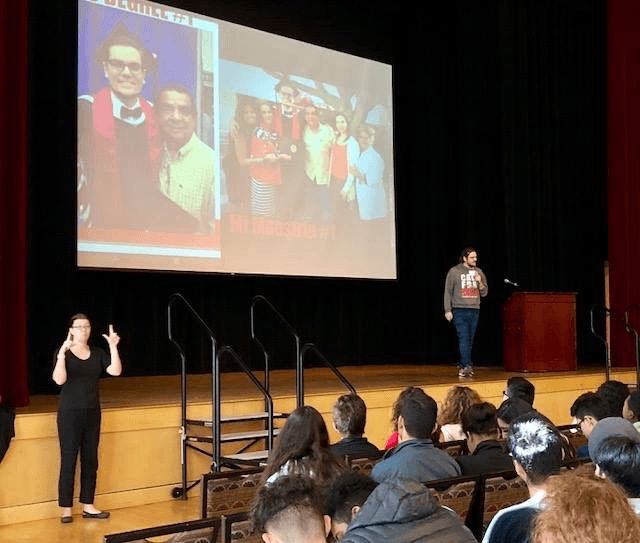
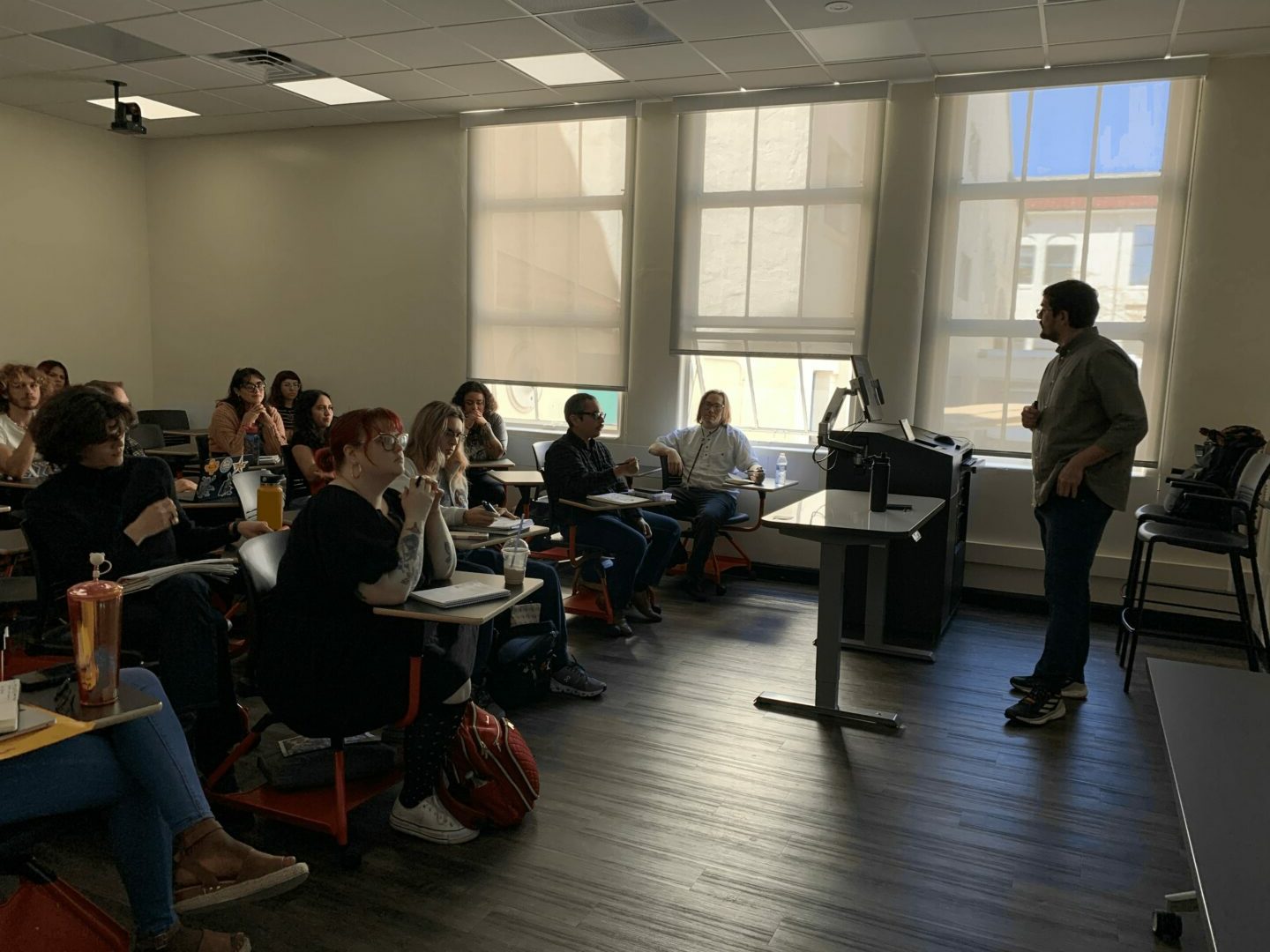
Several things contributed to finding my purpose. I excelled at the many jobs I held as an adolescent, whether selling peanuts and cracker jacks at the former Qualcomm stadium in San Diego, working as a busboy in a restaurant, or working at a couple of banks as a Bank Teller. In all of them, I found a passion in showing people the ropes, teaching them tricks of the trade that would help them excel and do the job well. This was especially true at Wells Fargo, where I worked for almost eight years. Although never interested in promotion further than Lead Bank Teller, a post I was never rewarded with, I was entrusted to teach all new tellers because of my patience, skill, and efficiency. I enjoyed teaching them how to do the job and chatting with new employees to help them feel welcomed in a new space. Later, after my first master’s degree (in American Literature), I would need to acquire teaching experience, so a year before my last day at Wells Fargo, I put in my notice that I would be leaving to take a drastic pay cut for a mentoring position at San Diego State University (SDSU) during my first year of my Master of Fine Arts in Poetry. I gave them a year to show them and myself how serious I was about leaving, to set a deadline for a career I truly despised for the harm we did as an institution to community members and the pressures and stress passed down to the employees at all levels. As a mentor in the classroom, I learned quickly that I had a powerful collective experience that I could share with young students about how to write, become a more effective college student, and persevere through struggles common to those journeying through academia. Later, I would grade papers for my mentor and friend, SDSU Professor Bill Nericcio, and soon after that, I was given my first Rhetoric and Writing course at San Diego State; I was so excited about this that a week before class started, I went to the classroom and took pictures to share with my family and to document this opportunity. I fell in love with teaching quickly and haven’t looked back since. My main purpose in life is to help young people succeed in college and to show them that it is okay to challenge our beliefs and to grow into newer, more complete understandings of how the world works and who we can become. I especially love working with high school students in summer camps because it allows me to discuss my story while helping them write their own. After my MFA in poetry, I asked myself how I would change the world, placing enormous pressure on myself to create grandiose change, but I realized that my path through education and my journey to Assistant Professor has allowed me to create change wherever I go, perhaps on a smaller scale, and yet, change isn’t always grand, it can begin in classrooms, at summer camps, through conversations with young people that help guide them, that help create a change that blossoms into more change. Gandhi said, “Be the change you want to see in this world,” and I live by this; this is my purpose.
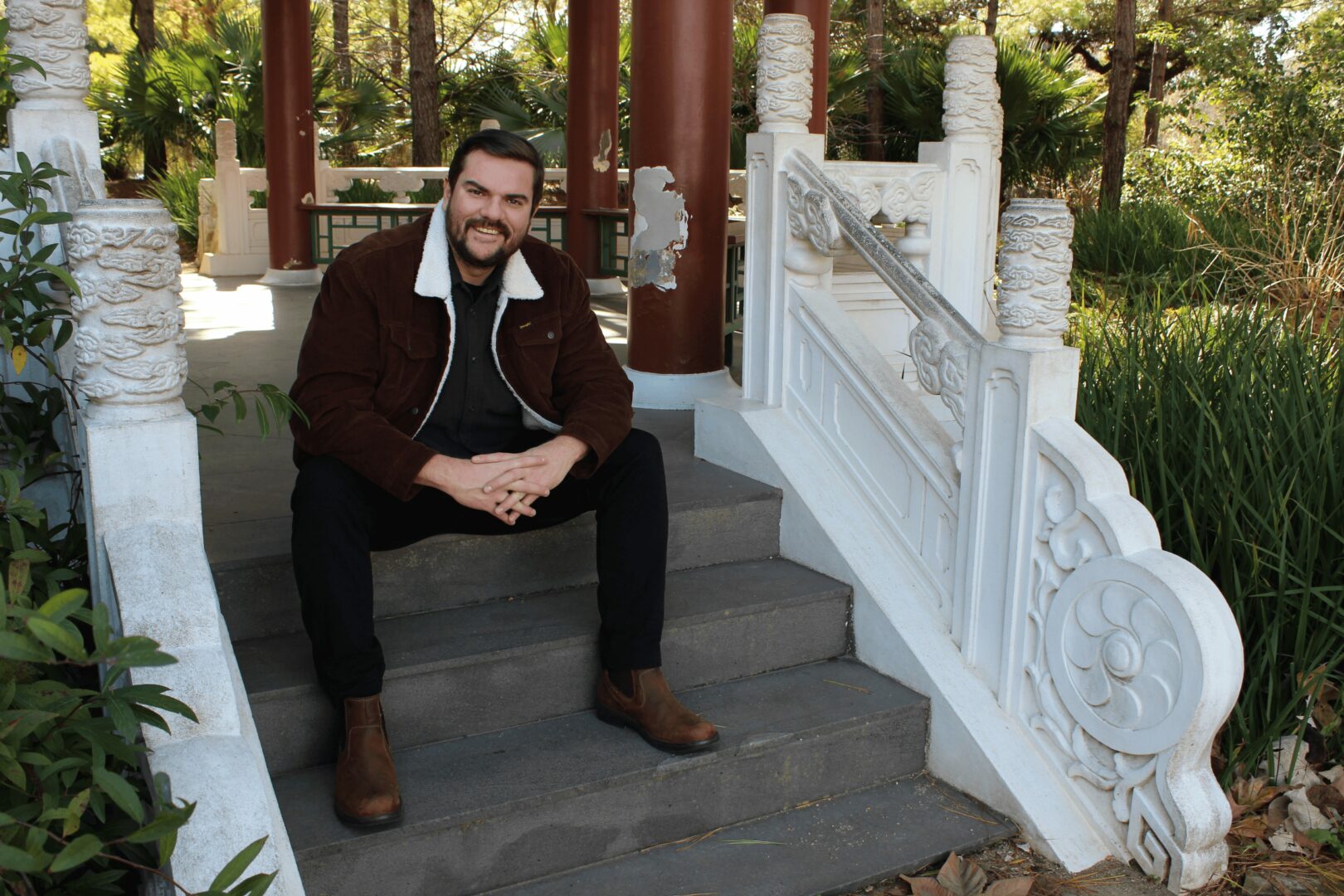
Thanks for sharing that. So, before we get any further into our conversation, can you tell our readers a bit about yourself and what you’re working on?
I’ll begin this section by telling a story of my younger self, who loved video games as much as I do today. Back in the day, when Blockbuster was still around, my parents would rent video games for me occasionally. Sometimes, these video game rentals were used as bribes to get me to attend church on Sundays, which worked well, especially those doughnuts they sometimes had outside after the service; that was a bonus (I mean, delicious, right?). However, I did not really understand the concept of late fees, so I would devise dastardly plans to hide away the games before the return date so that I could keep them a little longer, which would cause my mother to panic and scream for where the game was. I apologize to my parents, especially mi madre, for having her go through this; I just wanted more time to play.
Later, I would use my savings (mostly birthday money) and income from my first job at 15 to buy video games I wanted, especially the Nintendo 64, and then the next consoles, like Xbox, PlayStation 2, and so on. As a kid, my friends would come to my house to play video games for hours, or I would walk to their houses to play with them. In high school, we once set up a 4-TV and 4-Xbox Local Area Connection (LAN) party at a friend’s house to play a Halo tournament with 16 people from across friend groups, which is one of the highlights of my early gaming–people brought their TV and Xbox to make the set-up possible. The social element involved in playing video games was something that always appealed to me; in essence, we gathered to play stories and create stories about our play.
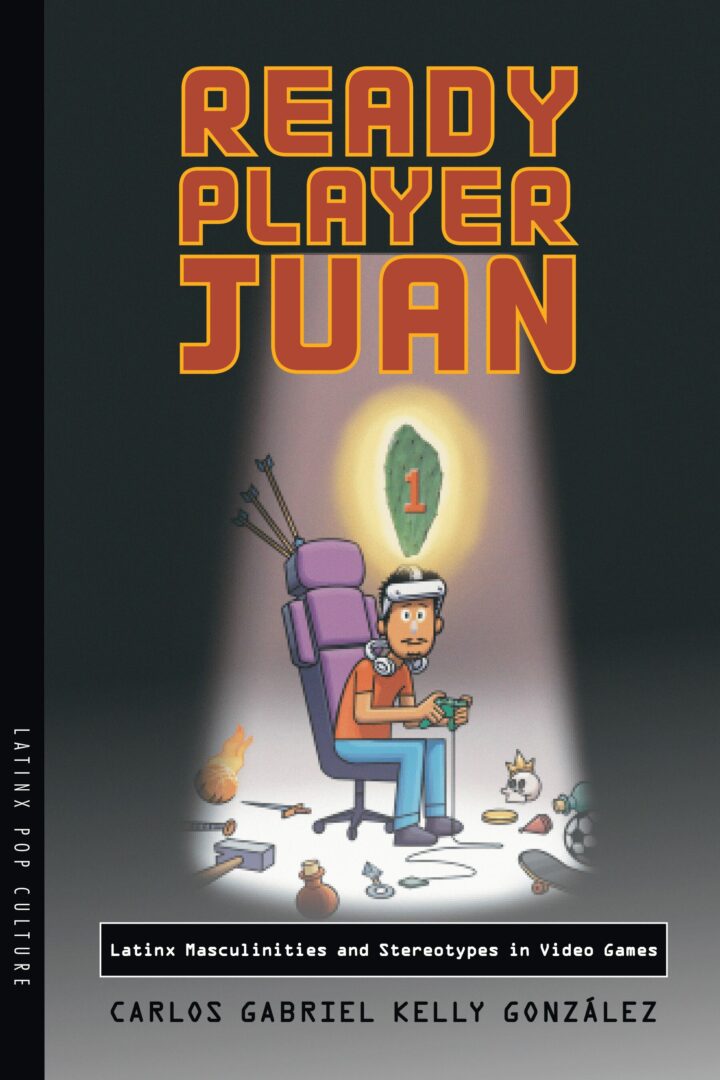
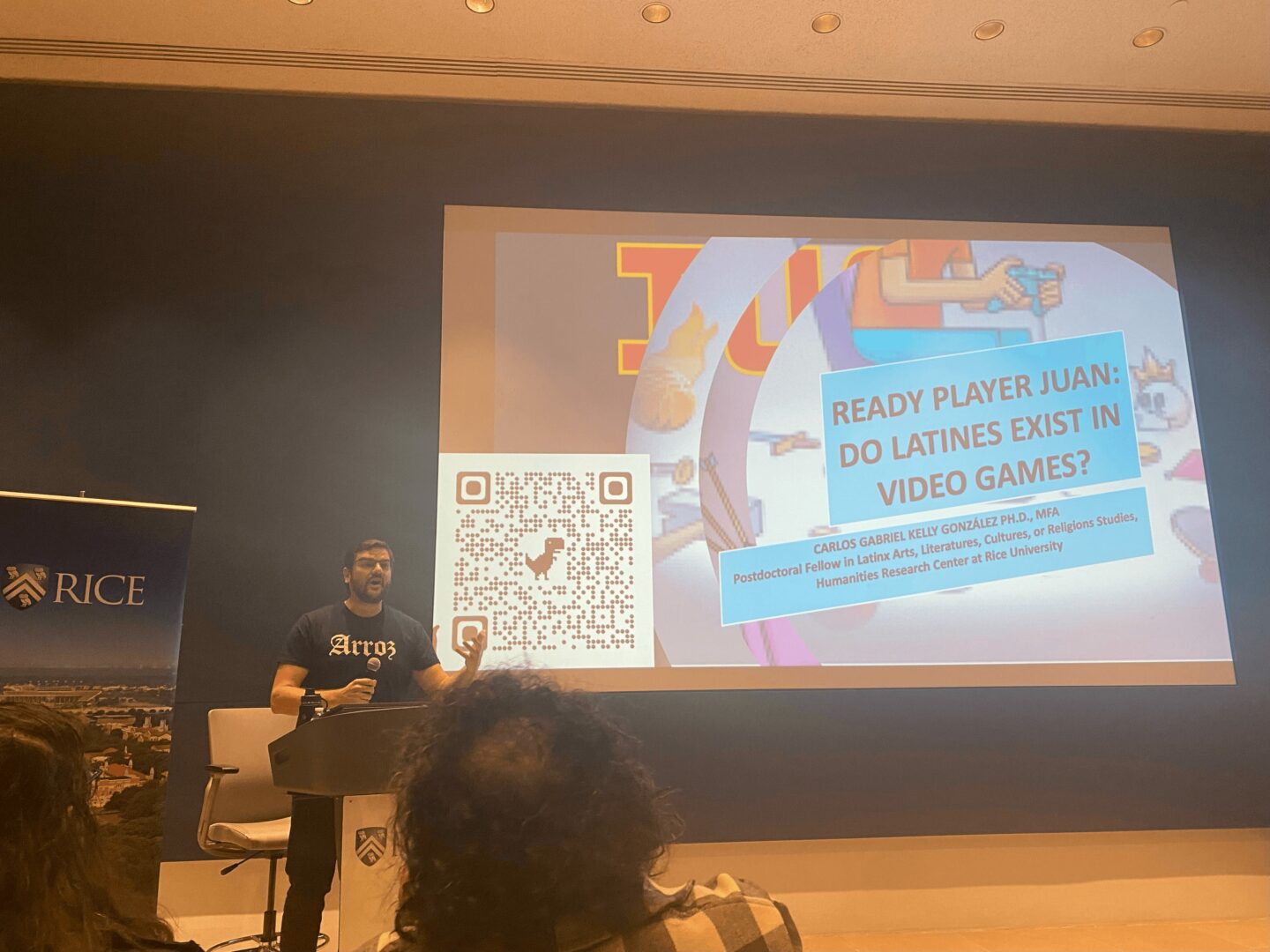
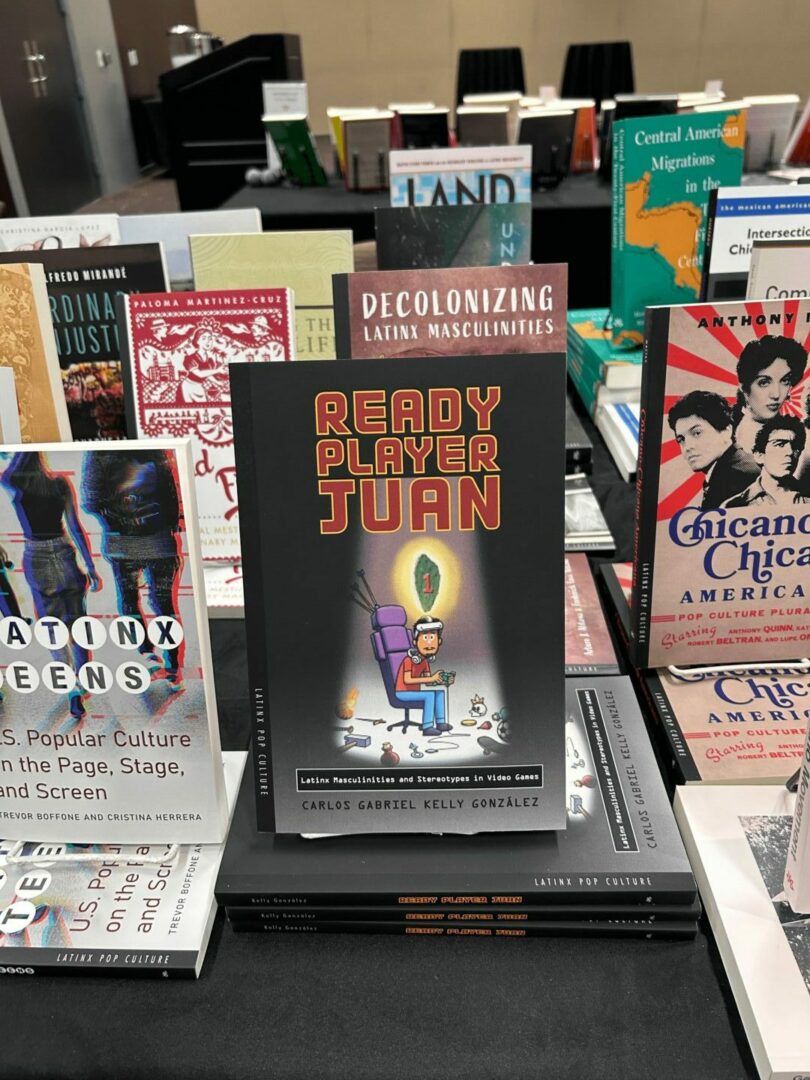
I have always loved video games, and it wasn’t until I set foot on Ohio State’s campus as a prospective PhD student that I came to understand I could study video games for a living, not designing them or creating them (skills I did not possess), but tackling the stories told and analyzing their importance and deeper meanings. And because representation was truly critical to my life at this point, I realized quickly that Latina/o/e/xs did not exist in video games in the ways I knew and experienced as a first-generation Mexican American. This focus and my background became central to my dissertation, which later became my book (less than one year after graduating with my PhD, which is an incredible turnaround). Ready Player Juan: Latinx Masculinities and Stereotypes is the first and only full-length book on video game studies and Latina/o/e/x studies. I say this with humility because I understand the space of video game studies to be one where many of us from marginalized communities can make our mark and bring our lived experience to create new ways of seeing, and this is exactly what I was able to achieve because of the privilege and access of attending a doctoral program. Latina/o/e/x Video Game Studies is a new field, a subfield of Video Game Studies. I am fortunate to have made the foundational contribution (according to renowned Latina/o/e/x studies scholar Frederick Luis Aldama) to Latina/o/e/x game studies, an achievement that every graduate student dreams of for their research. I owe a debt of gratitude to my dissertation committee, Frederick Luis Aldama, Paloma Martinez-Cruz, Guisela Latorre, and the many Latinas who shared their knowledge to guide me through my degree.
I am a born teacher, and though I came to appreciate learning later in my life, it is one of my biggest passions today and will continue to be. Because of my research and pathway into academia, I am beginning my first job as an Assistant Professor of English at Kennesaw State University. I can continue my passion for teaching, learning, and video games. I plan to release a co-edited collection (the first of its kind concerning Latina/o/e/x perspectives in game studies) with scholar and friend Regina Marie Mills and complete further work on inserting Latina/o/e/x perspectives into video game studies. My goal is to utilize my life as a Mexican American to create new knowledge and to insert Latina/o/e/xs into video games even if we are missing from game stories or where we exist as stereotypes; Latina/o/e/x people are the number one consumer of video games out of any ethnic group in the US, and we deserve to be seen, we deserve video game heroes and stories centering our experiences, cultures, and peoples. If any developers are interested in working together, I would love to help you create stronger, more robust stories about Latina/o/e/xs.
At this point, I plan to continue mentoring students, and I have big dreams of working with community business partners in Atlanta and beyond to build pipelines for Latina/o/e/x and other POC youth to dream bigger and receive the guidance necessary to do so.
I am also a poet with a collection of poetry, a Latine/x love story on the borderlands written in poems, Wounds Fragments Derelict. I expect to write a follow-up collection in the coming years and will continue to perform my work any chance I get. I’ll add one more thing here. My website, www.ElProfeCarlitos.com, is a great way to contact me because, together, we can make big things happen for local communities and Latina/o/e/x video game players.
There is so much advice out there about all the different skills and qualities folks need to develop in order to succeed in today’s highly competitive environment and often it can feel overwhelming. So, if we had to break it down to just the three that matter most, which three skills or qualities would you focus on?
One of the most useful things I have ever learned is having a growth mindset. I did not know that’s what it was called when I went from remedial Math and English/writing courses in my first semester of college to declaring an English major in my third year–I was not at the college level in these areas. I improved my writing and reading skills and always share this with students; if I can do it, so can you. If I can write books and create knowledge, so can you. I did something similar in high school regarding my basketball skills. For one summer, I shot 2000 jump shots a day, 1000 from 15 feet from the hoop and 1000 from 3-point range. By the time I was done that summer, I had a newfound 3-point shot that changed my entire playstyle. Now, I often joke that I can play basketball and shoot from anywhere on the court. We can grow and develop our skills, even those that are missing or “weaker.”
Empathy is central to my being. Without empathy for others, we lose our humanity and lose out on potential connections to other cultures and ways of being. I cannot emphasize this enough to all my students and the people in my life. We may disagree, but if we remain empathetic, we can find common ground and relate to one another through being open to how others experience the world. Sadly, this is missing from our politics and daily life in ways that cause much pain and allow ignorance and division to fester, easily exploited by those who command power in our systems.
This one is important for all men, anyone really, but especially to men. We must unlearn the toxic expectations of what it means to be a man in this country and worldwide. We must unlearn those dangerous lessons that teach us to bottle up emotion and to reject anything feminine as lesser. In the US and worldwide, an epidemic of loneliness encircles us, and none more than men are victims of it, with consequences impacting all of society, from surges in suicide to mass violence, political violence, and domestic violence. We can be better, and it starts with allowing ourselves the space to unlearn and grow into more empathetic and socially responsible men. Unlearning is a valuable skill because it allows us the space to subject questionable lessons we absorbed as kids or young people to doubt and introspection. If we value and crave the opportunity to grow, we must always consider that we do not know everything, and some of the things we’ve learned, the things we believe, may not serve us well anymore. This idea relates closely to academic humility, the understanding that we do not yet know everything, especially in fields outside our expertise where others are more informed by their studies and their embodied experiences. Through unlearning and remaining humble about our knowledge gaps, we can begin to challenge perceptions around us that no longer suit us and that rob us (and everyone around us) of our shared humanity.
As we end our chat, is there a book you can leave people with that’s been meaningful to you and your development?
I’ll cheat here and provide two books that can help anyone grow their perspectives.
John Berger’s Ways of Seeing is one of the most foundational books I have ever encountered. In it, he traces social relationships, gender expectations, and marketing to oil painting traditions in the 1500s that set what we would consider modern capitalism to be in stone. The book has much to appreciate; it is even available as a series on YouTube for those who prefer audiovisuals. Berger speaks about the power of envy created by oil paintings that show off lifestyles versus artistic practice, such as oil paintings of landscapes, lavish foods, or women. He argues that this dynamic created envy in others because those who owned the artwork were rich and powerful enough to have these valuable “items” as ornaments in their houses. In the case of women, it showed that these men were powerful enough to “own” a wife, which you might think about more deeply when considering the many ways men (worldwide) view women as objects to possess. This is modern marketing, which he tackles in his last chapter on capitalism. He shows us how marketing persuades people to purchase items for how it will make them feel, especially in relation to other people’s envy and admiration. I did not have the words to describe these ideas, and yet I had always felt them in the ways I valued name-brand clothing as a youth, how I compared myself to others who had more, and thinking my relationships with my body and with women had to live up to unachievable standards. John Berger’s book was enlightening.
Gloria Anzaldúa’s book Borderlands/La Frontera: The New Mestiza contributed to my already glowing pride in being Mexican, Mexican American, and Latino. She teaches that being from the borderlands is not a negative to ascribe to ourselves but rather an identity to celebrate because of the power and grit it takes to survive, live, and understand two cultural experiences simultaneously. This space of negotiation between two cultures, she calls a 3rd space, where a border culture manifests and creates a new people, a border people. She teaches about the constant struggles Chicana and Latina women navigate because of the many gendered, cultural, and religious expectations placed on women. I learned to further my empathy and understanding of what women in my life and around the world experience. Through her work, I learned about how Latines grow up in the US and worldwide and how we all have so much in common, especially the ideological borders we face not just lines in the sand. She speaks of instant sensing, which comes without reasoning, of the deep structures that dictate how people are treated, calling it La Facultad, normally possessed by those who experience marginalization at the hands of others. She invites others to come to this positionality and truly see other people’s experiences. This book will help fellow Latines become more conscious of our shared struggles, and it will also provide a powerful window into combatting the stereotypical narratives written about us, which other Americans and people from abroad can use to enlighten themselves.
Contact Info:
- Website: https://ElProfeCarlitos.com
- Twitter: @CarlosGK22
Image Credits
Ready Player Juan: Latinx Masculinities and Stereotypes Book Cover by Adrian Carrillo
so if you or someone you know deserves recognition please let us know here.