Alright – so today we’ve got the honor of introducing you to Caroline Gates. We think you’ll enjoy our conversation, we’ve shared it below.
Alright, so we’re so thrilled to have Caroline with us today – welcome and maybe we can jump right into it with a question about one of your qualities that we most admire. How did you develop your work ethic? Where do you think you get it from?
When I was in eighth grade, my family needed to live in two states for my dad’s work. As it is very difficult to attend school when you live in one state for half the week and a different state for the other half, I started homeschooling.
Homeschooling in my family was very rigorous, complete with discussions and lectures, weekly, timed essays and tests, and even a school dress code and start time. (Once, I overslept the 8:15 start time and my mom literally marked me tardy!) At the beginning of the week, I was given a list of everything that needed to be completed by Friday morning. I was responsible for when and how quickly I got that work done. My parents and sisters, who are all highly intrinsically motivated, gave me pointers on how to create a schedule and stick to a plan, and then I developed my own agenda. So, in middle and highschool, I didn’t just learn how to do geometry and what iambic pentameter was, I learned how to plan my days effectively: how to manage my time, when I work best, where I work best, how long tasks take me, what distracts me, etc. These were the tools that proved most valuable when going through higher education, working jobs, and eventually, starting my own art business.
But these strategies are only half the battle when it comes to maintaining my work ethic. The other half is the belief that what I am doing is valuable and more important to me than doing anything else. I once had a professor who said, “No one else is going to care whether you get out of bed in the morning and paint.” For some, that is a really depressing sentiment, but for me it serves as a weird motivation. Because I care if I get out of bed in the morning to paint, and the only way others will ever care about my work is if I continue to do it. And sometimes it is hard, when I spend months on a piece and only a handful of people notice or when I am rejected from another show or residency. When my feelings of disappointment or failure start to choke out my internal motivation and belief, that’s when having a support system of peers, mentors and heroes becomes so important. I have to make it a point to talk to others who are experiencing or have experienced similar feelings; I have to read the stories of hardship that my heroes also experienced to know that I am not alone, struggle is a normal part of the process, and the work itself is good.
So for me, work ethic comes from the combination of knowing how I work + why I work + who I need to support me along the way.
Thanks, so before we move on maybe you can share a bit more about yourself?
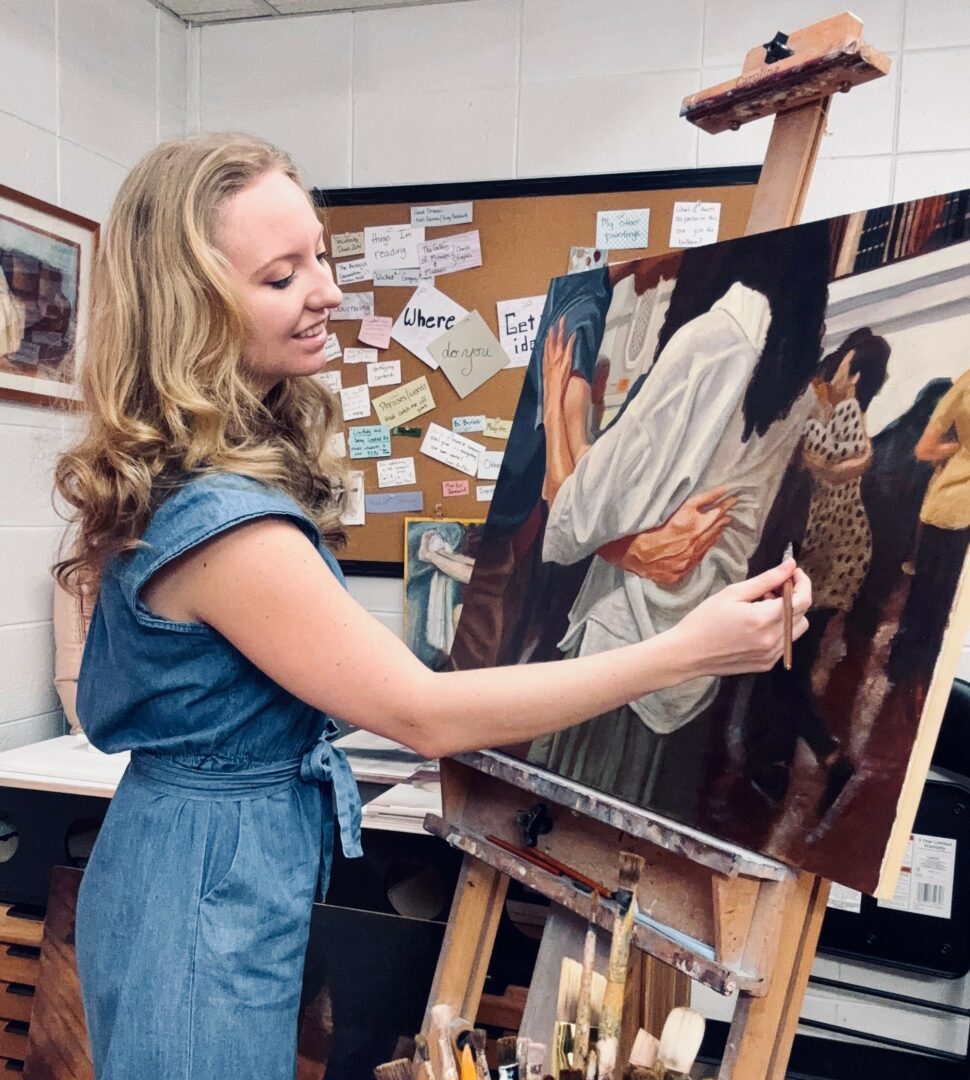
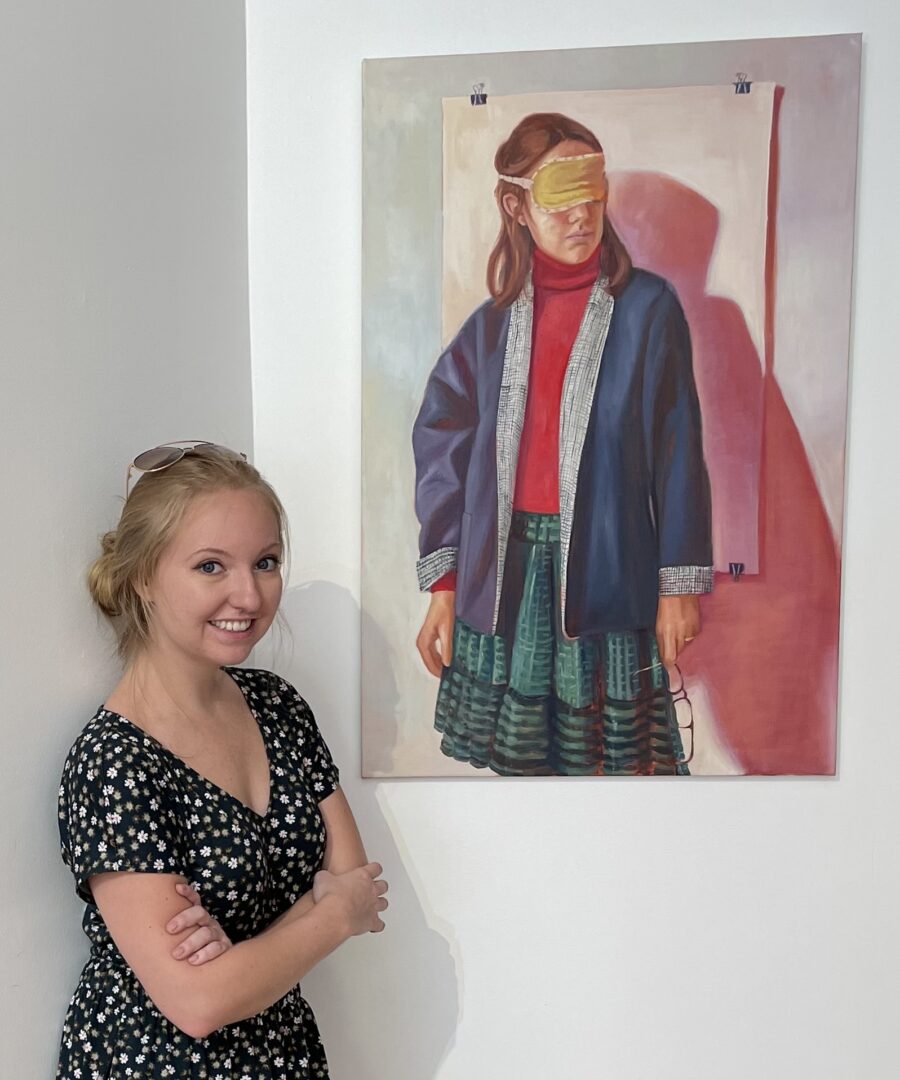
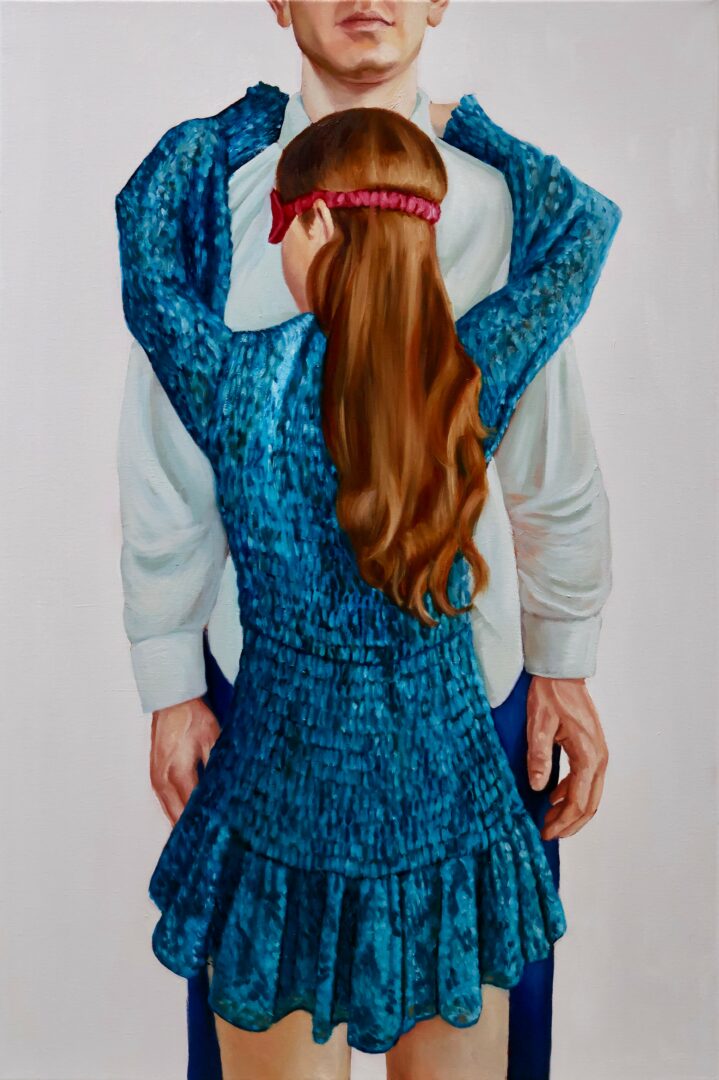
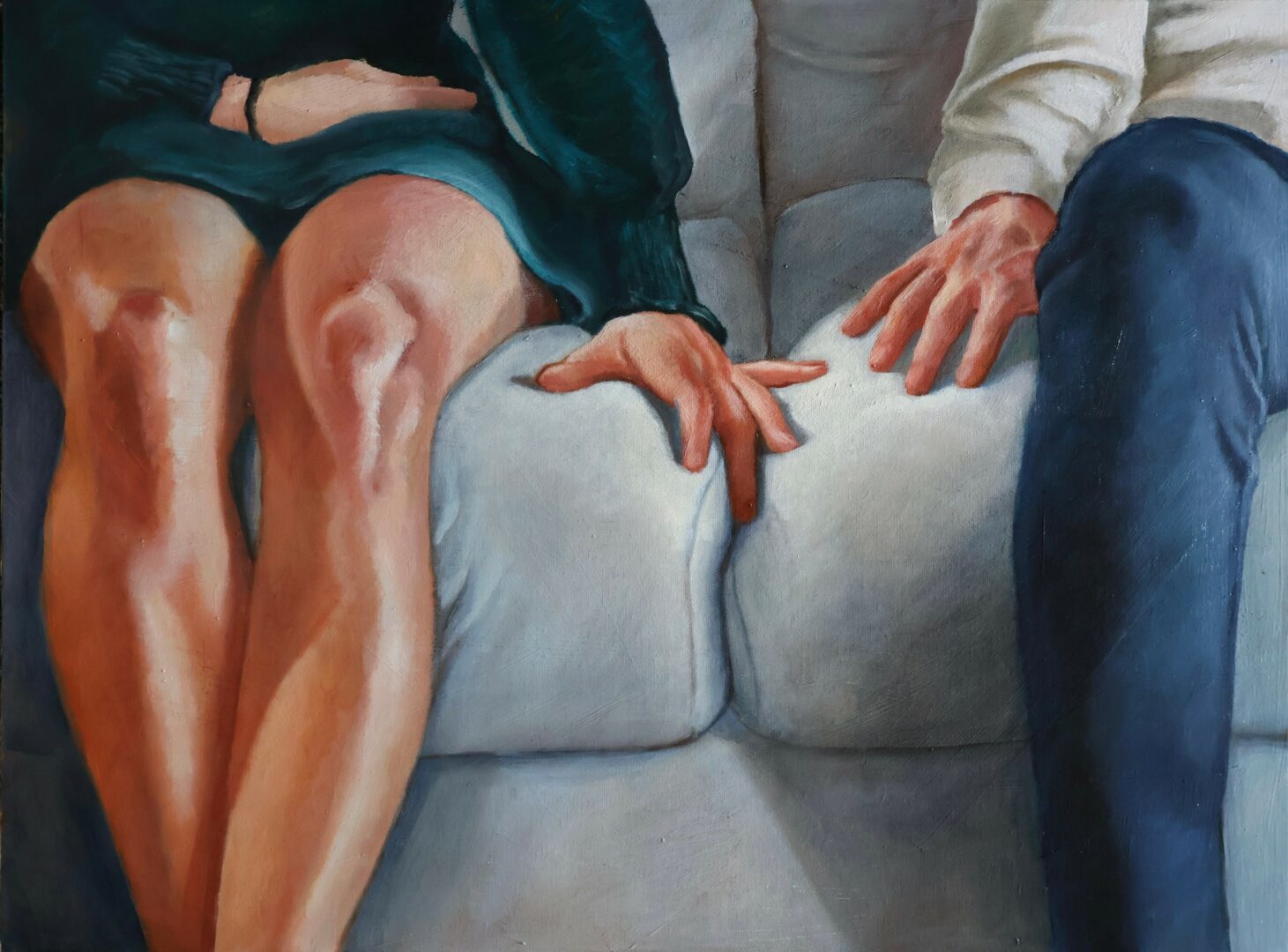
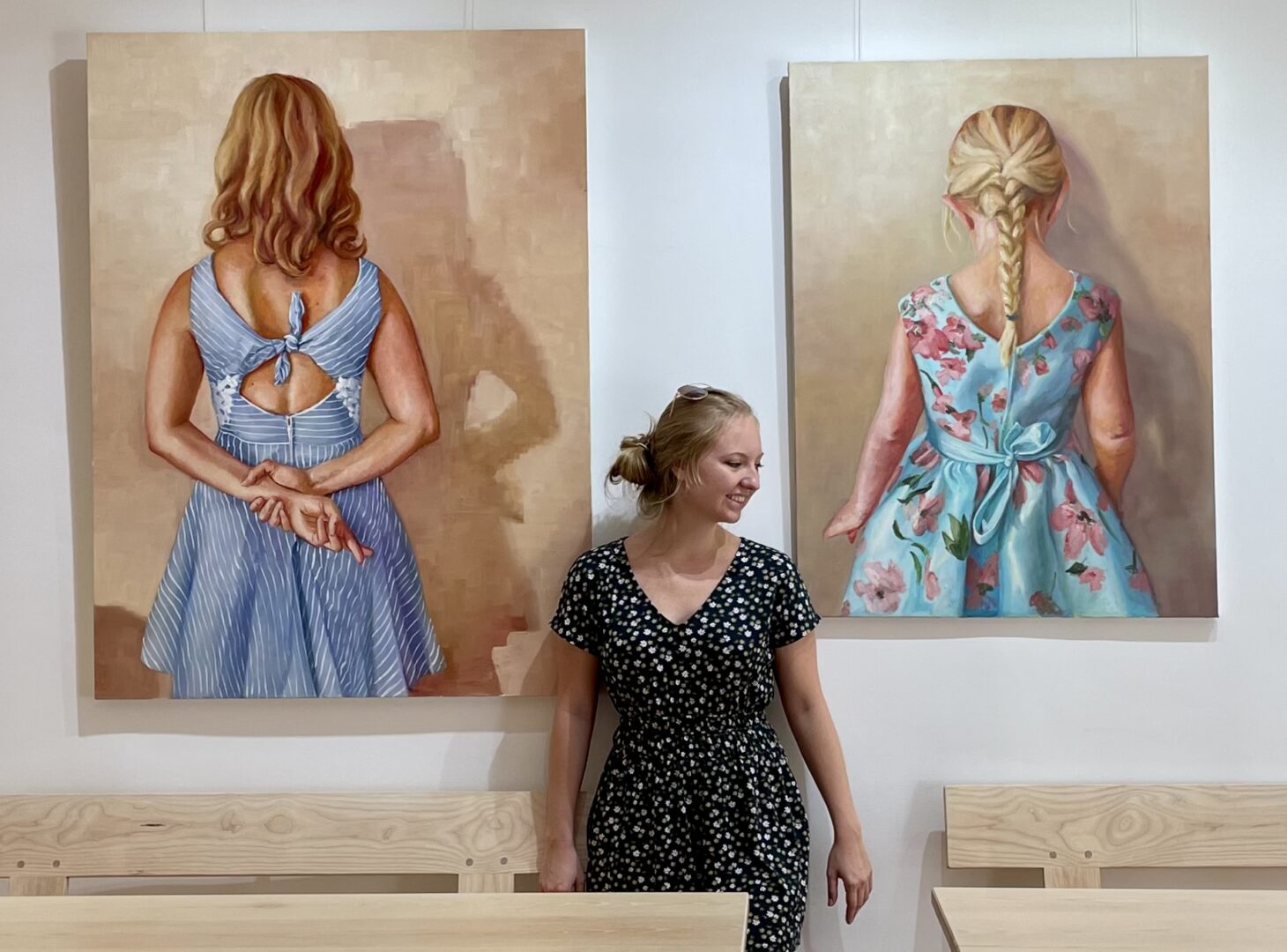
I’m a figurative artist and new business owner of Caroline Gates Art, LLC. I work primarily in oil paint and soft pastel to create works of art that speak to people’s sense of identity and placement in the world. Recently I’ve been thinking about human connection and how easy it is to feel disconnected from others–even if they’re in the same room as you. As a woman in the arts, my work generally centers around the female perspective. I think about issues of self image, what it means to feel like you’re on display and how societal expectations impact the freedom to allow others to see the real you. With this in mind, many of the figures in my paintings are hiding, masked, or fragmented, symbolizing the idea that we often do not reveal our whole selves to the world or sometimes even to ourselves.
Under my business, I create commissions and teach classes and workshops. Although I do have some school aged students, I mainly teach adults: people who are looking for a creative outlet or always wanted to pursue art but never had the chance. I love sharing the joy of painting, offering people an additional way to communicate their thoughts and feelings without using words. Painting allows a different part of your brain to express itself and can create a map of how people think. It can help you explore feelings and ideas that may have gone unrecognized or unacknowledged. In my classes, we often discuss art history and why people chose to paint things like bugs or skulls in still lives, for example. We discuss why people used different colors and different brush strokes. Afterwards, it is amazing to see how the students put together their own compositions, choose colors, and lay down paint. Even in the early days of painting, I love seeing the individuality of each student shine through the simple exercises.
There is so much advice out there about all the different skills and qualities folks need to develop in order to succeed in today’s highly competitive environment and often it can feel overwhelming. So, if we had to break it down to just the three that matter most, which three skills or qualities would you focus on?
Before I became a full time artist, I worked as a personal and executive assistant. In that job, I handled everything from scheduling business meetings to building a deck and planning an engagement. It was a lot like homeschooling, but with much higher stakes. During those three years, I learned the value of having a can-do attitude, staying levelheaded in the midst of chaos, and being patient with myself and others.
At 23 years old, fresh out of an MFA program for painting, I had never built a deck. I had certainly never built a double-level deck in an NYC apartment with stairs, fences, planking, and tile. But when my boss handed me that assignment in my first few weeks at the job. I said, “I can make that happen.” I sat down and did my research. I spent hours pouring over permitting in NYC (and let me tell you, that is complicated), environmentally friendly wood that won’t gray as quickly, the best landscape architects in the city that are also affordable, etc. I made copious notes, and when I hit a wall, I knew I could grab my phone and call my grandfather and my dad, both experienced in carpentry. I took a task that I had zero experience in, broke it down into the necessary steps, learned everything I could, talked to people with experience, and, after 6 months, my boss had a deck. All because I said, “I can figure this out.”
And did the project go perfectly? No! This was my first time working with contractors, this was during a time of wood shortages, this was early in the job so I was still learning how to read what my boss actually wanted. I didn’t get everything into the contracts that needed to be there. The project took longer than it was supposed to. The payment schedule was confusing. There were so many times when I could’ve broken down and said, “Enough, I quit. Everyone is upset and this is not going to happen.” But I didn’t. Instead, I took a deep breath, and said, “Let’s step back for a minute and figure out what steps need to be taken to fix this.”
This process repeated itself with each assigned task in that job. I learned, I tried, I struggled, but I persevered and accomplished the goal set before me–to satisfaction if not perfection. Learning to let go of perfectionism and embracing patience and grace, was pivotal in my work and painting life. In painting there’s this idea that the image on the canvas will never live up to the idea in your head. With that in mind, sometimes people struggle to sit down and create the painting at all because it can never live up to expectations. But, if you can let go of the idea of perfection, if you realize there are going to be setbacks, hurdles, and failures, then you can come out with something just as meaningful, and maybe more so as it is the product of patience and perseverance. And, of course, I never let go of the idea of doing my best work, but I realized if I was going to create anything at all–a business, a relationship, a painting–I had to have patience with myself and others. I had to allow people to be flawed, stubborn, opinionated, imperfect; I had to allow people to be human.
These three mindsets, having the can-do attitude, staying even-keeled when things go wrong, and trading perfectionism for patience, have been invaluable to me in my art business. I’m an expert in painting, not taxes, bookkeeping, forming an LLC, or marketing. But I know I can tackle these basic aspects of business the same way I tackled my boss’s deck, and my work will be all the better for it.
We’ve all got limited resources, time, energy, focus etc – so if you had to choose between going all in on your strengths or working on areas where you aren’t as strong, what would you choose?
When I went to college, I started out as a double major in creative writing and psychology and a double minor in art and music. I wanted to learn everything and do everything. Of course, as I went through school, I changed and narrowed, and graduated with just a double major in studio art and creative writing (although, I’m like 2 credits short of a music minor–so sometimes I claim that too–after all, who really needs to take conducting?) From there, I narrowed further still to get my MFA in painting (with a subtrack of anatomy). However, even during my MFA, I never stopped learning other things. While I painted, I listened to books on psychology, theology, nutrition, and history. I took classes in belly dancing, tango, and swing dancing. I got a Swedish tutor. After my MFA, I continued to pursue music, taking voice lessons and practicing the piano. I took acting classes and got a part in a musical.
Am I an expert in any of those things? No. But do I regret investing time in these jack-of-all trades pursuits? No.
As a creative, I believe it is important to have a wide range of experiences, to constantly be learning about humanity, to never stop challenging yourself. After all, I could be the best painter in the world, but if I have nothing to paint about, what good is that skill? My work is inspired from life, both my own experiences and my responses to things I see and hear in the world. I have to try things; I have to meet people, hear their stories, and observe how they live. Because I want to be a great painter, I believe I have to have an understanding of how the world works. I must have empathy and awe for other people and the things they can do.
In my creative writing classes, my professor used to talk a lot about the importance of letting an idea marinate. Coming up with an idea and then sleeping on it, consciously stepping away to let your subconscious do the work. I have clung to that idea in my professional life. Believing in the idea that I am always painting; I am always working on an idea or looking for something visually exciting, whether consciously or subconsciously. Some of my best ideas have come while swing dancing, while sitting in meetings, while talking to a friend. I believe in the importance of honing my craft, focusing on technique and professional practices, but I would never trade the ability to be a well-rounded, experienced person for the laser-focus of perfecting one skill.
Contact Info:
- Website: https://carolinegates.com/
- Instagram: @caroline.gates.art
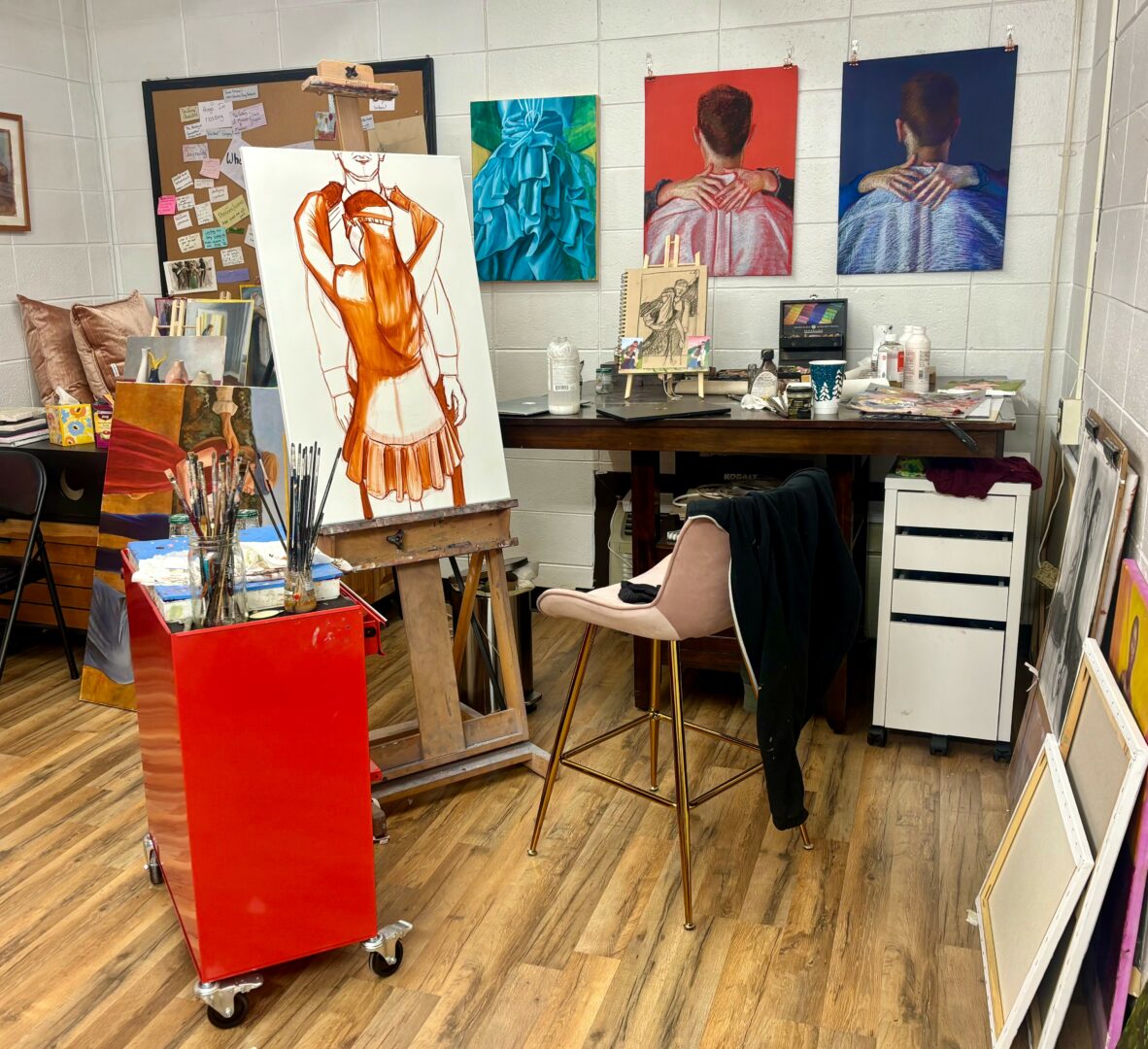
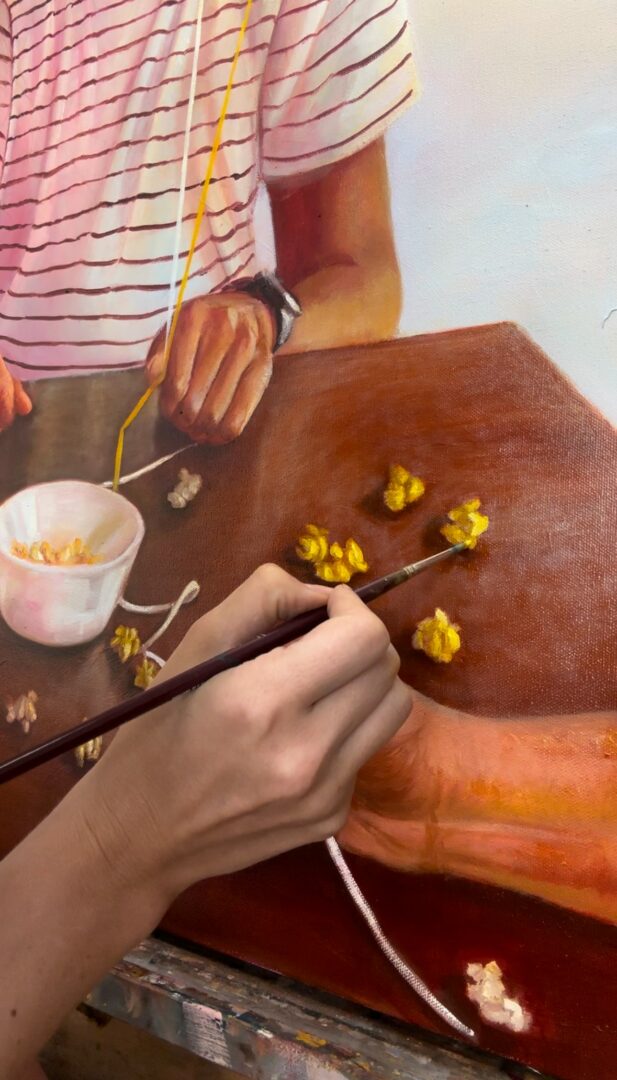
Image Credits
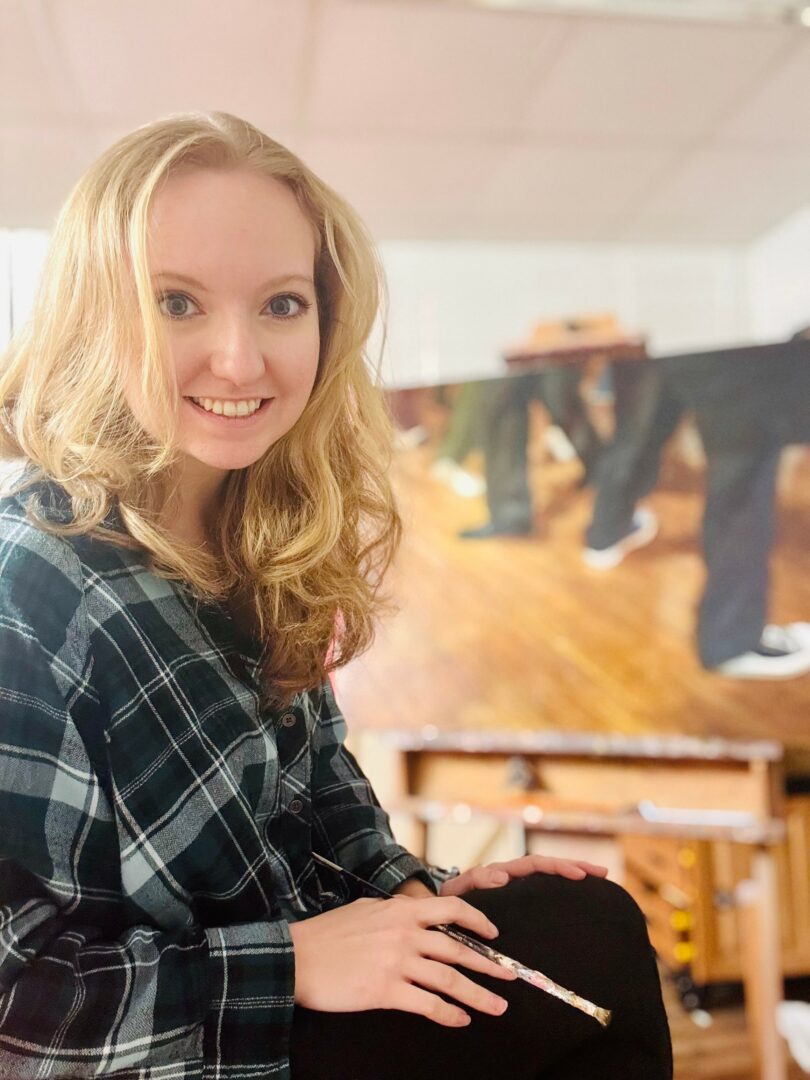
I took all but two of the photos. The one of me standing between the two paintings of females in blue dress and the one of me next to the painting of the girl in the plaid skirt and mask were taken by Heather McLeod.
so if you or someone you know deserves recognition please let us know here.