
We’re excited to introduce you to the always interesting and insightful Charlotte Wang. We hope you’ll enjoy our conversation with Charlotte below.
Hi Charlotte, appreciate you sitting with us today to share your wisdom with our readers. So, let’s start with resilience – where do you get your resilience from?
As a child, I first learned resilience from my grandfather, a self-taught mechanical engineer who never gave up. He learned through trial and error and persistence. When something failed, he studied it, adjusted, and tried again. I was amazed that he could stay focused and remain patient even though there was no formal instruction and the task was frustrating. Watching him taught me that resilience is not loud determination, but steady commitment. You keep going, not because it is easy, but because the work matters.
That lesson carried into my work as an educator in the most disadvantaged communities. Teaching demanded constant improvement, not because perfection was expected, but because my students deserved better each day than the day before. I had my challenges. Sometimes the lessons did not land, or the strategies did not always work. Yet each setback became a reason to adjust, reflect, and try again. Showing up prepared and present, even on difficult days, taught me that resilience is often the simple decision to keep improving for the sake of others.
It deepened through my dissertation, where resilience took the form of sustained belief in my own capacity to complete the work. Studying self-efficacy required me to live and believe it. There were moments of uncertainty, revision, and doubt, but progress depended on trusting that effort, persistence, and reflection would lead to growth. The research process reinforced that resilience is not just endurance, but confidence built through repeated engagement with challenge.
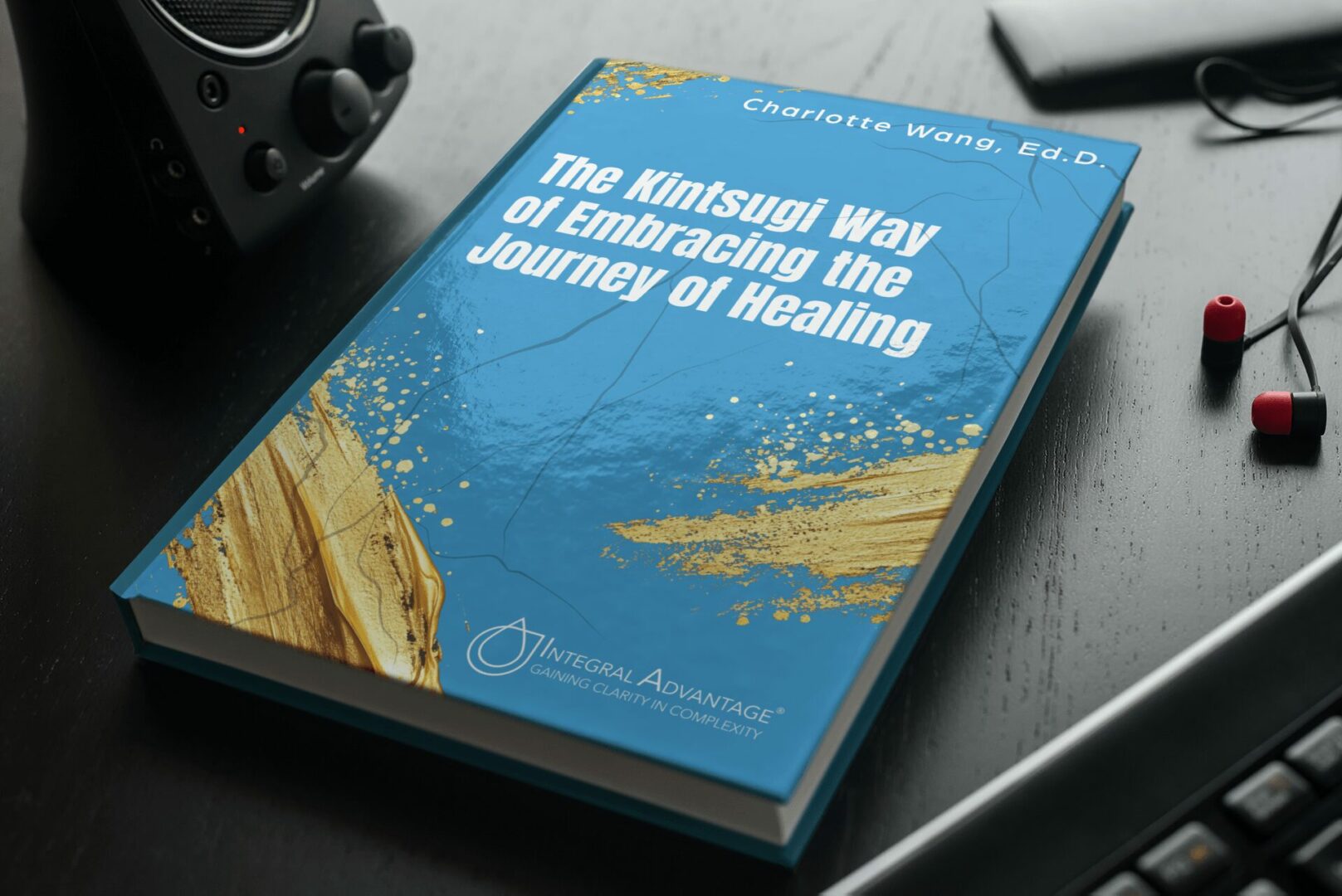
Finally, my book, The Kintsugi Way of Embracing the Journey of Healing, taught me the clearest lesson of all. Writing demanded that I stay with ideas and stories long after the initial motivation faded. There were moments when the work felt unfinished, unclear, or too heavy to carry. Continuing anyway taught me that resilience is not about inspiration. It is about commitment. Page by page, revision by revision, I learned what it means not to give up on a story or on myself.
Looking across these experiences, I understand resilience differently now. It is not a trait you either have or lack. It is a practice and journey. It requires continuous work, honest engagement with struggle, sustained motivation, and self-efficacy. Resilience grows each time we choose to continue.

Thanks for sharing that. So, before we get any further into our conversation, can you tell our readers a bit about yourself and what you’re working on?
At the heart of it, I am an educator, a researcher, and a writer. Each role informs the others. In the classroom, my work centers on helping students build confidence, curiosity, and resilience. Learning is most powerful when students feel seen, capable, and supported, so my teaching is rooted in reflection, relationship-building, and continuous improvement.
What excites me most is exploring how people develop self-efficacy, the belief that they can grow, adapt, and succeed even when challenges arise. That focus shaped my doctoral research, which examined how educators develop confidence in their practice and how that belief impacts the communities they serve. Research often feels abstract, but for me it has always been deeply human. It is about understanding what helps people persist, especially when the work is difficult or slow.
That same question drives my writing. My book project grew out of a desire to make complex ideas about healing, resilience, and growth accessible through story, yours, mine, and our stories. Everything I do has taught me patience and commitment, and it has reinforced my belief that struggle is not something to avoid, but something that can be transformed into meaning. I want readers to recognize themselves in these stories and feel less alone in their own process of becoming.
As a brand, my work sits at the intersection of education, research, and storytelling. The body of my work is built slowly and intentionally, with care for both rigor and humanity.
The same belief guides everything I create: growth is possible when we commit to the work, trust ourselves, and keep going.

Looking back, what do you think were the three qualities, skills, or areas of knowledge that were most impactful in your journey? What advice do you have for folks who are early in their journey in terms of how they can best develop or improve on these?
Looking back, three qualities stand out as the most impactful in my journey: resilience, self-efficacy, and reflective practice.
Resilience has shaped everything I have done. Learning to stay with difficult work, adjust after setbacks, and continue even when progress feels slow has made long-term growth possible. For those early in their journey, my advice is simple: stop waiting to feel ready. Growth comes from repetition. Show up, do the work imperfectly, reflect, and return. Resilience is built through consistency, not intensity.
Self-efficacy, the belief in your ability to learn and improve, has been just as important. Without it, effort fades quickly. Confidence does not come from talent alone, but from the evidence you collect through experience and knowledge from others. If you are early in your path, start by setting small, achievable goals and honoring progress. Each completed step becomes proof that you can handle the next one. Over time, that belief compounds.
Finally, reflective practice has been essential. Whether in teaching, research, or writing, reflection allowed me to turn experience into understanding. Taking time to ask what worked, what did not, and why helped me grow intentionally, rather than repeating the same mistakes. For those developing this skill, build reflection into your routine. Write, talk it through with mentors, or pause long enough to make meaning from what you are experiencing.
If there is one thing I emphasize, it is that these qualities develop together. Resilience keeps you moving forward, self-efficacy helps you trust yourself along the way, and reflection ensures that growth is not accidental. None of them appear overnight, but with commitment and patience, they grow steadily, layer by layer.
Any advice for folks feeling overwhelmed?
When I feel overwhelmed, I return to the principles that shaped my book, The Kintsugi Way of Embracing the Journey of Healing. Kintsugi teaches that healing does not begin with fixing, but with noticing. The first step is acknowledging the break without judgment. When I am overwhelmed, I pause long enough to name what feels fractured, rather than trying to push through it.
In Kintsugi, the repair cannot be rushed, or the vessel will fail again. I apply that same patience to myself. I focus on one small, manageable action rather than the entire problem. Progress does not come from solving everything at once, but from taking the next steady step.
I also remind myself that overwhelm often comes from disconnection. In the book, I explore how healing requires reunion, not perfection. That might mean reconnecting with my body through movement, reconnecting with others through conversation, or reconnecting with meaning by returning to why the work matters. Overwhelm lessens when we remember we are not meant to carry everything alone.
Finally, I practice self-compassion. In my book, Kintsugi honors cracks rather than hiding them, and I try to extend that same grace to myself. Feeling overwhelmed is not failure. It is information. It tells me something needs care, rest, or attention.
I often tell others, “Stop treating overwhelm as something to conquer and start treating it as something to listen to. Healing is not linear, and neither is growth.” When we slow down, name the break, and respond with patience, we give ourselves the chance to repair in a way that is stronger and more honest than before.
Contact Info:
- Website: https://integraladvantage.com/publications-2/
- Linkedin: https://www.linkedin.com/in/charlottewang/
- Youtube: https://www.youtube.com/@integraladvantage
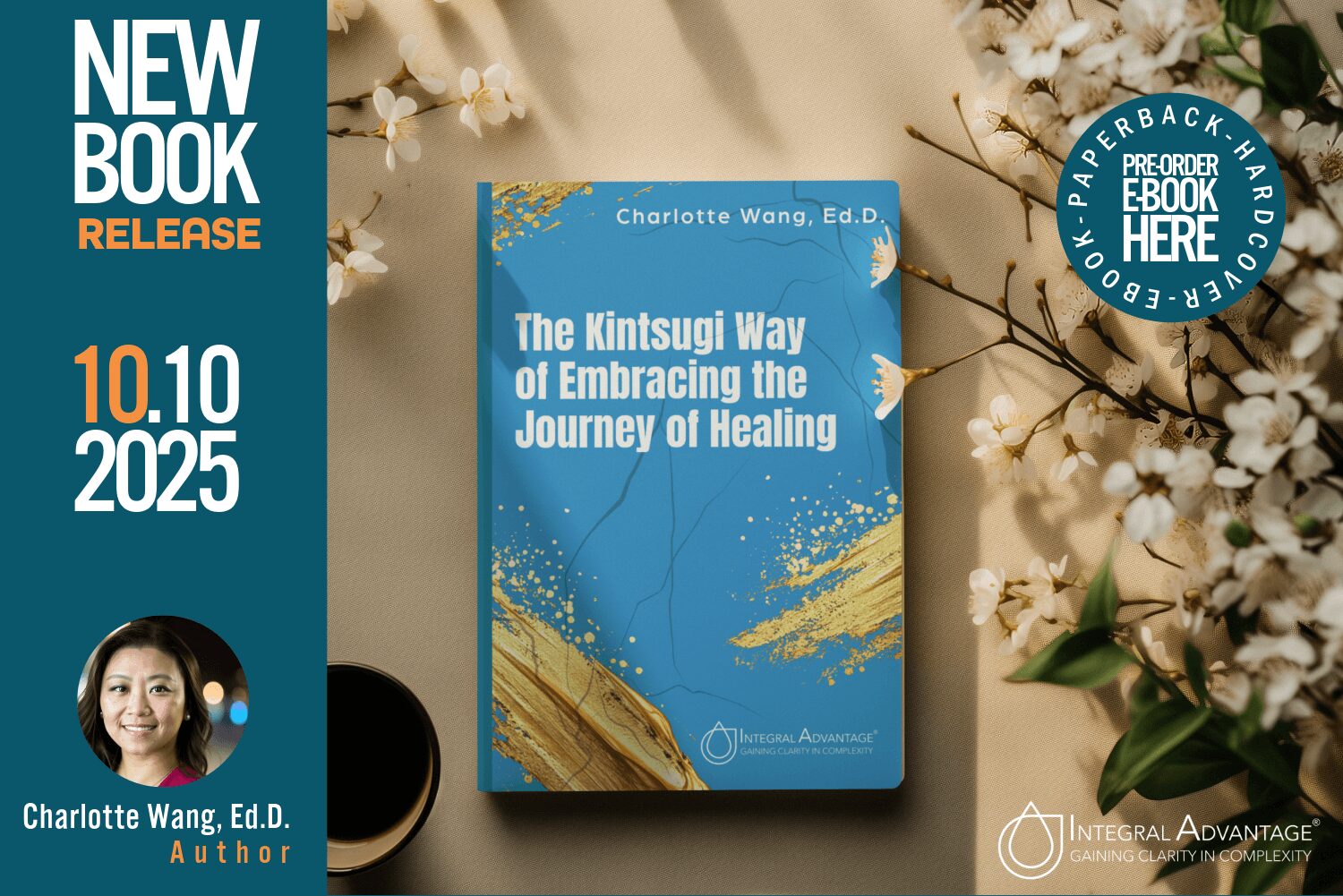
Image Credits
Robert Radi
so if you or someone you know deserves recognition please let us know here.