Alright – so today we’ve got the honor of introducing you to David Fritzson. We think you’ll enjoy our conversation, we’ve shared it below.
David, thank you so much for taking the time to share your lessons learned with us and we’re sure your wisdom will help many. So, one question that comes up often and that we’re hoping you can shed some light on is keeping creativity alive over long stretches – how do you keep your creativity alive?
I find the easiest way to keep my creativity alive is to surround myself with other creatives. Whether it’s artists I know locally or I follow online that continue to inspire me. Additionally, it’s not just limited to people involved in film. I’ve found to pick up inspiration just from listening to a new album from a favorite musician, or an artist talking about their process of creating a painting out of a blank canvas. No matter who it is, I tend to pick up something either from their final product or their process. It’s little things I learn from each creative that inspires me to create and continue my own work in filmmaking.
Let’s take a small detour – maybe you can share a bit about yourself before we dive back into some of the other questions we had for you?
I’m an Indie Film Director, Writer, and Producer, and run my own filmmaking production company, Son of a Fritz. I have directed and produced a handful of independent short films that have screened and competed at film festivals around the country, and host a majority of them on my YouTube channel; Son of a Fritz Films.
Most notably, my short film ‘Wireless’, which had a successful run in film festivals by taking home award such as the ‘Audience Award’ at Independent Film Fest Boston as well as ‘Best Original Short Film’ at the South Dakota Film Festival, premiered on YouTube in February 2023 for the world to see, and in less than a year it’s approaching a whopping 200,000 views.
As a filmmaker, I find the most rewarding part of the process is not just creating films that I’ve always wanted to see on the big screen, but telling stories that have audiences reach out to me directly or in the comments. This was especially true for ‘Wireless’ with its deeply personal story, and it means the world to me each and every time someone reaches out to share their own experiences and how the film resonated with them.
As for 2024, I have a few short films already planned to be released throughout the year via YouTube and screening at festivals, including ‘Requiem’, originally made for the 48 Hour Film Project and soon after turned into one that will also screen at film festivals. It’s a dramatic horror short that tells the story of a woman grieving the recent loss of her wife. I also have a few other projects in development, and plan to work with other indie filmmakers in the Richmond, VA area as a Producer, Director, or Writer.
Looking back, what do you think were the three qualities, skills, or areas of knowledge that were most impactful in your journey? What advice do you have for folks who are early in their journey in terms of how they can best develop or improve on these?
I’ll focus on working as an Indie Film Director for this particular question, but it applies to other roles in film and for other creatives.
First is learning. Learn as much as you possibly can on not just directing, but what it takes to work as a Director of Photography, a Gaffer, a 1st Assistant Director, a Grip, a Make Up Artist, a Set Designer…the list goes on. Having the ability to understand what everyone does on set enable you to communicate your ideas better, and your crew will appreciate knowing you understand the amount of work it takes for their role to carry out said ideas.
Second is patience. In the last eight years of working as a filmmaker, I don’t think I’ve ever had a production where everything went 100 percent as planned. Something is going to go wrong, or something will change when least expected. It could be major, or a minor inconvenience. Whatever it may be, know how to roll with the punches, how to pivot, but most importantly, remember when Plan A or B doesn’t work out, there’s still 24 other letters in the alphabet.
Third is trust. I have found some of the best films I’ve had the pleasure of being part of is when the work is spread out to a team of dedicated and talented people, rather than a single person being a jack of all trades. It takes a lot when first starting out to trust others with your vision. You probably have plenty of ideas on how each department can do things, and feel free to suggest them, but don’t dismiss your teammates suggestions either. To gain said trust, take the time to get to know your teammates, their previous work, their goals and aspirations, and listen closely to how they’d like to approach your vision with their craft. You’ll be pleasantly surprised to see either their ideas or a combination of yours and theirs end up being better than what you originally envisioned.
Lastly, for advice for aspiring Film Directors, I’m going to start this with my favorite joke to tell on film sets…
Question: How many first time film directors does it take to screw a light bulb?
Answer: …I don’t know, what do you think?
The punchline is a common response many new directors will ask their crew, and an experienced one will have enough under their belt to confidently make a decision and keep the scene moving. While it’s important to collaborate with your team and be open to ideas, it is your duty as a Director to make the final decisions of how a scene will play out. Some short films will have a cast and crew of less than 10, some will be over 100 or more, but no matter how many there are, there has to be one person that makes the ultimate decisions, and that’s the Director. Keeping everything above in mind; learning, patience, and trust, it will be much easier to make those decisions.
Thanks so much for sharing all these insights with us today. Before we go, is there a book that’s played in important role in your development?
I will always recommend ‘Show Your Work!’ by Austin Klein to any artist, anytime. It essentially is a great handbook on pushing yourself to feel good about not only sharing your work, but sharing your process. Additionally, I’ve had so many times where I’ve talked to artists who are afraid to put out their work to the world because they feel it’s not ready, or it’s not good as others etc. I’ve been guilty of this too, and this book helped immensely with that anxiety and imposter syndrome many creatives face.
As for impactful nuggets of wisdom, this relates to the above, and isn’t just for filmmakers, but to anyone on the fence of making that creative thing they’ve had their mind on for some time. Comedian Rodney Norman once said “Hey, you know you can just do stuff. Like you don’t need anybody’s permission of anything. You just kinda come up with weird stuff you want to go do and you can just go do it…go be weird.”
Are Rodney’s words simple? Sure, but it’s a gentle reminder to all of us that there’s no one holding you back from making that thing you wanted to make, just go do it. Go be weird. You’ll surprise yourself of how many other people out there will love it as much as you do.
Contact Info:
- Instagram: @SonofaFritz
- Linkedin: @davidfritzson
- Youtube: YouTube.com/c/SonofaFritzFilms


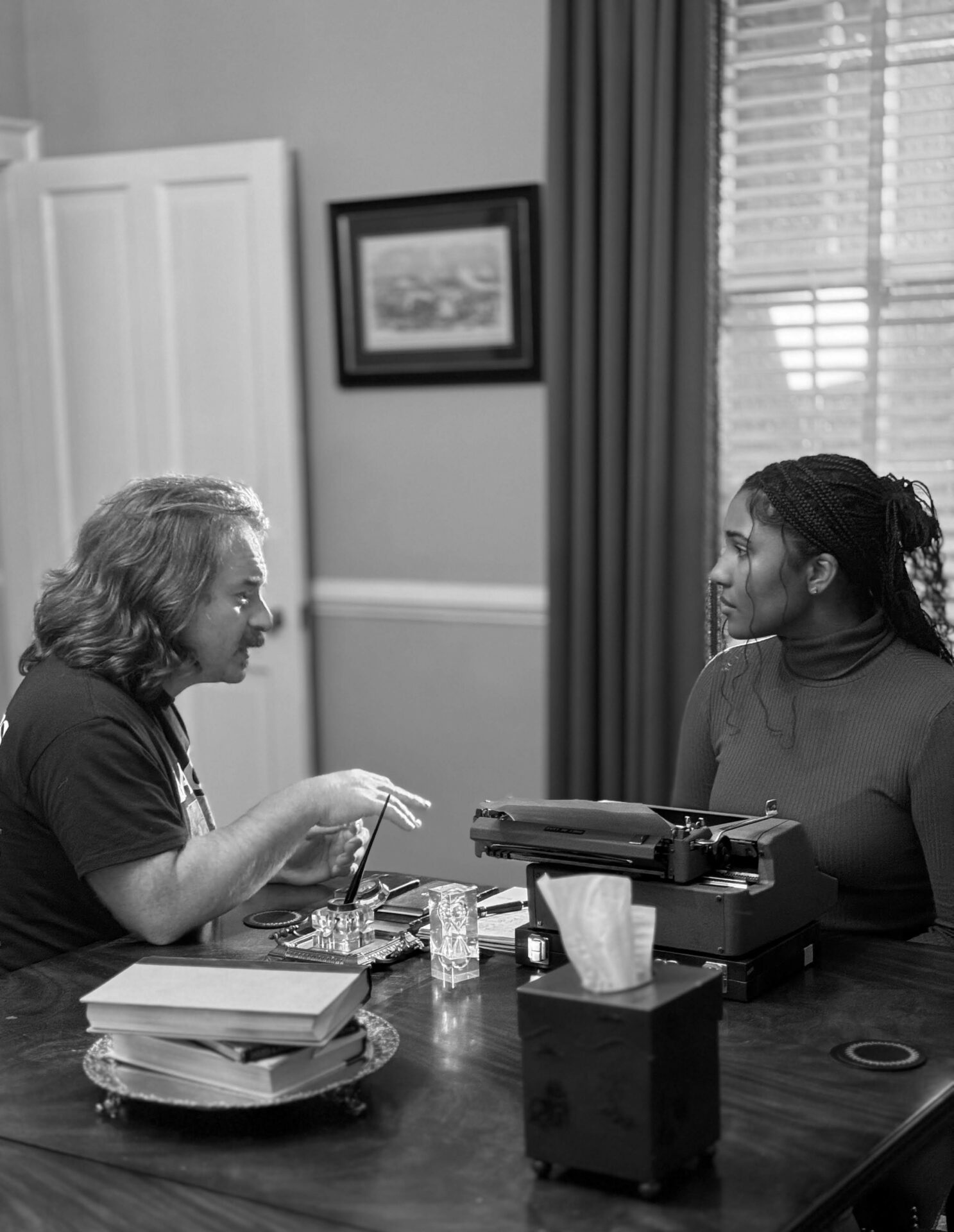
Image Credits
(Grey Shirt holding Script) Photo Courtesy of Dalton Okolo, 1108 Media (Large group photo) Photo Courtesy of the Richmond 48 Hour Film Project