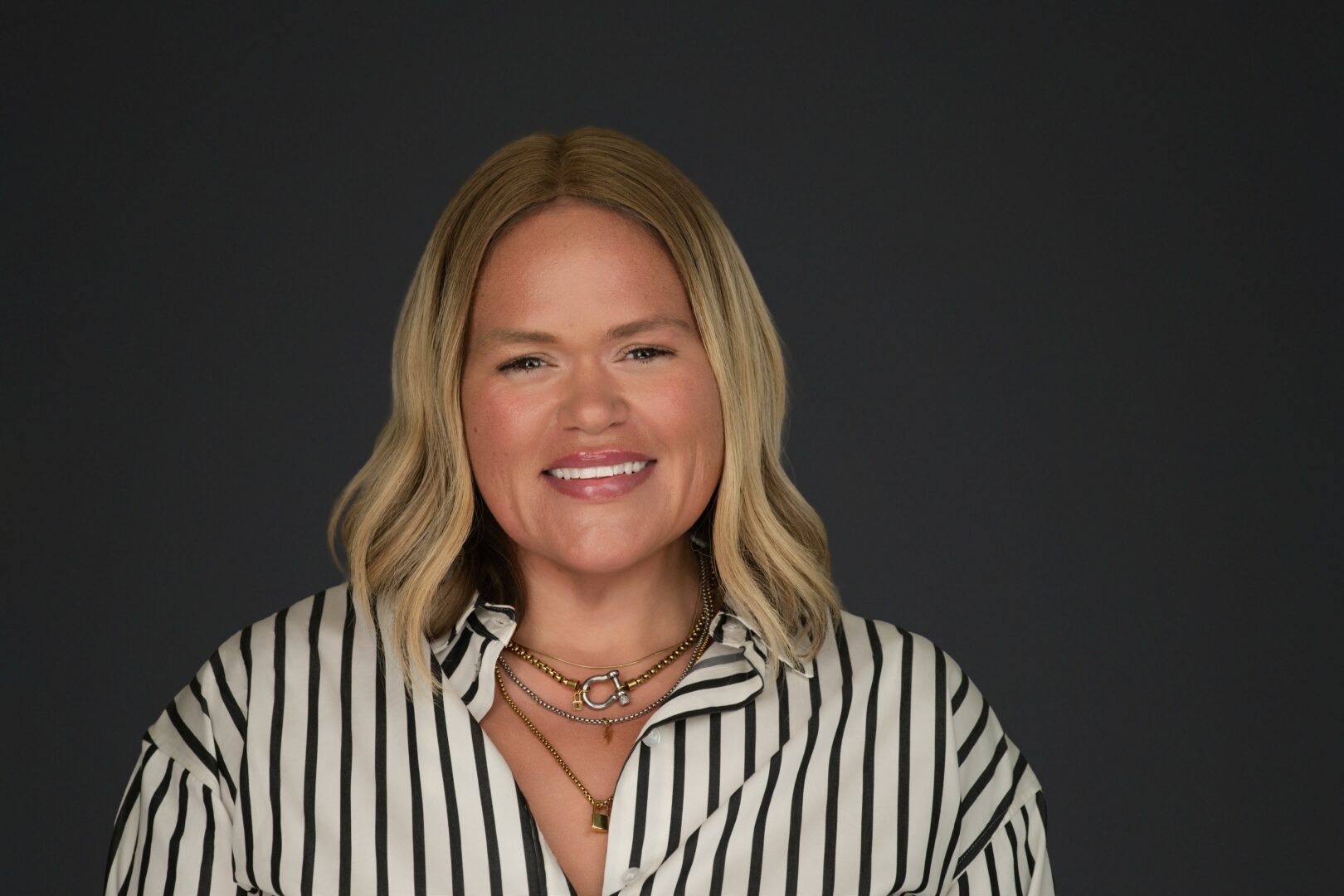
We’re excited to introduce you to the always interesting and insightful Deborah Katon. We hope you’ll enjoy our conversation with Deborah below.
Hi Deborah, great to have you with us today and excited to have you share your wisdom with our readers. Over the years, after speaking with countless do-ers, makers, builders, entrepreneurs, artists and more we’ve noticed that the ability to take risks is central to almost all stories of triumph and so we’re really interested in hearing about your journey with risk and how you developed your risk-taking ability.
The biggest risk I’ve taken was opening the Neon Museum of St. Louis.
At the time, it was far from an obvious or safe decision. My background is as a sculptor and exhibiting gallery artist. I understood the art world—how to make work, how to show it, how to teach—but I had never set out to run a museum, much less a nonprofit institution. What began as a modest pop-up exhibition to showcase neon artists from the St. Louis area slowly revealed a much larger possibility: that neon, as both an art form and a technological language, deserved a permanent home.
The timing made the risk sharper. After my husband passed away, I was faced with the practical reality of supporting myself and my family. The building we owned had long housed an antique and classic motorcycle business that we ran together. That mechanical world was familiar, but it no longer reflected my life or my future. I made the decision to completely change the direction of the space, converting the showroom from motorcycles to neon art.
That shift meant betting on something unproven. It meant redirecting finances, learning an entirely new operational model, and stepping into the nonprofit sector with no formal background in it. I went from being a sculptor, instructor, and office manager to becoming an executive director responsible for governance, fundraising, programming, compliance, and long-term sustainability. The Neon Museum took a full year to come to fruition after our first Noble Gas and Glass exhibition, and during the year there were many moments when the outcome was uncertain.
What carried me through was what I already knew; art, materials, process, and visual storytelling—and what I was willing to learn quickly. Neon wasn’t foreign to me; the science, the gases, the history, and the physical act of bending glass were already part of my vocabulary. The risk wasn’t the medium. The risk was believing that this highly specific, often overlooked art form could resonate broadly and publicly.
It did. The museum opened, grew, and became sustainable. Looking back, the risk wasn’t reckless—it was intentional. I stepped toward something that aligned with my knowledge, my skills, and my values, even though the scale was larger than anything I had done before. That decision changed the trajectory of my life and work entirely.
Thanks, so before we move on maybe you can share a bit more about yourself?
My name is Deborah Katon, and I am the Executive Director of the Neon Museum of St. Louis.
I come to this role as a practicing sculptor and neon bender. My foundation is in making—understanding materials, space, light, and how people physically and emotionally experience art. That background shapes everything I do at the museum. I don’t approach it as an administrator who happens to oversee art; I approach it as an artist who understands systems, flow, and structure from a visual and experiential perspective.
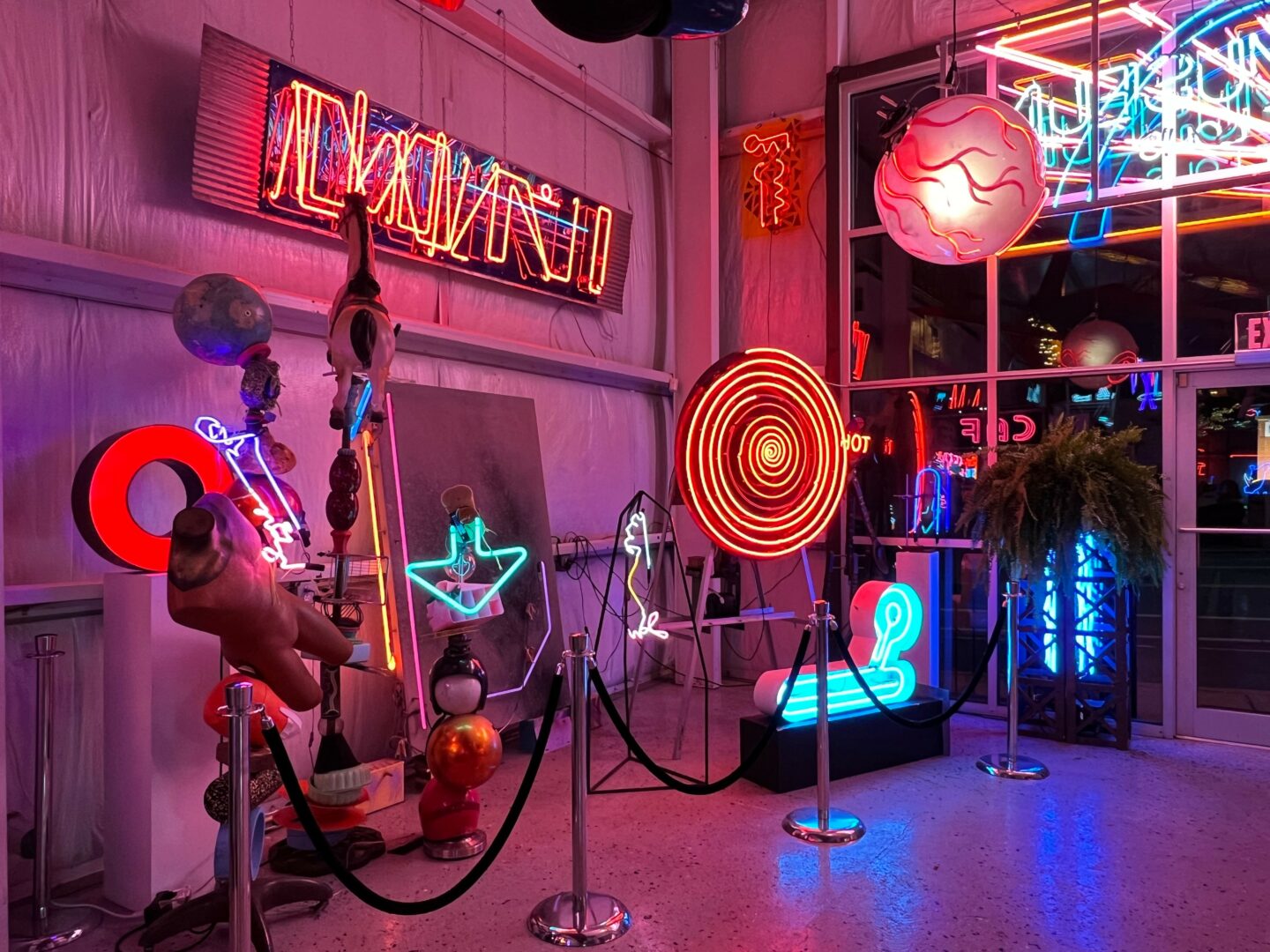
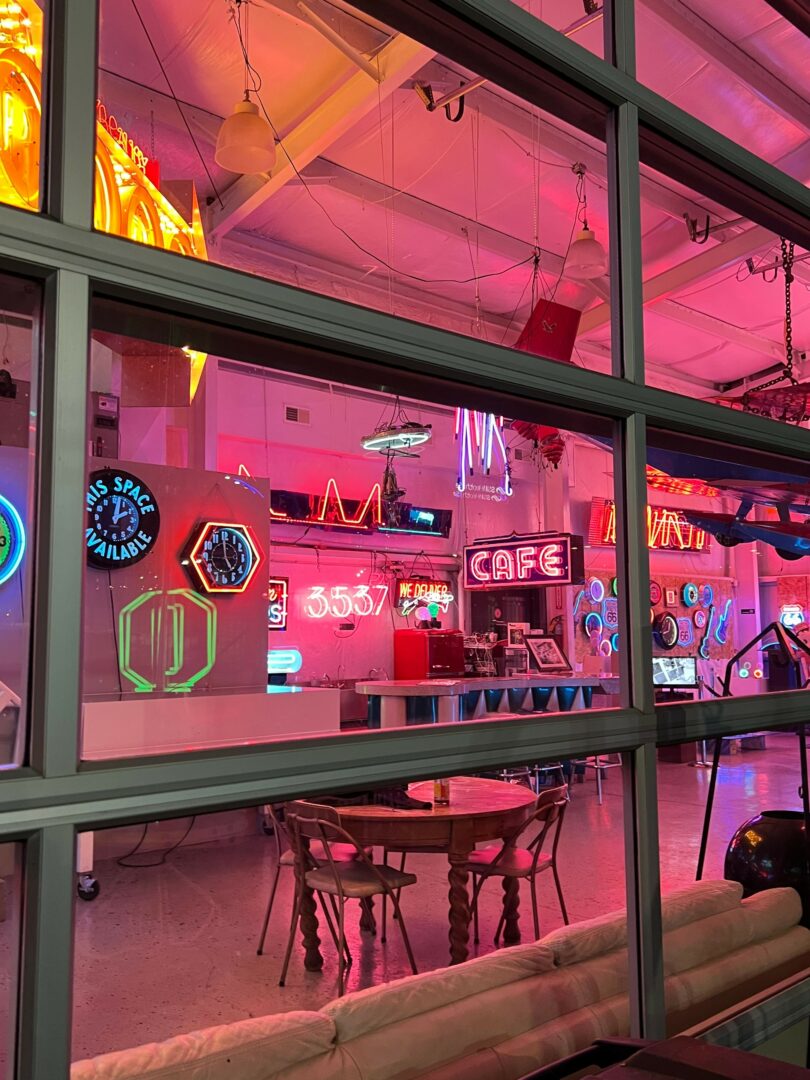
The Neon Museum of St. Louis is uniquely situated along historic Route 66—often called the Neon Highway—and this year coincides with the Route 66 Centennial. The museum sits at the intersection of art history, science, and cultural memory. We present contemporary neon artwork alongside educational programming that explains how neon works: noble gases, plasma, glass bending, and electricity. Visitors don’t just look at illuminated objects; they learn how and why they exist.
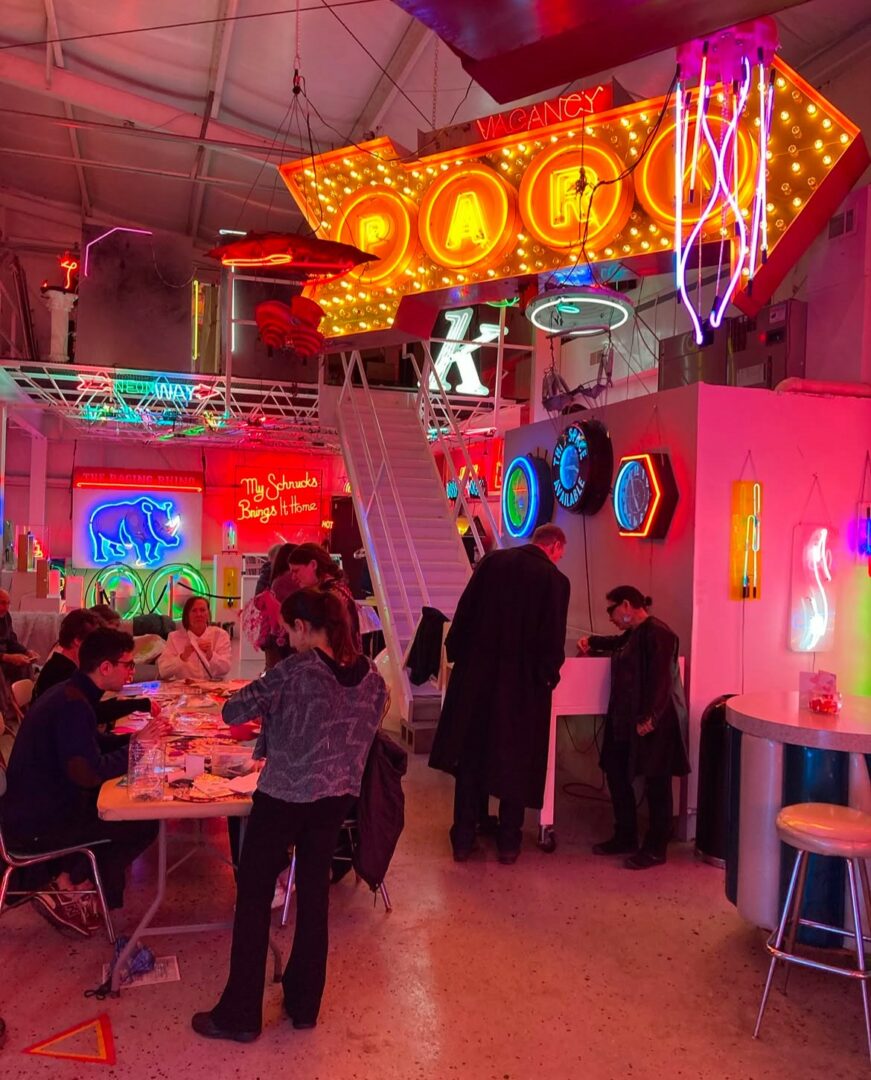
What sets the museum apart is its emphasis on engagement. We are not a passive viewing space. We host guided tours, hands-on craft nights, and unconventional programming such as yoga-inspired ecstatic dance events, all designed to invite people into the space in different ways. Our goal is that every visitor leaves with more knowledge and curiosity than they arrived with.
I am most proud of building an institution that is both accessible and rigorous. Neon is often dismissed as decorative or commercial, yet it has a rich history tied to innovation, transportation, and public life. We treat it with the seriousness it deserves while still embracing its joy. Scientifically, neon light has been shown to be dopamine-inducing, and people consistently describe a sense of calm and wonder when they are immersed in it. We lean into that response intentionally.
As Executive Director, I oversee all aspects of the museum’s operation—from curatorial vision and programming to daily logistics and long-term planning. My training as a sculptor has proven invaluable: sculptors are taught to consider form from every angle, and that mindset translates directly into running an organization. You learn to anticipate stress points, balance competing forces, and make something structurally sound as well as beautiful.
What I want people to know is that the Neon Museum of St. Louis is not just about preserving light—it’s about understanding how art, science, and human experience intersect, and using that knowledge to brighten the world, one visitor at a time.
There is so much advice out there about all the different skills and qualities folks need to develop in order to succeed in today’s highly competitive environment and often it can feel overwhelming. So, if we had to break it down to just the three that matter most, which three skills or qualities would you focus on?
Looking back, three areas of knowledge and skill continue to shape both my artistic practice and my work as an executive director.
First: education and material intelligence.
My undergraduate education taught me how to work with materials—how to test them, understand their limits, and let process inform meaning. That foundation established a habit of continual learning that still guides me today. While studying in Rome, where I initially intended to pursue classical figurative work, a mentor fundamentally redirected my trajectory toward more conceptually driven, contemporary practice. Learning to trust curiosity—and to allow mentors and experience to challenge assumptions—became a defining skill, one that applies equally to leadership and institution-building.
Second: graduate study and learning the language of art.
At Washington University, I learned how to articulate ideas with precision and how to situate my work within a historical and cultural lineage. That fluency—understanding context, history, and institutional frameworks—has been essential not only as an artist, but as an executive director. It informs how I advocate for artists, communicate with boards and funders, and shape long-term vision with clarity and purpose.
Third: travel as an ongoing practice.
Travel continues to be a form of research. Moving through different countries, cultures, and systems expands how I understand place, labor, signage, light, and human behavior. These experiences actively inform the narratives in my artwork and influence how I think about community engagement, accessibility, and cultural stewardship within an institution.
Advice for those early in their journey:
Commit to learning—formally and informally. Develop the ability to articulate your ideas clearly. Seek out experiences that expand your perspective beyond what is familiar. Build adaptability by paying attention and staying present.
And the most enduring advice I carry—given to me by my mother as I crossed borders alone at 15—remains simple and useful in both art and leadership:
Go with the flow.
All the wisdom you’ve shared today is sincerely appreciated. Before we go, can you tell us about the main challenge you are currently facing?
The biggest challenge we’re facing right now is funding.
Running a museum is deeply rewarding, but it’s also very real: people need to be paid, electric bills have to be covered, and artists deserve fair compensation. None of this happens without steady financial support.
With funding, we’re able to do what people most associate with the Neon Museum—restore and display iconic neon. Right now, we have a major piece waiting to be restored and installed on top of the building, where it can be enjoyed by the entire community. Funding allows us to bring these works back to life, expand our collection, and extend our reach far beyond our walls.
We’re leaning into the momentum of the 2026 Route 66 Centennial and actively reaching out to sponsors and partners. We’re creating a range of ways for people to engage—through exhibitions, demonstrations, and special events—not only to generate income, but to grow our audience and further our mission of brightening the world through color and electricity, one visitor at a time.
Looking ahead, we’re dreaming big and planning responsibly. Future goals include a rooftop sculpture garden and, not too far down the road, a reimagined building for the Neon Museum: a contemporary, architecturally creative structure that unfolds from the top floor down. Visitors would move through neon’s history, encounter contemporary work, experience floors dedicated to local St. Louis artists, learn the science behind neon, and watch neon benders at work.
A little funding goes a long way, and a lot of funding goes even further. We are deeply grateful to everyone who helps this new St. Louis institution grow into an icon—one that honors the past, supports working artists, and lights the way forward.
Contact Info:
- Website: https://www.neonmuseumstl.com
- Instagram: @neonmuseumstl
- Facebook: Neon Museum of St. Louis
- Youtube: Neon Museum of St. Louis
so if you or someone you know deserves recognition please let us know here.