We were lucky to catch up with Delyth Angharad recently and have shared our conversation below.
Delyth, appreciate you making time for us and sharing your wisdom with the community. So many of us go through similar pain points throughout our journeys and so hearing about how others overcame obstacles can be helpful. One of those struggles is keeping creativity alive despite all the stresses, challenges and problems we might be dealing with. How do you keep your creativity alive?
I was really lucky to have a fantastic art teacher in high school who encouraged experimentation and trying odd combinations of things, breaking away from the ‘traditional’ and doing things in the ‘wrong’ way to see what the results might be. I remember one of my art projects involved taking a famous surrealist landscape painting, printing it onto acetate, making photocopies of tea bag labels and printing them onto acetate, overlaying the acetates and putting them onto a projector and blowing them up huge and tracing bits of them onto a massive sheet of paper, then colouring parts of the pattern with paints and filling in other parts with magazine cut-outs and things. It was weird, but definitely a very ‘new’ way of thinking about creativity, especially as a sixteen year old who mostly did realistic pencil drawings. I carry that with me now when I’m thinking about my art; I do ornamental line art and calligraphy, but I’m always thinking ‘what if’ – what if I take something that’s traditionally done in one specific kind of medium and do it in something else, or what if I mix two very different styles of doing things, etc. It’s great for forcing me out of my comfort zone and for generating loads of ideas to push past a creative block!
Let’s take a small detour – maybe you can share a bit about yourself before we dive back into some of the other questions we had for you?
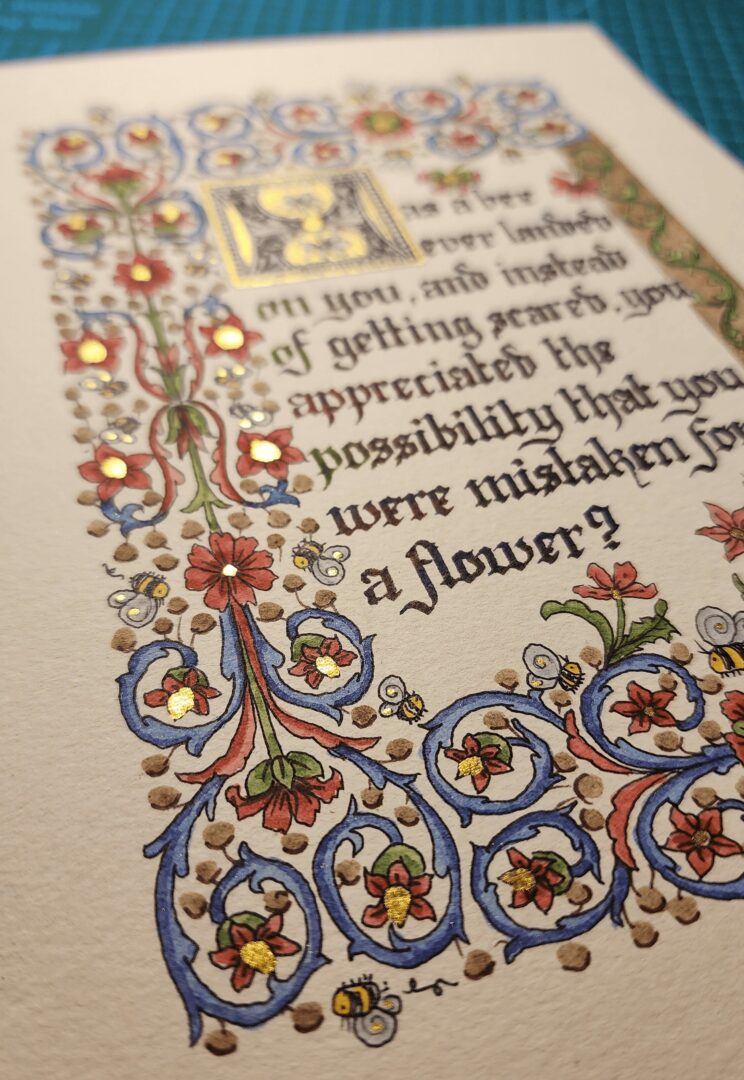
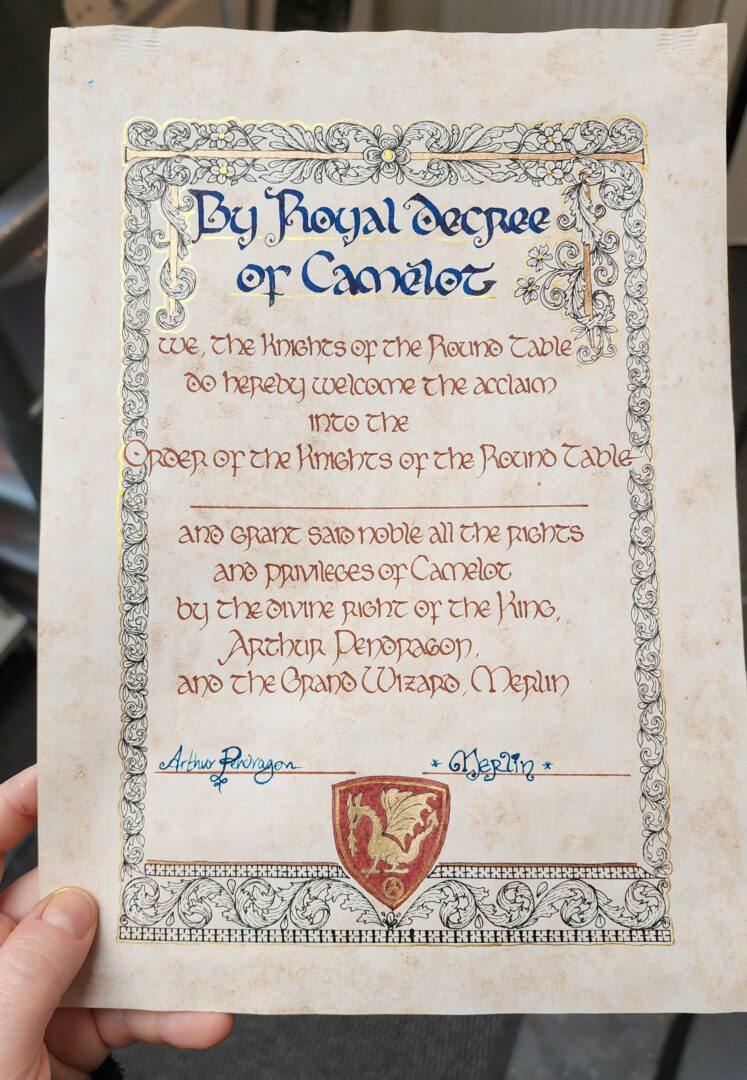
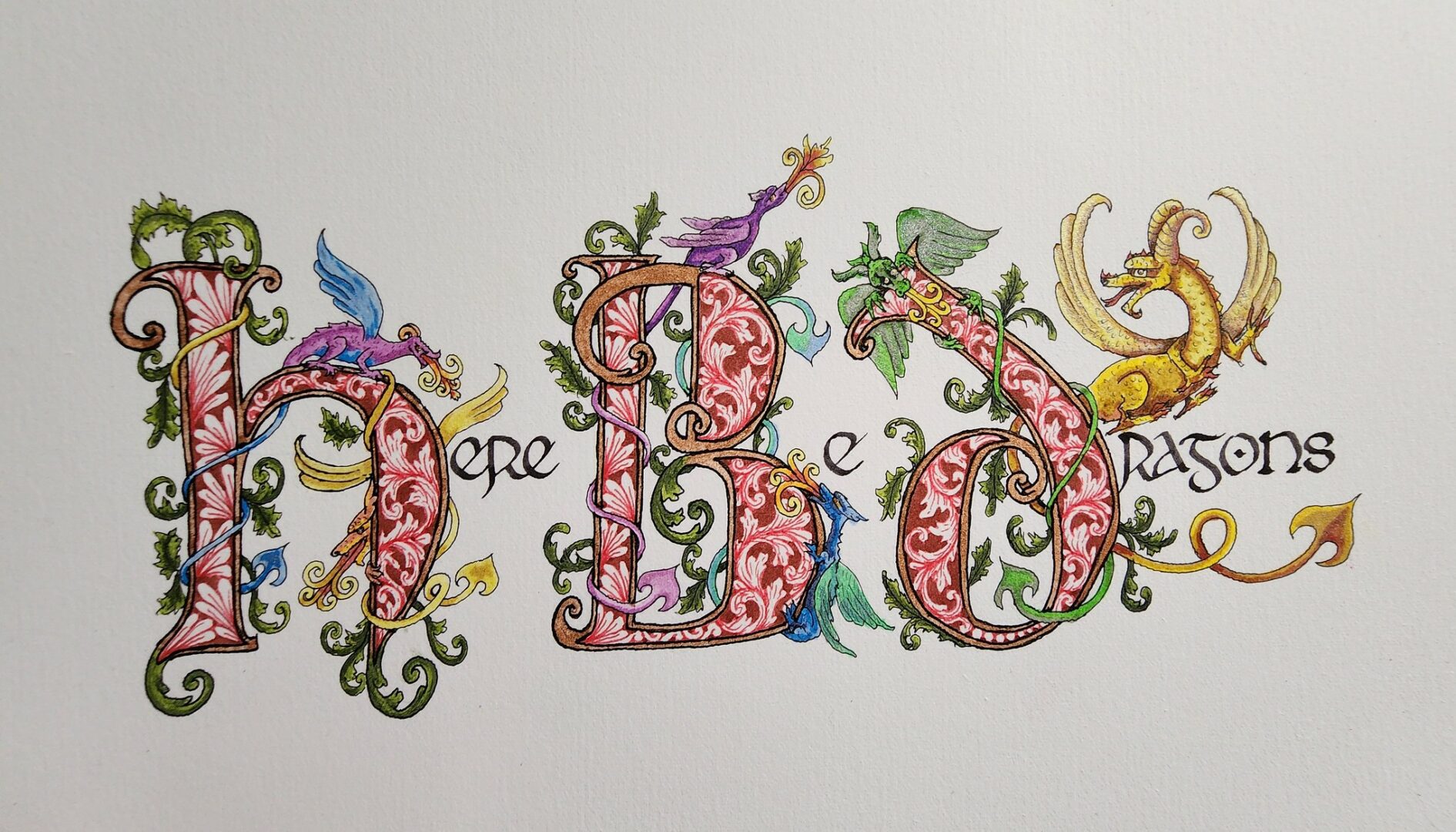
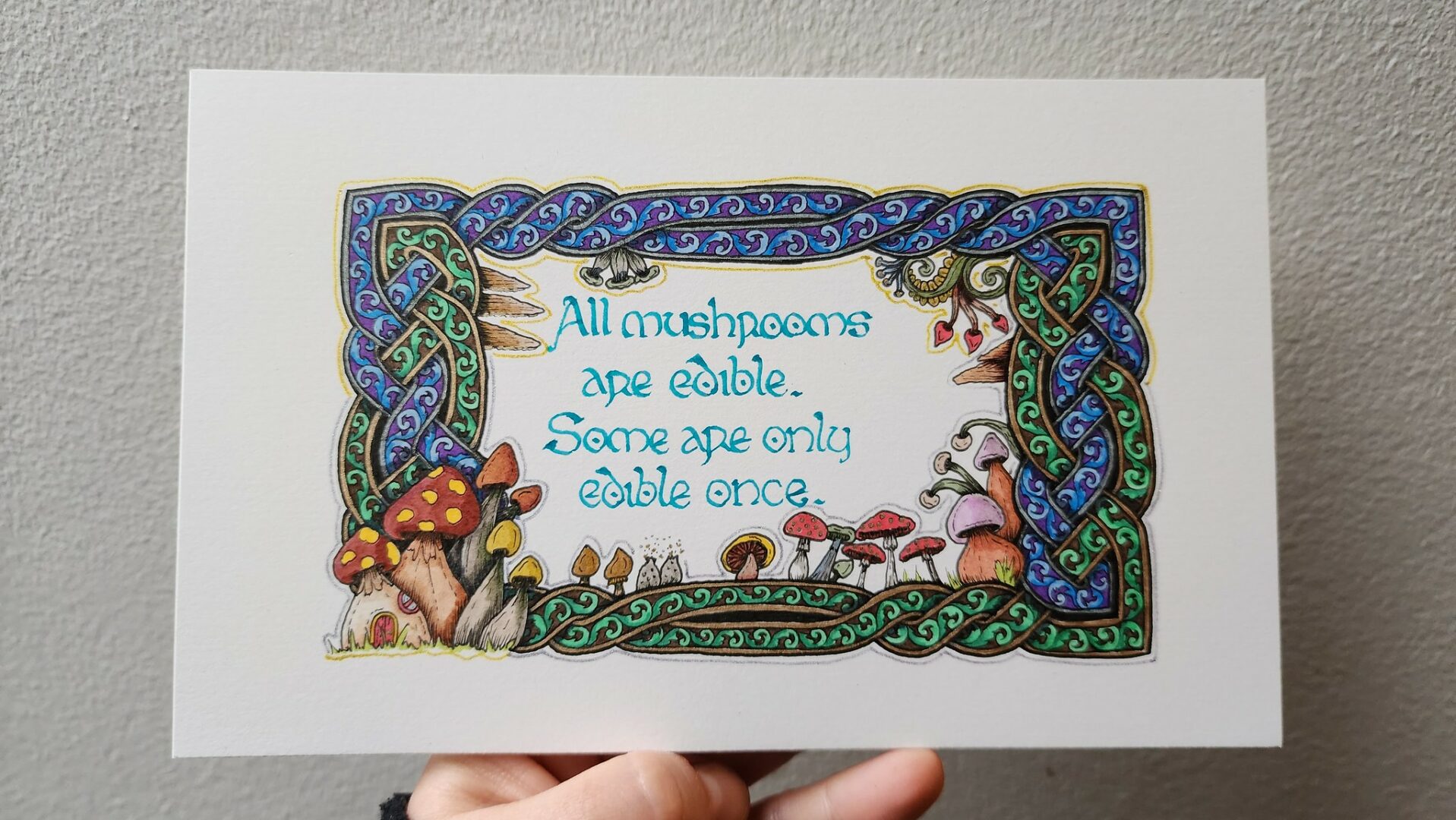
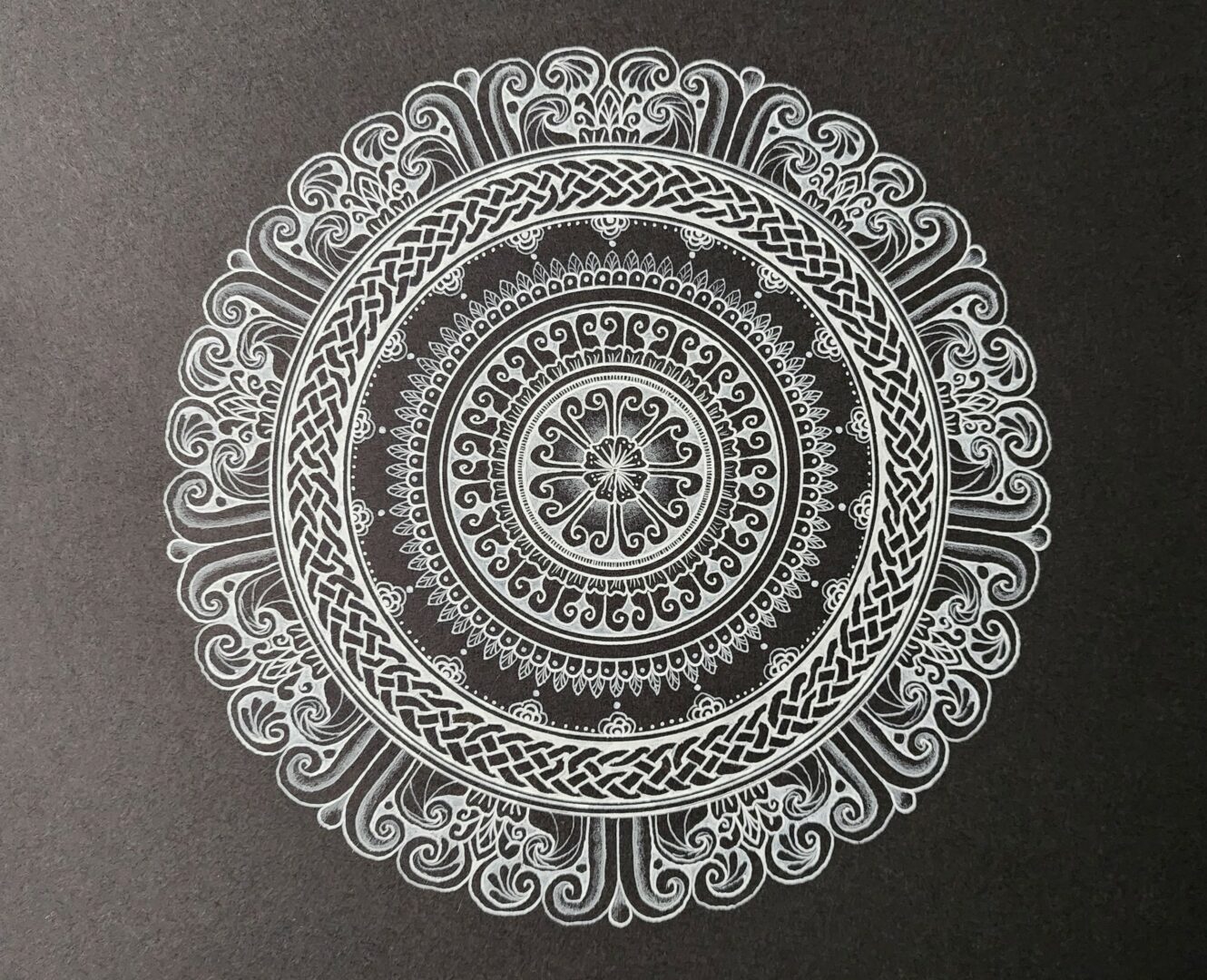
I hand-draw mandalas, calligraphy, illuminations (like the old monk manuscripts with decorative borders), and also run an art instance on Mastodon.
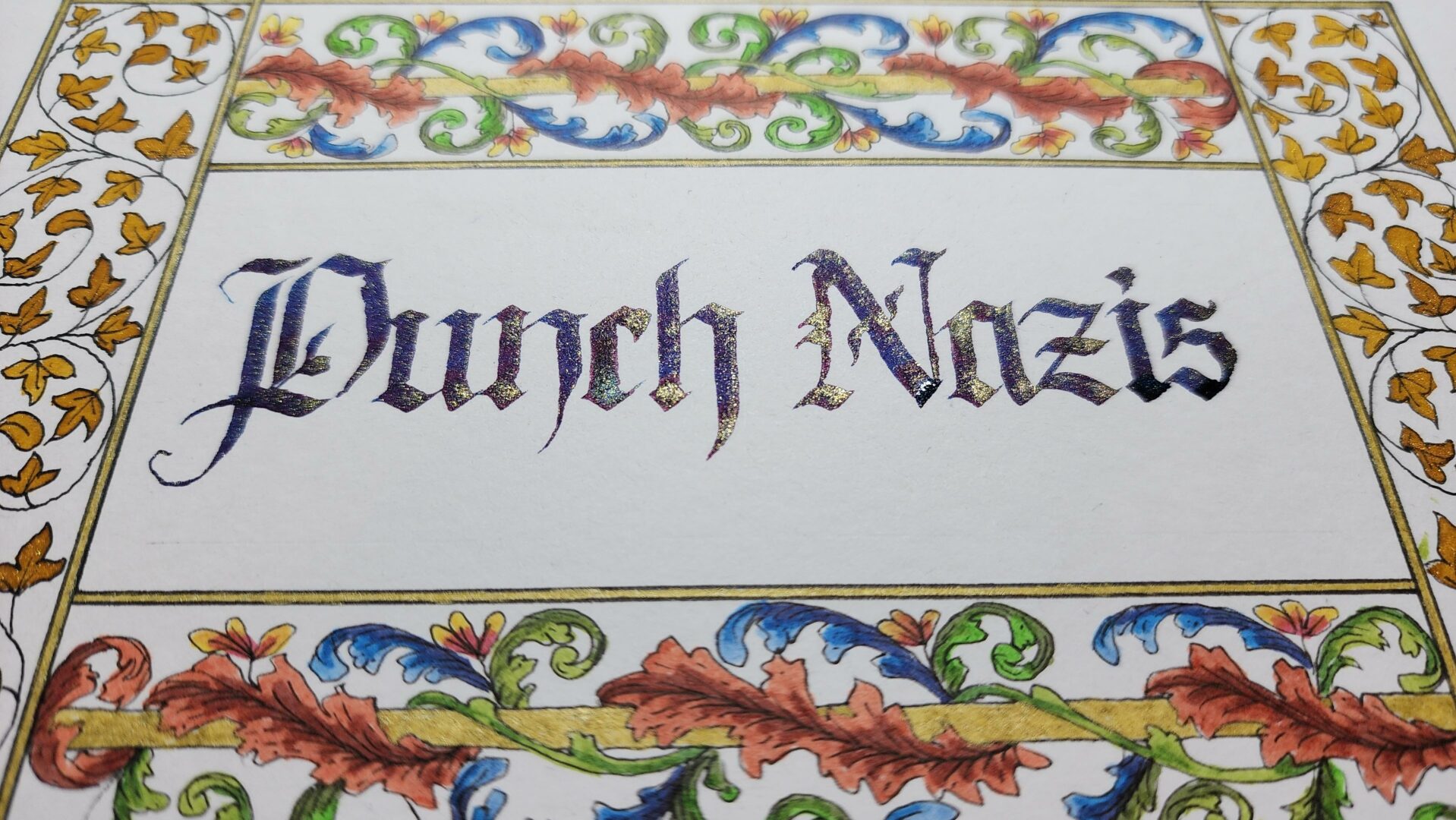
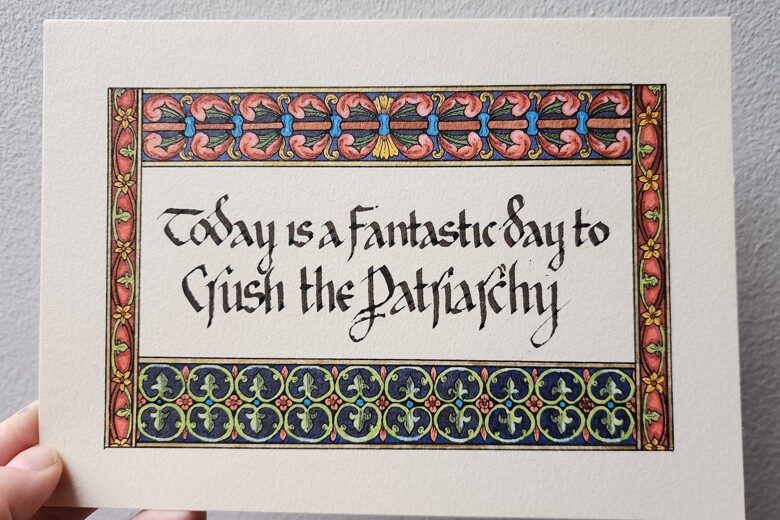
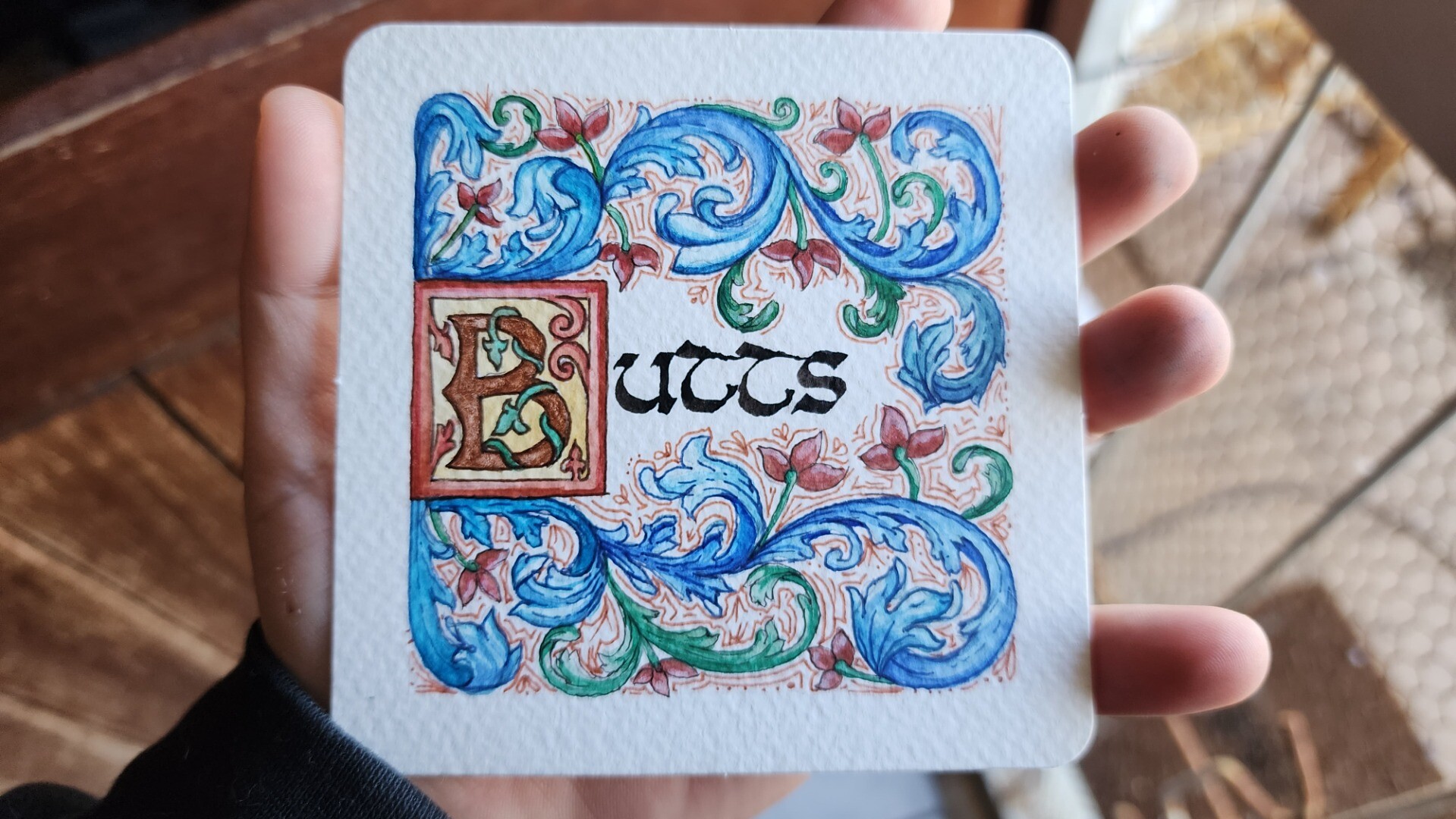
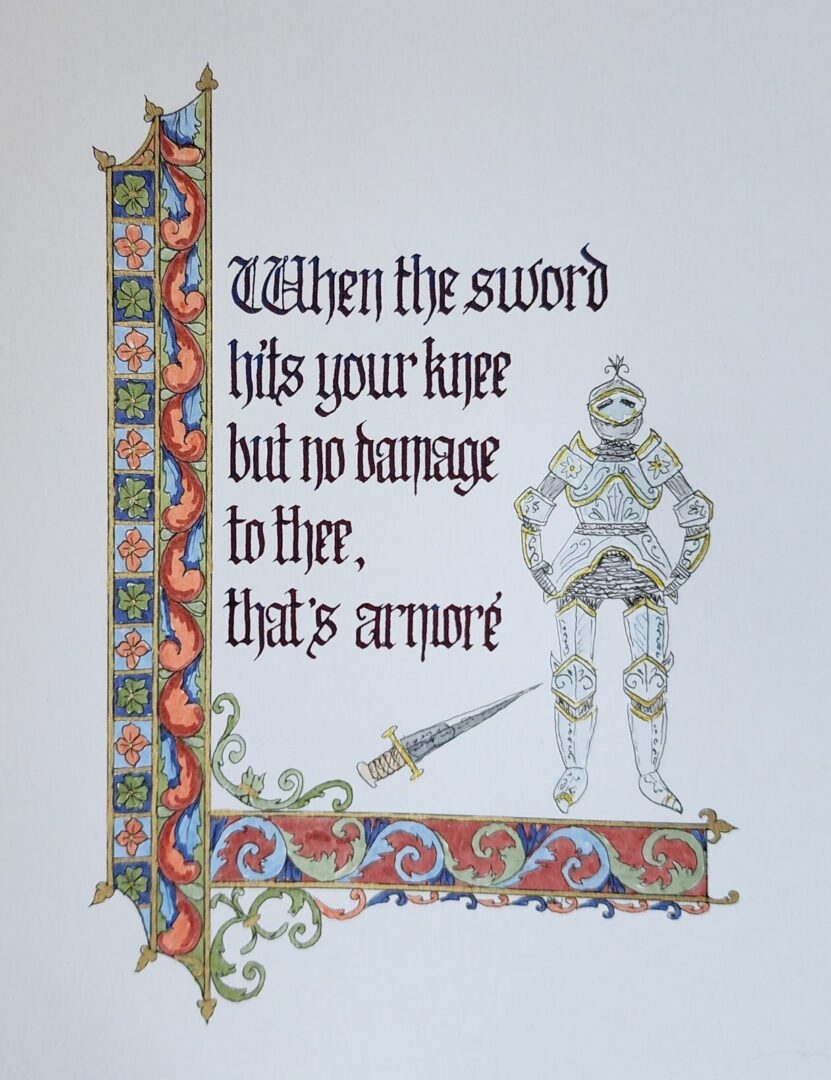
My art started about ten years ago, with the ‘adult colouring book’ boom. I started drawing line art colouring pages (mostly mandalas), people enjoyed them, I made a Facebook group, became popular, and ended up having a colouring book of mandalas published by Barnes & Noble. Since then my art has kind of naturally morphed towards the type of decorations you see in old illuminated manuscripts, with those intricate borders of repeating patterns. I decided at some point that if I was going to do things like that, I should go all-in and learn calligraphy, so I taught myself Blackletter and Insular scripts. Now my main artistic output is that kind of calligraphy – people commission to me to write their favourite quotes or special phrases and to decorate them with lovely borders. I like mixing that style of ‘ancient manuscript’ calligraphy, which is often used in holy texts and other ceremonial things, with a more modern twist; so I’ll calligraphy rude words, or modern memes, and then decorate them to look like those old solemn, important manuscripts. I also like making ‘protest’ calligraphy; phrases like ‘punch nazis’ or ‘become ungenderable’ or ‘eat the rich’; things that push back against social norms and capitalism, and that embrace diversity and queerness.
I promote my art on Mastodon – an open-source, decentralised social media platform – where I’ve had an account on mastodon.art since 2017. In 2021, the then-owner of mastodon.art asked me if I’d like to take over, and I’ve been running it ever since. It’s hugely rewarding, being able to provide a space free from ads, algorithms, corporate control, AI, etc. where artists can promote themselves and thrive. We also moderate the community as a safe space for Black, queer, disabled, neurodiverse folks, under the idea that if it’s safe for them, it’s safe for anyone; so we take a hard stance against things like racism and transphobia. It’s a great place for artists to be if they’re fed up of the exploitative terms and contidions on corporate-owned big social media platforms like Twitter/Facebook/Instagram.
Looking back, what do you think were the three qualities, skills, or areas of knowledge that were most impactful in your journey? What advice do you have for folks who are early in their journey in terms of how they can best develop or improve on these?
The most important thing for me to realise when I started trying to draw line art for colouring books, is that art is a learned skill, just like playing the piano or woodworking. You’re not going to pick up a pen and be perfect at executing the idea in your head on Day 1; you have to practice, you have to put in the hours, and gradually you’ll improve. For me, I find joy in the process – the time I’m spent sitting at the paper with pen in hand – so it’s not as much about the outcome, and if you can let go of ‘the outcome needs to be perfect’ and find pleasure, or meaningfulness, in the process instead, it’s going to be a much more pleasant journey honing your skill.
Patience is also important, and goes hand in hand with the above; when I started, I couldn’t hold a pen for more than 10 minutes before my hand would start to cramp. You need to build up those muscles, exercise them every day by drawing, and gradually you’ll be able to spend longer periods working on your art. Developing your patience is as much a skill to be learned as the drawing itself, and again if you find pleasure in the process, developing the patience to work on those really big, intricate works that take hours and hours, will come more easily.
Lastly, creativity for me is very important – as per my answer to the first question. Encouraging yourself to think outside the box, to experiment, to try new things and see how they work. I have ADHD, so this isn’t hard for me – the hard part is NOT trying a million different crafts and hobbies and filling the house with supplies I only use for a few months before the hyperfocus goes! But it’s important to develop your creativity; look through art reference books, visit museums, find inspiration anywhere you can – in architecture (there are some fantastic patterns carved into stonework in the most mundane of places), in nature (repeating fractal patterns in leaves, for example). Attempt things that are outside of your comfort zone; if you draw precise line art, try watercolours and oil pastels. Try incorporating them with your line art. Push your boundaries.
Any advice for folks feeling overwhelmed?
I have autism, ADHD, and social anxiety, and a whole bunch of fun things like PDA (pathological demand avoidance) that come with those, as well as chronic migraines and PCOS which, as well as the neurospicy things, contribute to brain fog and tiredness. I have to be very careful with pacing myself when I’m taking commissions, giving myself enough time to work on personal projects, and not to feel too overwhelmed if I take on too many commissions, or I’ll start burning out and shutting down – which then affects things like housework and self-care. It’s been a learning curve, especially in realising late in life that I am actually AuDHD and that all the ‘weird brain things’ I experience are valid and legitimate and that loads of other people experience them to, and that they’re documented and supported.
With commissions, I try to not have three or four in my queue at any one time, and I give myself plenty of time to work on them; if I know something will only take me a few hours once I sit down to do it, I still give myself a few days to work on it. I also try to set expectations with my clients (who are almost all just regular people from social media who want to buy some indie artwork, so nothing ‘formal’ and no businesses, which makes them much nicer and less stressful to deal with) as to timeframes and whether they’re in a rush for something.
When I start feeling overwhelmed, I stop taking commissions, have a break where I don’t force myself to do any artwork if I don’t explicitly feel excited about working on something, and then get back to it in a few days. I always try to have a few ideas in my head for projects that I can get excited about, to keep the spark for creating alive.
If I’m feeling especially burned out, I’ll pull back from selling physical things for a while (which involve sorting out postage, which is a chore that especially suffers under my PDA) and push my digital things instead, which are more passive in terms of my involvement, so that I can still generate an income even when I’m low on spoons.
It’s important to figure out where your limitations are, to be aware of them, and to not push yourself past them; to give yourself grace and treat yourself with compassion, to not be hard on yourself when you’re struggling, and to realise when you ARE struggling that you need to take a break and look after yourself (and that spending a few days doing absolutely nothing is valid, and perfectly fine, and good self-care, if that’s what you need for your brain to heal <3).
Contact Info:
- Other: https://mastodon.art/@welshpixie
https://ko-fi.com/welshpixie
so if you or someone you know deserves recognition please let us know here.