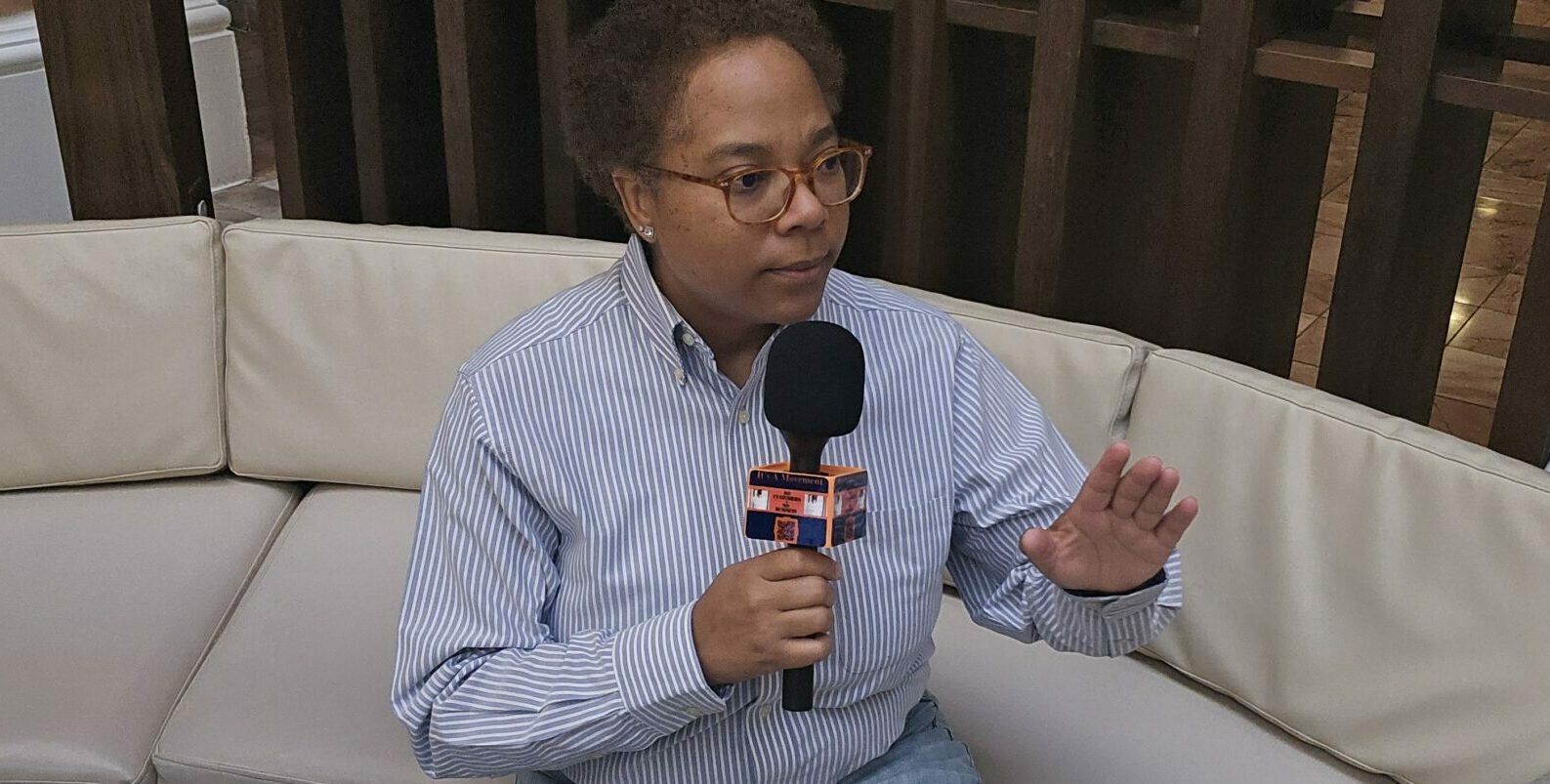
We caught up with the brilliant and insightful Divya Gill a few weeks ago and have shared our conversation below.
Hi Divya, thank you so much for opening up with us about some important, but sometimes personal topics. One that really matters to us is overcoming Imposter Syndrome because we’ve seen how so many people are held back in life because of this and so we’d really appreciate hearing about how you overcame Imposter Syndrome.
The higher I climb, the louder the floorboards creak. To the outside world, my resume looks like a steady incline of hard-won achievements and ‘right moves.’ But from the inside, it feels like a high-stakes game of pretend. Every time I hit a new milestone, I don’t feel like I’ve ‘arrived’; I feel like I’ve just increased the height I’m eventually going to fall from when everyone finally realizes I’m just winging it.
I Thought I Needed More Experience. What I Really Needed Was Perspective. That quiet voice that questioned whether I was truly qualified to be in the room. Whether I had enough experience. Whether someone, at some point, would realize I wasn’t as capable as they thought.
So I did what most high performers do—I overprepared. I double-checked everything. I worked harder than necessary, not just to succeed, but to prove I deserved to be there.
But no amount of preparation fixed the feeling. Because the problem wasn’t competence. It was perception.
People often talk about overcoming imposter syndrome like it’s a breakthrough moment—like one day you wake up and feel completely certain of yourself. That wasn’t my experience. The shift happened much more quietly. I started noticing patterns where Clients were trusting me with meaningful decisions. I was solving problems that genuinely mattered. I wasn’t “aspiring” to do the work—I was already doing it
That’s when I realized something uncomfortable but freeing:
Imposter syndrome doesn’t disappear just because you become more quiet. For a long time, I treated confidence as a prerequisite. If I just learned more, did more, achieved more—then I’d feel ready. But readiness is a moving target.
Every time I reached a new level, the standard shifted. The room got bigger. The expectations grew. And the same voice followed me there. At some point, I had to make a decision: Either wait until I felt ready… or accept that I already was. Feelings are persuasive, but they’re not always accurate.
I looked at the facts, a different story emerged where people were coming to me for guidance. My work was creating real outcomes. I had built a track record, whether I acknowledged it or not with clients, team and various authorities of influence.
That shift—from relying on how I felt to looking at what was true changed everything.
What I once interpreted as a warning sign, you don’t belong here, I began to see as something else entirely: Growth.
Of course it felt uncomfortable. I was stepping into bigger responsibilities, higher expectations, and new challenges. The discomfort wasn’t evidence of inadequacy. It was evidence that I was expanding.
There’s a subtle but powerful difference between doing the work and owning the work.
When I stopped second-guessing every decision, something shifted—not just internally, but externally. People responded differently. Conversations changed. There was less hesitation, more clarity. Confidence didn’t come from knowing everything. It came from trusting that I could handle what I didn’t know.
At this stage, imposter syndrome (notice “I” here is smaller) didn’t disappear. It just got much quieter.
It still shows up in moments that matter—new opportunities, bigger decisions, unfamiliar territory.
But now, I recognize it.
Not as a signal to stop, but as a reminder that I’m stepping into something meaningful. Something new and refreshing, more powerful!
I didn’t overcome imposter syndrome by becoming perfect (no one is!)
I overcame it by realizing I was measuring myself against a standard that didn’t exist—and overlooking the proof that I already belonged.
And once you see that clearly, you stop asking, “Am I ready?”
You start asking, “What’s next?”

Thanks, so before we move on maybe you can share a bit more about yourself?
I’m Divya Gill, owner of Gill Tax Group—a woman-owned, second-generation firm with multiple offices across California and Nevada—and I work at the intersection of strategy, problem-solving, and trust. I’m also a TV host with Now Media, where I host “GILL-TY OF SAVINGS” and bring financial conversations into the spotlight.
As a second-generation CPA, I bring experience from billion-dollar organizations across audit to controller roles. I founded my firm to provide strategic guidance to growing businesses. I hold an Accounting degree from the University of Wisconsin–Milwaukee, an MBA from Golden Gate University, and a Leadership Certificate from Cornell. Today, I’m licensed in California and Nevada, file in all 50 states, and serve clients nationally and internationally.
At the core of what I do is help businesses and individuals make sense of complex financial and tax situations—often in moments that feel overwhelming, unclear, or high-stakes. My role isn’t just about compliance or checking boxes. It’s about bringing clarity where there’s confusion, structure where there’s uncertainty, and confidence where there’s hesitation.
What makes this work especially meaningful to me is that it’s deeply personal for the people I serve. Behind every return, every number, every decision, there’s a story!
A business someone built from the ground up. A major life transition. A risk someone took that finally paid off. I get a front-row seat to those moments, and I don’t take that lightly.
The most exciting part of my work is solving problems that don’t have obvious answers. Situations that require not just technical knowledge, but judgment, experience, and the ability to see the bigger picture. That’s where real value is created—when you can guide someone through complexity and help them move forward with clarity.
I’ve also been intentional about building a practice that feels different from the traditional experience people expect. My approach is grounded in transparency, responsiveness, and respect. I believe clients should feel informed, not intimidated. Supported, not rushed. And most importantly, they should feel like they have someone in their corner who is thinking ahead for them—not just reacting in the moment.
I’m equally committed to my team—investing in their growth, supporting their success, and building a culture where people feel valued and motivated to do their best work.
As for what’s ahead, I’m continuing to expand the way I serve clients beyond just transactional work—focusing more on proactive planning, advisory, and long-term strategy. The goal is to be a partner in their growth, not just a service provider they hear from once a year.
If there’s one thing I’d want readers to take away, it’s this:
The right guidance doesn’t just solve problems—it changes how you make decisions going forward.
And that shift can be everything.
If you had to pick three qualities that are most important to develop, which three would you say matter most?
What actually made the difference: Looking back, three things shaped my journey more than anything else: judgment, resilience, and communication.
Judgment is what separates people who know the rules from people who know when to bend them. Early on, I realized success isn’t about memorizing answers—it’s about seeing patterns, understanding context, and making decisions when there isn’t a clear playbook.
Resilience is non-negotiable. Things will go wrong. You will make mistakes. You will have moments where you question yourself. The difference is whether you stay in that moment or move through it. I learned quickly that growth comes from pressure, not comfort.
Communication is the multiplier. You can be the most technically skilled person in the room, but if you can’t clearly explain what you see or guide someone to a decision, your impact is limited. The ability to simplify complexity is what builds trust—and trust is everything.
Advice for those starting out
Stop waiting to feel ready—you won’t.
Focus less on trying to prove yourself and more on building real understanding. Ask better questions. Pay attention to how decisions are made, not just what the outcomes are. And don’t avoid hard situations—lean into them. That’s where the real learning happens.
Most importantly, don’t underestimate the value of how you show up. People remember clarity, confidence, and consistency far more than perfection.
The truth most people learn too late: Success isn’t about knowing more—it’s about thinking better, adapting faster, and communicating with clarity.
If you can do those three things well, you won’t just grow—you’ll stand out.
Do you think it’s better to go all in on our strengths or to try to be more well-rounded by investing effort on improving areas you aren’t as strong in?
A mentor once told me to double down on my strengths—and be honest about my weaknesses. Not to perfect them, but to ensure they never become a limitation.
The “all-in” versus “well-rounded” debate is one of those classic career crossroads. If you try to be good at everything, you risk becoming a jack of all trades, master of none. But if you focus only on your strengths without awareness, you create blind spots that can eventually hold you back.
I’ve found the most effective approach isn’t balance—it’s leverage.
I think of it as an 80/20 strategy: spend 80% of your energy turning your strongest skills into something exceptional, and 20% making sure your weaknesses don’t become liabilities.
Early in my career, I tried to be everything. I said yes to everything, took on every type of work, and pushed myself to improve in areas that weren’t necessarily where I added the most value. I thought that’s what growth looked like.
The real shift came when I stepped out of corporate and started building my own firm.
I didn’t want to build a volume-based practice. I didn’t want to be the firm that processed as many returns as possible. I wanted to build something more intentional—focused on quality, strategy, and long-term relationships.
That decision forced me to get very clear on my strengths.
I leaned into business and high-net-worth returns—areas where complexity matters, where strategy makes a real difference, and where clients aren’t just looking for a service, but for guidance they can trust.
At the same time, I became very aware of where I needed support. Instead of trying to master everything, I focused on building the right team and systems around me.
That’s what allowed me to create a different kind of experience—one that feels more like a partnership than a transaction. A red-carpet level of service where clients feel supported, informed, and confident in every decision.
That shift changed everything.
It allowed me to operate at a higher level, serve clients more effectively, and grow in a way that aligns with how I want to work and who I want to serve.
In tax and finance, we’re often trained to be generalists—a bit of audit, some SALT, exposure to international structures, and just enough client skills to navigate conversations. But over time, I’ve seen a different pattern emerge.
The market doesn’t reward “well-rounded.”
It rewards clarity, expertise, and trust.
The professionals who stand out aren’t the ones who can do a little of everything—they’re the ones known for doing a few things exceptionally well.
That’s the shift.
If you want to move from feeling replaceable to becoming indispensable, you have to stop trying to smooth out every weakness and start leaning into what makes you distinct. Build depth where it matters. Be intentional about where you add value. And surround yourself with the right people or systems to support the rest.
That’s how you don’t just grow—you differentiate.
It allowed me to operate at a higher level, serve clients more effectively, and grow in a way that aligns with how I want to work and who I want to serve.
Over time, that clarity in focus shaped how others see me. Today, I’m not viewed as someone who simply prepares returns—I’m seen as a tax strategist who handles complex, high-stakes matters and helps clients make smarter financial decisions.
Contact Info:
- Website: https://www.gilltaxgroup.com
- Instagram: https://www.instagram.com/gill_tax_group/
- Facebook: https://www.facebook.com/gilltaxgroup/
- Linkedin: https://www.linkedin.com/company/gill-tax-group/
- Youtube: https://www.youtube.com/@GillTaxGroup
- Yelp: https://www.yelp.com/biz/gill-tax-group-irvine
- Other: https://www.tiktok.com/@gilltaxgroup
https://www.yelp.com/biz/gill-tax-group-las-vegas-2
https://www.yelp.com/biz/gill-tax-group-san-diego
https://www.yelp.com/biz/gill-tax-group-santa-clara
so if you or someone you know deserves recognition please let us know here.