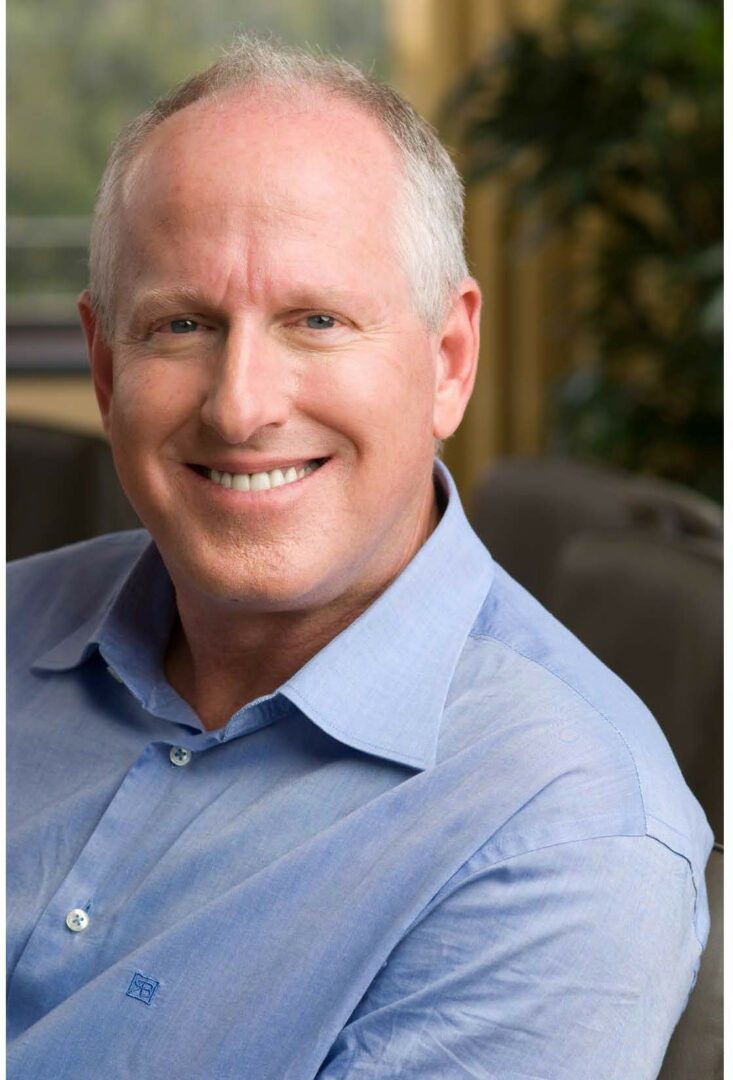
Alright – so today we’ve got the honor of introducing you to Doug Zeif. We think you’ll enjoy our conversation, we’ve shared it below.
Doug, looking forward to learning from your journey. You’ve got an amazing story and before we dive into that, let’s start with an important building block. Where do you get your work ethic from?
I would love to tell you that I got my work ethic from my Father, my Mother, or my brothers and sisters, but I cannot. My Father was a high school language teacher who hated his job every day for 35 years and my Mother was a bookkeeper for the City of New York. They went to work each day and were home at dinner time. Don’t feel bad for me- this is all what made me who I am. My parents, in essence, were the poster children for what I didn’t want to become during my lifetime.
My work ethic emanated from my need for independence and independence, in those days, came with having cash. Cash meant having some choices and having mobility to go where I wanted to go – more or less- at least locally for being 13 years old.
Yes, I had a paper route when I was 12, delivering the Long Island Star Journal and then the Long Island Press. At 13, I had four other paper boys working for me on five routes. At 14, I cooked weekends in an amusement park, and at 15 I began working weekends baking bagels in Queens, NY, which I did throughout high school.
Back to my work ethic- it came about- seriously- because of my desire for money and freedom. I was not born into money and knew very quickly that having it was my “out”. I was always calculating my paycheck in my head, figuring out what was coming in and how I was going to deploy it. “Validation” was also part of the equation. I wanted people to respect and look up to me and that came with hard work and being dedicated. I don’t ever remember missing a day of work- or being late, for that matter- unless I was mandated to do so by a doctor. This is all how I was going to hold my head high and feel like what I was doing was meaningful.
As a youth and adolescent, I was very sports-focused. I was an amazing baseball player and, unlike all of the friends I grew up with who had focused on one sport, I was more-than-competent at many sports- football, basketball, ice hockey, swimming, and running track. I lettered in three sports in high school and won the “Athlete of the Year” award when I graduated.
Where am I going with this, you ask? This leads to the point of me being comfortable and excelling in team situations. Yes, I could score on the basketball court but it gave me the same- or more- pleasure doling out assists and locking down the person I was guarding than scoring points. The validation and reward that comes from being on a winning team whether it be sports or business is what drove my work ethic. Taking The Cheesecake Factory public in 1992 was one of those days where our team got noticed for the amazing work we had been doing. Our stock was oversold by 7 or 8 times on the same day Starbucks went public and we kicked their butts!
It really wasn’t until college where my work ethic, originally driven by money-making, morphed into a passion for the restaurant industry. I was lucky and worked all the jobs in the same restaurant over my three years at the University of Buffalo. The team there was great as were the Managers in the way they fostered a family atmosphere. We were very busy, and we all loved each other.
Looking back now after so many years, I would have to say that work ethic became passion and, honestly, I don’t feel like I have ever worked a day in my life. If you love what you do, as do I, you tend to spring out of bed each day and can’t wait to get there. Well…

Thanks for sharing that. So, before we get any further into our conversation, can you tell our readers a bit about yourself and what you’re working on?
My most notable experience was taking The Cheesecake Factory from 2 restaurants to over 30 over almost a 12-year period in the 80’s and 90’s. Yes, I am mostly responsible for the food becoming a national phenomenon and becoming something that you’d be crazy to try and copy and would fail miserably if you did. We had a successful IPO in 1992 and I “retired” to start my consulting business in 1996. In early 2005, I went in-house again as a Senior Vice President with a subsidiary company owned by The Blackstone Group and was there until 2013, when I went off on my own again, keeping them as a client. They are still my client today.
Now, mostly, I am a hospitality consultant- I own a hospitality consulting firm- that specializes in all things related to food and beverages. That means hotels, resorts, clubs, colleges & universities, restaurants and bars. We have gotten the reputation as the ‘fixers’. We are great at analyzing and fixing what is broken, seeing what others don’t see and giving operators a roadmap to find their way out of their problematic issues.
We also develop stellar restaurant and bar concepts from scratch and have done so in a way that continually yields review scores over 4.5. We understand the socio-dynamics of the dining public, whether it be in urban centers of remote islands, and craft programs that really sing! We dip our toes into many different pools- menu development, menu engineering, procurement, technology, staffing, equipment specifications, and facility design/layout among others.
We have two bases of operations in the U.S. and one in Madrid, Spain. We have worked in dozens of countries including China, The Maldives, Australia, The Americas, the U.K., France, Germany, Spain, Italy, Greece, Portugal, The Netherlands, and Israel for various private equity and asset management firms.
I have also conceived and started several restaurants and bar concepts, all of which have been really well-received by the dining public. In the 90’s I was part of five “Hot Concept” award winners (given out by MUFSO yearly) over a ten-year period. I also was the C.O.O. and partner in what was widely considered to be the first fast-casual dining concept in the U.S., Pallino Pastaria in Seattle, Washington. Pride and reputation are now what drives me.

If you had to pick three qualities that are most important to develop, which three would you say matter most?
In our business, experience and expertise are everything, at least to start. It gets you in the door. The ability to work with others in a team setting is also critical. Our clients value the ability to talk to people who have done it in addition to having studied it (we are all students, aren’t we?) as opposed to just having studied it. They don’t want to talk to some college graduate who has no experience from which to draw conclusions and then ask someone in-house for an answer. Time is very finite, and we only take projects in which we can be personally involved.
Look, at the end of the day, our industry is all about people- Guests, Team Members, Managers, Stakeholders/Investors, etc. You have to be expert at reading faces and body language so you can understand the effect either your words or a situation that occurred is having on one of your ‘people’. Our society is generally so self-absorbed these days. There is so much “Me, Me, Me” out there that it is difficult to see past our own “stuff”, BUT you need to be able to relate or you will not be successful.
Other qualities (if you want call them that) needed to be successful are patience (take a deep breath, see the end line, now what’s the path); adaptation (you need to be able to adapt to a changing marketplace and changing demands); and focus: laser-focus on what is important to your business. Is it People? Product? Profit? Perhaps it’s all three and perhaps it should be all three. What I know is that in the situations where the going got “rough”, making a profit- not at ALL COSTS but in the right way- balancing the needs of every aspect- has always kept me employed.
As we end our chat, is there a book you can leave people with that’s been meaningful to you and your development?
You know, it’s an old and small book but it really changed my views on being a Manager and then a Leader. “The One Minute Manager” by Ken Blanchard and Spencer Johnson, written in 1982 helped me see things in a different light. The things that are broken- black & white- have always been glaring to me. It became hard to see past them- when things were going well (the gray areas)- the way they should be going- and acknowledging and rewarding those and seeing the Moments of Truth (another great book!) happen in our businesses changed the way I managed and was viewed as a Manager and Leader.
Sure, there were still issues that needed fixing, but this book enlightened me as to the balance needed in managing for very productive and positive results.
“Catch them doing something right!”
I also have three very similar adages I use all the time: “What got you here won’t get you there”; “If you keep doing what you’ve been doing, you’ll keep getting what you’ve been getting”; and “Good is the enemy of great!” Adapt, change, move on…
Contact Info:
- Website: https://www.nexthospitality.com
- Instagram: https://www.instagram.com/nha_global
- Linkedin: https://www.linkedin.com/in/doug-zeif-47030011/
so if you or someone you know deserves recognition please let us know here.