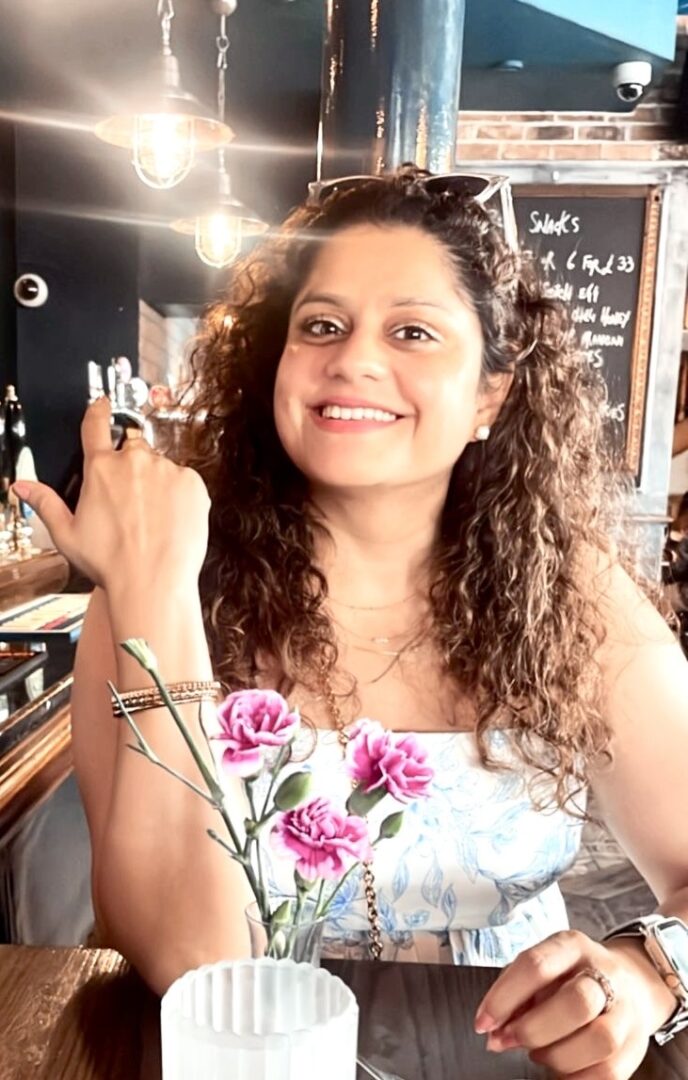
We caught up with the brilliant and insightful Dr. Ananya Singh a few weeks ago and have shared our conversation below.
Dr. Ananya, appreciate you making time for us and sharing your wisdom with the community. So many of us go through similar pain points throughout our journeys and so hearing about how others overcame obstacles can be helpful. One of those struggles is keeping creativity alive despite all the stresses, challenges and problems we might be dealing with. How do you keep your creativity alive?
I keep my creativity alive because it has never been just a skill for me—it is the air I breathe. Creativity is my field, my language, my lifelong companion. I have lived with it since I was a child, sketching ideas before I even had the words to explain them. Today, as an artist and an Assistant Professor, that same spark fuels every second of my life. This field is not what I do—it is who I am.
I am a keen observer.
I study people, nature, silence, movement, tension, joy—every vibration around me. I feel the energy of a room before I enter it. I listen to the stories that exist between moments. My ideas come from watching life with intention. Creativity flows through me because I never stop paying attention.
Growing up, I learned that creativity is not a luxury—it’s strength, resilience, and reinvention. Every new city I moved to, every challenge I faced, demanded a new version of me. Instead of resisting change, I let it sharpen me. Reinvention became my creative engine.
As an academic, I teach what I live. I spend my days guiding students to think courageously, push boundaries, and question everything. Their curiosity keeps me curious. Their growth keeps me evolving. Teaching creativity keeps my own creativity fiercely alive.
And beyond the classroom, I stay connected to the world—absorbing colors from nature, stories from people, inspiration from unexpected places. I let life interrupt me. I let it move me. I let it shape my work.
What truly keeps my creativity alive is this unwavering truth:
This field is my life. I live with it every second. It lives in my blood, my choices, my work, my voice.
Creativity survives when you nurture it.
Thrives when you challenge it.
And transforms you when you allow it.
That is why mine never fades—it grows.
Thanks for sharing that. So, before we get any further into our conversation, can you tell our readers a bit about yourself and what you’re working on?
I am an Assistant Professor of Visual Communication at the University of Texas at Arlington, USA, an artist, and a creative researcher committed to shaping how the next generation thinks, observes, and designs. My work sits at the intersection of art, design, social impact, and cultural storytelling. What excites me most is that I don’t simply teach software or technique—I teach perspective. I teach students how to see the world with sharper eyes, deeper empathy, and the courage to create meaningful change through design.
Creativity has been a part of my life since childhood, long before I had the words for it. Today, I channel that lifelong passion into my work: guiding students, creating research that challenges traditional boundaries, and producing art that sparks conversation. My brand is rooted in curiosity, observation, and the belief that creativity isn’t decoration—it’s transformation. It’s a way of thinking, a way of seeing, and a way of reshaping the world around us.
Professionally, my work spans three interconnected areas:
Creative Research: exploring evolving themes in media arts, design ethics, AI-driven creativity, cultural identity, and visual narrative.
Teaching & Mentorship: empowering students to think boldly, embrace experimentation, and develop confident creative voices.
Art & Design Practice: producing visual work centered on storytelling, identity, and human experience.
What’s special about my journey is that I am both an artist and an academic. I move between studios, research labs, classrooms, and global conferences—and each space fuels the other. This gives my work a unique blend of intuition, intellect, and innovation.
I am currently working on several new projects, including upcoming publications on ethical AI in art, cultural storytelling through media arts, and nature-inspired sustainable design. I am also expanding my creative collaborations and preparing for presentations at international conferences. Each project allows me to bring fresh ideas back to my students and my artistic practice.
At its core, my brand is simple:
Creativity with purpose. Design with depth. Art that questions, reflects, and awakens.
I want people to know that design is not just my profession—it is my language. My life. My way of engaging with the world. And I hope that through my work, I can inspire others to see creativity not just as something they do, but something they live.
Looking back, what do you think were the three qualities, skills, or areas of knowledge that were most impactful in your journey? What advice do you have for folks who are early in their journey in terms of how they can best develop or improve on these?
Looking back at my journey as an artist, academic, and creator, three qualities have shaped my path more than anything else: the power of observation, the willingness to reinvent, and a commitment to purpose-driven creativity.
1. Observation: The Foundation of Creative Intelligence
If there is one skill that changed everything for me, it is the ability to observe with intention. Long before I understood theory or technique, I learned to watch the world closely—how people move, how light shifts, how emotions surface without words, how nature quietly teaches balance.
Observation became my creative engine. It informs my research, sharpens my artistic instincts, and strengthens the way I teach students to think and design. When you learn to truly see, you unlock ideas that others walk past every day.
For those just starting out:
Train your eyes. Don’t rush through the world—study it. Creativity doesn’t come from looking harder; it comes from looking deeper.
2. Reinvention: Embracing Change as a Creative Strategy
My journey has taken me across continents, disciplines, and stages of life, and each chapter demanded that I evolve. Reinvention became less of an act and more of a habit—shaping my confidence, my adaptability, and my voice.
Every time I stepped into a new challenge, I discovered a new layer of myself. Reinvention allowed me to grow rather than fear the unknown. It kept my creativity bold and alive, especially in moments where comfort would have been easier.
For early-career creatives:
Don’t hold on too tightly to one version of yourself. Growth comes from allowing life to stretch you. Reinvention is not a sign of uncertainty—it’s a sign of courage.
3. Purpose-Driven Creativity: Creating with Meaning, Not Noise
The third defining quality has been a commitment to creativity with intention. As an artist and an educator, I’ve always believed that creativity is not decoration—it is communication. It shapes narratives, provokes thought, and influences how people understand the world.
Creating with a purpose gives your work depth and direction. It ensures that your voice is not just loud, but meaningful. Whether I am researching, designing, or teaching, I focus on work that adds value, sparks dialogue, and connects with people.
For emerging creatives:
Ask yourself why you’re creating. The world is full of content; what it needs is intention. Purpose is what transforms creative work into impact.
Is there a particular challenge you are currently facing?
The biggest challenge I’m currently navigating is balancing the rapid evolution of creative technologies with the deeply human side of art and design. As a Professor and an innovative researcher, I’m constantly working at the intersection of innovation and intention. The world is moving fast—AI, digital media, immersive tools—and while these advancements open extraordinary possibilities, they also raise essential questions about authorship, ethics, identity, and cultural responsibility.
My challenge is ensuring that my students and my own work don’t get swept up in the speed of innovation, losing the depth, empathy, and meaning that define powerful creative expression.
To overcome this, I am doing two things intentionally:
1. Staying deeply grounded in research and education.
I’m actively studying how emerging technologies reshape creativity, authorship, and cultural narratives. This research helps me bring clarity, critical thinking, and ethical frameworks to my classrooms, so my students don’t just use technology—they understand it, question it, and create responsibly with it.
2. Centering humans in every creative decision.
I remind myself and my students that no matter how advanced the tools become, creativity begins with observation, emotion, and lived experience. I incorporate reflective practices, storytelling exercises, and hands-on exploration that reconnect them to the human side of art.
My focus is not just to keep up with change, but to guide it with purpose. The goal is to ensure that in a world of accelerating technology, we don’t forget the one thing that makes creativity truly powerful—the human mind behind it.
Contact Info:
- Website: https://www.behance.net/14ananyasingh
- Linkedin: https://www.linkedin.com/in/ananya-singh-7305516b/
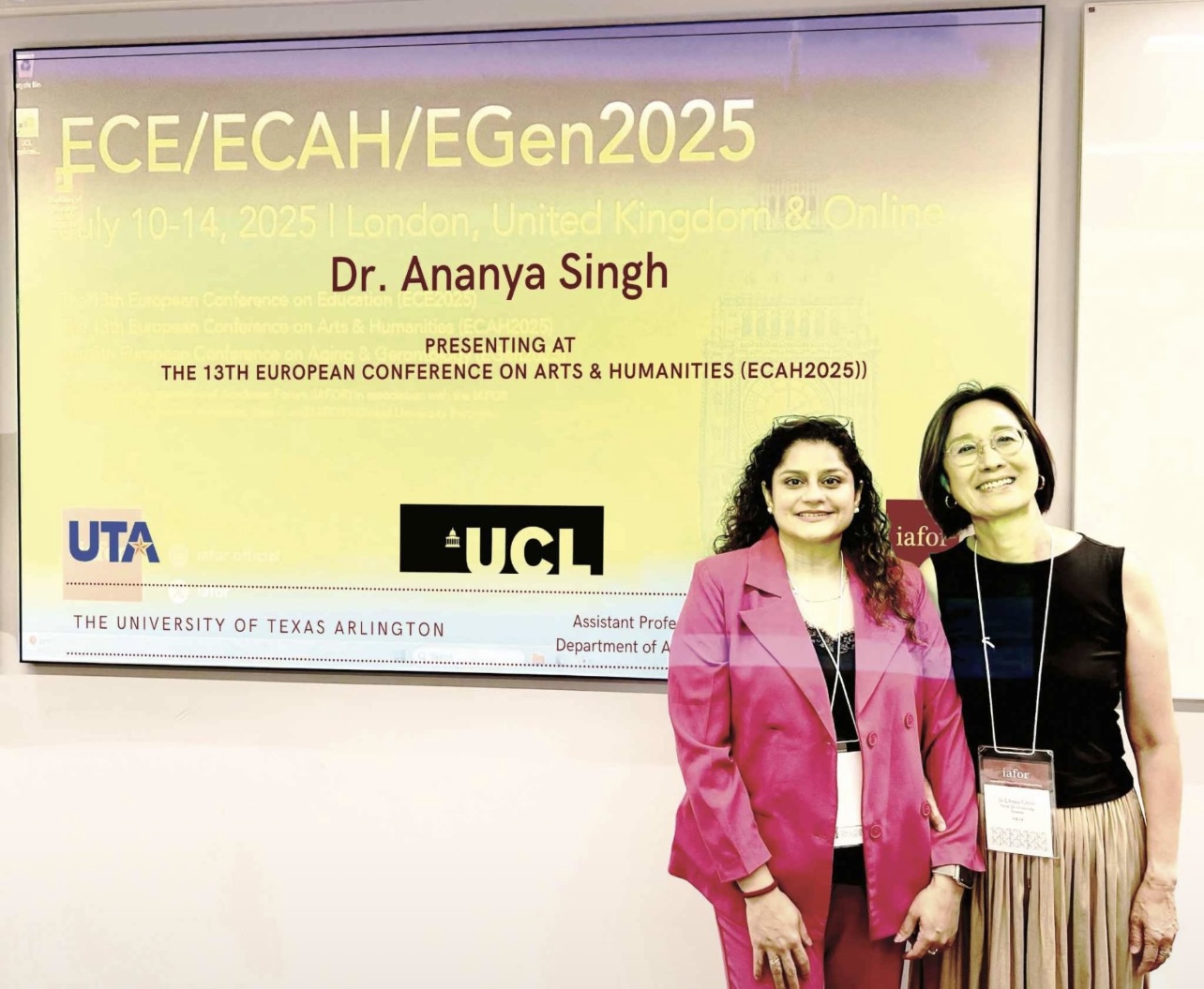
Image Credits
iafor organization, Self