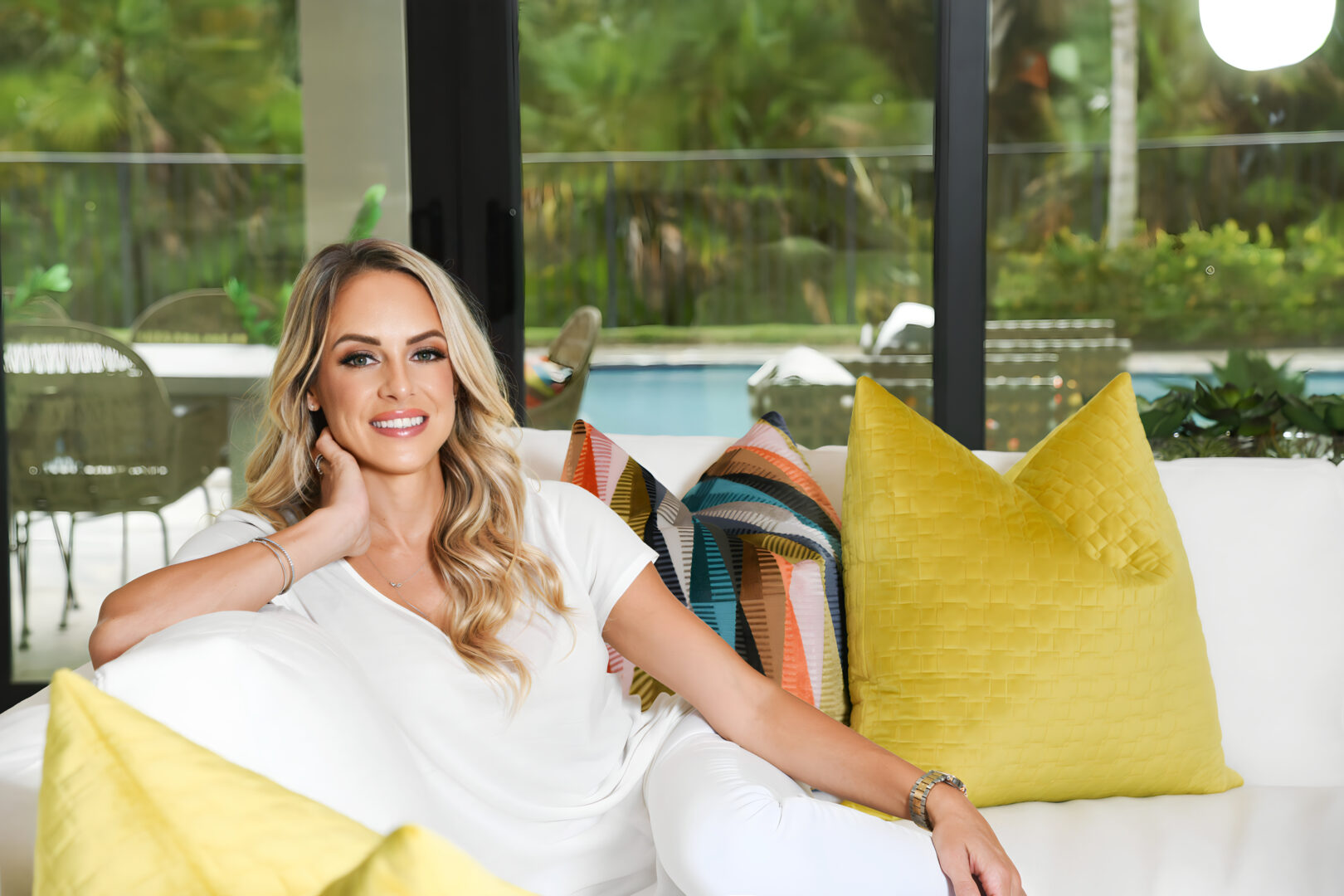
Alright – so today we’ve got the honor of introducing you to Eric Race. We think you’ll enjoy our conversation, we’ve shared it below.
Alright, so we’re so thrilled to have Eric with us today – welcome and maybe we can jump right into it with a question about one of your qualities that we most admire. How did you develop your work ethic? Where do you think you get it from?
My work ethic comes directly from my parents, who showed me two completely different but equally powerful approaches to life.
My mom worked for NASA, SETI (the Search for Extraterrestrial Intelligence program), and JPL (Jet Propulsion Laboratory). Her job involved planetary protection for Mars missions, which means she had to make sure we didn’t contaminate other worlds and they didn’t contaminate Earth. Growing up around that work taught me the importance of precision, responsibility, and attention to detail. When the stakes are that high, you can’t afford to cut corners.
My dad, on the other hand, was a serial entrepreneur and CEO who turned around major consumer brands like Sony-PlayStation, Reebok-Pump Shoes, and Worlds of Wonder-Teddy Ruxpin. He showed me what it means to take calculated risks and see challenges as opportunities to build something better. He taught me that entrepreneurship is about problem-solving at the highest level and that sometimes the biggest wins come from betting on yourself when others won’t.
From them, I inherited this unique combination of scientific discipline and entrepreneurial risk-taking. That mix of careful planning and bold action has shaped everything I’ve done, from my time in emergency response to building Atlas Mobility.
There’s another layer to my work ethic that came from the firehouse and firefighting culture. Being a firefighter means you can’t give up when things get hard. When that 911 call comes through, people are depending on you in their most desperate moment. You don’t get to decide if you’re ready or if the timing is convenient. You answer the call, no matter what. That culture of unwavering commitment and always showing up has become ingrained in me. It’s a standard of accountability that has stayed with me for life.

Appreciate the insights and wisdom. Before we dig deeper and ask you about the skills that matter and more, maybe you can tell our readers about yourself?
I’m the Founder and CEO of Atlas Mobility, and we’re working to solve one of healthcare’s most overlooked problems: how to keep both patients and caregivers safe during the simplest act of care, which is moving or repositioning someone in the hospital.
Every year, tens of thousands of patients develop serious, life-threatening pressure injuries (bedsores) simply from lying still too long. At the same time, nurses and nursing assistants are getting hurt lifting and repositioning patients because they don’t always have the right support or equipment. These are completely preventable problems, yet they’ve been happening for decades.
What excites me most is that we’ve created technology that tracks patient movement in real time. Think of it like a fitness tracker, but for hospital patients lying in bed. Our bedside monitors use sensors to measure how often patients are being turned and repositioned, giving caregivers the data they need to move patients frequently and sufficiently, and thereby prevent injuries before they happen. We pair that technology with hands-on clinical support and training, so hospitals get both the tools and the expertise to make real change.
The most special and rewarding part of this work is seeing the impact. When we help reduce caregiver injuries and patient complications, we’re helping nurses go home without back pain and we’re helping patients heal faster and get home to their families sooner. That human connection to the work is what drives everything we do.
Before Atlas Mobility, I spent years as a firefighter and paramedic. That experience taught me that safety isn’t negotiable. You protect your team, you protect the people you’re serving, and you build systems that make sure everyone goes home healthy. That same mindset guides how we approach healthcare today.

If you had to pick three qualities that are most important to develop, which three would you say matter most?
Three things have been absolutely critical: curiosity, grit, and purpose.
Curiosity has been my greatest teacher. I’ve always asked “why” one more time than most people do. As a kid, I took apart radios and engines to understand how they worked. As a paramedic, that curiosity pushed me to learn how the body responds under stress. In building Atlas Mobility, it meant diving deep into how hospital systems function and where they break down. Curiosity led me to realize that hospitals track every vital sign except one: patient mobility.
Grit is what gets you through the hard years. Transforming healthcare is full of regulatory hurdles, slow-moving systems, and moments when it feels like you’re pushing a boulder uphill. Grit is the willingness to persist long after the excitement wears off. That’s what separates people who talk about change from people who actually create it.
Purpose gives your work meaning and endurance. I built Atlas Mobility around a mission with a moral center: enhancing patient safety while preventing caregiver injury. When you’re building something that exists to make people safer, your purpose becomes fuel.
For anyone early in their journey, here’s my advice: stay curious by never accepting “that’s just how it’s done” as a final answer. Build grit by choosing problems that matter enough to keep you going when things get tough, and surround yourself with people who believe in the mission. Find your purpose by connecting your work to your core values and asking yourself what kind of impact you want to have in the world. When you have all three working together, you create something that lasts.

What’s been one of your main areas of growth this year?
Over the past 12 months, my biggest area of growth has been getting back to basics.
When you’re building a company, there’s this natural momentum that builds over time. You’re adding new services, exploring new markets, responding to customer requests, and before you know it, you’ve drifted away from the fundamentals that made you successful in the first place. I found myself in that exact position this past year.
The wake-up call came when I realized we were getting so caught up in the complexity of growth that we were losing sight of our core: the mission of protecting patients and caregivers. I had to take a step back and ask some hard questions. Are we still doing the things that create the most value? Are we staying true to the principles that got us here?
This year has taught me that sustained success comes from mastering the fundamentals and executing them consistently, rather than chasing every opportunity that comes along. It’s been humbling to realize that sometimes the most important growth isn’t about doing more, but about doing what matters better.
I’ve also learned to communicate these basics more clearly to the team. When everyone understands the foundation we’re building on, decisions become easier, priorities become clearer, and the work becomes more meaningful. That alignment has made all the difference.
Contact Info:
- Website: https://atlasmobility.com
- Linkedin: https://linkedin.com/company/atlas-mobility/
- Youtube: https://youtube.com/@atlas.mobility

Image Credits
Atlas Mobility
so if you or someone you know deserves recognition please let us know here.