We recently connected with Erica Marcano and have shared our conversation below.
Hi Erica, thank you for joining us today and sharing your experiences and acquired wisdom with us. Burnout is a huge topic these days and so we’d love to kick things off by discussing your thoughts on overcoming or avoiding burnout
As an Athletic Trainer, I began my career working in the Division 1 collegiate athletics setting. I often ate 3 meals a day in the Athletic Training Room, came in on my days off to treat my injured athletes, and missed friends’ weddings, birthdays, and other special occasions when my teams were in season. I never resented it – it was part of the job, and I loved my job. Over the years, I worked in other sectors (research, teaching, outpatient PT, concierge sports performance & rehab), but continued to find that I gave 100% to my patients and clients, no matter where I was. This made me a great employee and an amazing Athletic Trainer, and while I was happy with the results of my efforts, I wasn’t truly happy with my life. With more time off, when I wasn’t at work, I gave 100% to my social life – you know, the “work hard, play hard” thing. But when I had time to myself, I had to acknowledge that I was exhausted – sometimes physically, sometimes mentally, and most often, emotionally. In excelling at being a helper, a giver, a caretaker, a team mom, an ally, and an advocate, I wasn’t taking care of myself. I’m not talking about bubble baths, shopping, and ice cream or wine “treat yo’self” time (although I did try all of those!) – I’m talking about deep, soul level self-care.
My journey to overcome burnout began with the hard realization that many of the strategies and tactics promoted to the general public for burnout avoidance simply weren’t possible to utilize or sustain in my line of work. Frustrated by this, I began studying energy work, pranayama, and meditation. I gained so much clarity around practices I could use to create and enforce energetic boundaries, while being the best rehab provider I could be. This made a significant change for the better in my ability to maintain my own work-life balance and well-being, and I was able to diminish the constant overwhelm I had previously been feeling. In addition, I was able to show up more fully for my patients, clients, and athletes, AND for my family and friends. I also found that I still had energy left to pour into other projects that I was passionate about – which eventually resulted in me starting my own business.
One of my goals as an entrepreneur is not only to be mindful of my own energetic supplies, but also to help as many Athletic Trainers as possible thrive in our profession, without struggling on the long and winding road that I took to achieve professional satisfaction and fulfillment. I hope to continue creating content in various forms that will support my colleagues in their pursuit of a happy, healthy, and sustainable Athletic Training career.

Great, so let’s take a few minutes and cover your story. What should folks know about you and what you do?
As an athlete who was injured, I was told by a medical professional, “You’ll be fine if you just stop playing your sport.” What I needed to be told was, “We will find a way to make you strong enough to continue doing what you love, without pain, or future repercussions.” I became an Athletic Trainer and Strength Coach because I wanted to be able to give that opportunity for success to other athletes.
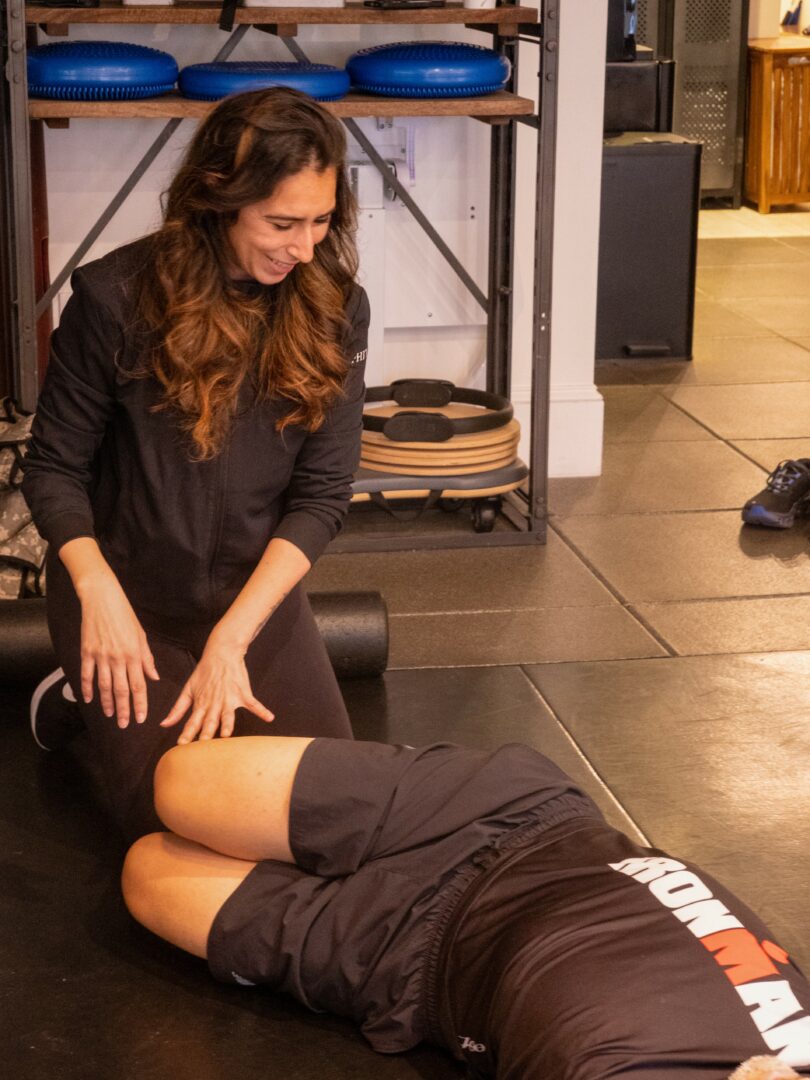
I deeply believe in taking a biopsychosocial approach to injury rehab and recovery, as well as athletic performance and development. The research tells us that the best outcomes are achieved when we take not only the physical, but also the psychosocial needs of our athletes into consideration when developing our programming. To be sure that I am delivering the best care possible to the people I work with, I incorporate breath work, meditation, visualization, and other modalities alongside the traditional physical/biomedical approach of exercise and manual therapy.
In addition to working one-on-one with my clients, I also prioritize education, advocacy, and mentorship within the profession of Athletic Training. I know that by supporting the next generation of Athletic Trainers, I will be able to help way more people than I ever could on my own!
I am currently working on several projects that focus on injury risk mitigation as well as successful recovery from injury and return to activity — including two books! These projects all stem from the desire to make the standard of care we give to elite athletes accessible to everyone.
There is so much advice out there about all the different skills and qualities folks need to develop in order to succeed in today’s highly competitive environment and often it can feel overwhelming. So, if we had to break it down to just the three that matter most, which three skills or qualities would you focus on?
I often tell Athletic Trainers that the qualities that make us great rehab providers – compassion, dedication, and self-sacrifice – are also often the qualities that make us vulnerable to experiencing burnout. One of the most important things I tell my younger colleagues is that in order to best care for their athletes, patients, and clients, they must take care of themselves first.
There’s a common theme in both the healthcare and the fitness professions, which is that we wear our hectic and demanding schedule as a badge of pride. (“How have you been?” “Good! Busy!” is the most common conversation opener I had for years). While this may be the industry standard, the research actually shows that it’s detrimental to the health of everyone involved — burnout causes a multitude of mental and physical symptoms, and health professionals are more likely to make errors in diagnosis and treatment when they are struggling with burnout. It’s like the analogy of putting on your own oxygen mask before helping others, or the idea that you can’t pour from an empty cup. I now make it a clear goal to prioritize the things in my life that allow me to show up in my fullest potential for my clients. I can’t stress enough how much this has helped my mental health and my ability to be present in my work.
I wish I had learned this sooner, and even more than that, I wish this was something more professionals in my industry placed value on. A big part of my advocacy work focuses on helping other Athletic Trainers prevent and be resilient to burnout, while working towards top-down change industry-wide.

Thanks so much for sharing all these insights with us today. Before we go, is there a book that’s played in important role in your development?
Johann Hari’s book Lost Connections is the most impactful book I have read recently. It is a book that delves into the societal contributors to depression and anxiety, and I found it extremely moving on a personal level. Upon re-reading it, I also have drawn insights from it that correspond to my current work with athletes, especially those who have experienced a forced medical retirement from sport.
Contact Info:
- Website: https://www.thenotoriousatc.com
- Instagram: notorious.atc
- Linkedin: https://www.linkedin.com/in/erica-marcano-75357459/

Image Credits
Starky Morillo
Nousha Salimi
David Alan Sauerhoff
so if you or someone you know deserves recognition please let us know here.