We were lucky to catch up with Erin Perkins recently and have shared our conversation below.
Erin, so good to have you with us today. We’ve got so much planned, so let’s jump right into it. We live in such a diverse world, and in many ways the world is getting better and more understanding but it’s far from perfect. There are so many times where folks find themselves in rooms or situations where they are the only ones that look like them – that might mean being the only woman of color in the room or the only person who grew up in a certain environment etc. Can you talk to us about how you’ve managed to thrive even in situations where you were the only one in the room?
I think this is such an interesting question because most of the time it’s not obvious that I am different from others in the room.
I’m DeafBlind, but it’s a hidden disability. Unless I show up with my white cane, people don’t clock it right away. And even then, it will confuse them.
I want to share a story:
I was at a conference with about 100 people. We were mingling in the lobby, and I struck up a conversation with a woman. At one point she said to me, very casually, that I was the only person she knew with a disability.
That moment stopped me.
Because I immediately knew it wasn’t true.
I might’ve been the only person she recognized as disabled.
The only one who talked about it.
But I know wasn’t the only disabled person in that room. Not even close.
That moment stuck with me because it reminded me just how invisible disability still is, even in rooms full of leaders, creatives, and people who see themselves as inclusive. Disability doesn’t always look like what people expect.
You might hear it in my speech, some sounds don’t land, even after years of speech therapy.
You might see me in an airport with a white cane.
You might notice my husband and me signing to each other.
But most of the time?
You won’t see it.
You won’t hear it.
And learning to be effective in rooms like that has meant getting comfortable being the one who names it, the one who disrupts assumptions, the one who expands what people think disability looks like. Not by over-explaining, but by existing fully and doing my work well.
That’s how I’ve learned to be successful: by realizing I’m never actually alone in the room. I’m just often the only one visible.

Appreciate the insights and wisdom. Before we dig deeper and ask you about the skills that matter and more, maybe you can tell our readers about yourself?
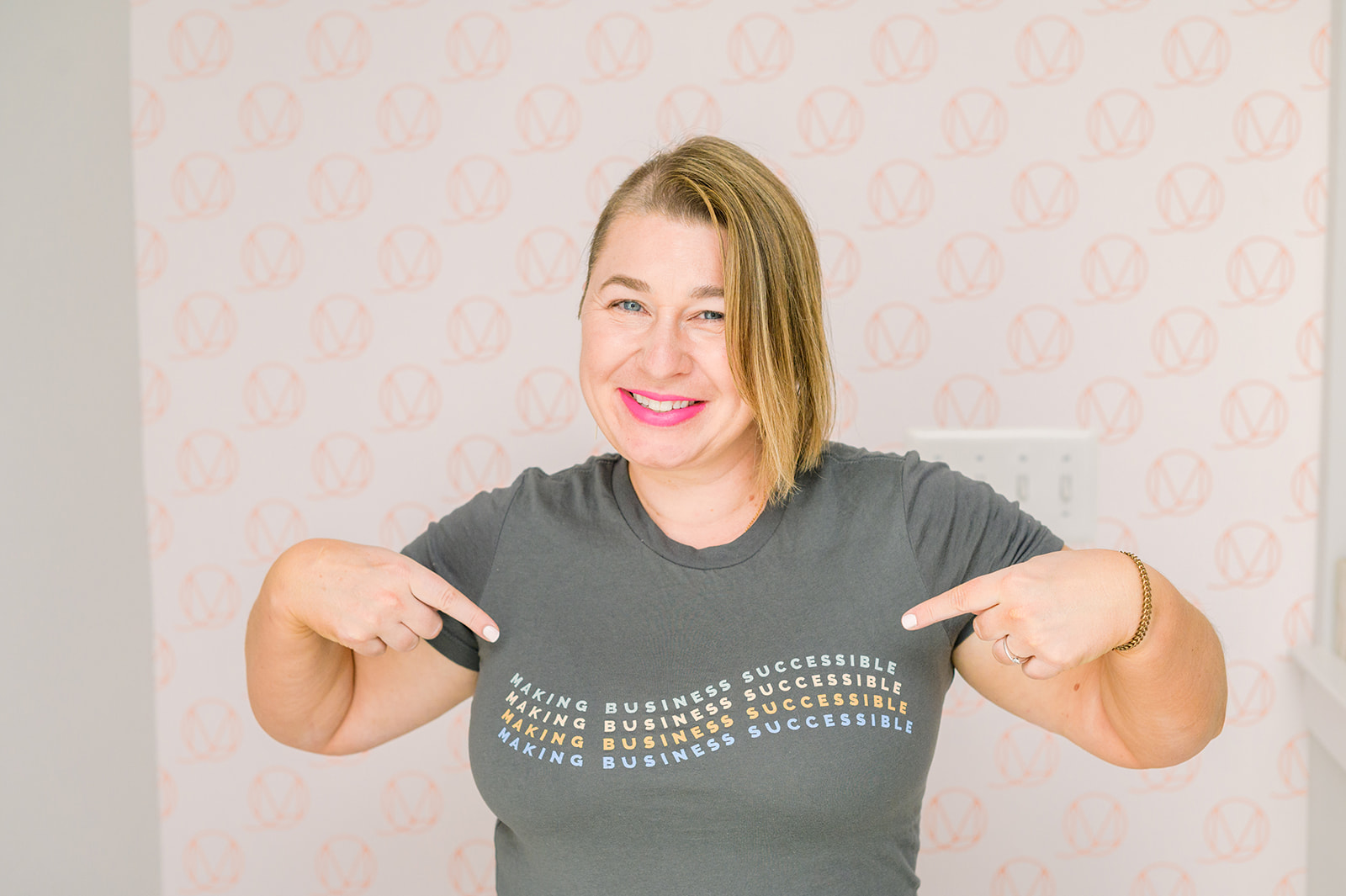
Mabely Q supports small businesses in building accessibility into how they show up, across email, websites, podcasts, social media, events, and the everyday systems that make a business run.
Right now, Mabely Q is in an exciting transition. We’re pivoting from a purely service-based model into tech with the build of Successible, an accessibility assistant designed for creators and small teams. (My own mind is being blown!)
Successible works like Grammarly, but for accessibility. It helps you spot access issues as you’re creating, inside the platforms you already use. My belief is simple: accessibility should be as easy as spellcheck, not something you have to remember after the fact.
That shift, from education and services into product, is a big step for me as it’s a direct response to what I kept seeing: business owners want to do the right thing, but they need tools that meet them where they are.
Mabely Q exists to make accessibility usable, human, and built into the process, not something separate from it.
Looking back, what do you think were the three qualities, skills, or areas of knowledge that were most impactful in your journey? What advice do you have for folks who are early in their journey in terms of how they can best develop or improve on these?
Looking back, there are three things that have mattered most in my journey, and all three show up clearly in how Successible came to be.
First: building real connections.
Every meaningful step forward came from conversations. My mentor teaching me how to ask for support. People in my community offering referrals because they understood what I was trying to solve. I set out to connect with people I trust, learn from, and think alongside. That’s what made the next step possible.
Second: staying curious and willing to experiment.
Successible didn’t start as a polished idea. It came from playing with new tools, attending an AI summit, workshopping ideas that didn’t quite land, and hitting my own limits as a creator. I remember using a new website platform and thinking, I do accessibility for a living and I still can’t remember everything. That was frustration which led me to the third thing.
Third: solving real problems I was personally experiencing.
This work has always been grounded in lived experience, being a designer, a business owner, and someone who wants to do things right but doesn’t have unlimited time or mental bandwidth. Even when a developer told me it was a terrible idea, When my mentor helped me see different kinds of support, I listened. That led me to the right developer, the one who said, bring on the challenge.
My advice for folks early in their journey:
Invest in community before you need something. Build relationships, not pipelines.
Follow your frustration. If something feels hard or broken for you, pay attention, that’s often where the best ideas live.
Give yourself permission to experiment badly. Play with new tools. Ask “what if.” Let ideas evolve instead of forcing them to be perfect.
Nothing about this was a straight line. It was a culmination of conversations, curiosity, and lived experience. And that’s exactly why it works.
What’s been one of your main areas of growth this year?
The past 12 months have been a major period of growth for me. .
In 2025, I was navigating health challenges that landed me in the hospital. realizing Realizing I was also dealing with depression when I was watching Season 3 of Ginny & Georgia. Around the same time, I wanted to burn my business down entirely. My mentor told me not to, which was exactly what I didn’t want to hear, but what I needed.
That season forced me to slow down and take my physical and mental health seriously. And once I did, something interesting happened.
Instead of pushing harder, I started playing.
I experimented with things I knew very little about, vibe coding, building a custom GPT, among other things. This was a big shift for me. I don’t come from a tech background. I have a graphic design degree. But I gave myself permission to be a beginner again.
That’s been my biggest growth: learning to take care of myself and let myself experiment without needing to be an expert first.
Contact Info:
- Website: https://www.mabelyq.com/
- Instagram: http://instagram.com/mabely_q
- Linkedin: https://www.linkedin.com/in/erineperkins
- Other: Threads: https://www.threads.com/@mabely_q
Image Credits
Cait Kramer Photography
so if you or someone you know deserves recognition please let us know here.