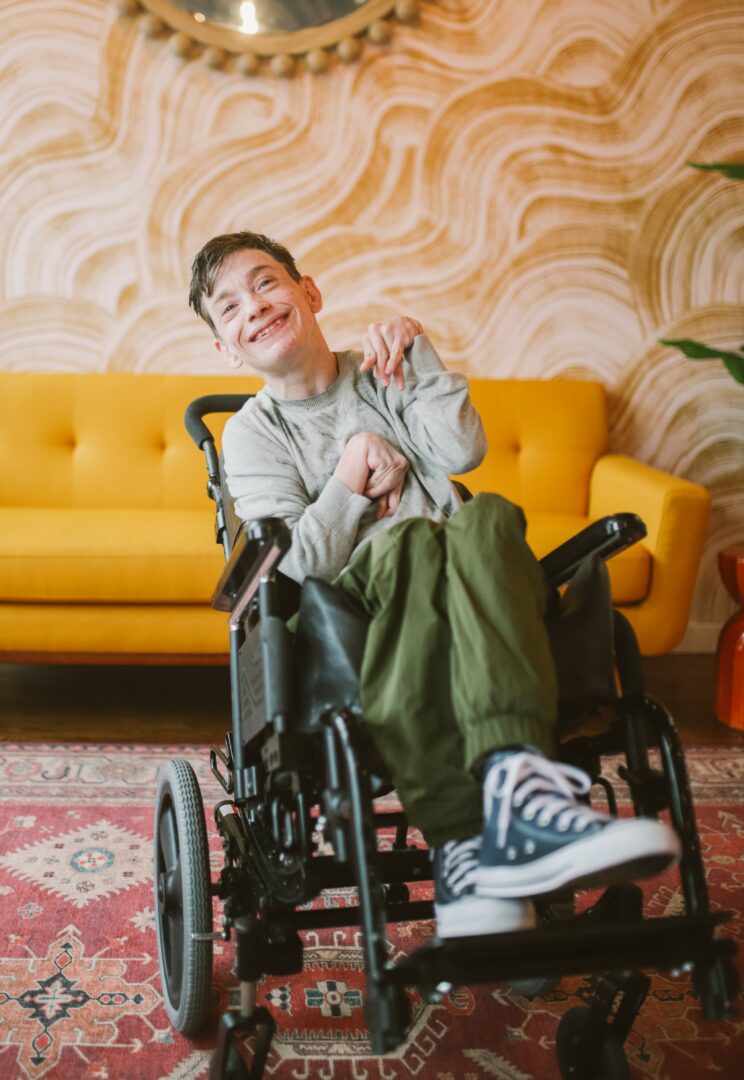
We caught up with the brilliant and insightful Evan Sweeney a few weeks ago and have shared our conversation below.
Hi Evan, so excited to talk about all sorts of important topics with you today. The first one we want to jump into is about being the only one in the room – for some that’s being the only person of color or the only non-native English speaker or the only non-MBA, etc Can you talk to us about how you have managed to be successful even when you were the only one in the room that looked like you?
In my sex education work, being the “only one in the room”—whether as a trans man, a person with cerebral palsy, or a queer educator—has taught me that effectiveness stems from owning the perspective only I can provide. I’ve learned to navigate these spaces by reframing my visible differences not as hurdles, but as essential tools for expanding the room’s collective understanding of bodily autonomy and inclusivity. Success in these environments requires a blend of radical authenticity and strategic patience; it means being the primary advocate for accessible, intersectional curriculum while simultaneously holding space for others to unlearn their biases. By consistently showing up as my full self, I’ve found that I can transform a room’s dynamic from one of mere “inclusion” to one of genuine, lived equity, proving that my presence is not just a seat at the table, but a necessary catalyst for more comprehensive education.
Great, so let’s take a few minutes and cover your story. What should folks know about you and what you do?
As a writer and educator, I lead Cripping Up Sex, an educational platform dedicated to the intersection of disability, queerness, and sexual health. What makes this work so vital is the shift from clinical, deficit-based narratives to a celebrate-your-body approach that centers lived experience and radical pleasure. Through workshops like my recent series on navigating medical conversations and the “In Bed with Evan” chat-cast, I provide the nuanced, intersectional resources that are so often missing from mainstream sex ed. It’s incredibly exciting to see the brand expanding, and I’m particularly energized by my current work developing professional development series for therapists and my upcoming residency as the 2026 Carrie Buck Distinguished Fellow at Brandeis University this April.
Looking back, what do you think were the three qualities, skills, or areas of knowledge that were most impactful in your journey? What advice do you have for folks who are early in their journey in terms of how they can best develop or improve on these?
Looking back on my journey as a writer and educator, I believe the three most impactful pillars have been radical authenticity, strategic advocacy, and community-building. Authenticity allowed me to lean into my lived experience as a queer person with cerebral palsy, turning what others might see as a limitation into my greatest professional strength. Strategic advocacy gave me the tools to navigate complex systems—from healthcare to academia—and demand the accessibility I deserve, while community-building ensured I never had to do that work in a vacuum. For those early in their journey, my best advice is to prioritize unapologetic self-knowledge: spend time understanding your own needs and values before trying to meet the expectations of others. You can develop this by seeking out mentors who share your intersections and by practicing “low-stakes” advocacy in your daily life, which builds the muscle memory needed for larger systemic shifts later on.
How can folks who want to work with you connect?
I am always looking to collaborate with folks who are committed to pushing the boundaries of intersectional education, particularly those working at the crossroads of disability justice, reproductive health, and LGBTQ+ advocacy. I am especially interested in partnering with organizations, fellow educators, and medical professionals who want to move beyond “compliance-based” accessibility and toward a model of radical inclusion that truly honors disabled bodies and desires. If you are a creator, therapist, or activist who values lived experience as much as clinical expertise, I’d love to hear from you. The best way to connect is via email at [email protected]—since I am non-verbal, this allows us to communicate most effectively and ensures I can give your proposal the attention it deserves.
Contact Info:
- Website: https://crippingupsex.com/
- Instagram: https://www.instagram.com/crippingupsex/
- Facebook: https://www.facebook.com/crippingupsex/
- Twitter: https://x.com/crippingupsex
so if you or someone you know deserves recognition please let us know here.