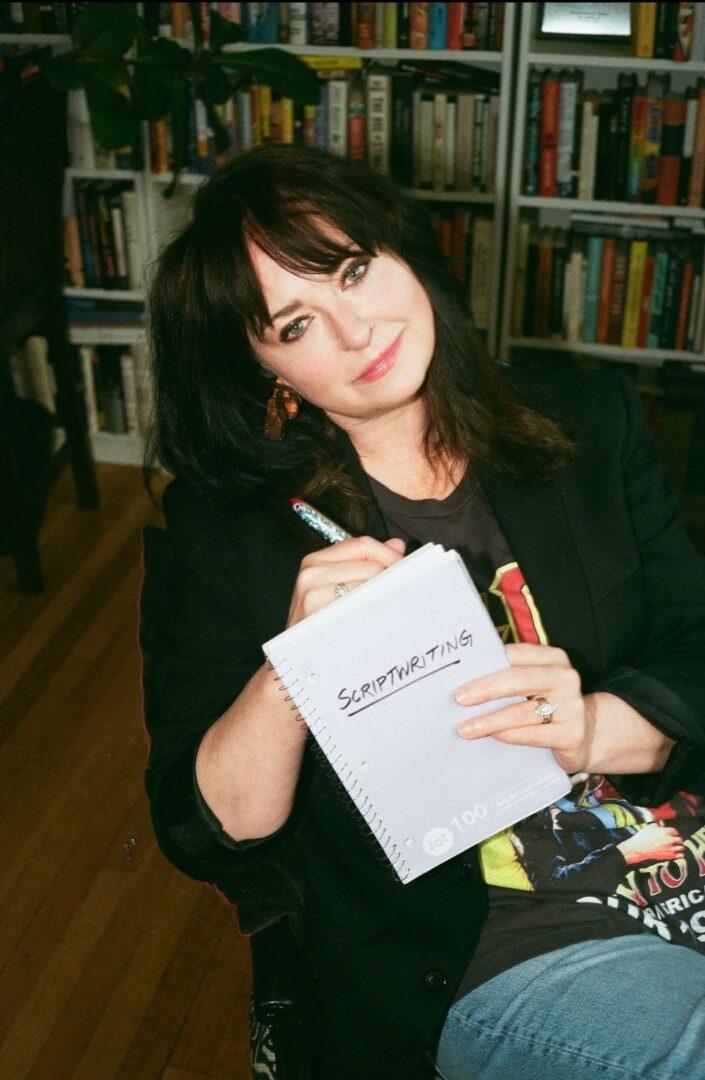
Alright – so today we’ve got the honor of introducing you to Genevieve Sage. We think you’ll enjoy our conversation, we’ve shared it below.
Hi Genevieve, really happy you were able to join us today and we’re looking forward to sharing your story and insights with our readers. Let’s start with the heart of it all – purpose. How did you find your purpose?
Growing up on a lake in the woods, fifteen minutes from any civilization, fostered an imagination rooted in unstructured play—and by play, I mean full-blown, twelve-hour live outdoor theater starring me and my two younger sisters. Our stages were cedar trees and marsh mint; our costumes came from my mother’s cast-off disco clothes and wigs. I was like a baby Lorne Michaels, creating comedy sketches in our basement with fully developed characters, elaborate backstories, and improvised lines. Today, I write TV pilots and feature film scripts—and occasionally comedy for advertising agencies. But the purpose I’ve known since I was a kid is this: seeing my stories come to life. It’s something I’ve only recently been able to articulate. For years, I circled it without naming it so plainly. Not writing. Not performing. Seeing my stories come to life.
Thanks, so before we move on maybe you can share a bit more about yourself?
I write scripts—sometimes for advertising agencies as a side quest—and most recently, a finished play I’m putting up this April with the Fertile Ground Festival in Portland, Oregon, called What We Buried. It’s a two-person play about family secrets, loosely inspired by Jack Nicholson’s life. I’m also acting in it alongside Garrett Dyer, and we’re self-directing.
I’m often woken up around 4 a.m. with what some might call a “universal download” of story ideas. They range wildly: a paranormal TV series conceived as a Winona Ryder vehicle, a time-traveling female buddy comedy, a horror film about fertility, and a Gen Z feature so good I’m not even ready to talk about it yet.
What’s special about this process for me is the ritual. I wake up—married, no kids or pets, which helps—brew a cup of excellent local coffee (hey, Sterling!), crawl under a heated blanket, and open Final Draft. That’s where these images and ideas turn into words. That feeling—bringing something intangible into form—is pretty damn special to me.
Most recently, I was hired on spec to write a biographical TV pilot based on Jasmine Glass’s memoir, Unbreakable Glass, which chronicles her wild life as the CEO of a high-fashion magazine in New York City while secretly addicted and homeless. It’s a riveting, raw story, and I was honored to shape it into an hour-long pilot we’re currently shopping. The project is titled The Glossy Cover, and we’re eyeing Jodie Comer for the lead—a role that would be an absolute dream for an actress to play, speaking as a sometime actress myself.
Looking back, what do you think were the three qualities, skills, or areas of knowledge that were most impactful in your journey? What advice do you have for folks who are early in their journey in terms of how they can best develop or improve on these?
1. Cross-Pollinating Creative Skills
One essential quality is learning how to use your other creative juices to fill a different cup—to treat every skill you have as a tool in the same toolbox.
I had one viral Portlandia moment as an actor, but mostly my performing life has lived in small theaters up and down the West Coast. No major red carpets. No overnight success. But I can access my skills as a performer directly in my writing.
I started as a child actor in regional theater in the Pacific Northwest—that was my first entry point into performative creativity. Writing, at least officially calling myself a writer, came later. And I’ll tell you this: writing feature films and TV as a somewhat ex-actress gives me a real advantage. I hear dialogue in my body. I understand rhythm, breath, subtext—because I’ve been learning lines my entire life.
2. Being the Observer
(Why isn’t there a tarot card called “The Observer”?)
The second quality is observation—especially after the pandemic, when being physically present with other humans feels newly vital.
I pay attention to everything: body language, speech patterns, accents, posture, personalities. All of it feeds my characters. I’ll go to a bank and clock every detail—from the Dum-Dum suckers offered as a parting gift, to the way the tellers dress, to how the security guard greets me with a friendly smile while quietly running a mental checklist of whether I’m bank-robber material or not.
Creativity comes from engagement. From being out in the world with all five senses firing. From letting real life fold itself into your work.
3. Soft Discipline
The third quality is discipline—but not the hard, icky, king-coded version where someone tells you you have to wake up at 5:30 a.m. (Absolutely not.)
I believe in soft discipline: taking something you want to do and moving toward it one small, humane step at a time.
Writing every day is easy for me because it’s therapeutic. Some days I drop into a flow state and write for hours, forgetting to eat or pee. Other days I open the document and just… stare. I edit. I fix. I look for comedy holes I can punch up.
It’s fits and starts. But I sit down every day—not because I’m grinding, but because I need to. For my mental health. That’s where my discipline actually comes from.
One of our goals is to help like-minded folks with similar goals connect and so before we go we want to ask if you are looking to partner or collab with others – and if so, what would make the ideal collaborator or partner?
Omg—literary agents. Literary managers. Boutique agencies looking to champion a darkly funny Xennial with thousands of genuinely marketable stories to tell.
Mark Duplass—can we have coffee? Can we talk about art-house and independent films, how to bring them back, and how to knock down a few unnecessary gatekeepers while we’re at it?
I think the story I secretly carry around in my head is Diablo Cody being “discovered” by her manager, Mason Novick—that moment when someone reads the work, really sees the voice, and understands how it could translate into scripts, dialogue, and characters people want to watch on a big screen again.
If you’re reading my personal essays on Another Jane Pratt Thing or my Substack and thinking, this voice belongs in film and television, I’d love to talk. I’m looking for collaborators and champions who believe, as I do, that distinctive voices—and personal, weird, funny stories—are how we bring people back to theaters.
Contact Info:
- Website: https://www.genevievesage.com/
- Instagram: https://www.instagram.com/genevievesage/
- Facebook: https://www.facebook.com/genevieve.sage.3/
- Linkedin: https://www.linkedin.com/in/genevieve-sage/
- Other: https://genevievesage.substack.com/
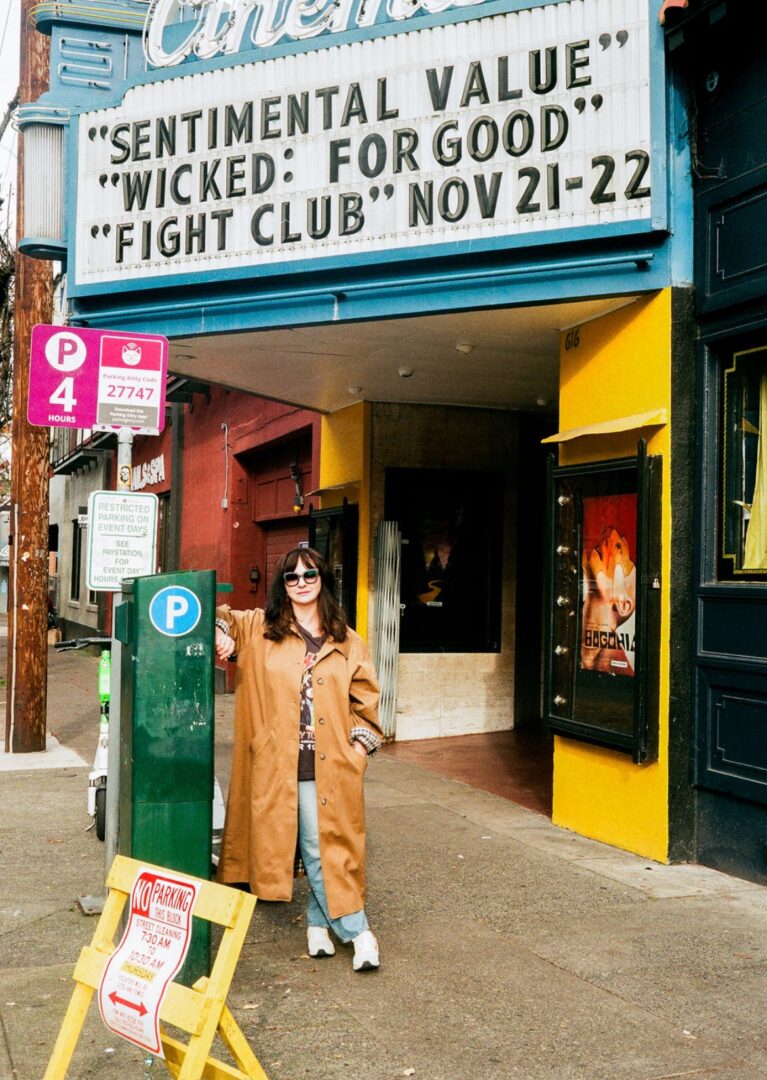
Image Credits
Allison Webber