Alright – so today we’ve got the honor of introducing you to Geri Lopez. We think you’ll enjoy our conversation, we’ve shared it below.
Geri, we’re thrilled to have you on our platform and we think there is so much folks can learn from you and your story. Something that matters deeply to us is living a life and leading a career filled with purpose and so let’s start by chatting about how you found your purpose.
Honestly, I didn’t find my purpose — it found me through burnout.
For most of my life, I thought my worth came from how much I could handle. Like a lot of first-gen womxn of color, I grew up believing that being strong meant carrying everything — other people’s needs, emotions, and expectations — without dropping the ball.
When I became a therapist, that pattern followed me. I said yes to everything and everyone. I worked late, took on too many clients, and called it passion. But really, it was over-functioning in disguise. I was exhausted, resentful, and still telling myself, “You should be grateful. You have it good.”
My breaking point wasn’t loud — it was quiet. I just remember thinking one day, If helping people means constantly abandoning myself, something’s off.
That moment led me to nervous-system healing and unlearning what “strong” actually means. I started to see that burnout wasn’t a failure — it was my body asking for a different way.
And that’s when my purpose came into focus. I realized I wanted to help other first-gen womxn of color — especially therapists and healers — stop overextending themselves just to prove they’re enough. To teach boundaries as something sacred, not selfish.
Now, my work is about helping them come home to themselves — to build lives that feel grounded, self-led, and free. Because that’s what I had to learn for myself first.
Let’s take a small detour – maybe you can share a bit about yourself before we dive back into some of the other questions we had for you?
I’m the founder of Womxn & Compass Collective, where I help first-generation womxn of color — especially therapists and healers — break cycles of burnout, over-giving, and self-doubt by learning to set boundaries that actually stick.
What makes my work different is that I don’t teach boundaries as just communication skills — I teach them as a nervous system practice. Because for so many of us, it’s not that we don’t know what to say — it’s that our bodies don’t feel safe saying it. My coaching blends mindset work with somatic and trauma-informed tools so my clients can build real capacity to say no, rest without guilt, and receive without apology.
I’m also a clinical trauma-informed therapist, and that part of me deeply shapes how I coach. I’ve sat with clients in their hardest seasons, and I know how much unlearning it takes for first-gen womxn to stop proving, overworking, or holding everything together for everyone else. That’s why my work is rooted in both compassion and accountability — helping womxn learn what safety, ease, and freedom actually feel like in their bodies.
Through my 1:1 coaching and workshops, I support clients in reconnecting with their own voice and authority — so they can lead, love, and live from a place of grounded confidence.
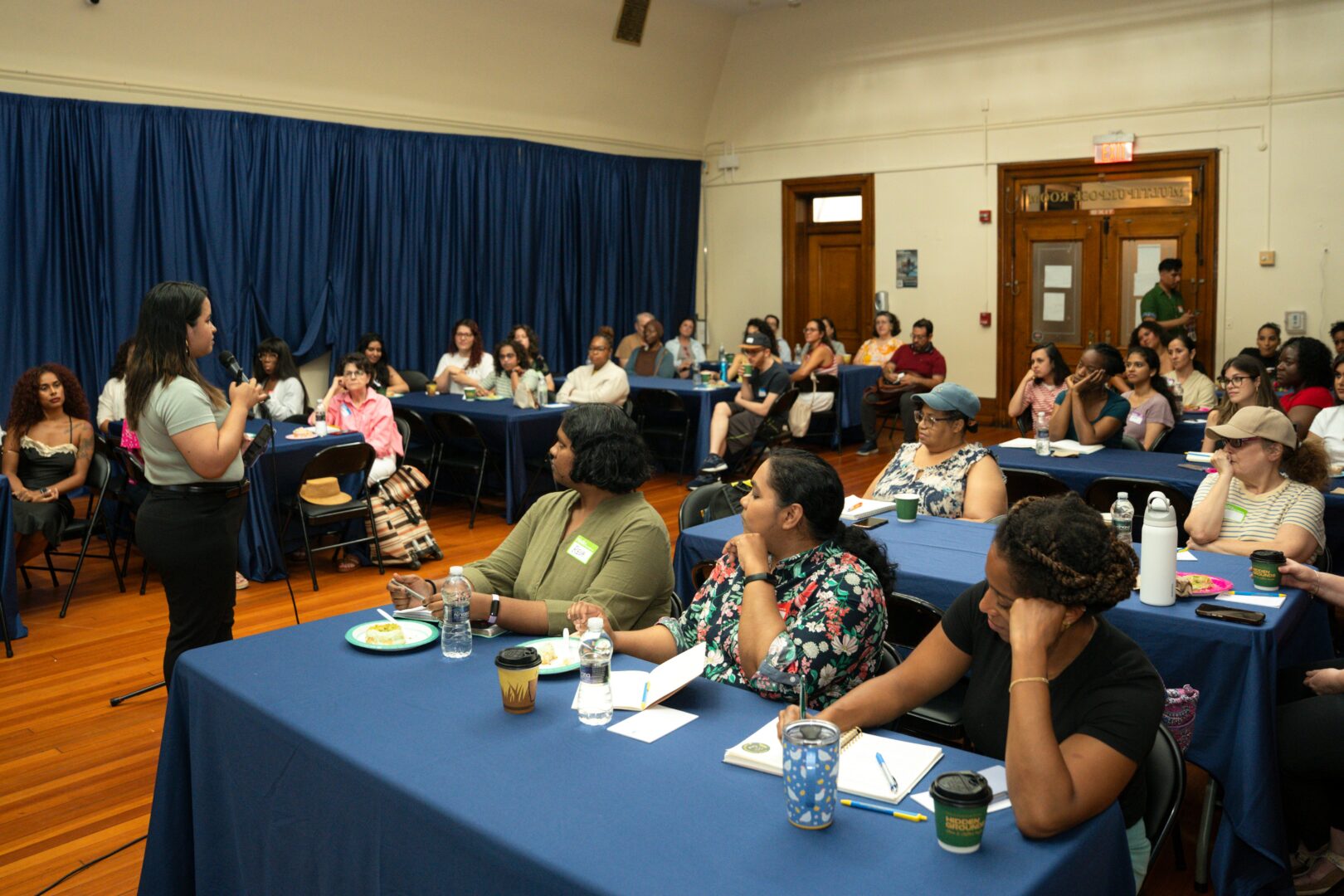
Right now, I’m also expanding my work into speaking and facilitation — leading workshops and keynotes on boundaries, resilience, and first-gen leadership at conferences and organizations. It’s been beautiful to see how this message resonates across therapy, leadership, and entrepreneurship spaces.
At the core of everything I do, my mission is to help first-gen womxn of color feel at home in themselves again — to move through the world not from survival, but from self-trust. Because when a womxn learns to lead their/her life from their/her body, not their/her burnout, everything changes.
If you had to pick three qualities that are most important to develop, which three would you say matter most?
When I look back, the things that shaped me most weren’t from a textbook or a training — they came from lived experience. From trial and error. From breaking cycles and learning how to come back home to myself.
1. Self-Trust.
As a first-gen therapist and entrepreneur, I had to learn to trust myself even when there wasn’t a clear path to follow. Early on, I kept looking outside of myself — mentors, supervisors, “successful” people online — trying to find the right formula. But purpose doesn’t come from someone else’s roadmap. It comes from listening inward. My biggest advice for anyone starting out is: don’t outsource your intuition. Try things. Pay attention to what feels expansive and what feels heavy — that’s your compass.
2. Nervous System Awareness.
No one talks enough about how much regulation it takes to follow your purpose. Every new step — raising your rates, saying no, being seen — activates something in your body. Learning to recognize those sensations and respond with care instead of panic changed everything for me. The work isn’t just mindset; it’s also body. When you learn what safety actually feels like, not just stress, your boundaries stop being survival tools and start becoming your standard.
3. Courage to Fail.
As first-gen Latinx folks, most of us weren’t raised with the privilege to fail. Our families taught us to survive, not to experiment — to make the safe choice, not the bold one. And that pressure sticks with you. You hear it in those quiet family scripts: “Don’t mess this up.” “Be grateful you made it this far.” I carried those voices for a long time. Every time I wanted to try something new — launch a new offer, charge more, take up space — I felt that weight of, “What if I let everyone down?”
It took me a while to realize that failure isn’t betrayal — it’s feedback. Every time I let myself fail forward, I built more capacity to trust myself and take up space in ways my younger self never got to see. My advice? Experiment like your healing depends on it — because it does. You can’t unlearn perfectionism while still playing it safe.
These three skills — self-trust, nervous system awareness, and courage to fail — are what keep me grounded. They remind me that growth isn’t about getting it right. It’s about staying connected to yourself as you evolve.
We’ve all got limited resources, time, energy, focus etc – so if you had to choose between going all in on your strengths or working on areas where you aren’t as strong, what would you choose?
I think most of us — especially first-gen folks — were raised to be well-rounded because we didn’t feel like we had room to fail. We had to prove we could do everything so we’d never be seen as less capable, less deserving, or replaceable.
That mindset made me adaptable, sure, but it also kept me exhausted. For a long time, I thought strength meant filling every gap — saying yes to extra responsibilities, learning every skill, never admitting what I didn’t know. But all that effort was coming from fear, not confidence.
Somewhere along the way, I realized that being “well-rounded” was actually making me blurred. I was so focused on being good at everything that I forgot what made me brilliant at something.
So now, I go all in on my strengths — and I teach my clients to do the same. Your strengths are where your nervous system feels most at home, most creative, most alive. When you build from that place, everything expands with more ease.
That doesn’t mean you ignore your weak spots — it just means you approach them differently. Instead of fixing them from shame, you support them from awareness. You can always hire help, collaborate, or learn — but don’t dilute your magic trying to prove you can do it all.
When I stopped chasing “balanced” and started owning “brilliant,” my business, energy, and confidence all aligned. I learned that you don’t have to be everything to everyone. You just have to be fully you — consistently and unapologetically.
Contact Info:
- Website: https://www.womxnccollective.com/
- Instagram: https://www.instagram.com/womxn.compass.collective/