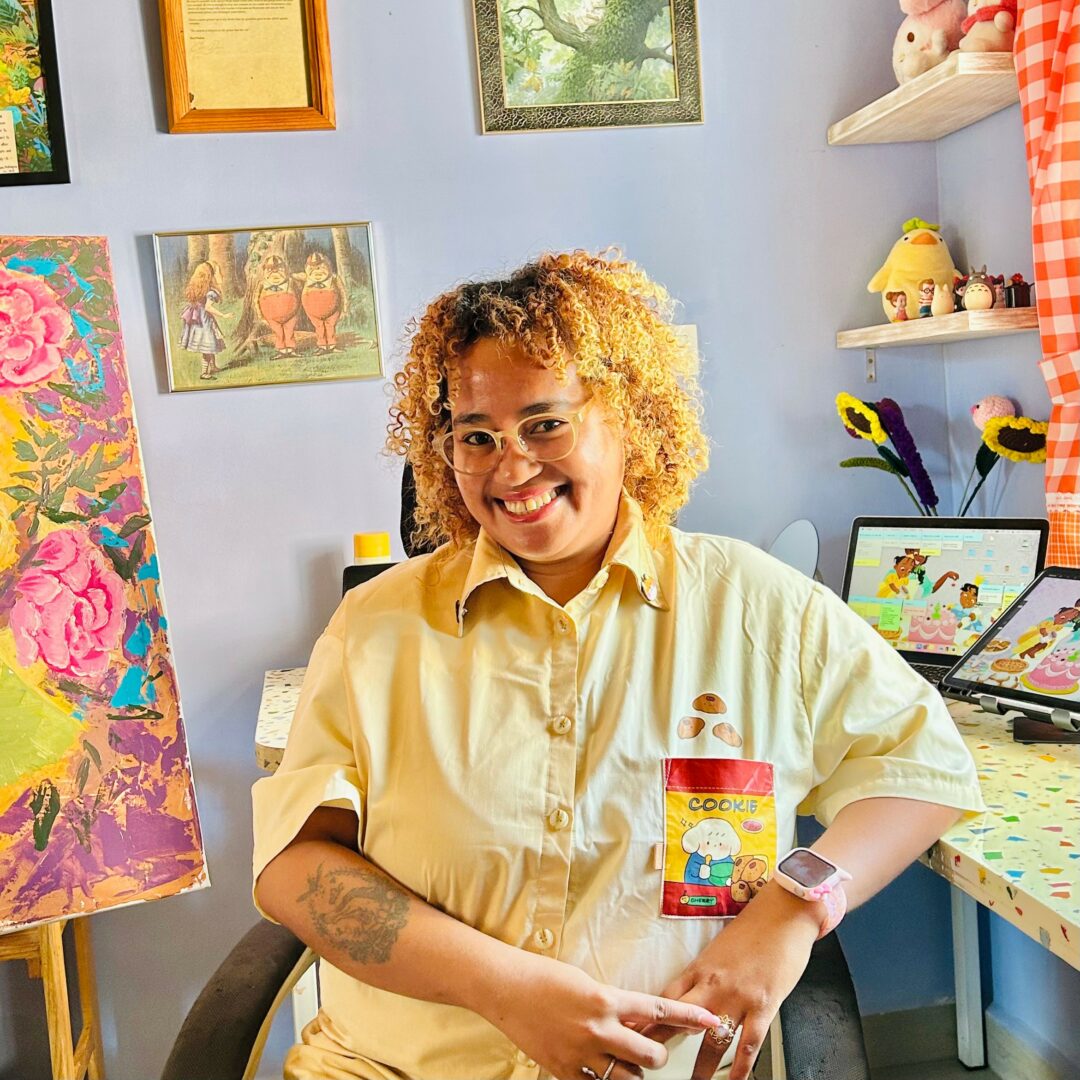
We’re excited to introduce you to the always interesting and insightful Grace Nelson. We hope you’ll enjoy our conversation with Grace below.
Grace, thanks so much for taking the time to share your insights and lessons with us today. We’re particularly interested in hearing about how you became such a resilient person. Where do you get your resilience from?
Small business owners put their resilience muscle to work day in and day out. We often think about resilience in terms of big-time comebacks, but when your work is closely intertwined with your identity as is the case for many entrepreneurs, resilience is what helps you recover from regular setbacks like losing a sale, receiving negative feedback from a client, or navigating a jam-packed work week.
I’m fortunate to have a remarkable female role model in my mom, who pursued a career in the Air Force and later at Delta Air Lines during a time when female pilots were unheard of. In fact, women in aviation remained uncommon for the entirety of her career. I grew up observing my mom keeping her eye on her own prize, building her own pathway to what she defined as success.
Women receive a lot of unsolicited advice, especially when they are underrepresented. A female pilot is no exception! Mom demonstrated how to glean something positive from constructive input without taking it personally: feedback is a gift, even if it’s unsolicited. Perhaps even more importantly, she considered non-constructive input irrelevant. Criticism of any nature often has more to do with the person giving it than the person receiving it, so it’s important to de-personalize it, implement something positive if you can, and let go of it if it’s not serving you. This mindset has helped me continuously improve my company’s product while maintaining a healthy sense of appreciation for my accomplishments and goals.

Thanks, so before we move on maybe you can share a bit more about yourself?
Nonprofit organizations have a unique superpower: unlike standard corporations which operate with the goal of enhancing the bottom line as much as possible, nonprofits exist with a goal to solve a particular problem. This means they can work together in abundance rather than in the siloes of competition.
And yet…the first word that often comes to mind in tandem with “nonprofit” is “scarcity” – scarcity of funding, resources, talent, time, etc. Scarcity prevents nonprofits from achieving their missions, which means the world’s problems don’t go away. I am on a mission to solve this scarcity problem so nonprofits can better meet the needs of their constituents.
Based on 10 years of nonprofit experience – five in the industry and five as a nonprofit consultant – my observation is that most organizations cannot precisely communicate their progress toward achieving their mission. (E.g. are you closer to eliminating hunger in your community that you were a year ago? How do you know?) For-profit companies measure their effectiveness based on bottom-line performance. What universal metric do nonprofits use?
Without clear enterprise benchmarks, it is impossible to maximize operational effectiveness, because there’s not a clear evaluation metric. Without metrics, operational efficiency begins to unravel; thus, resources become scarce.
My company’s small piece of this puzzle lies in impact measurement: we partner with mission-focused organizations to identify impact metrics that align with their mission, capture progress, and message that progress to potential funders. Leveraging benchmarks and accountability, we develop compelling fundraising communications that inspire funders to invest in an organization’s mission, then equip the organization with tools to responsibly steward that investment for maximum impact.
If you had to pick three qualities that are most important to develop, which three would you say matter most?
Managing a growing company comes with a big learning curve, and I wish I had known these three things when I started out!
1. Implementing Profit First: I’ve always been a responsible saver and set aside 10% of everything my company made from the beginning. However, Profit First takes this philosophy a step further by setting targets for your company’s percentage of profit, tax, owner’s compensation, cost of services, and operating expenses. Instead of looking at how much you have left over as profit, the philosophy flips the script so you’re looking at how much you have to spend on operating expenses after you’ve set aside funds for savings and taxes. It helped me hire and spend more wisely. I recommend reading the book!
2. Starting with empathy: Having empathy for your clients—really putting yourself in their shoes, solving the problem they’re trying to solve—has made me a better business partner. I’ve shifted my mindset from “who will buy from me” to “who needs what I do best.” If you can make that need go away for a client, at a cost that’s less than what that need is costing them, you have a sale.
If you don’t know what the major pain points in your industry are, you can always ask. A great way to facilitate networking conversations is to sit down over a coffee with people in your field and ask them about their challenges. You’ll better understand how your potential customers see their businesses and where you can add the most value.
3. Productizing offerings: Like many service-based entrepreneurs, I struggled with how much to charge for my time and approached pitches more as a salary negotiation than as sale of a service. Once I understood where my value-adds best aligned with the needs in my market, I turned my services into products. Instead of buying an hour, month, or year of my time, clients can buy a funding proposal or an impact report. Productizing my offerings reduced the need for project customization, clarified my value proposition, and simplified my sales process. Most importantly, I no longer haggle over the value of my time.

One of our goals is to help like-minded folks with similar goals connect and so before we go we want to ask if you are looking to partner or collab with others – and if so, what would make the ideal collaborator or partner?
The conversation around nonprofit efficiency has the potential to change the landscape of social impact work. I enthusiastically welcome input from anyone working in this space.
In particular, I’m eager to connect with collaborators who are interested in exploring the relationship between nonprofit investment and impact, developing a framework to measure nonprofit effectiveness, or executing a study evaluating defunct organizations.
Please connect with me on LinkedIn and send me a note: https://www.linkedin.com/in/grace-a-nelson/.
Contact Info:
- Website: https://www.magentastrategy.org/
- Instagram: https://www.instagram.com/magentastrategy/
- Linkedin: https://www.linkedin.com/company/67717876/admin/dashboard/

Image Credits
Robby Toles
so if you or someone you know deserves recognition please let us know here.