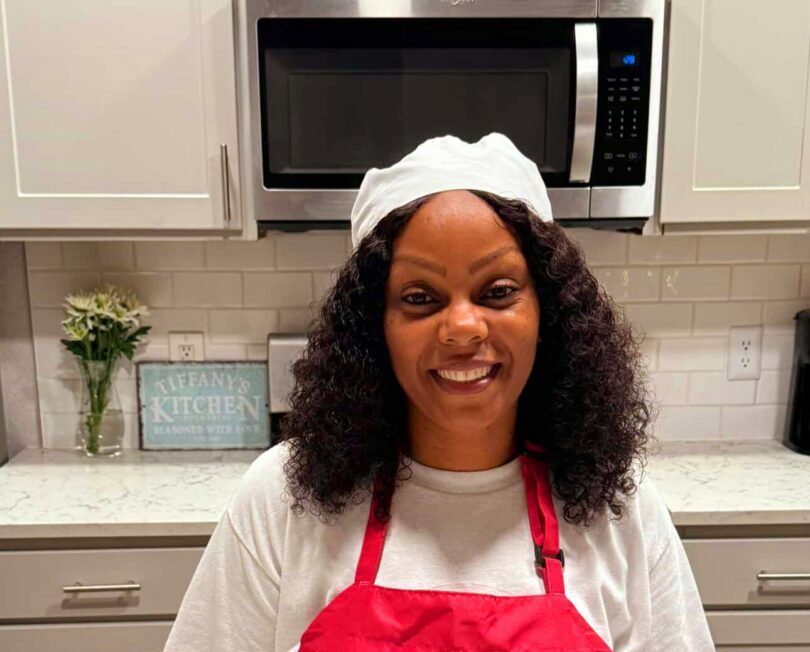
Alright – so today we’ve got the honor of introducing you to Isaiah Thomas. We think you’ll enjoy our conversation, we’ve shared it below.
Hi Isaiah , really appreciate your meeting with us today to talk about some particularly personal topics. It means a lot because so many in the community are going through circumstances where your insights and experience and lessons might help, so thank you so much in advance for sharing. The first question we have is about divorce and how you overcame divorce and didn’t allow the trauma of divorce to derail your vision for your life and career.
Still Married in God’s Eyes
By Isaiah C. Thomas
To start, let’s define a couple of words before we dive in—marriage and divorce.
Marriage, in the literal sense, is the legally or formally recognized union of two people as partners in a personal relationship, typically involving mutual rights and obligations. Spiritually, however, marriage is much more: it is a sacred covenant before God, a union of two becoming one, and a reflection of Christ’s love for the Church. It is designed not just for companionship, but for growth, sanctification, and fulfilling God’s purpose in each partner’s life.
Divorce, on the other hand, is literally the legal dissolution of a marriage, ending the contractual obligations and rights associated with it. Spiritually, divorce represents the breaking of a covenant God intended to be lifelong. While the Bible allows it in certain situations, such as marital unfaithfulness, it is generally viewed as separating what God has joined, with both emotional and spiritual consequences.
Now that we’ve set that foundation, here’s my story.
I’m technically divorced on paper. But what I’ve come to learn—and what many overlook—is that submitting a divorce through a court hearing, a judge, and an attorney doesn’t necessarily count as an actual divorce in God’s eyes, especially when there was no adultery involved. And in my case, there wasn’t.
My name is Isaiah C. Thomas. I’m a writer, author, and philanthropist whose sole purpose is to bring God glory through the pain and turmoil this life causes all of us. My mission is simple: to give people hope by sharing my deepest personal traumas with love, grace, and truth.
One question I’ve heard more times than I can count is:
“You’re a married man but got a divorce?? How does that make sense?”
Fair question. And I understand where people are coming from. I don’t claim to be a preacher or a religious professional—not even close. I’m just a child of God with a passion for His Word, learning through lived experience, and sharing what I discover along the way.
Professionally, my title has always been “entrepreneur.” I mean it literally—I’m an entrepreneur, lol.
But more than building businesses, I build bridges between faith and the real-life struggles people are afraid to talk about. And here’s the connection: the lessons I’ve learned from marriage, heartbreak, and personal trials have shaped how I approach entrepreneurship. I believe entrepreneurship isn’t only about revenue or scaling; it’s about stewarding your story, leveraging your pain, and transforming it into purpose. It’s about creating something meaningful from the very things meant to break you. In other words, my work as an entrepreneur and my journey in life are inseparable—they feed into one another.
⸻
Resiliency
Now, enough about entrepreneurship, lol—let’s get into this word called resiliency. Resiliency means the ability to bounce back, recover, or stay strong when life hits you with pressure, setbacks, pain, or stress. In simple terms, resiliency equals the strength to bend but not break.
Resiliency is the thread that ties my story together—from marriage to basketball to entrepreneurship. To overcome a situation as heartbreaking and traumatizing as divorce, I needed resiliency. And I didn’t learn it overnight.
Back in high school, I tried out for my school’s basketball team. I was a 9th grader, probably around 4’9” or 4’11”. I was short, but I still had hoop dreams—and BIG ones at that. Heartbreaking to say, I got cut every year from freshman year to senior year.
You’d think that would destroy my resiliency, but it didn’t. Maybe I was a little arrogant or unrealistic—but that’s probably true. You need something to get you through tough times, right? So I never gave up. I told myself I would make it in college because my dream of going pro—or even making the NBA—was stronger than my setbacks. Long story short (and you can find the rest of this story in my book An Athlete’s Most Pressing Need on Apple Books or Trilogy.tv), I tried out for my college team and made it on as a redshirt.
Maybe you’re wondering, “Well, that definitely builds resiliency, but how?” I’m glad you asked. I forgot to mention—I was also a “military brat,” and being in an environment that DEMANDS excellence definitely shaped my view on life in both challenging and incredible ways. This foundation of discipline and perseverance would later carry me through the emotional and spiritual challenges of adulthood, including my marriage, my entrepreneurial journey, and the divorce on paper.
I even left entrepreneurship for a season, and I stepped away from basketball to pursue God fully. Yet, God brought both back to me, because even though I had stepped away, I realized deep down that I was still “married” to them in purpose. I knew in my heart that this is what God had made for me, and my calling could not be ignored.
⸻
Cultivating Resiliency
What I’m getting at is this: resiliency has to be cultivated. You can’t just be handed it. I had many opportunities from a young age to develop resiliency. It comes from trying, failing, then trying again—and failing again—until you realize that failure is not the enemy. Failure is the pathway that drives you to the feet of Jesus, where real strength and purpose are forged.
I also grew up in the non-denominational sector of Christianity, and I was taught that when you fall, you get your butt back up and try again. More than just seven times—or at least, that’s how I interpreted it at the time. That principle became foundational for how I approach every challenge: spiritually, emotionally, and professionally. It prepared me to face setbacks in marriage, business, and life with faith and determination.
⸻
This journey—my marriage, my high school basketball career, my entrepreneurial path, the divorce on paper, whatever it is—has one caveat: in order to be successful, you have to have resiliency and the conviction that God isn’t done writing this chapter of your life. Learning how to fight spiritually and mentally has reshaped how I lead, love, and serve myself and others. It has grounded my work as a writer and philanthropist and clarified the calling behind everything I create.
Each experience feeds into the other. The persistence I learned on the basketball court taught me lessons I could apply to business. The discipline from my upbringing helped me navigate heartbreak and disappointment. And through it all, my faith has given me a lens to see pain as a doorway, not a dead end.
⸻
Once you learn that pain is just a gateway to clearer purpose, you won’t be afraid to fail, and you will build resiliency. You just have a choice: will I sit in this pain and get nothing from it, or am I going to get up off my ass, fall on my face, and ask God to give me the strength to overcome?
Whether I’m training athletes, writing books, or building content that brings value to people’s lives, the goal is the same: glorify God, even through the mess. Offer hope where there was none. And remind people that their story isn’t over.
Your story isn’t over, and you are an overcomer through Christ Jesus our Lord.
Appreciate the insights and wisdom. Before we dig deeper and ask you about the skills that matter and more, maybe you can tell our readers about yourself?
Professional Purpose and Basketball Training
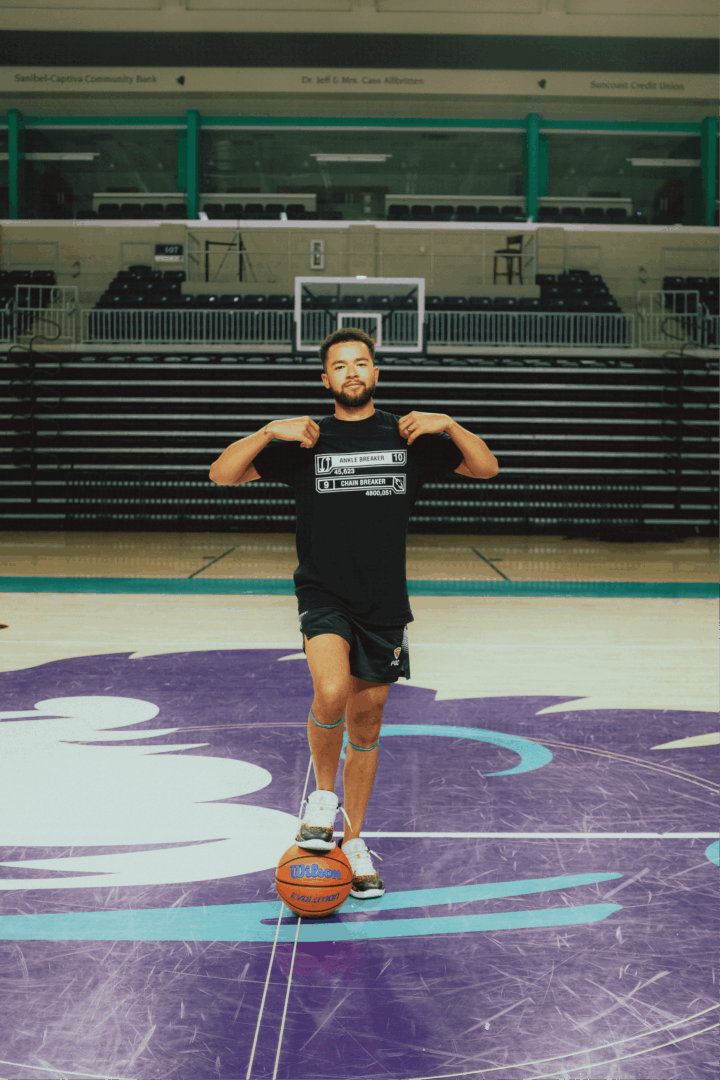
Building on this theme of marriage, purpose, and overcoming, I want to connect it to my professional life. To keep the theme of divorce, what I do professionally is I try and divorce myself and my brand from the toxic behaviors that keep athletes and entrepreneurs from growing in their potential. I do that in various ways, like creating environments that uplift, but also realizing that not every behavior or belief in the human soul is bad.
What’s fascinating about my purpose within the sports world and the entrepreneurial world is that once I can identify something that can be better, I hone in on it almost obsessively and then reunite it with the new thing I believe would work better. For example, coaches have a bad reputation for screaming and yelling at their athletes. Most people would say that’s a counterproductive method to motivate athletes, and I would agree. On the other hand, while patience and a softer tone work better in my opinion, I’ve found that if you can adopt and have the essence of someone who is strong and roars like a lion with a soft tone—and bridge that gap between loud, tough, rugged, and soft-toned—it makes things way better. I don’t just want to find “better ways” to help athletes; I want to see what’s already working and make that better, which also requires humility on my part.
Now, this groundwork might seem invisible at first, but it’s absolutely necessary. While that is the purpose and foundation of my work, what I actually do is train athletes. My job is to teach—and teach with excellence—but in order to do that effectively, I must do the previous steps noted above. Once that foundation is laid, I can train your athlete. I speak in first person because I can imagine how frustrating it can be for some parents to pay for a private lesson and not see us doing “relevant” basketball training work. What most fail to realize is that this is exactly what you are also paying for. You’re not just paying for the concepts I teach or the training sessions I charge for; it’s the mental and spiritual components and applications necessary for me to do my line of work. That may be treating athletes with patience, not critiquing EVERY wrong thing they do, and/or affirming them instead of ONLY tearing them down. There’s a method to my madness.
In short, while I enjoy all these foundational pieces, to make it simple, I am a basketball skills development coach—or basketball skills coach—who trains athletes in shooting, dribbling, passing, and IQ through various concepts and techniques proven to get athletes better QUICKLY and efficiently.
And finally, if you’re interested in joining me for training, you can find and book me here: Private Lessons https://utrain.page.link/rEaN3mVCYBHp7yij7
If you are interested in my book, here it is:
Physical Copy https://www.trilogy.tv/index.php/an-athlete-s-most-pressing-need
Digital Copy https://books.apple.com/us/book/an-athletes-most-pressing-need/id6449137560

There is so much advice out there about all the different skills and qualities folks need to develop in order to succeed in today’s highly competitive environment and often it can feel overwhelming. So, if we had to break it down to just the three that matter most, which three skills or qualities would you focus on?
To expound upon the idea of marriage even more, let’s talk about the physiological skillset of cognitive dissonance. For example, my wife is great—but she doesn’t complete me. She’s an amazing addition to what God has already done in my life, but she doesn’t complete me. This quality, I believe, is critical to have because on one hand, I want to believe that she doesn’t complete me, but deep down in Mi Corazon I know that only God makes me truly whole.
This creates a tension, a dichotomy of freedom and bondage. I’m free because I’m my own man, but I’m also married, which means I can’t just sleep around. That tension—being free yet committed—has forced me to grow in ways I didn’t expect. It’s taught me the difference between being spiritually complete and relationally connected, and how to hold both at the same time. In essence, it’s a balancing act that requires self-awareness, discipline, and humility.
Over time, I’ve also learned how to let people do them and give them exactly what they want. Even if you know what they are doing will be destructive to their soul or their relationship, if they are persistent in wanting the wrong thing, I’ve learned to just let them have it. At the end of the day, you are only responsible for your actions, and God isn’t going to hold you accountable for something someone else did—especially if it goes against what you believe. This understanding didn’t come easily; it came through pain, confusion, prayer, and learning how to release people instead of trying to rescue them. Sometimes letting people have what they want is the only way they will ever learn what they truly need.
There’s an amazing book out there called the Bible that speaks directly to this idea. I truly admire the Bible because of Jesus and His teachings. Jesus taught that if a town doesn’t accept your message, shake the dust off your feet and leave them alone. He also said that those who won’t listen to you are more doomed than Sodom and Gomorrah (Matthew 10:14-15). These teachings aren’t just about rejection—they’re about understanding your value, your mission, and your boundaries. They’re about knowing when to stay, when to speak, and when to walk away with peace still intact.
It was through reading scripture, studying helpful books, journaling, talking these ideas out loud to myself, and sharing them with friends that these lessons became deeply rooted in me. The repetition, reflection, and honesty shaped the way I respond to conflict, heartbreak, pressure, and even success.
Another skill I learned through this process is how to handle conflict well and how to not let other people’s opinions of my life stop me from doing what God called me to do. These skills tie directly to cognitive dissonance because I learned to separate the offenses of others from my self-esteem. I’ve learned to love the very people who were praying on my downfall. If I can offer some motivation, learning to have compassion for and love your enemies will make you unstoppable—you will go far in your career, marriage, or church ministry. Loving your enemies doesn’t make you weak; it makes you spiritually bulletproof.
And here’s the final lesson: if you still care about these people and want the best for them, you can pray for them and bring them before trusted people and God. In time, people who truly live lives of love will come around—or at least, that’s the hope, isn’t it? All you can do is teach people what you know. If they reject it, move on, and keep loving them until they come around. Love doesn’t always look like holding on; sometimes it looks like stepping back, trusting God, and giving people the space to grow into who they were meant to be.

As we end our chat, is there a book you can leave people with that’s been meaningful to you and your development?
I read a book and it surprised me, what surprised me was how The Let Them Theory book by Mel Robbins impacted me. What impacted me most is how closely the “let them” mindset connects with biblical principles I already believed in: letting people choose, releasing control, and focusing on what God has actually given me to steward—my character, my calling, and my peace. The book put language to lessons God had already been teaching me, but that I didn’t fully know how to articulate. One nugget that stayed with me is this: when you stop reacting to everything, you start rising above it. That truth carries a lot of weight. It reminded me that not every action needs a response, not every misunderstanding needs clarification, and not every opinion needs to be taken personally.
This mindset has shaped how I show up in my personal life—how I communicate, how I handle disappointment, and how I respond when people don’t see the full picture of my heart or intentions. It has also influenced the way I will approach future content. I run a YouTube channel and a podcast called thezavierpodcast, where I talk about faith, mindset, growth, and real-life transformation through a biblical lens. Before reading the book, I was already committed to being authentic in how I share, but the “let them” mindset reinforced that I don’t need to create from a place of pressure or performance. It reminded me to let God handle the outcome—who watches, who listens, who supports, and who doesn’t.
Understanding this freed me to show up with more clarity and confidence. On both my YouTube and podcast, I can speak without over-explaining, teach without needing validation, and share boldly without being held back by people’s reactions. The book helped me see that my assignment is to steward the message—not the metrics.
In many ways, The Let Them Theory confirmed what I felt God already calling me into: to teach, encourage, and pour into others with honesty and obedience. It helped me release the weight of public perception and trust that the right people will find the content at the right time. Ultimately, it taught me to trust God with people’s choices and stay faithful to who He’s shaping me to become.
All in all, resiliency is about pushing forward and striving mentally at times, but it doesn’t always look like running through brick walls. Sometimes, it’s about allowing yourself to unwind and slowly release old thought patterns so you can teach at the right time and in the right space. Both sets of tools are essential for truly helping those in your sphere of influence.
If you’re interested in my podcast, YouTube channel, or the Mel Robbin’s book, you can check them out here:
https://www.youtube.com/@isaiahcthomas
https://www.melrobbins.com/book/the-let-them-theory/
Contact Info:
- Instagram: https://www.instagram.com/isaiahcthomas?igsh=NmQwN3AydWttM2Uz&utm_source=qr
- Facebook: https://www.facebook.com/share/1MdH5cQRMu/?mibextid=wwXIfr
- Youtube: https://www.youtube.com/@isaiahcthomas
- Other: My podcast https://podcasts.apple.com/us/podcast/thezavierpodcast/id1819546465
Physical Copy of my book https://www.trilogy.tv/index.php/an-athlete-s-most-pressing-need
Digital Copy of my book https://books.apple.com/us/book/an-athletes-most-pressing-need/id6449137560
Private Basketball Lessons https://utrain.page.link/rEaN3mVCYBHp7yij7

Image Credits
Deuce Daniels
so if you or someone you know deserves recognition please let us know here.