We were lucky to catch up with Jackie Johnson recently and have shared our conversation below.
Jackie, we’re thrilled to have you sharing your thoughts and lessons with our community. So, for folks who are at a stage in their life or career where they are trying to be more resilient, can you share where you get your resilience from?
I believe resilience blossoms from a combination of lessons learned, and patience. I had a unique upbringing that allowed me to develop an incredible amount of the latter, and garnered the ability to grow and adapt through the former.
I spent most of my childhood left to my own devices, which I chose to spend exploring the wilderness on horseback. This became the foundation of my adaptability, learning to problem solve on the trail when things went wrong, to confront my own fear and decide the best thing to do with it.
More recently, when my children were small, my husband and I made the wild decision to live off the grid while we built our forever home. During this three year stint, we had no electricity, no running water, no internet, and although it was familiar territory for me, it was different now that I was responsible for the lives of others. This experience changed me. I learned firsthand the hierarchy of human needs, categorized the necessary means of survival every day, and came out the other side with the ability to be emotionally present in the midst of survival mode, which is resilience in its most sharpened state.
Thanks, so before we move on maybe you can share a bit more about yourself?
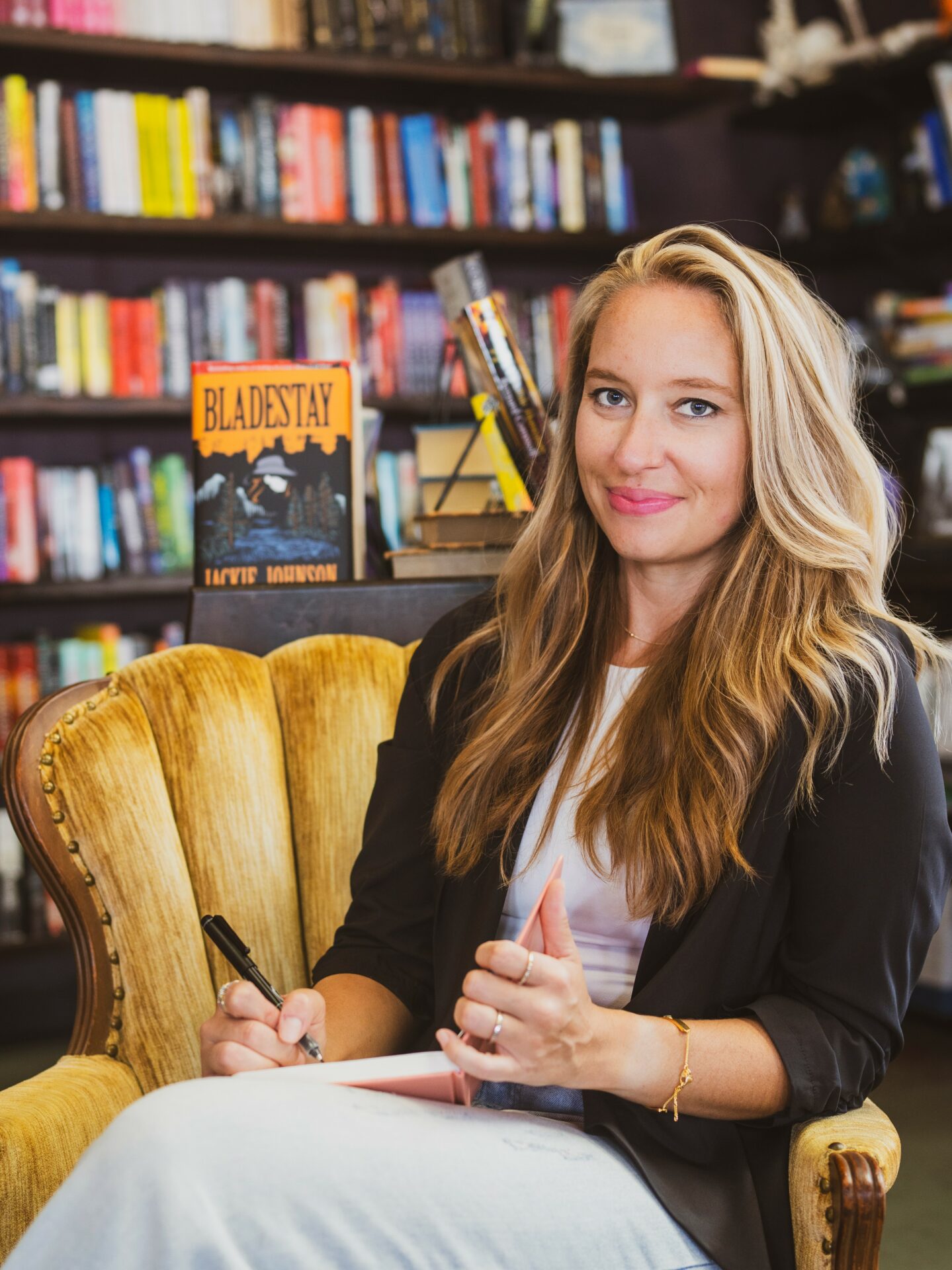
I’m a multi-genre author from Southern California with a penchant for morally grey characters. My debut, Bladestay, is a YA-Adult crossover historical novel about a cunning teenager named Theo who infiltrates a notorious gang in order to sabotage the violent plans they have for her town. Theo’s scheme begins to go awry, however, when she finds herself sympathizing with the magnetic antagonist and falling for one of his outlaws.
I wrote this book while living off grid, during the height of Covid, where I discovered that the depths of human adaptability are remarkable. While I was able to translate a lot of my experience as an historian, equestrian, and homesteader into the mechanics of the story, I write very character-driven stories because I believe they are the heart of every narrative. My favorite thing to explore is the concept of motivation because we are, all of us, biased by our own perspective. Bladestay surgically splices this notion upon the fine line between good and evil, and it fuels the dance between hero and villain. Each character blurs that line for their own gain, but in the end, they either justify it, or learn from it, which ultimately defines who they are.
Part thriller, part historical, part love story, Bladestay is the book I wish I had when I was struggling to understand the complexities of this world and humanity’s bottomless capacity for evil…and the unfathomable resilience we possess to conquer it.
Bladestay is out now!
If you had to pick three qualities that are most important to develop, which three would you say matter most?
“The long way is the short way; the short way is the long way.” Rushing stilts progress and cutting corners always equals mistakes, which means you’re going to have to go back and do it again anyway. Most of us want a quick fix, an immediate solution, an ‘overnight success.’ Although progress is rarely linear and failure is often an essential part of the journey, I think there’s a lot less heartache in patience.
“Curiosity over judgment.”
I got that one from Ted Lasso.
Having a reverence for your craft, being open to other perspectives, and approaching every person and experience with curiosity has matured my thinking, but it also continues to elevate my writing, especially when it comes to crafting complex, well-rounded characters.
What would you advise – going all in on your strengths or investing on areas where you aren’t as strong to be more well-rounded?
Identifying strengths and weakness is a skillset in and of itself, as is asking for help when you know you don’t have the skills or means to accomplish something yourself. In writing, it’s necessary to invest the time to improve on the areas I’m not as strong. Every writer has their strength and and their weakness—for example, my strength is characters and dialogue, but world building never comes easy for me. I always have to invest far more time in atmosphere and setting. I spent countless hours crafting and tweaking and revising the descriptions of Bladestay’s world, whereas the characters almost fell out of me and onto the page with much less effort. It wasn’t possible for me to throw my hands up and have somebody else do this; it was up to me to do the research and get every aspect of the story right.
Having said that, an editor will change any writer’s life. That’s a different skillset and I would far prefer to collaborate with a professional rather than pursue an education in it. There are also things in the broader scheme of publishing that I know aren’t worth investing my time. I chose to traditionally publish rather than self-publish because it’s much more valuable to me to invest my time into the craft of storytelling than the countless things it takes to turn a manuscript into a book: cover art, editing, formatting, marketing, etc. It’s absolutely valuable to have a decent grasp on all these things, but you can’t become an expert in everything, and to that end, I would say know when to collaborate and when to spend your most valuable commodity: time.
I think, like everything in life, it’s nuanced choices to determine where efforts are best served weighed against a person’s privilege in their access to resources.
Contact Info:
- Website: https://camcatbooks.com/Books/B/Bladestay
- Instagram: https://www.instagram.com/jaqsattack/
- Twitter: https://twitter.com/jaqsattack
- Other: https://www.goodreads.com/book/show/122757694-bladestay


Image Credits
Cover: CamCat Books; cover design by Maryann Appel Event picture: David Fay