We’re excited to introduce you to the always interesting and insightful Jeff Miller. We hope you’ll enjoy our conversation with Jeff below.
Jeff , so excited to have you with us today. So much we can chat about, but one of the questions we are most interested in is how you have managed to keep your creativity alive.
I operate under the belief that I’m an antenna. It’s not really me, it’s a frequency that I’ve tuned myself to. My chops have to be good enough to interpret and play the signal that’s coming through.
Meditation is a big part in connecting to the Creative Force and staying connected to the frequency. It is possible to keep the frequency flowing even when you’re not completely plugged in. This happens to me when I’m dealing with health issues. I stay plugged in and make notes about different ideas, then when I’m well enough, I work on bringing them out.
How I can tell that I’m connected is that when you meditate and you’re completely quiet, there are always two sounds you can hear. The lower pitched sound is your blood flowing. The second, higher pitched, almost electric static sound is your nervous system. I can tell by the sound of my nervous system that I’m connected. I can sit quietly without meditating and hear it when I’m connected.
Here is where I have to give credit to Pat Martino. When I had my apprenticeship with him we worked more on esoteric techniques like this than nuts and bolts guitar, although we did do some of that.
The other person I have to give credit to is the saxophonist Bill Janssen. Not only has Bill been a great collaborator over the years he’s been a great spiritual advisor and always tells it straight. He’s been an inspiration and invaluable friend.
Let’s take a small detour – maybe you can share a bit about yourself before we dive back into some of the other questions we had for you?
I’m always working on being the best musician I can be, technically and being open and in the moment. I always strive and work to be better, have a better flow, so it comes through me unimpeded.
Over the past few years I’ve been working very hard on growing as a composer. This is the area where I’ve had more trouble keeping up with the Creative Force. I’ve had some major breakthroughs in the last year or so and hope to continue my growth in this department. This is more difficult for me than playing.
There is so much advice out there about all the different skills and qualities folks need to develop in order to succeed in today’s highly competitive environment and often it can feel overwhelming. So, if we had to break it down to just the three that matter most, which three skills or qualities would you focus on?
Your strengths are your weaknesses. One of my strengths is my focus which has been an invaluable benefit to me. Focus on my practice, on my work. When I say practice, I don’t mean just practicing my instrument(s), which is a big part of it but it’s more like a yoga practice. It’s physical and mental and includes meditation. But the strength of my focus becomes a weakness because I can get so focused I shut a lot of things out. Which brings me to the second quality.
Be OPEN. If you’re open there are doors that are constantly opening if you’re open to them. When the Universe is trying to tell you something and you’re not open to it, you’ve missed it. There are untold connections to be made and influences and knowledge to be absorbed. Here’s a perfect example. One of my mother’s best friends is Jan Brookmeyer, the composer and arranger Bob Brookmeyer’s wife (now widow). So I have an opportunity here for all kinds of things. Bob’s work that I was familiar with was very straight ahead, where mine is in the avant-garde. I, in all of my wisdom, don’t do anything about it, thinking our musics are too far apart and he, other than being polite, isn’t going to be interested in my music. Fast forward thirty years, Bob has passed away and through various circumstances Jan and I started communicating and sharing music and information. Not only has she become very supportive of my music and direction but I have learned that Bob loved the avant-garde, Cecil Taylor (who I had a 29 year association with), was influenced by Morton Feldman, was using Schoenberg’s Twelve Tone System and had studied with Earle Brown!?!?!? Do you think I missed an opportunity to learn something very valuable by not being open and having preconceived ideas? How many other opportunities did I miss that I’m not even conscious of.
The third thing would be explore. Whatever it is you do, look how it’s done in other countries and cultures. If you’re a painter, sculptor, dancer, writer, musician there’s a wealth of knowledge out there that can be incorporated in your work. I always refer to it as adding colors to my palette. I’ve done projects with people that at points in my life I would’ve passed on and then thought by doing this I’ll sharpen skills X,Y and Z that I don’t use very much and as such, make me that much better all the way around.
As we end our chat, is there a book you can leave people with that’s been meaningful to you and your development?
Books are very important to me, not only for their “impactful wisdom” but for inspiration as well. How, out of a lifetime of books do you pick one? I feel obligated to at least list some of the authors who have had a big influence on me and apologize for any I’ve left out.
James Joyce, Virginia Woolf, Marcel Proust,Fyodor Dostoevsky, Rumi, Gurdjieff, P D Ouspensky, Jean Vaysse,
C G Jung, William S Burroughs, Fritjof Capra, Lao Tzu, Thich Nhat Hanh, Karen Armstrong, Stephen Nachmanovitch, Gary Lachman, J G Bennett, ee cummings, Richard Feynman, Roger Penrose, Brian Greene, Douglas Hofstadter, Dante, Aldous Huxley, Albert Camus, Joseph Campbell, Hazrat Inayet Khan, Haruki Murakami, Homer, Virgil and not to mention ancient texts where the author(s) are unknown, like The Tibetan Book of the Dead for example and books about and by the artists themselves.
The one book I’m going to single out is Free Play by Stephen Nachmanovitch. The subtitle is The Power of Improvisation in Life and the Arts. It helps to strip away the constraints that society puts on us and helps you be more open to the Creative Force. It talks about the issues we all face being creative beings in a society that doesn’t value our gifts. It brings out things buried in your subconscious to a conscious level where you can use it. Everyone has their own approach and no matter what your approach is, this book helps open your eyes, give you ideas on different approaches and broaden your horizons on ways to effectively increase your creativity and ways of finding inspiration. From the simplest things like how you prepare your space and get ready to create to ways to work through the dreaded blocks. It’s very insightful. You’ll read something and it’s something that’s been buried in your unconscious, brought to the surface where you can use it. You realize it was a truth buried in there because you KNOW IT when it’s brought to your attention that, it’s an absolute truth, you knew it all along without consciously knowing it. By bringing it out you’re in a position access it. It’s now at your disposal.
I reread this book every four to five years as a refresher and hopefully pick up on something I missed previously or as is the case in life, a passage takes on a different meaning years later, “you can’t step in the same stream twice”.
- Linkedin: Jeff Miller musician / composer


Image Credits
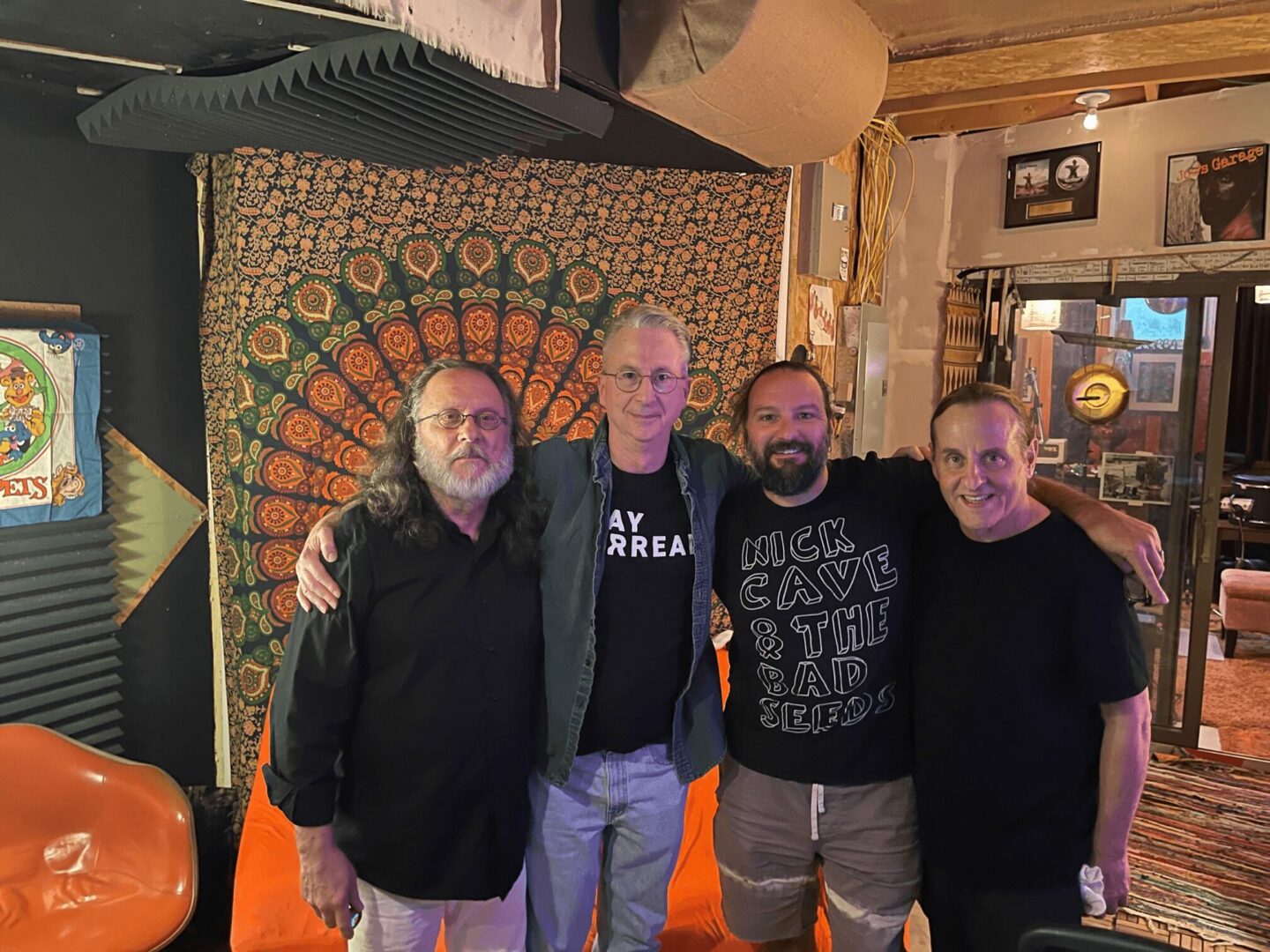
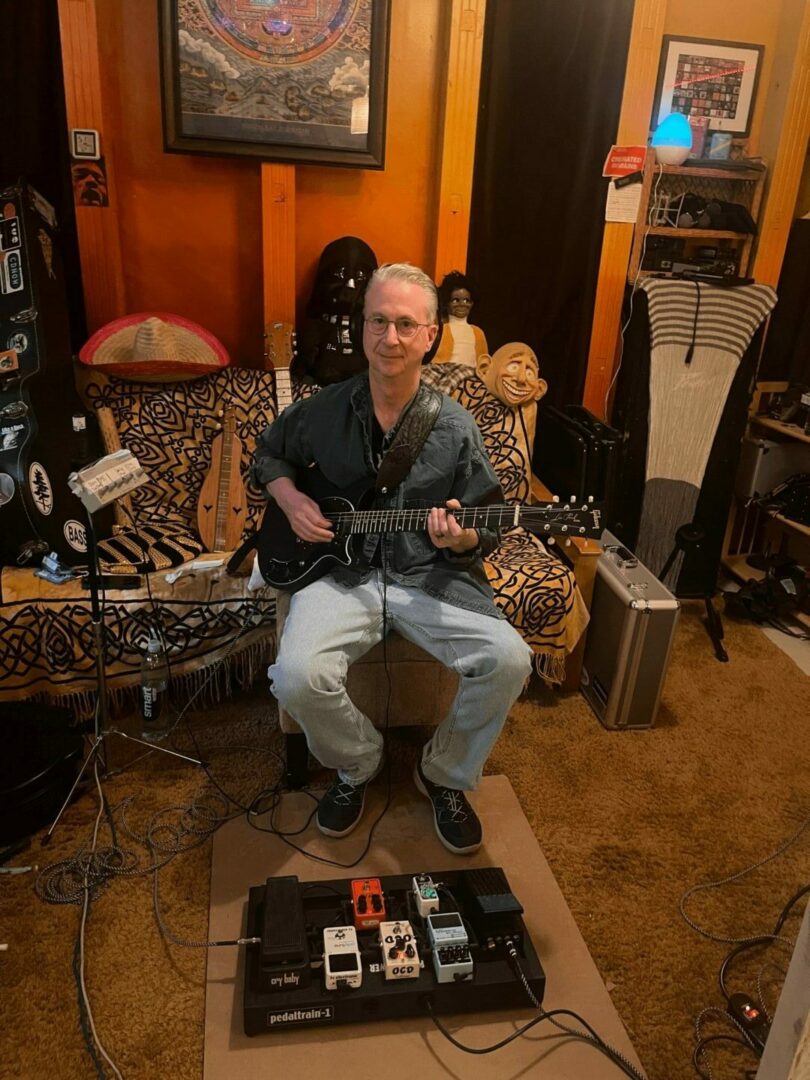
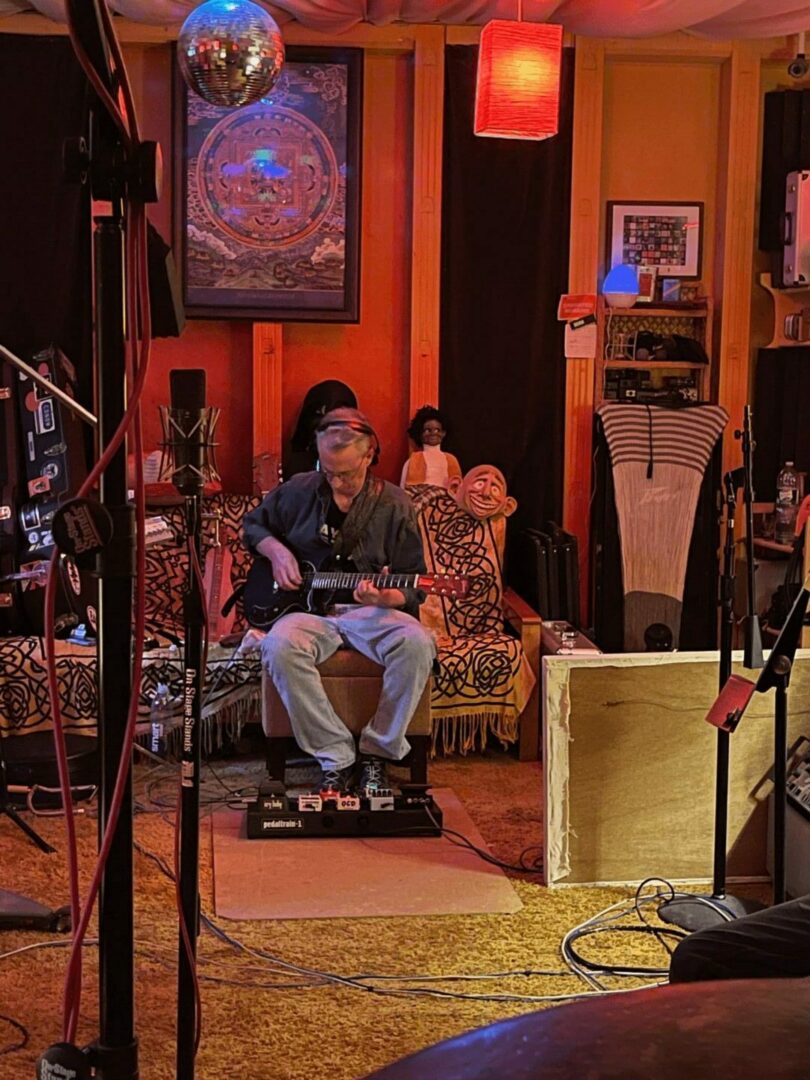
The three pictures in the studio were taken at The Audio Lab in Millville, NJ
so if you or someone you know deserves recognition please let us know here.