
We caught up with the brilliant and insightful Jon Zweifler a few weeks ago and have shared our conversation below.
Hi Jon, really happy you were able to join us today and we’re looking forward to sharing your story and insights with our readers. Let’s start with the heart of it all – purpose. How did you find your purpose?
I didn’t find my purpose so much as I stopped looking for permission to name it.
When autism entered our family, it didn’t arrive as a single moment or diagnosis—it arrived as a pattern. A repeating mismatch between what my son needed and what the world was designed to provide. Support existed, but it ended at the clinic door. Tools existed, but they assumed ideal conditions that real families rarely have. Progress was measured in sessions, while life happened everywhere else.
Living inside that gap changes you.
As a parent, you don’t get to stay theoretical for long. You either adapt, or you watch opportunity slip through moments that never repeat. Over time, I could see the broken pattern clearly enough: systems optimized for delivery, not understanding. For compliance, not context. For efficiency, not dignity.
When you see a broken pattern clearly enough, and you have the skills to intervene—even imperfectly—you don’t get to look away.
Reed exists because I stopped waiting for a perfect solution and started building a useful one. Not for families like mine, but within them. That distinction matters. Building from the inside collapses your tolerance for friction. You stop chasing elegance and start chasing what works on a random Tuesday night when a child is tired, a parent is overwhelmed, and language still has to happen.
Progress compounds. Waiting and hoping doesn’t.
My purpose came into focus when I realized that questioning the status quo wasn’t an intellectual exercise—it was a responsibility. When the existing options quietly fail the people you love, invention stops being optional. You build, you test, you adjust. Not because you’re ready—but because the moment demands it.

Thanks, so before we move on maybe you can share a bit more about yourself?
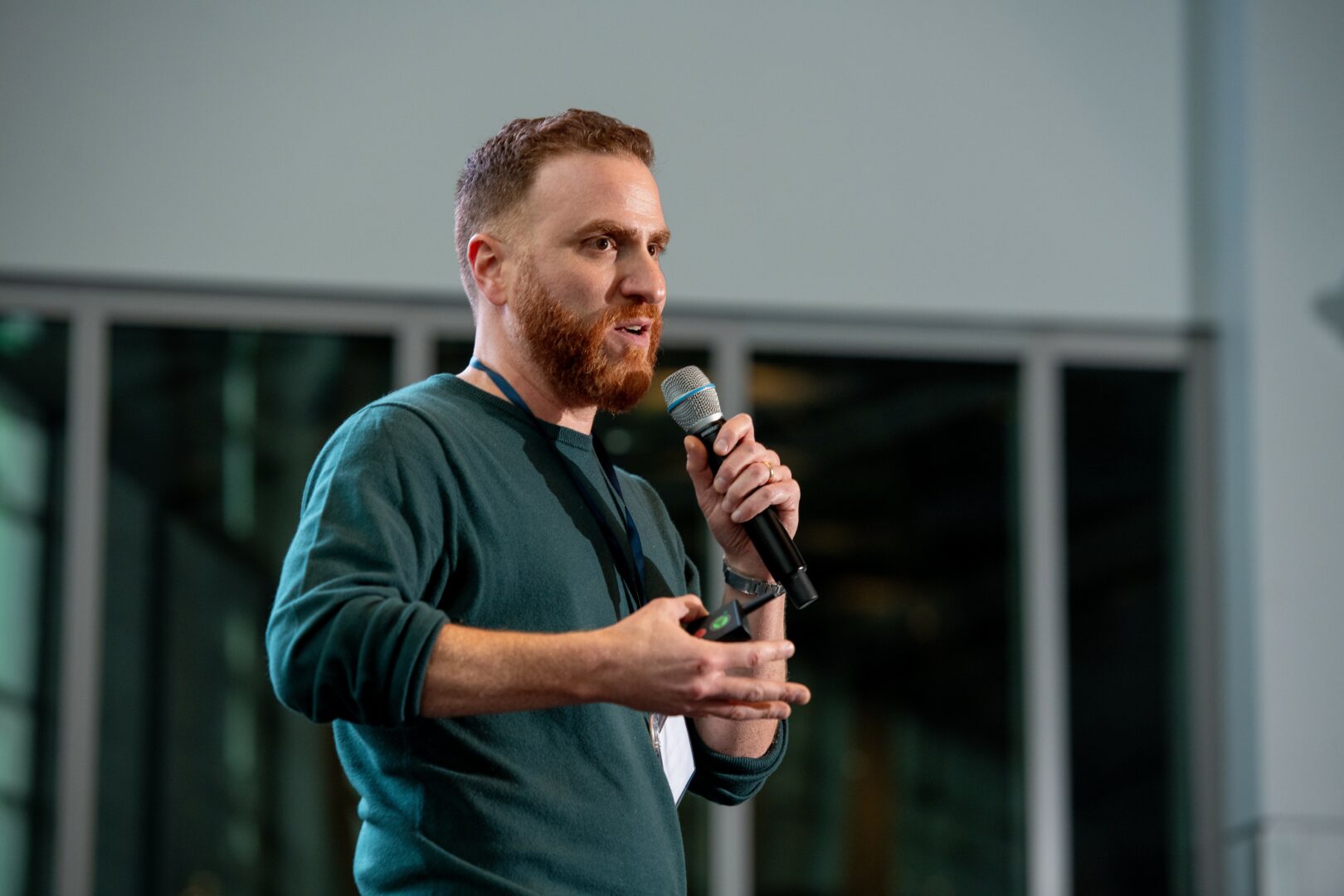
I’m the Founder & CEO of Reed AI, a public-benefit technology company building the first Natural Language Learning platform purpose-built to live where learning actually happens for divergent families: inside everyday life.
What makes Reed different isn’t just the technology—it’s the refusal to accept false trade-offs. We don’t believe families should have to choose between clinical rigor and real-world usability. Or that language learning must be confined to therapy hours. Reed turns ordinary moments—conversations, routines, decisions—into spontaneous learning opportunities without turning homes into clinics.
What’s most exciting right now is that we’re proving a new category can exist. Not Augmented of alternative communication (AAC). Not homework. Not another “edtech” product. An understanding layer that travels with the child across environments and grows with the family. And momentum as a business is growing. Our consumer alpha is on track to broaden into a larger beta this January, shaped directly by families using Reed in real homes, not test environments. At the same time, we’re seeing continued pull from public schools, with a co-design pilot already locked in for Q1 with a district in New Jersey. We recently delivered a successful pitch and demo day through the Multiple Accelerator Program and are now deep in diligence conversations with members of their founding funder community. Reed also joined the Disabled Life Alliance, which has opened doors to new collaborators and potential lead investors, including several meetings scheduled around CES Eureka Park. None of this feels abstract—it feels like proof that when you build something useful, momentum follows.


There is so much advice out there about all the different skills and qualities folks need to develop in order to succeed in today’s highly competitive environment and often it can feel overwhelming. So, if we had to break it down to just the three that matter most, which three skills or qualities would you focus on?
1. Pattern Recognition Across Domains
The ability to see how problems repeat across industries—education, healthcare, product design—was more valuable than any single technical skill. Early in your journey, study systems, not just roles. The leverage is in the connections.
2. Comfort with Incomplete Answers
Progress belongs to people willing to act based on confidence as they seek out certainty. Waiting for perfection is often just fear in disguise. Build, test, adjust. Momentum is a strategy, confidence is the catalyst.
3. Respect for Lived Experience as Data
Some of the most important insights don’t come from white papers—they come from kitchens, classrooms, and late-night conversations. Learn to listen without trying to immediately “optimize” what you hear.
Advice: Don’t chase credentials faster than you chase understanding. Skills can be learned. Perspective has to be earned.


Thanks so much for sharing all these insights with us today. Before we go, is there a book that’s played in important role in your development?
Breakfast of Champions by Kurt Vonnegut gave me permission to think differently—before I knew I was looking for permission. What stayed with me wasn’t the satire for its own sake, but the radical freedom underneath it. Vonnegut treats systems, labels, and “the way things are done” as optional constructs—not sacred truths – rejecting the notion of being “trapped in the machinery of our times”.
That outlook quietly reinforces an outlaw mentality in the best sense: if the rules don’t serve people, you’re allowed to question them. If a system produces absurd outcomes, you’re allowed to redesign it.
The book reframes progress as something that doesn’t require consensus or polish to begin. You don’t need to wait for institutions to catch up before acting. You can build something useful today, even if it’s imperfect, even if it doesn’t fit neatly into an existing category.
That idea has shaped how I approach Reed. We’re not here to defend conventions—we’re here to test whether they’re still worth keeping. Vonnegut reminds you that meaningful change often starts at the margins, with people willing to look a little unreasonable in pursuit of something more humane.
Sometimes progress requires an outlaw mindset—not to burn things down, but to build what should have existed all along.
Contact Info:
- Website: https://meetreed.ai
- Instagram: https://www.instagram.com/meet_reed/
- Facebook: https://www.facebook.com/profile.php?id=61581729281842
- Linkedin: https://www.linkedin.com/in/jonzweifler/
- Youtube: https://www.youtube.com/@meet_reed/shorts


Image Credits
DeJay King, Redline Shooters
Courtesy of Empathy Tech. (Speaking Event image)
so if you or someone you know deserves recognition please let us know here.