We were lucky to catch up with Jose Vasquez recently and have shared our conversation below.
Jose, thank you so much for taking the time to share your lessons learned with us and we’re sure your wisdom will help many. So, one question that comes up often and that we’re hoping you can shed some light on is keeping creativity alive over long stretches – how do you keep your creativity alive?
I seek a constant stream of ideas across every field imaginable: art, programming, quantum physics, Buddhism, and philosophy. I’m constantly reading, going to art museums, and asking people what’s currently on their playlists. Whatever calls to me, no matter how distant from music, can become a creative prompt.
The key is that I never allow myself to be passively influenced; instead, I engage by bringing what I already have to the table and treating the external idea as a challenge. Though I’m generally an undisciplined person, the habit of practicing creativity as frequently as possible is crucial. I compose or engineer sound nearly every single day. Ideas are everywhere, but the flow only starts once you commit to putting in the time.
Ultimately, I find that creativity is fundamentally about play. You have to let go of the fear of failure, release the need for perfection, and simply engage. The technical skills and concepts are just tools; the truly solid, unique work comes from consistently showing up, trusting the process, and having fun building and beautifully vandalizing your own creations.
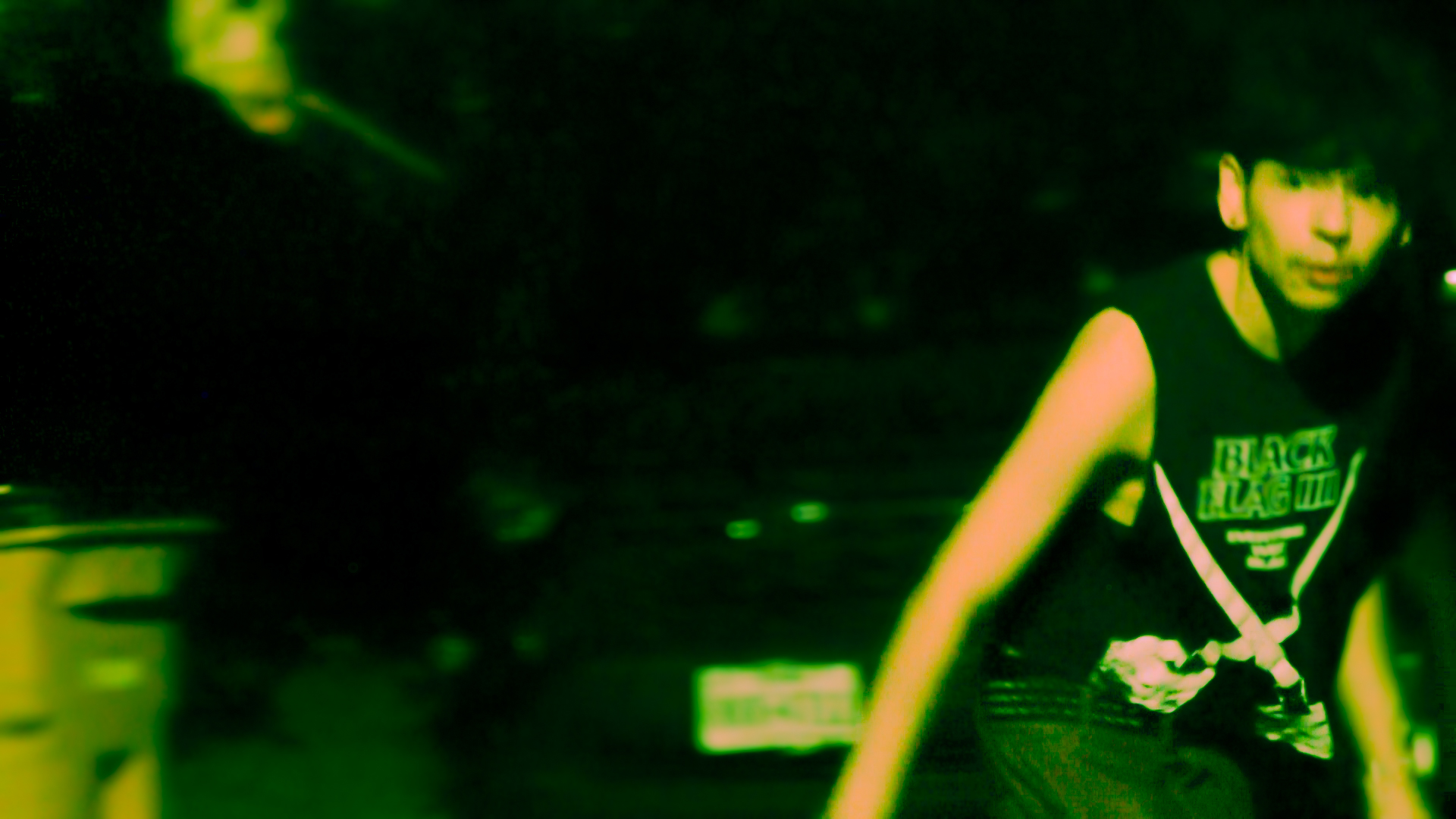
Thanks for sharing that. So, before we get any further into our conversation, can you tell our readers a bit about yourself and what you’re working on?
I am anarchoskum, an artist, producer, and engineer based in Austin, TX, and the founder of skumboi records. My music is a self-engineered fusion that sits at the volatile intersection of emo rap, digicore, and the lo-fi kult aesthetic. I take the raw, vulnerable lyrical transparency of early 2000s emo and wrap it in the hyper-compressed, often glitchy sound design of the digital underground.
The most special thing about this process is that my music practice is merely one output of a broader, Full-Stack Creative Entrepreneur mindset. The technical and philosophical complexity in the music directly informs my other creative-productive impulses, and vice versa. The tension I engineer in a track is the same philosophical tension I explore in my written work, such as my essays on Psychoanalysis in Music Discourse and Web Browser Performance as Aesthetic Theory.
As a Symbolic Systems Architect, I put those same analytical and aesthetic skills to use professionally. I can be contacted for a variety of services, ranging from site performance audits (leveraging my background as a WebKit Contributor and Web Developer) to full semiotic environment building for brands. My music is the ultimate proof-of-concept for the skills I offer: the ability to build, analyze, and intentionally corrupt any system, whether it’s a digital performance environment or a complex emotional soundscape.
You can inquire about these services or creative collaborations here: skumboirecords.com/inquire
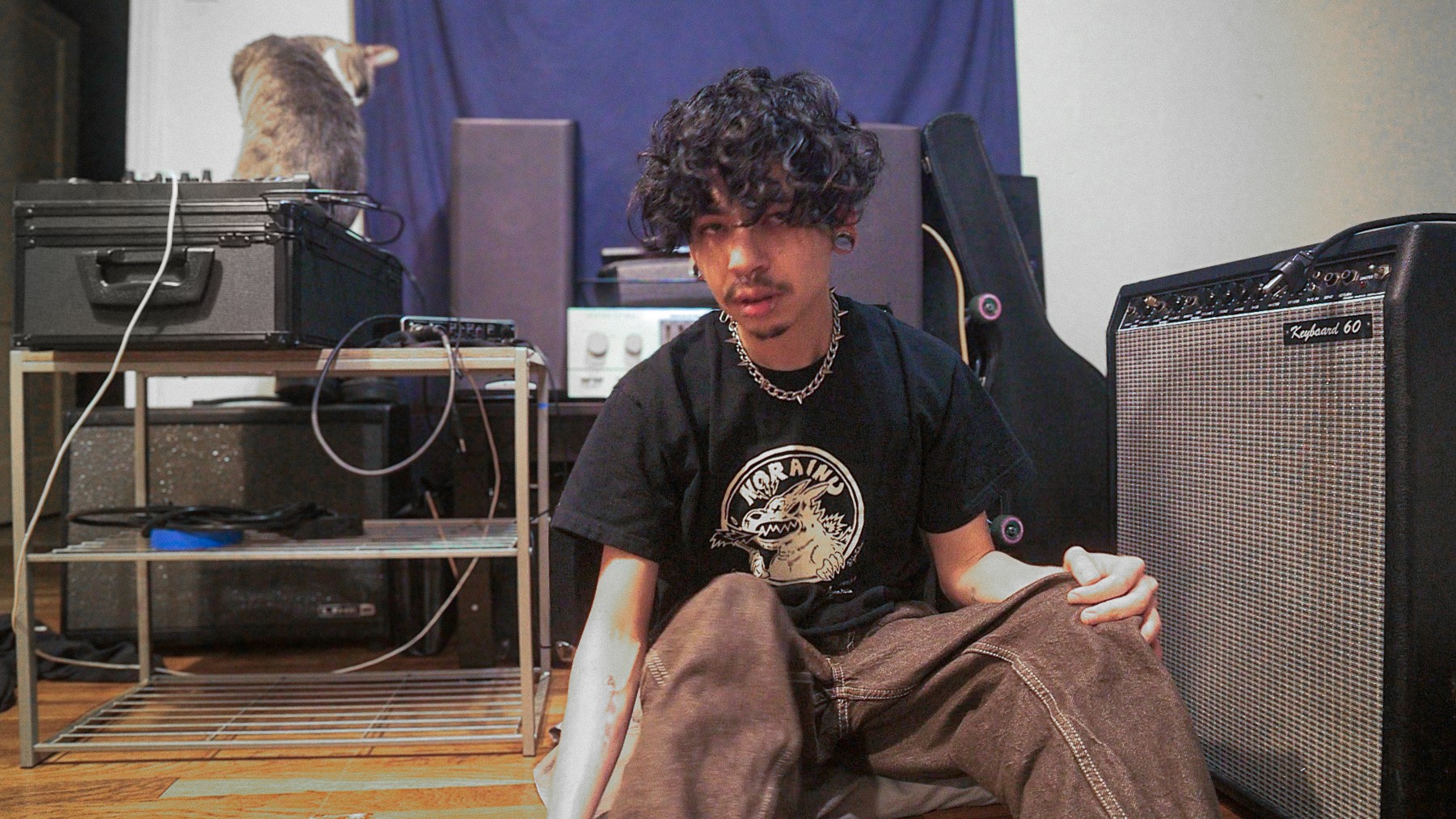
If you had to pick three qualities that are most important to develop, which three would you say matter most?
Systems Literacy: This is the most impactful technical skill. My background in computer science, specifically web development and open-source contributions (like WebKit), taught me how to read, build, and debug complex symbolic systems. Whether I’m looking at jazz theory, h.264 video compression, or a psychoanalytic framework, I treat it all as a system of rules that can be analyzed and manipulated. This skill is why my music isn’t just lo-fi; it’s intentionally corrupted.
Learn the rules before you break them. Pick a system—it could be a programming language, the rules of a DAW, Lacanian analysis, or music theory—and achieve mastery over its fundamental structure. Only once you understand why the system works can you creatively fracture it.
Aesthetic Independence: The moment I realized that music and vision go together (as I learned on MySpace), I stopped seeking external validation and started building my own unique semiotic environment. This independence is why I design all my own covers, engineer my sound, and treat my art as a full-stack project. My brand is my aesthetic, and I am the only one who can define the boundaries of anarchoskum.
Reject the idea of a blueprint. The goal isn’t to be the best in a genre, but to create a genre of one. Invest time in skills outside of your primary art to build a fully self-contained creative universe that is uniquely yours.
Duality of Discipline: This is the ability to maintain the productive tension between two opposing forces. My classical training gave me the discipline to compose every day, while my emo/digicore internet counterculture roots gave me the permission to aggressively deconstruct those compositions. The work stays alive because it is never allowed to settle into a single mode.
Develop a “shadow habit.” If you are naturally chaotic, force yourself to create within rigid constraints for a month. If you are highly disciplined, dedicate a block of time each week to intentionally failing, glitching, or destroying a perfect piece of work. The tension between those two habits will fuel your most original ideas.
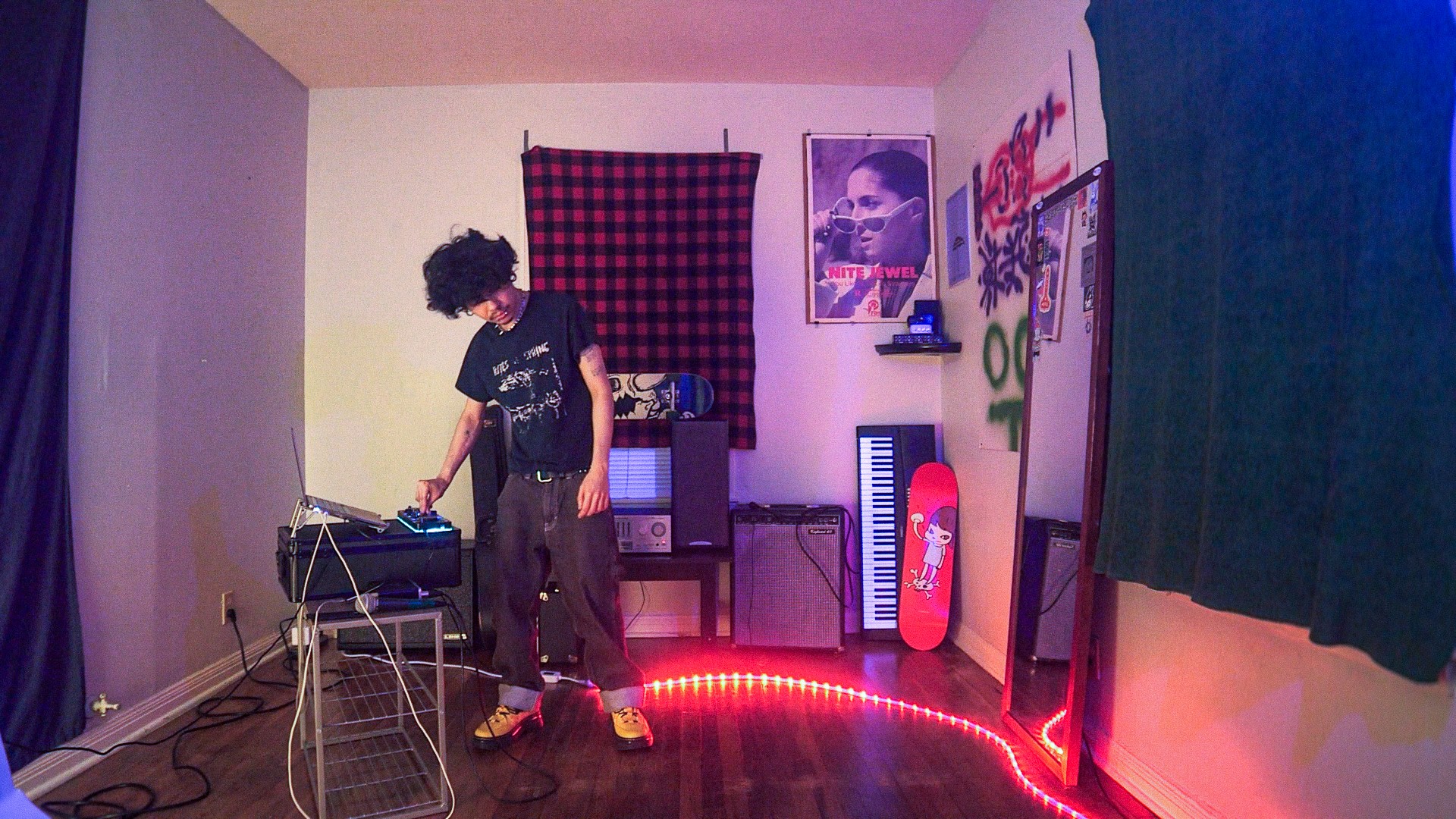
Thanks so much for sharing all these insights with us today. Before we go, is there a book that’s played in important role in your development?
Karen Barad’s Meeting the Universe Halfway fundamentally changed how I view creative work, system design, and the nature of reality itself. Barad’s concept of Agential Realism is the most powerful idea I’ve encountered, asserting that existence is not fixed but is constantly being brought into being through phenomena—or “intra-actions.”
The most impactful nugget of wisdom is the understanding that the ontological structure of the universe is fundamentally a game of “Yes, and.” This is a particularly useful idea to meditate on when you need to overcome inertia, inaction, and doubt. Reality is always in flux, always open to the next move. So what’s the move?
Contact Info:
- Website: https://skumboirecords.com
- Instagram: https://www.instagram.com/anarchoskum
- Linkedin: https://www.linkedin.com/in/jose-vasquez-128191205/
- Youtube: https://www.youtube.com/@anarchoskum
- Other: Apple Music: https://music.apple.com/us/artist/anarchoskum/1634883107
Blog: https://anarchoskum.skumboirecords.com/journal/
Project Inquiries/Collabs: https://skumboirecords.com/inquire
Image Credits
Skate photography by Freya Neeley
so if you or someone you know deserves recognition please let us know here.