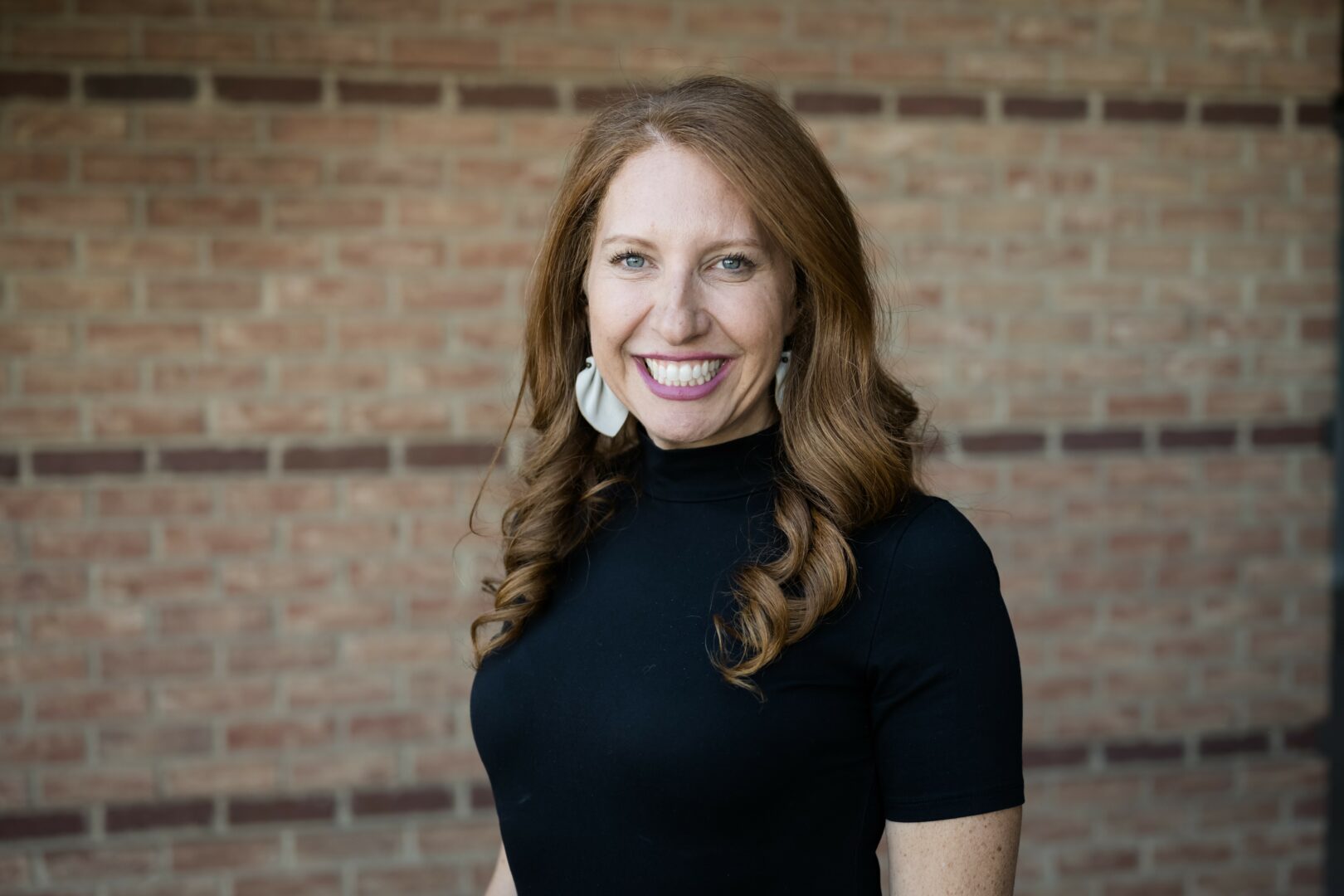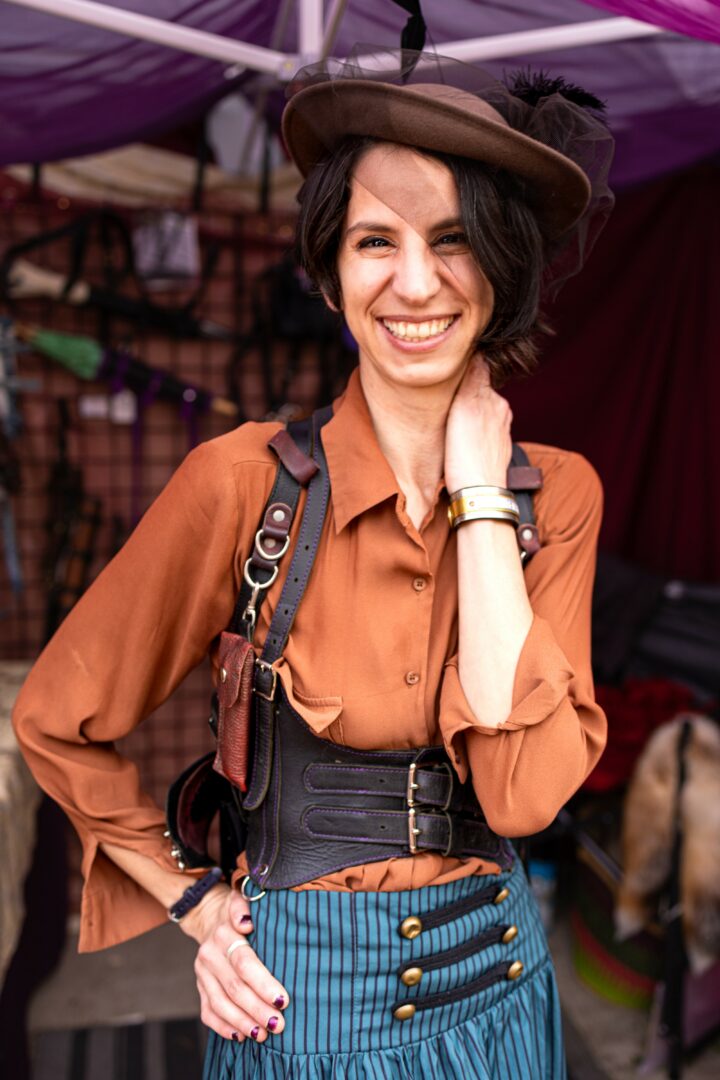
We recently connected with Leah Markman and have shared our conversation below.
Leah, thank you so much for taking the time to share your lessons learned with us and we’re sure your wisdom will help many. So, one question that comes up often and that we’re hoping you can shed some light on is keeping creativity alive over long stretches – how do you keep your creativity alive?
As I expand my business from a creative endeavor to a full production line of clothing, this question is something I love to dive into and explore. Being a full time artist, there are times where I may feel more like an automaton than an artist. Between the love and the design, work still needs to get done and fighting the stagnation of production work can prove to be the biggest villain in any creative business. I’ve found the best way to keep the creativity flowing is through experimentation and collaboration.
Experimentation: I set aside a week here and there to try something entirely different. Often this will be working with a different medium such as fabric and sewing a piece of clothing for myself, or drafting an idea I’ve had in my head for months. These weeks are often the most frustrating as well as fulfilling. Something that drives me is finding myself in the flames of frustration. I’ve learned many juicy secrets of the trade through the suffering of an unrealistic or unsuccessful vision. This experimentation will either fuel me with a new idea or technique, or it will be a complete failure and I start looking forward to the familiar methodic nature of my beloved production line. It’s important to know that I need the time to dedicate to this exploration, because without it, my business starts to lack the heart that feeds it.
Collaboration: This looks different to every person, depending on their social battery life. Being an extreme introvert I look for ways to create with others through custom versions of my work or tailored fittings. I love helping people feel beautiful in their bodies and get an extra zap of creativity by working with their vision and colorway ideas. These experiences offer a fun landscape to create some truly one of a kind pieces that reflect an individual’s style.
Tailored clothing, especially leather, has a certain fit. When it’s right, it is like a second skin. Often people walk into my shop or booth and don’t expect to find something for their body, and if it isn’t there I welcome the opportunity to create it! Resizing and on rare occasions, redesigning an existing piece to fit a particular human is a challenge that feeds my need to create and get a small taste of the larger experimentation puzzles I crave in designing.
In short, when my creativity gets low, I look to collaborate either with myself and a new skill, a custom size or even a custom order. Creativity cannot exist in a vacuum, its best when shared with others.
Appreciate the insights and wisdom. Before we dig deeper and ask you about the skills that matter and more, maybe you can tell our readers about yourself?
My professional focus drew itself out over a matter of years. I’ve had a deep love affair with Victorian and Edwardian fashion and time period. Something I’ve always loved about this time period was the strong dichotomy between the constrictive and oppressive “rules” of society and the forward momentum of technology and science. The Victorians had a love affair with both the occult and science, which sometimes showed itself in beautifully grotesque manners.
I’ve wanted to focus my brand on reclaiming many of these styles from an era with a history of oppression and misogyny, creating items that hold the same beauty but with none of the constraints.
Within the brand and the history itself, fashion always has a “standard of beauty” and I love breaking these norms. I strive to draft my patterns with larger bodies in mind and try to keep these larger sizes in stock during in person events. Being able to find your size in stores has become a privilege and I would love to fight the stigma of what is considered normal sizing. This goal has taken a lot of time in working outside the realm of my own body image and drafting pieces that will fit a wide variety of humans.
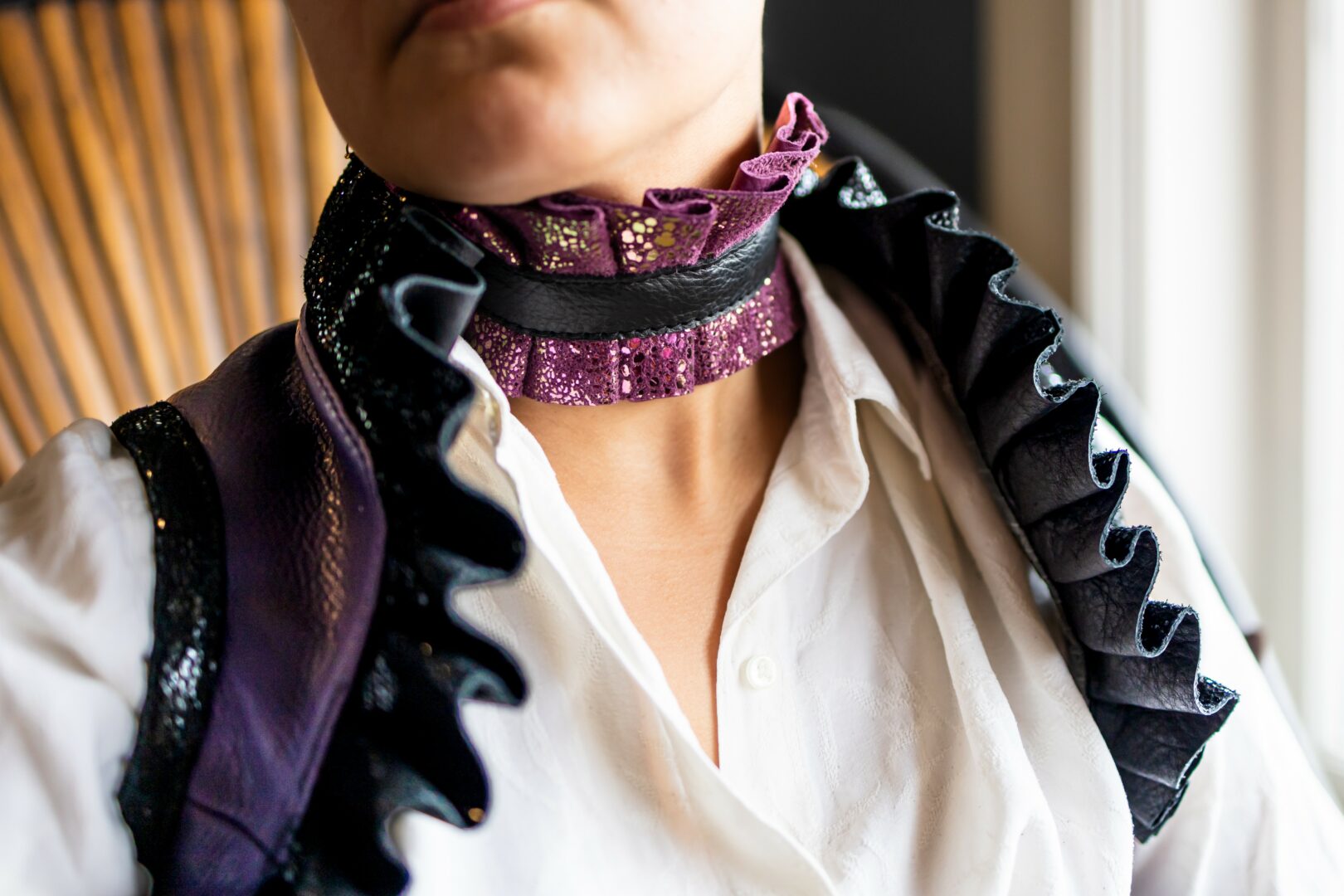
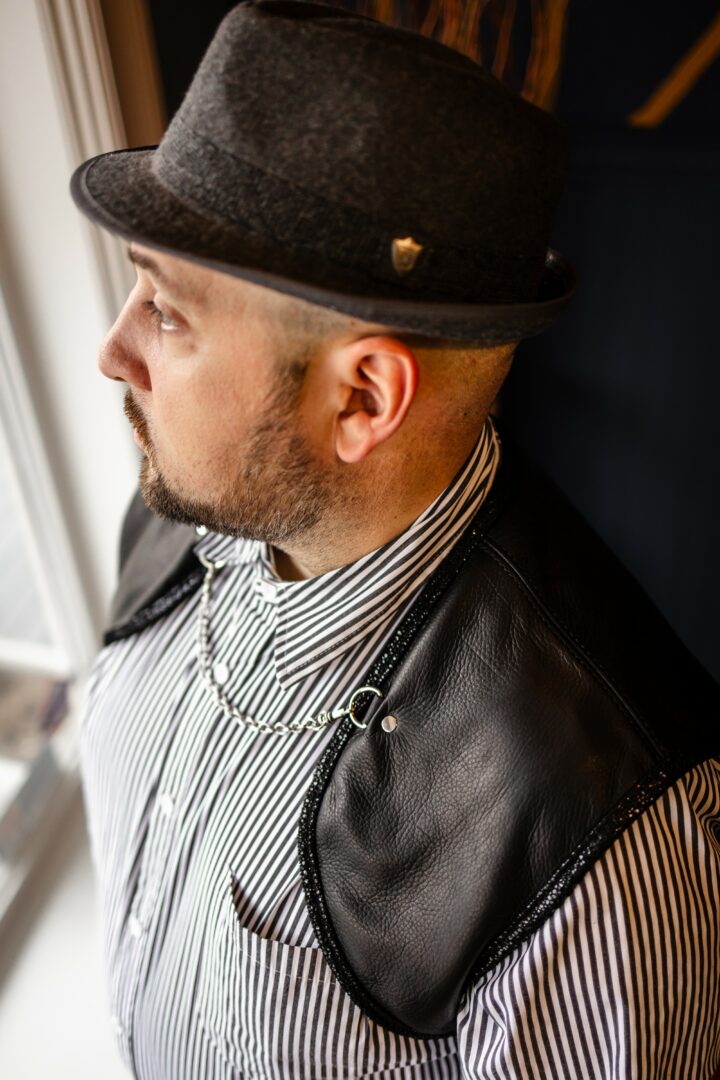
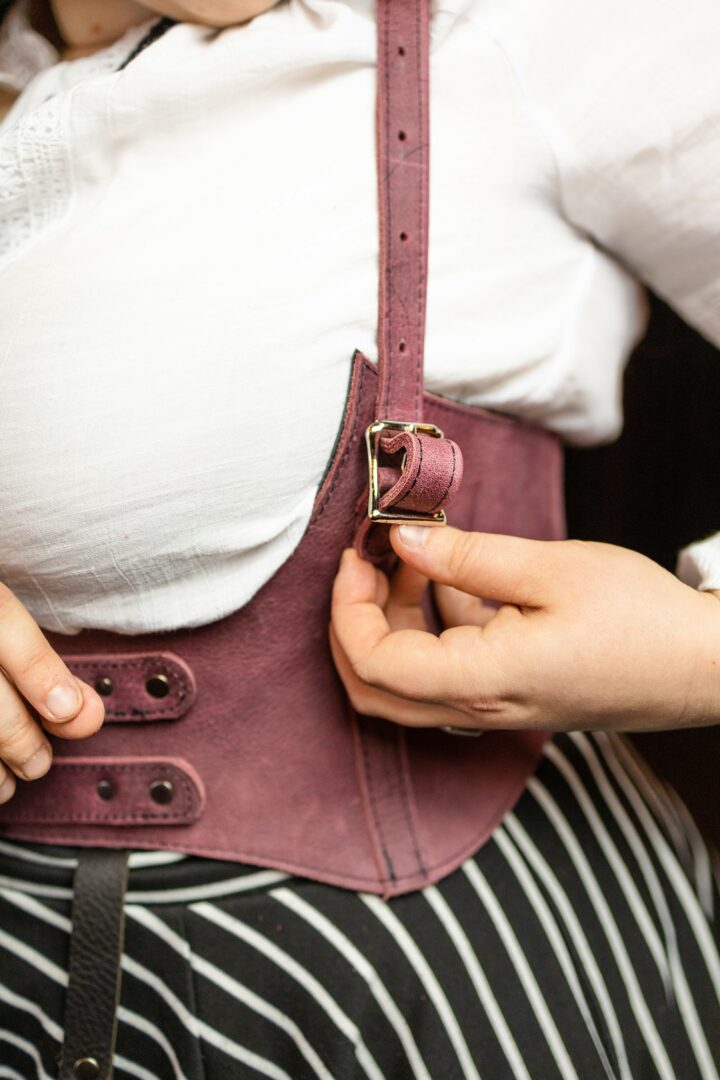
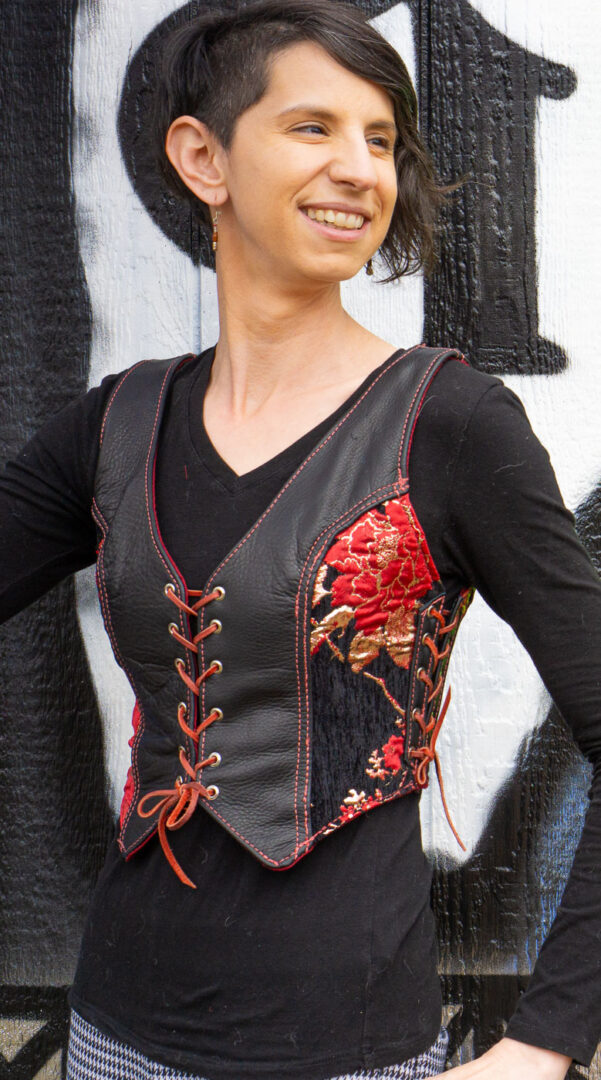
This brings me to what I am truly excited about and passionate about creating. This year I hope to develop and prototype a new line of clothing. These pieces will be a blending of history, body image and materials. I am in the process of drafting tailored duster vests, tail coats with mixed media textiles. Combining the durability of leather with the sensuality of brocade and jacquard fabrics, I am designing pieces that will both withstand the elements of everyday life but embody the grace and beauty of historical patterns. This challenge of creating something both extravagant and versatile for today’s fashion is part of the tension I love to play with when designing products.
There is so much advice out there about all the different skills and qualities folks need to develop in order to succeed in today’s highly competitive environment and often it can feel overwhelming. So, if we had to break it down to just the three that matter most, which three skills or qualities would you focus on?
The most impactful skills or areas of knowledge were oddly enough some of the most simple
Keep a growing curiosity and desire to learn. Something that catapulted my work was diving into fabric sewing and taking some basic classes. I had to manipulate a lot of the seams to fit the medium I was working with, but some basic lessons in another craft taught me worlds about my own.
Time management: I keep a timer in my studio and keep track of how much time I spend on each product, task. Set small time goals for yourself, especially with tasks that are hard to complete or get motivated to do. When I really don’t want to do something, I set a 30 minute timer. Knowing there is an end time helps push through and I often extend that timer if needed.
Learning to love your failures: I had to learn to look forward to failures, because those failures were full of lessons. I sometimes knew that when a pattern didn’t work as expected, it was a clue that I was on the right track towards something great. I keep a spreadsheet of notes that I can refer back to at the end of each year. What worked for me and what didn’t. When pattern drafting, the rich juiciness of “why” it didn’t work often was a greater win than having a finished product.
My advice for those who are early on in their journey is to learn the difference between being an artist and running a business. I had to learn to differentiate between the art that I created and the business that I needed to build to sustain the vision. My advice is two-fold: when it comes to making art, for goodness sake just keep making! Please don’t stop, keep learning, keep asking questions and keep trying, especially after a big failure, those are often the richest clues to creating. When it comes to running a business, go about it like learning a new craft. Keep asking questions and know your resources. Start with some cold-hard research and learn to love your spreadsheets.
Do you think it’s better to go all in on our strengths or to try to be more well-rounded by investing effort on improving areas you aren’t as strong in?
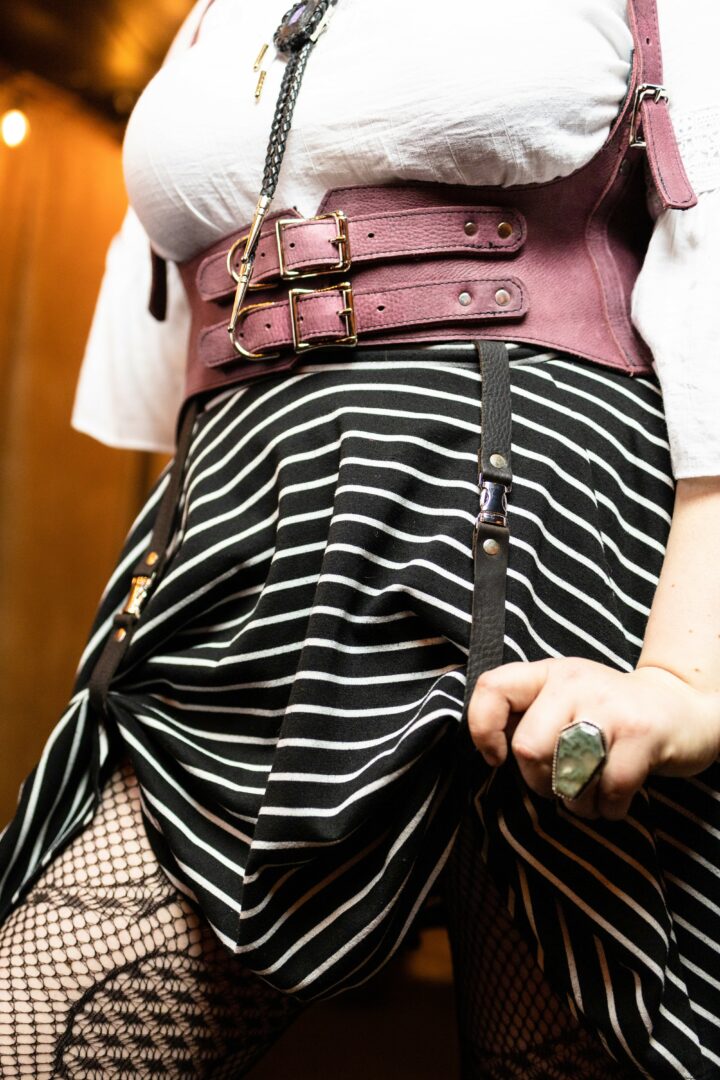
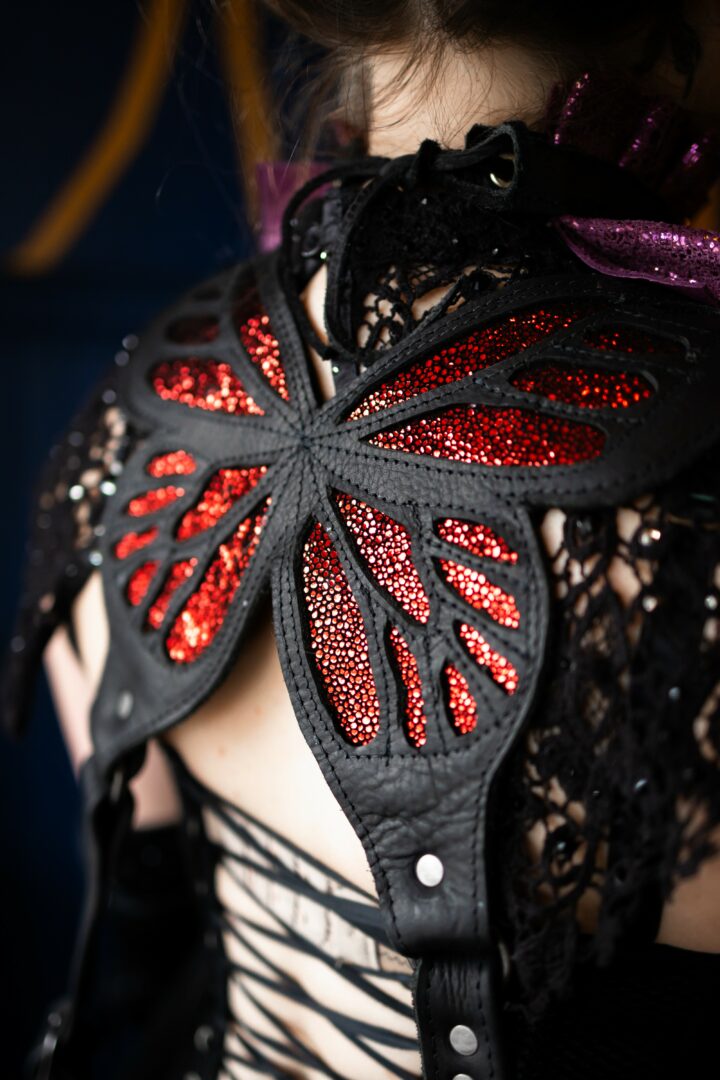
Time and time again I have learned it pays off to invest effort on improving areas I wasn’t strong in, or outright unfamiliar with. When I first started leatherwork, I tried everything I could. I learned to tool leather, mold it, hand sew, braid etc, in the beginning my works were a true experimentation in the medium and a valuable resource. I was unknowingly learning how this medium acts under different circumstances and methods of construction, testing the boundaries of what could be done and what I liked. I have since put some of these skills aside, but I learned techniques through that process I never would have gained if I only stuck to sewing clothing and basic seams or if I never branched out of traditional leatherwork into mixed textiles. Being able to pull from an array of skills has been an invaluable tool in crafting a piece with quality and intentionality.
During the pandemic I was uncertain of my livelihood because live events were historically the best places to share my work. Thinking I would need new skills to re-enter the workforce, I was able to use the time during lockdown to invest in online classes on graphic design and, to my surprise, color theory integrated perfectly into the larger picture of my business, improving my work beyond anything I could ever imagine. Gaining a grasp of how colors interact and the nuances of shade and tone is used in every single one of my works. I also started expanding my process and creating digital patterns.
Honing these different skills has added to the appearance and functionality of how well my pieces are put together. The skills that were unfamiliar or the ones which I thought were unrelatable to leatherwork have been invaluable to me as a growing artist. Spending time improving areas I am not the strongest in has given me great freedom in experimentation. This experimentation often results in spectacular pieces that truly have a unique and individual look that has defined my brand.
Contact Info:
- Website: https://dreamtenderleather.com/
- Instagram: https://www.instagram.com/dreamtenderleather/
- Facebook: https://www.facebook.com/dreamtenderleather
- Other: TikTok: https://www.tiktok.com/@dreamtenderleather
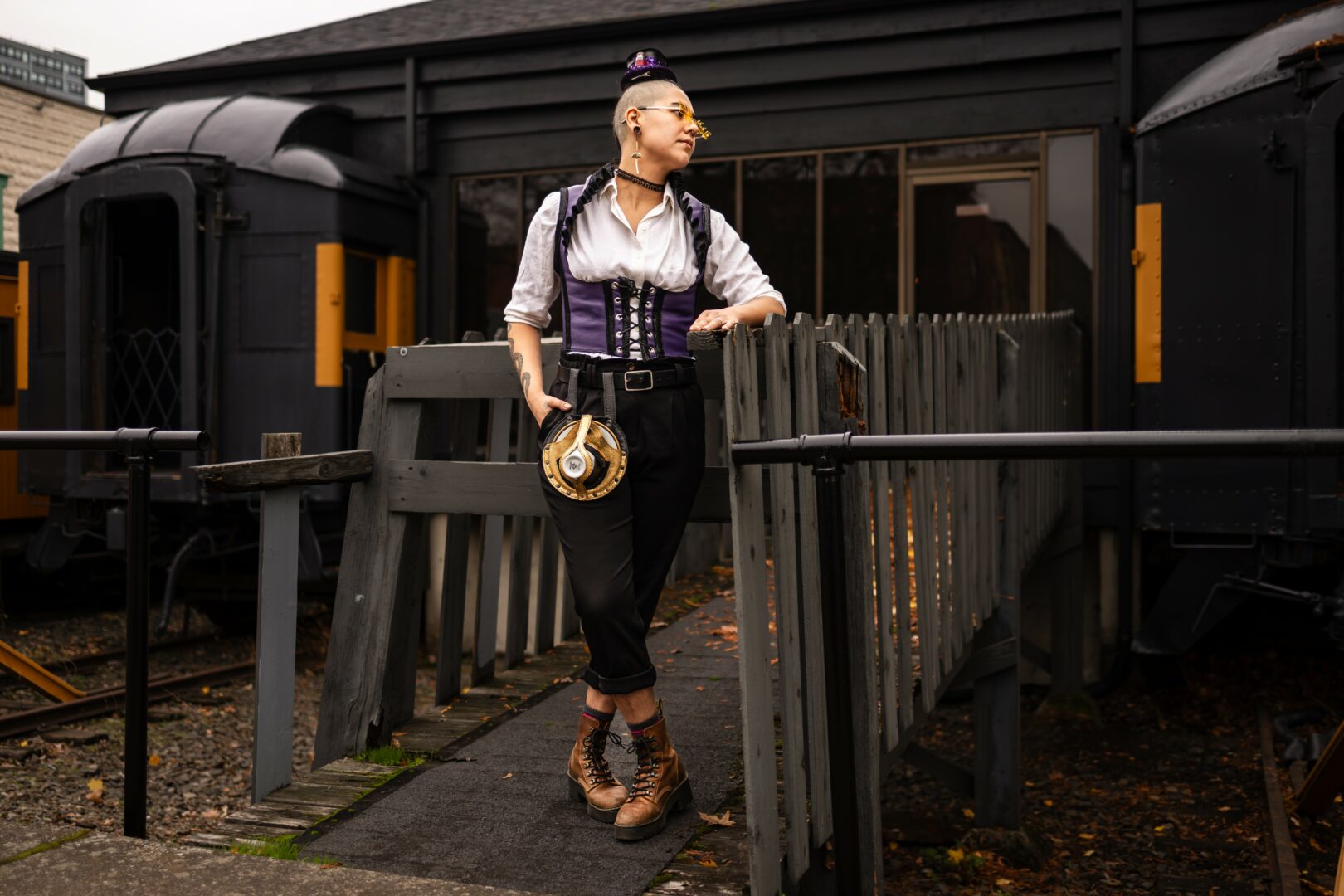
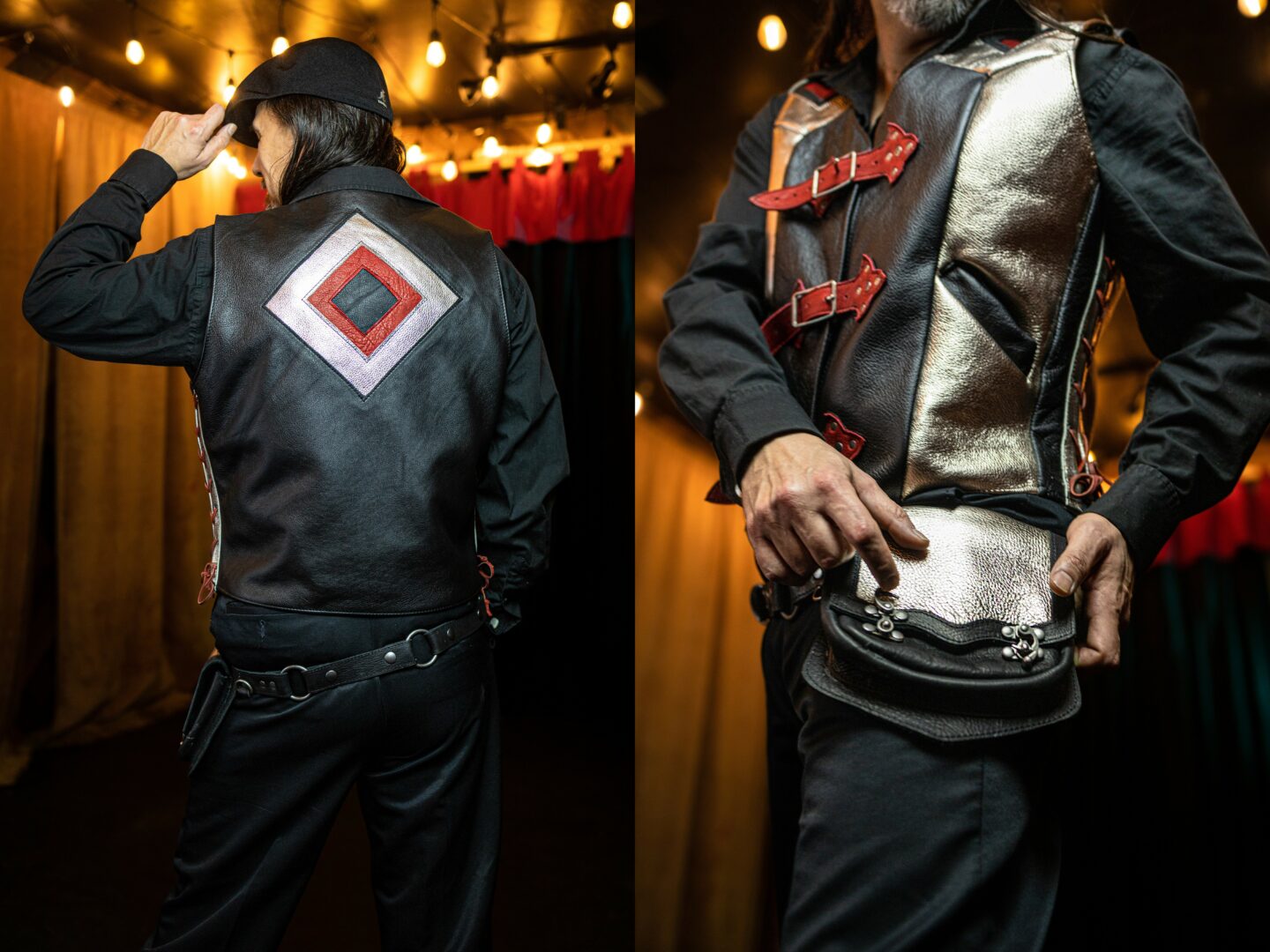
Image Credits
Faliesha Dawne (falieshdawne.com)
so if you or someone you know deserves recognition please let us know here.