Alright – so today we’ve got the honor of introducing you to Libby Reimer. We think you’ll enjoy our conversation, we’ve shared it below.
Hi Libby, appreciate you sitting with us today to share your wisdom with our readers. So, let’s start with resilience – where do you get your resilience from?
I have been sitting on this question for a while now… trying to think of what particular event or characteristic of myself I got my resilience from. I cannot just pin point one thing in my life, but in fact multiple aspects. The main one though is from my fluency disorder.
From the age of two until I was twenty, speech therapy was a constant part of my life. If you talked to me today, many would never guess I once had a severe stutter. Growing up, it was a constant struggle for me, I did not understand why I couldn’t talk like all the other kids. As I got older though I found ways to cope with it and I not let it stop me from doing what I wanted to do. I knew it was possible because my dad shares the same speech disorder as me, and he has shown me that career success is not determined by my ability to speak, but instead through my work eithic and resilience.
Fluency disorders are fascinating; each person’s experience is unique, yet there are shared challenges. In college, my curiosity led me to take a course on disorders, which included a section on fluency disorders. This class was eye-opening for me. For the first time, I didn’t feel weird or “damaged”, I learned my mannerisms more common than what I thought, and it changed my perspective of how I saw my stutter.
As an adult, looking back I realized that my stutter fueled my determination to pursue anything I set my mind to. Ironically, I chose a profession that many would consider a stutterer’s worst nightmare: a professor. A profession of nonstop public speaking. So I decided to go to grad school for an MFA to teach graphic design at the college level. Two weeks into my first semester as a Graduate Teaching Assistant at Fort Hays State University, I received an unexpected call from my advisor. The Art History Professor had passed away suddenly, and she asked if I would take over his class. That semester was a period of intense growth and learning how to manage my speech for this type of career. The following semester, I got a job offer to teach at a private college in Kansas. I couldn’t believe that at age 23, I would be doing this. I took the position, which involved teaching art appreciation, art history, 3D art, and all the graphic design courses.
Graduation was an emotional milestone. I remember going to hug my dad, both of us in tears. It was a huge moment because my educational journey had been an uphill battle. Alongside my stutter, I had several learning disabilities that made it difficult to comprehend what was being taught. I did not want these to define me. Along with a great support system from my parents and my teachers, it became the driving force behind my resilience and success.

Great, so let’s take a few minutes and cover your story. What should folks know about you and what you do?
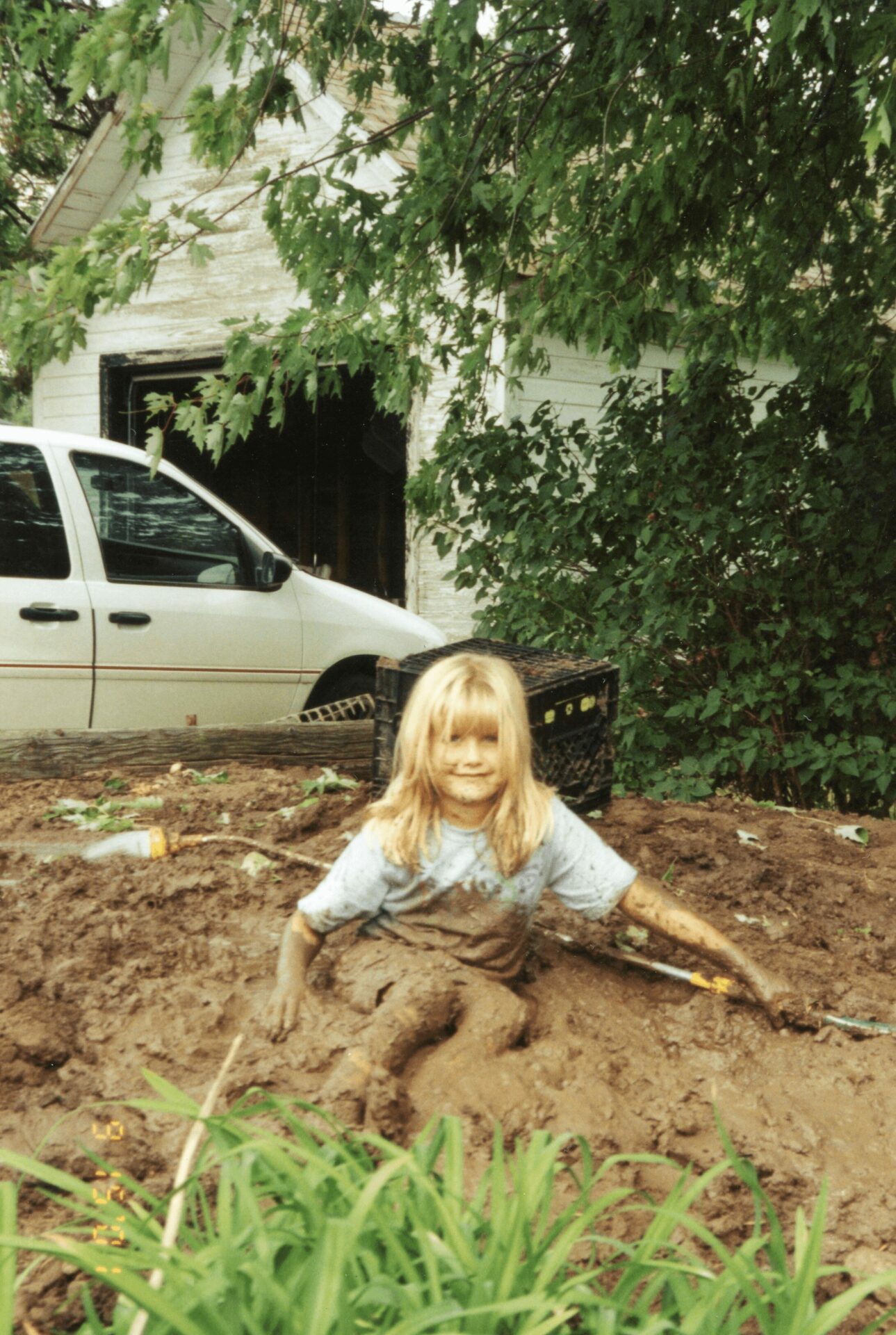
Growing up in central Kansas, my childhood was filled with outdoor shenanigans and boundless creativity. My days were spent having cookouts with my bucket calves, catching minnows and tadpoles to add to my goldfish tank, being always covered in mud, and driving around on the four-wheeler, often at speeds that would make any parent nervous. Inside, my imagination was never-ending; my mom learned to think twice before throwing anything away, as I always was ready to transform random objects into artistic creations. Id sit on the sidewalk, melting bendy straws together with a candle to form unique sculptures, one of my first foray into a lifelong passion for art.
Though I always loved the outdoors and creating art, I didn’t discover graphic design until I got to high school. It was through my involvement in Future Business Leaders of America that I came across this field, excelling at state and national competitions in art-related events. Inspired by a few dedicated teachers who saw potential in me, I realized that graphic design could be my career path.
I pursued my BFA and MFA at Fort Hays State University in Hays, KS, where I became deeply involved with the American Institute of Graphic Arts (AIGA), even serving as president and secretary of our school’s board. Visiting agencies through AIGA events, I soon discovered that my tree passion lay not in the graphic design corporate world by in helping others achieve their goals. Encouraged by my art teacher’s long-standing belief that I would make a great educator, I decided to follow a teaching path.
During my second semester of grad school, I landed a job as a graphic design instructor at a college in central KS, balancing full-time teaching with completing my MFA. My first year coincided with the onset of COVID-19, presenting immense challenges. Nonetheless, after graduating, I advanced to assistant professor and department chair of art and design.
In my third year of teaching, I faced a significant personal challenge that led me to reassess my life. For the first time, I felt free to explore opportunities beyond Kansas. This journey took me to Missouri, where I became a designer for an outdoor product company. At the time though we were unable to find a suitable replacement for my teaching and chair position. I had grown a deep respect for the school and my students so I ended up teaching my classes online while working full time corporately until someone was hired to take over.
Working in the outdoor industry reignited my passion for graphic design. Designing for brands I personally connect with has made every day at work enjoyable. I no longer feel torn between my career and my hobbies; instead, they have merged, enriching my love for what I do and allowing me to thrive both professionally and personally.

Looking back, what do you think were the three qualities, skills, or areas of knowledge that were most impactful in your journey? What advice do you have for folks who are early in their journey in terms of how they can best develop or improve on these?
1. Show respect and be kind no matter what.
– In today’s day in age, who you know gets you in the door. Showing kindness and respect to everyone you meet builds connections and relationships with people. I have no idea where I would be today if I hadn’t built those relationships with my teachers, classmates and coworkers. Surround yourself with successful people (whatever success is to you) and you too will be successful.
2. Work ethic
– A hard work ethic can allow you to overcome challenges that at the time feel undoable. Life isn’t just going to hand you what you want, it is difficult sometimes, buckle down, put on your helmet, and work! You can surprise yourself with what you can accomplish. With that being said though, there is a balance that has to be had. Even though I don’t have a family yet, this idea has always stuck with me; “10-20 years from now, the company you used to work for will not remember or know that you stayed late, but your kids will.”
3. Trust that God knows what he is doing in the current season of your life.
– God has shown me time and time again during times of heartache he had a bigger plan all along. Every time it has been for something way better than what I was previously doing, personally and professionally. There were always lessons to be learned through times of difficulties and disappointments that I would not change because they challenged me to grow in my areas of weakness. In turn, weaknesses become strengths.

What was the most impactful thing your parents did for you?
At the time I hated it but they made me work for anything I wanted to do. I spent many hours, pulling shingles off of a house, pulling carpet, mowing, painting, etc to earn money to pay for dance competitions, sports tournaments, or school trips. It taught me at a very young age the importance of working for something you want and the value of what you do with your earnings. It almost gives what you want more of a purpose because you know how hard you worked to get to it.
Contact Info:
- Website: https://libbyreimer.com
- Linkedin: https://www.linkedin.com/in/elizabeth-reimer-mfa-ba4526106/
- Other: MFA Thesis Catalog: https://scholars.fhsu.edu/theses/3180/

so if you or someone you know deserves recognition please let us know here.