We caught up with the brilliant and insightful Maggie Bathory a few weeks ago and have shared our conversation below.
Maggie, so excited to have you with us today. So much we can chat about, but one of the questions we are most interested in is how you have managed to keep your creativity alive.
The art of creativity and living a creative life are grounded in maintaining an open mind and being receptive to new ideas. By adapting these traits, ideas can flow more freely because we are better able to acknowledge and listen to our imagination. Getting there requires a paradigm shift, and establishing habits like removing negativity from our lives, practicing meditation, focusing on our breath, having a quiet place to create, and prioritizing time to make art. When it comes to making rugs, I pursue creativity by making it integral to my daily life. I exploit creativity by doing things differently: using different subject matters, experimenting with materials and techniques, auditioning various color palettes, and observing how the size of my canvas impacts the overall design. These allow me to see my works in new ways. Some of my best ideas happen when I am uninhibited because I’m not thinking about the daily grind or what people want. I make things for myself and for the sake of creating. Living a creative life is also enhanced by finding beauty in the smallest of things. When I go hiking, I stop to look at the petals of a flower, the different colors that make up an insect, or the lines that form the mountains. My mind automatically slows down and focuses only on what I am seeing in the moment and then it remembers those images for later use. These snapshots are recalled later when I sketch or make a rug. Over time, my appreciation for the simpler things begins to dominate my views on life and how I create. It even affects how I interact with people and how I move through life.
Something that is very important to me is to surround myself with people and things that inspire me. Being around other creatives, especially people in the rug-hooking community, allows me to interact and discuss ideas, get feedback, learn new things, and to make friends. For me, that sense of community is like oxygen and reduces stress. It’s a safe haven where rug-hookers share ideas and inspiration about one common interest. We all need a safe place like that. There used to be a time when I really didn’t know what inspired me, and then I started paying more attention to what excited me and began pursuing those things. I have learned a great deal about myself and what I like and dislike. It requires listening to my subconscious, being honest with myself, and then doing the work.
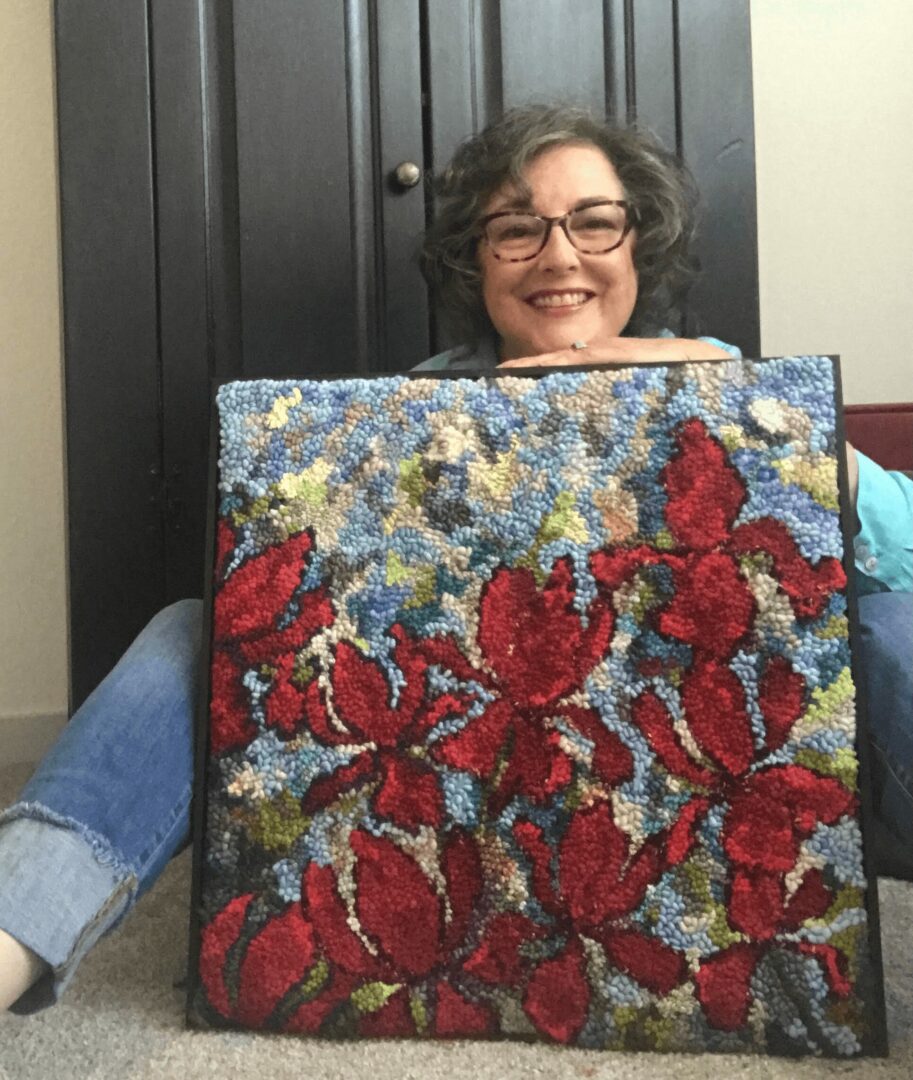
Sharing rug-hooking and teaching others are beautiful ways of connecting with people and keeping this old craft alive for future generations. There’s a lot of excitement and enthusiasm that comes from learning something new. Rug-hooking is very easy to do because it consists of knowing how to do one “stitch.” Pulling yarn or a strip of fabric through foundation cloth is cathartic and relaxing. Each individual controls how low or high to make the loops. One of the things that makes rug-hooking so interesting is that even though there is one “stitch” to learn, each individual leaves their own artistic mark when they hook their rugs. There are so many styles of rugs that are made using this technique and they can be vastly different. Rugs can be small to very large, utilitarian to decorative, and they can be made into pillow covers (which is something I often do), table runners, wall art, trivets, or mug rugs. When I teach someone how to hook rugs, I feel a sense of satisfaction and belonging to a community knowing that I am passing on knowledge to a person who might just share it with yet another person. This is very important to the human experience. That feeling that a person shares a common interest with another brings us together. Something that I tell people when they are just learning is to be patient, hook a little bit every day, start small, there are no rules, and to reach out when they get stuck.
Establishing a daily routine is essential when it comes to prioritizing my art. My actions are deliberate, so that I plan out my daily tasks and make a list of what I need to accomplish. It took a while to get used to creating every day, but when it became a part of my daily routine, it was easy, and I welcome those moments when I sit at my frame to work on my rug. Learning techniques and researching ideas also become very much a part of the creative journey, so I listen to podcasts and read books about art, visit exhibits, and I talk with other artists. Even if it’s just for 15 minutes, once I sit down at my frame, and pull that first piece of yarn through the linen, physically and mentally I shift into a calmer state. It’s the simple act of “making” that keeps my creativity alive. Physical and mental wellness enrich my creativity through activities like meditation, stretching, cardio, and weightlifting. When my body is active, I have mental clarity and I feel good. Feeling good boosts my creativity in a big way, and I think it’s often overlooked by creatives.
Appreciate the insights and wisdom. Before we dig deeper and ask you about the skills that matter and more, maybe you can tell our readers about yourself?
At 60, I am looking forward to growing my art and to begin exhibiting my works locally. For me, improving my art means that I am always learning and changing. It is never good to remain comfortable or static. Growth requires open mindedness and progress, which allows me to see life through different lenses. Even though I still work, and likely will for the foreseeable future, I prioritize my art just like I prioritize my physical activities and mindfulness. These are all a part of my life and help shape me as a person. Throughout my life, I have found that adapting to cultural shifts through love and empathy has developed a more accepting attitude towards humanity and a calmer and more resilient lifestyle. These are important traits not just for my life, but they extend into my creativity. I find my works are less rigid and constrained. By changing my mindset and accepting the changes that happen around me, my subconscious is calmer, and creative flow comes easier. The angst that comes with resistance is gone. My lifestyle and worldview affect what kind of art I like and how I view works of art. Lifestyle and creativity work in tandem; both interacting with one another.
Working a full-time job can be stifling because of the “9-5” workday. Sometimes, I get creative ideas for a new design while I am busy at work, but I am unable to act on it because my focus needs to be on work. I might have the opportunity to jot down a bulleted list about my idea, but I can’t go pull colors or sketch out the design. This can be frustrating. I think balancing a work life with a creative life can be challenging because there is a certain element of conflict between the two. The tasks associated with my work are often repetitive and technical; not to mention, demanding. Whereas, creating art is the exact opposite offering freedom, experimentation, relaxation, and spatial awareness. Having sufficient time to create is also a big factor when it comes to honing my skills and building an inventory of art works. To become a really good artist takes tremendous effort and lots of practice. The creative process requires making things over and over again. Working a full-time job can rob me of the time I need to improve my skills. I need the time to reflect on ideas, plan, do the actual part of making, wait for the design to reveal itself, change the design repeatedly until I see the results that please me, and then finish the piece. Often, I send photos of my pieces to my peers, so they can review it and provide me with feedback. This part can be hard, but honestly, I value feedback, good and bad, because it helps me to see what others see in my works. Based on some feedback, I go back to my designs and re-evaluate them.
My rugs have evolved from historical reproductions that I made from 2009-2021 to contemporary abstracts and impressionism that I currently make. Despite my love for the old primitive rugs, my rugs always had a more contemporary style. I was fighting what I liked with my inherent nature to make contemporary rugs. If it’s one thing I’ve accepted about myself, it is not to fight what comes naturally. I had to accept what came naturally and what my subconscious was telling me. This is where being honest with myself and knowing myself are crucial to my artistic development. That is where the artistry thrives, and that is where the excitement happens. When I am excited about making a rug, the ideas and creative flow happen serendipitously.
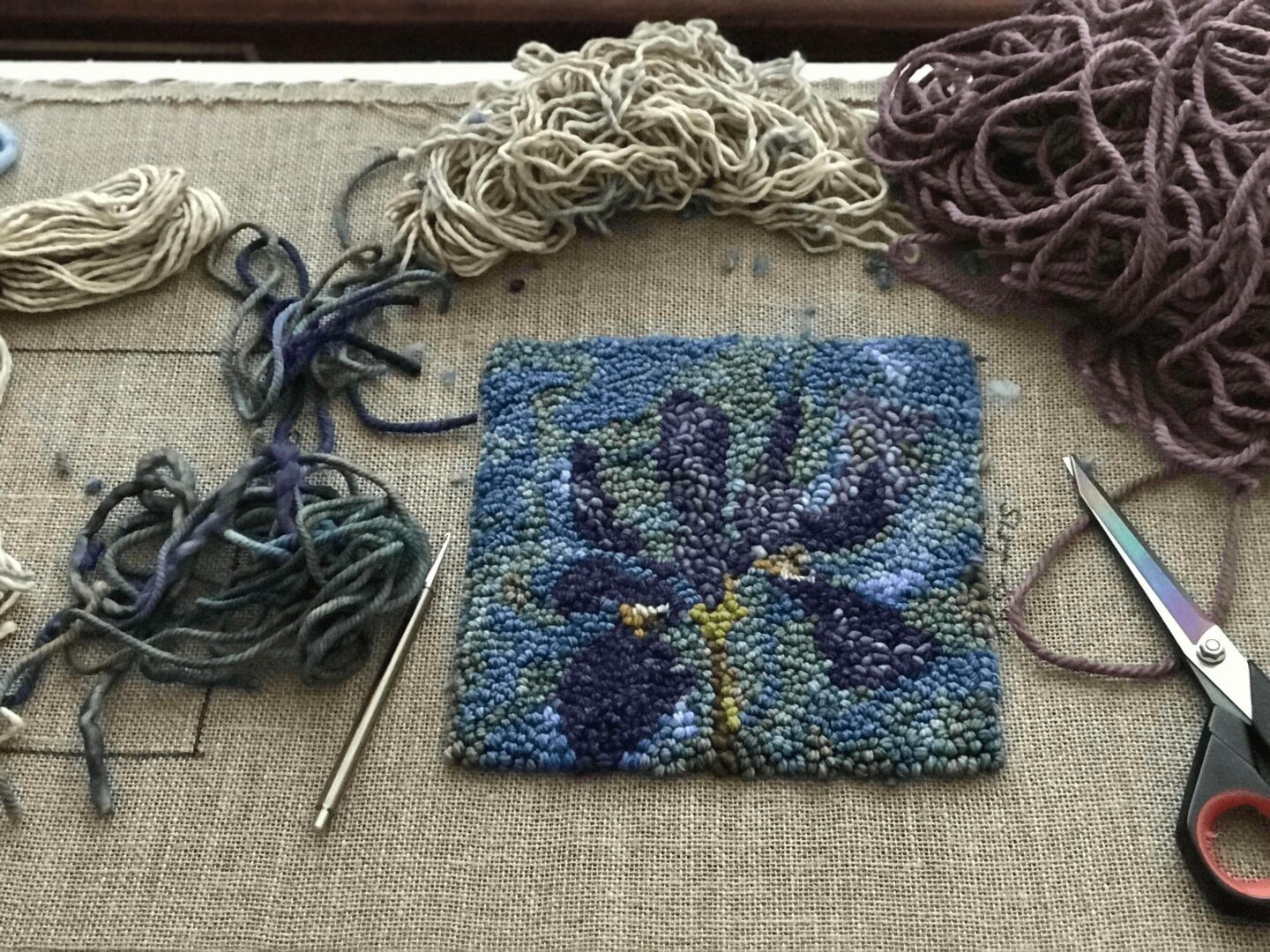
Being persistent requires time, patience, new knowledge, and a lot of practice. Recently during a 3-month period, I repeatedly sketched Irises and made numerous small rugs based on those sketches. It took several iterations until I achieved the design that appealed to me. That may seem daunting, but the act of practicing and honing a skill repeatedly is an act of patience that comes with high rewards of accomplishment and satisfaction. Sometimes in the fast-paced world of instant gratification that technology brings, having to make something that requires a slow repetitive process can intimidate and turn some people away from making art. I want to make beautiful rugs and share them with others, so they have the opportunity to see what I see. Again, it’s one way of connecting and maybe even inspiring others to explore their own creative journey. We need more of this!
I’ve made good rugs and bad ones. I’ve learned more from the bad ones because I discern design elements, perspective, contrast, and how I used color, which help me to make better art. I take those ideas and apply them to my next design. Asking myself questions like how I could have changed the location of motifs, colors, or textures forces me to think of new ideas and to see the overall design differently, and it pushes me further to see where the design can go. This process reveals things about me that have been lying dormant and expands my awareness. Seeing designs evolve over time is a renewal and regeneration of myself and the designs I create.
Looking back, what do you think were the three qualities, skills, or areas of knowledge that were most impactful in your journey? What advice do you have for folks who are early in their journey in terms of how they can best develop or improve on these?
One of the greatest thieves of time and creative flow is the Internet. Aimlessly scrolling through social media is a time-hog and zaps creative flow. To shift my focus from being bombarded with information to a calm Zen-like mindfulness requires discipline. I put away the devices, grab a sketchbook, and I take a few minutes just to focus on my breath. Then I physically move myself to a quiet place where I can focus on my art. It can be a cozy corner in my favorite chair, or I often go into my studio where I have plenty of space for my frames and materials. Being outside surrounded by trees is yet another way where I find inspiration and a sense of calm. My heart rate slows down and ideas flow easily when I am listening to the birds in the trees.
As a single parent, making the time to grow my art was very difficult. There were times when my schedule was full, and I was too exhausted to even have a single creative thought. On occasion, I was able to steal away some quiet time for myself to make something small. These moments offered solace and solitude, but I didn’t feel like I was growing my art. The one thing I didn’t know at the time was that I was very much growing my art; small steps that needed to be taken to bring me to where I am today. Over the years, as I had more free time, I took in-person and online courses, which instilled discipline and excitement to keep going and keep creating. Some courses were directly related to hooking rugs, while others were in painting, sewing, and pottery. I found it was important to go out of my comfort zone and try different mediums because there’s a lot of learning that happens there.
As a creative, I learned there will be times when I get blocks, or I just don’t feel like making anything. These are great opportunities to explore a new medium, change up my exercise routine, get outside, doodle in my sketchbook, or do free-hooking (that’s where I hook a design that has no established pattern or color-planning; it’s simply a brain dump of my subconscious). Some tips that have helped me include:
• Moving my body like walking/hiking, cycling, weightlifting, dancing, etc.
• Practicing meditation and breathing exercises.
• Spending time outside and exploring the beauty found in nature.
• Getting out of my comfort zone and taking art classes in different mediums.
• Finding a quiet corner or room where I can dedicate that space to creativity.
• Reading books about art and creating a habit. A big part of creating is just showing up, so sticking to a routine of when and where I create is important.
• Finding camaraderie with other creatives. I belong to different creative groups that meet in-person or online. I also go to museums and listen to podcasts. Being around like-minded people can really boost motivation and inspiration.
• Trusting myself. Not everyone has to like my art. It’s important that I like what I make.
• Being deliberate with my time and where I focus my attention.
• Putting down my devices and turning off notifications. These are distractions that inhibit my creativity, divert my attention, and add stress.
Looking back over the past 12 months or so, what do you think has been your biggest area of improvement or growth?
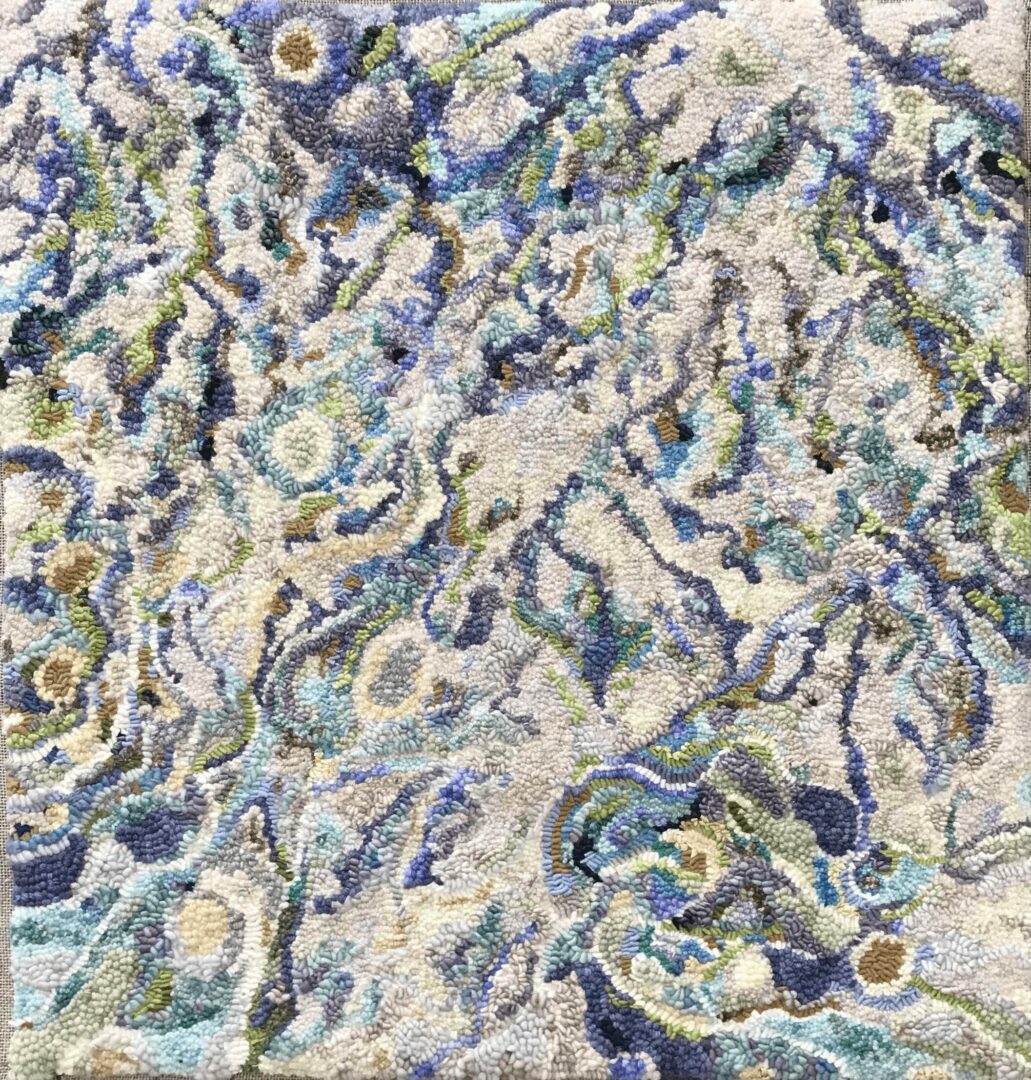
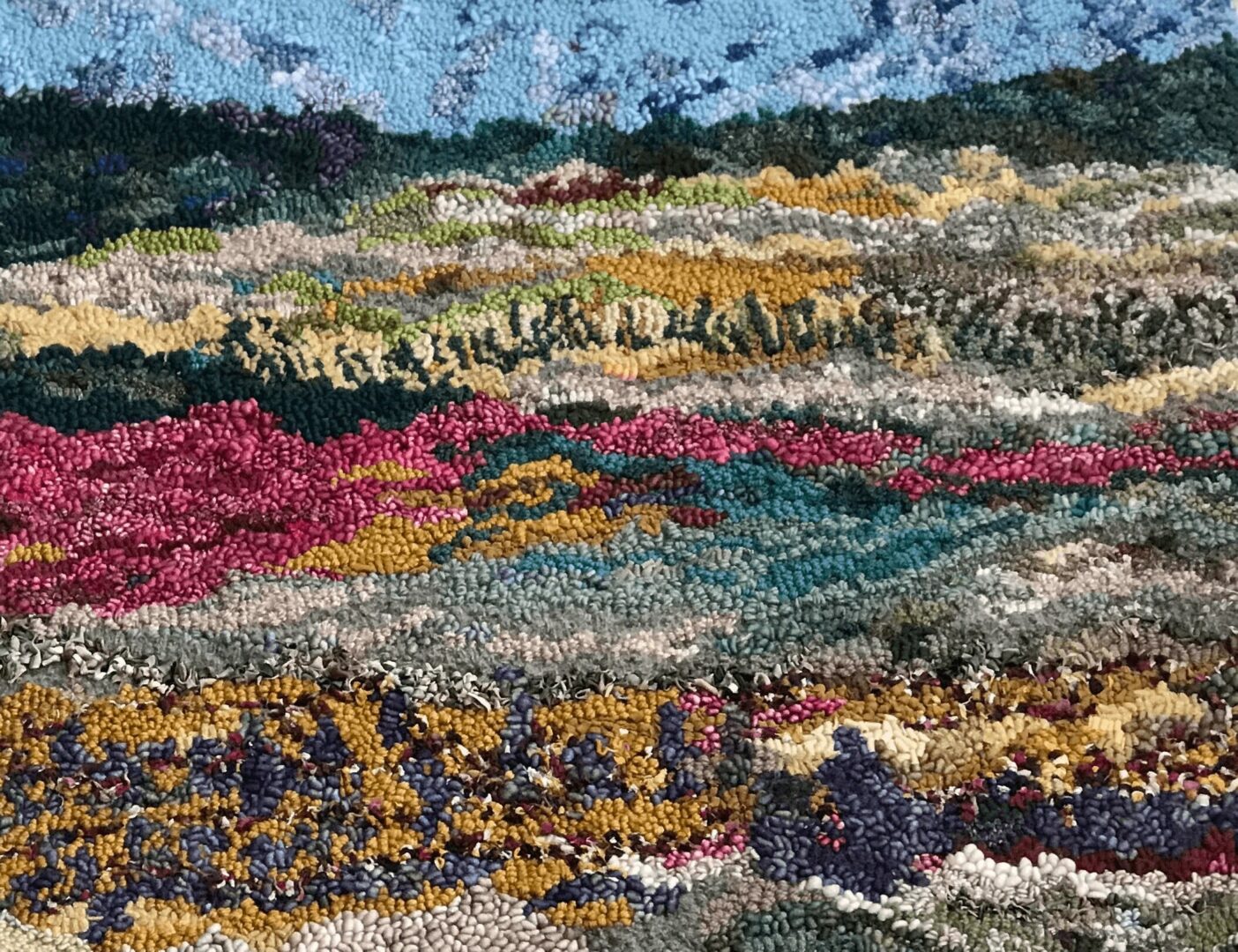
Robert Henri said, “The object isn’t to make art, it’s to be in that wonderful state which makes art inevitable.” Setting aside time every day to make rugs has improved my skills and afforded me the opportunity to develop my own style. The biggest improvement has been in my confidence, which has profoundly affected how I observe the mundane and transform it into something exciting. For example, my landscape rug (Great Spirit) was inspired by one of my favorite hiking locations in the fall. Most of the vibrant greens had faded leaving the surrounding area looking somewhat drab with greys and browns. The mountain range was dotted with deep greens of conifers and some golden Aspen. This description does not depict my rug, which shows vivid colors that aren’t necessarily found in a high-desert environment. I have yet to see a field of fuchsia in the high desert late in the fall. By using vibrant colors mixed with earth tones, I combined the real with the imaginative and created a feeling. When people see this piece, they pause and look at the colors, textures, and lines that comprise the landscape. They comment on the vivid pinks and deep purples juxtaposed with the greens and golds. To add interest and a connection to this work, I scavenged my closet and found two old scarves and a cashmere dress that I no longer wore. The colors and textures were ideal for what I wanted. And now those textiles are forever woven into this large rug. When I look at the rug, I see the colorful beauty, fragility, and diversity of our planet—She is a Great Spirit.
Over the last year, I have done a much better job of developing a routine to hook on a daily basis. By prioritizing my needs, I realized how beneficial it was to make time for what brings me joy and fulfillment. As a result, I have improved my skills and grown more confident when designing my rugs. Over time, a more creative lifestyle evolved and ultimately, changed me.
Living creatively has also benefited me because it is easier for me to achieve a creative flow when I make a rug. At the end of my work day, I yearn with anticipation and excitement to sit at my frame and work on a project. It’s soul food. It’s a safe haven where a metamorphosis of colors and textures collide. Where the only critic is me. If I don’t like something, I can swiftly change it by pulling out my stitches. This is when my imagination and subconscious are uninhibited, and ideas flow easily. There is no struggle with conflicting ideas. The process is calm and easy. My focus is only on the present and what my hands are doing. All of my daily concerns slip away. There are no external distractions. My mind is paying attention to how I should express my hidden thoughts and emotions through colors and shapes. Watching a design unfold reveals my thoughts that are locked away.
And for those times whenever I get stuck and can’t get into a creative flow, the best thing to do is to do nothing. I allow myself to be lazy to clear my mind and let it wander. I no longer feel guilty about being lazy. My mind and body need rest. Some of my best ideas happen when I am doing nothing because a relaxed mind allows me to be more receptive and opens the gate to better awareness of my thoughts. These thoughts are not static, they evolve and that’s what makes creating art so liberating. Things change. To me, art is a metamorphosis of thoughts and expressions.
Contact Info:
- Instagram: @maggiebathory
- Facebook: https://www.facebook.com/FiberArtistPapillion
- Linkedin: https://www.linkedin.com/in/maggie-bathory/
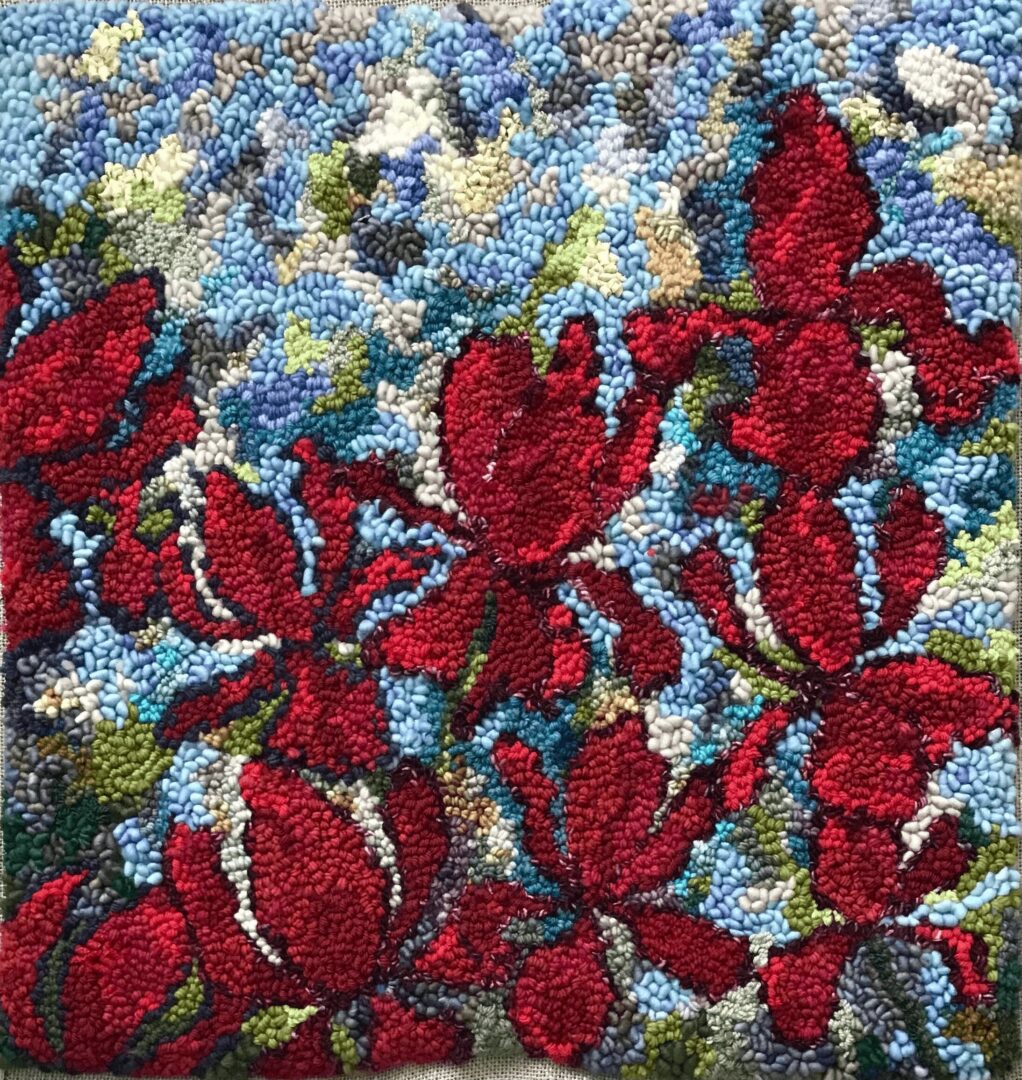
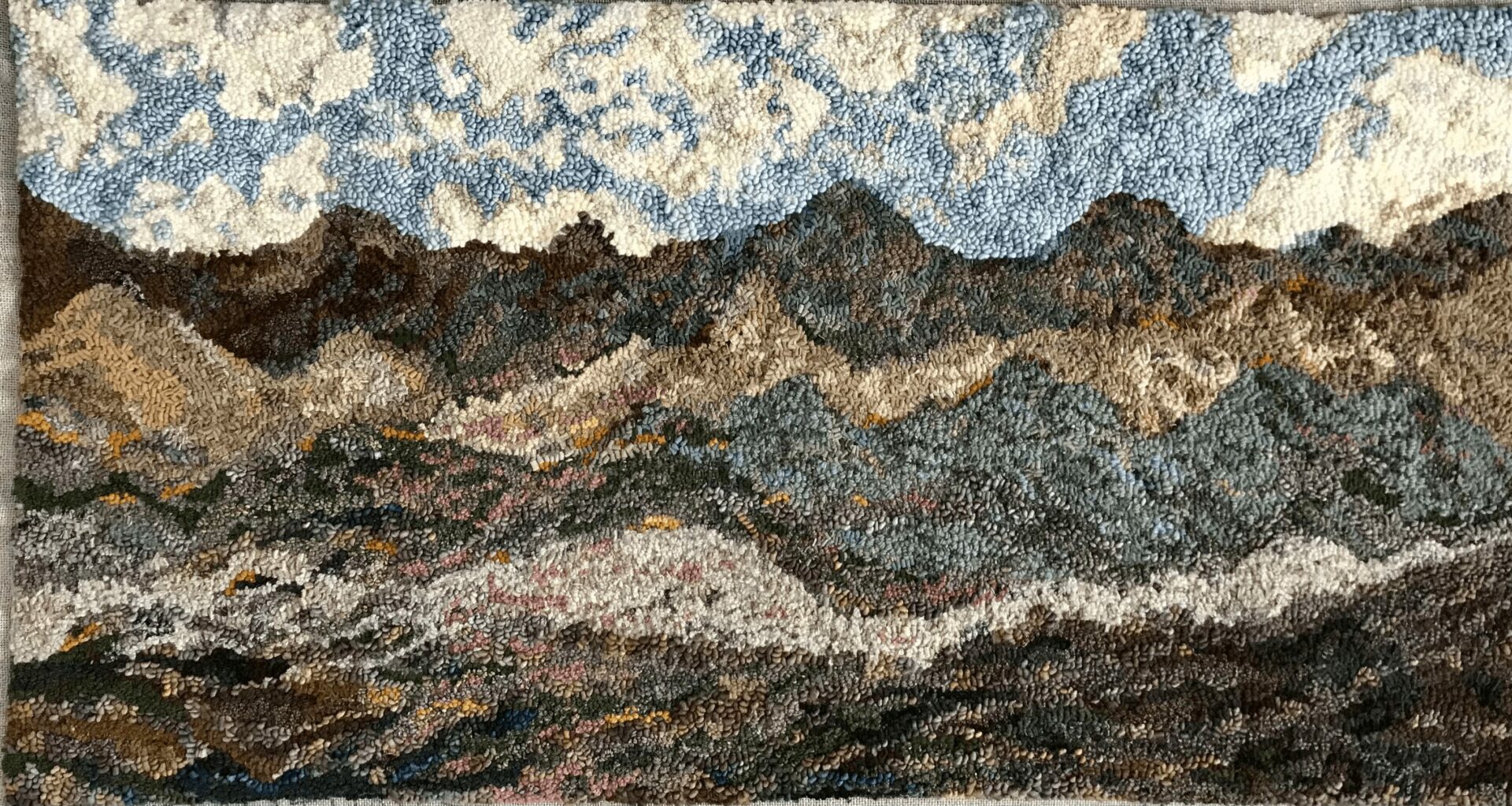
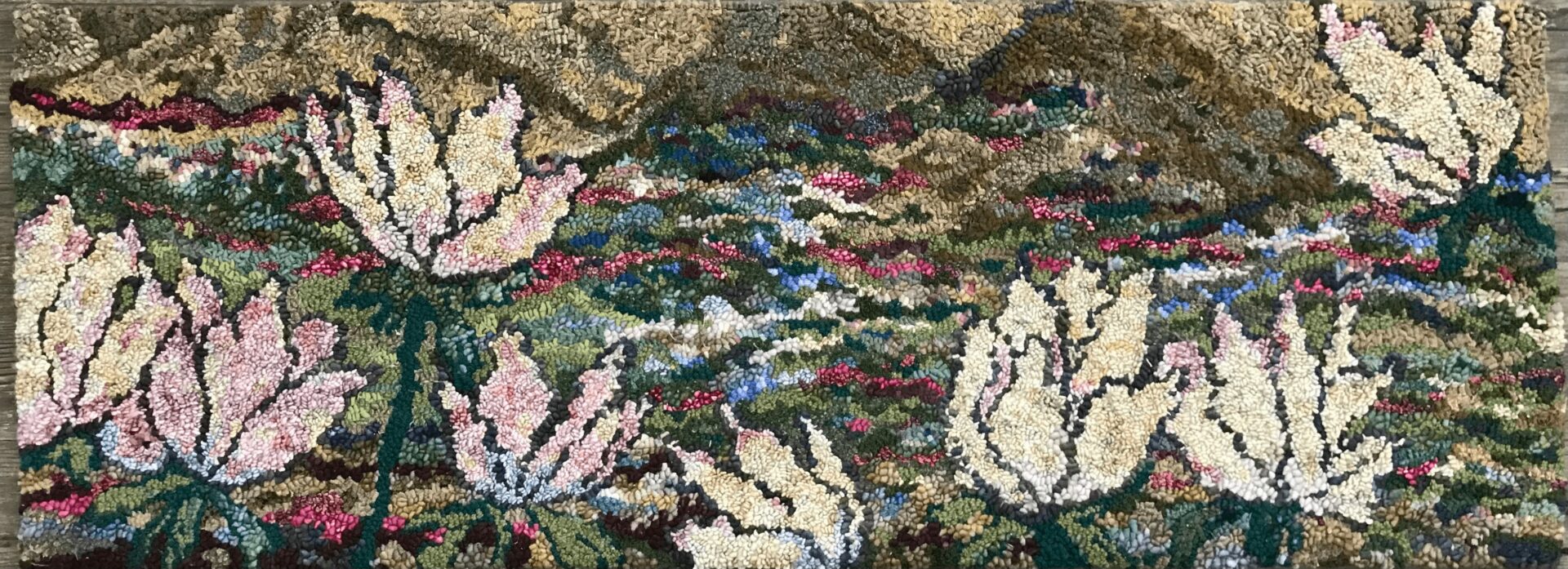
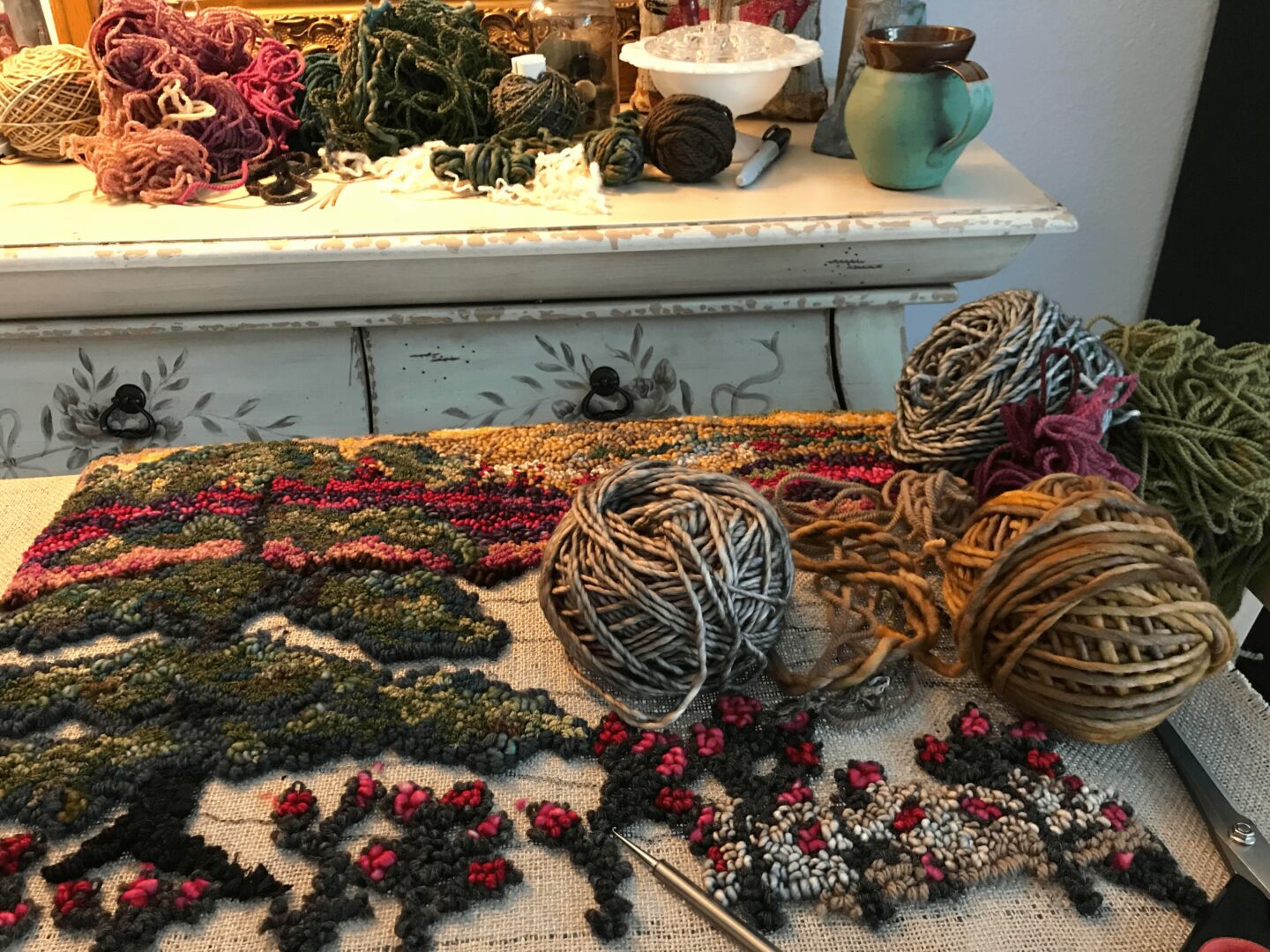
Image Credits
Maggie Bathory
so if you or someone you know deserves recognition please let us know here.