We recently connected with Margot Fass and have shared our conversation below.
Margot, so good to have you with us today. We’ve always been impressed with folks who have a very clear sense of purpose and so maybe we can jump right in and talk about how you found your purpose?
At 84 years old, I’ve done a lot of things, and I think it’s fair to say that my purpose has always been tied to whatever I was doing at the time.
The vision that kept me moving forward began when I was 17. My stepfather, persistent in his demands that I decide “what I wanted to do when I grew up,” unwittingly led me to it. While we were living in the Philippines because of his work, I read an article in The Manila Times that inspired me to visit a psychiatric hospital. I saw women in chains, sitting on concrete benches in a large, circular room, surrounded by upper-level cells. Their cries, moans, and muttering left a deep impression on me. At that moment, I had a vision: one day, I would become the director of a psychiatric hospital.
When it was time for college, my stepfather refused to pay, telling me I’d just “get married and have children.” I worked my way through school, did get married, and raised children. Along the way, I worked in education, explored medical education, and began dabbling in art. But that vision never left me. By 1955, I decided to work toward getting into medical school—a goal that took me two years to achieve.
Eight years later, I completed my residency and became a psychiatrist, guided by that bright vision from so long ago. Eventually, I did become the director of a psychiatric hospital—but the dream didn’t last long. After only a few days, I realized I hated it.
As a child, my mother told me I was destined to be a great artist. The pressure crushed my soul, and it took years to overcome my fears. I finally ventured into art before and after medical school. Knowing I couldn’t support myself as an artist, I pursued medicine, starting at age 37.
Ironically, my current purpose found me.
In my spare time, I returned to the studio, learning how to truly draw and paint. For reasons I still don’t fully understand, I began painting frogs. My husband gave me Elizabeth Kolbert’s article in The New Yorker called The Sixth Extinction, which deepened my fascination. Frogs, those resilient little creatures, have survived countless natural disasters since before the dinosaurs. Now, humans are driving them to extinction. It didn’t seem fair, and I felt compelled to help.
I discovered SAVE THE FROGS! and immersed myself in learning about amphibians. I kept painting and eventually wrote a book, Froggy Family’s First Frolic, which took a year to complete.
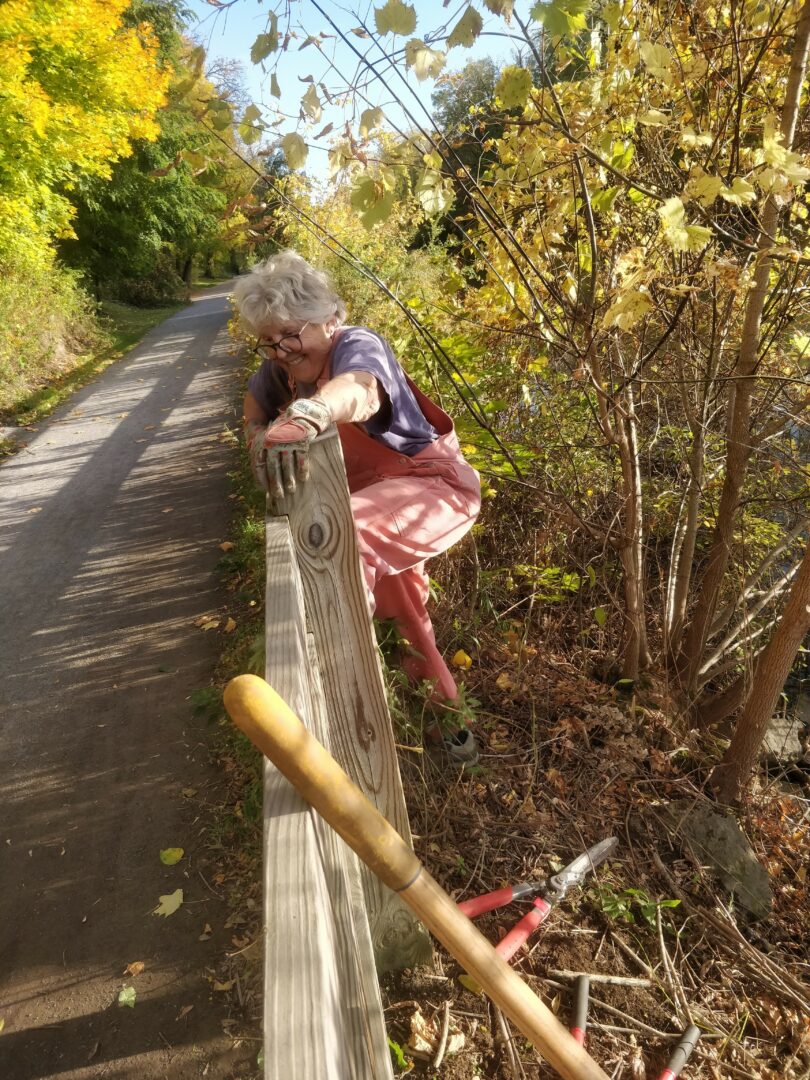
When our daughter moved from North Carolina, she found a house along the Erie Canal Towpath with an outbuilding that was falling apart and a yard overrun with non-native plants and chemicals. Renovating the property combined two things I loved: gardening and transformation. The little 10×10 house struck me as the perfect place for my frog paintings, frogabilia, and book. A friend, who had helped design the book, suggested using it as an educational space.
Thus, A Frog House was born. We officially opened on October 21, 2018, hosting events, activities, and writing blogs. With support from Kerry Kriger of SAVE THE FROGS!, we incorporated as a nonprofit on February 20, 2012. Since then, A Frog House has become a hub in Pittsford, hosting three or four major events annually and dozens of summer weekend open houses, featuring a frog pond and sustainable native gardens open to all.
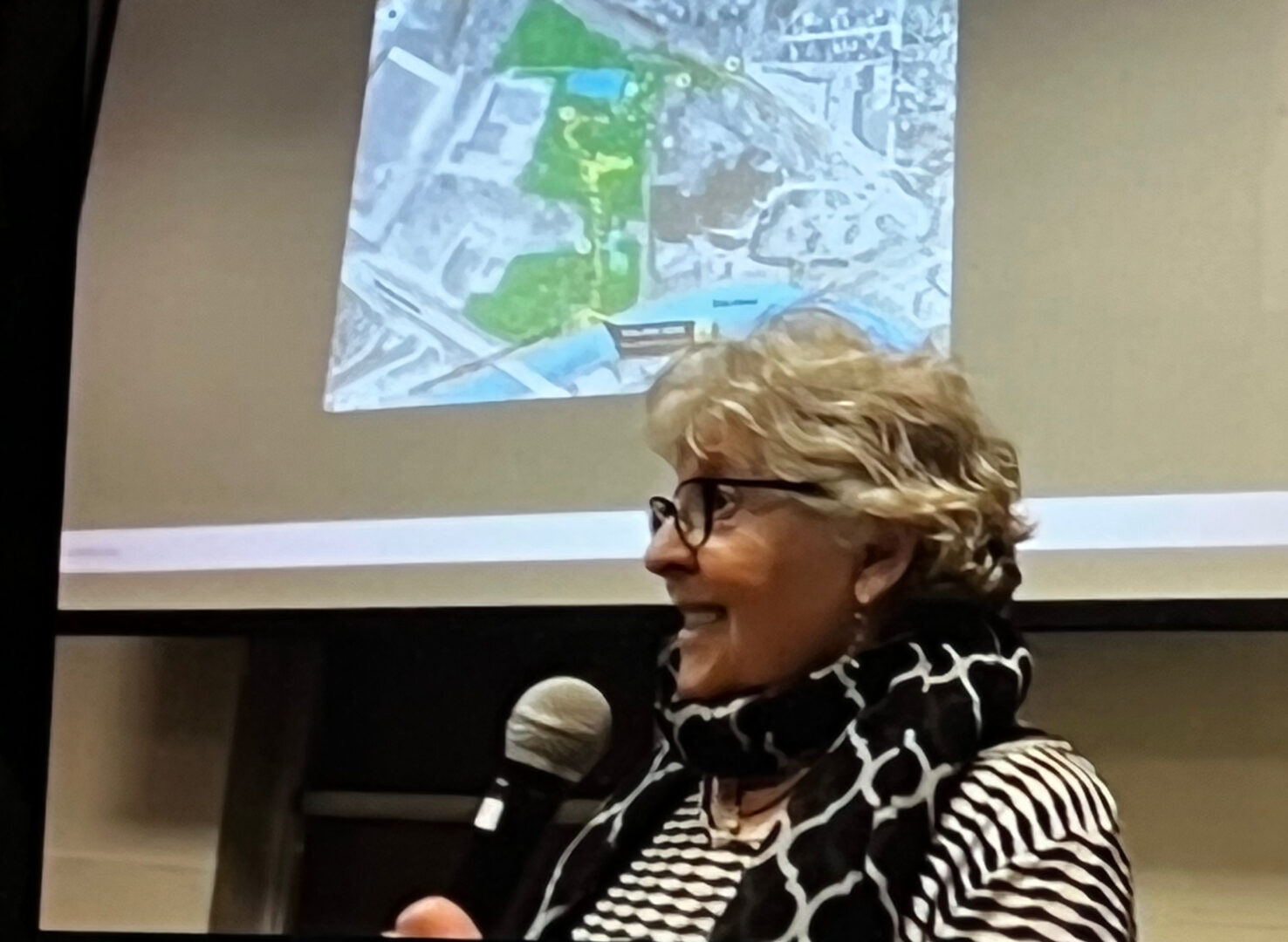
Last year, we set our sights on building or restoring wetlands, starting with the Robert C. Corby Arboretum and Wildlife Sanctuary. This spring, we’ll break ground on at least two, if not three, vernal ponds.
Between my small private psychiatric practice and this labor of love, my days are wonderfully full. A Frog House has allowed me to integrate many facets of who I am into a unified whole: activist, artist, author, educator, presenter, and psychiatrist.
I’m currently considering illustrating a poem, The Princess Frog, written by a friend. It seems my purpose, after all, is to do it all!
After a difficult journey of overcoming abuse and grappling with the realities of violence and hatred in the world, I’ve come to a powerful conclusion: the best way for me to live is to F.R.O.G. — Fully Rely on Goodness. By focusing on putting one foot in front of the other and doing the next right thing, I can offer my own little ounce of strength to care for others and nurture our planet.
Thanks, so before we move on maybe you can share a bit more about yourself?
Honoring Life and Learning—One Frog at a Time
A Frog House has become the perfect expression of who I am—activist, artist, author, educator, presenter, and psychiatrist—bringing these facets together to advocate for amphibian conservation and community well-being. This integration has proven profoundly good for mental health, my own included, as it nurtures a deep connection to nature, fosters collaborative action, promotes lifelong learning, and celebrates shared experiences.
Connecting to the Natural World
Visitors are often surprised to learn frogs are endangered. Through hands-on education and activities like building frog-friendly spaces and petitioning for local conservation efforts, we inspire both children and adults to protect these vital creatures. Amphibians are keystone species and bioindicators, signaling the health of our shared environment. By focusing on their survival, we address broader ecological challenges.
Taking Action Together
Our thriving volunteer community fuels impactful collaborations. Partnerships with scout troops, schools, and environmental groups have enabled initiatives like planting white pines and creating vernal ponds. These efforts, alongside our Frog Blog, newsletters, and presentations, amplify our reach and strengthen our mission locally and beyond.
Learning Through Engagement
Since 2019, A Frog House has hosted diverse events, from Save the Frogs Day to open houses and educational tours led by experts like Tom Biebighauser. These gatherings teach conservation practices, ecological balance, and the importance of creating sustainable habitats.
Celebrating Community
We bring joy and awareness to conservation through events like our Froggy Family Fun(d)raiser and annual galas. These celebrations unite art, music, and environmental advocacy, raising essential funds for projects like the vernal ponds at the Robert C. Corby Arboretum and Wildlife Sanctuary.
A Sanctuary for All
Nestled by the Erie Canal, A Frog House offers a peaceful retreat where visitors can connect with nature, reflect, and rejuvenate. Our ponds and native gardens provide a haven for frogs and people alike, fostering a sense of serenity and purpose.
Our most exciting project this year is the installation of vernal ponds at the Robert C. Corby Arboretum and Wildlife Sanctuary in the Village of Pittsford. Since August 2024, A Frog House has raised raised $24,000 to fund this initiative, and with just $3,000 more, so we will be ready to begin construction of three this spring.
We invite everyone to join us on the weekend of Save The Frogs Day! (April 25–28) to participate in building these ponds. It’s a unique opportunity to learn about amphibian conservation while creating habitats that celebrate and honor life—one frog at a time.
If you had to pick three qualities that are most important to develop, which three would you say matter most?
Three Qualities, Skills, or Areas of Knowledge That Were Most Impactful in My Journey
1. Empathy and Connection to Nature
My early struggles shaped my empathy for people and the natural world. Growing up, I became attuned to others’ emotions, like an antenna picking up on my mother’s pain. The healing embrace of Vermont’s hills, forests, and starry skies taught me the profound connection between nature and inner peace. With therapy, a few kind souls, and training in psychiatry, I’ve embarked on a continuous journey to connect with others, feel their struggles, and understand the interconnectedness of all life.
2. Perseverance Through Adversity
Overcoming personal and societal challenges has been a defining force in my journey. In my early 20s, I faced resistance to marrying my husband of 60 years. In my 30s, I was told medical school was impossible. Yet, I persevered, knowing that if I could achieve one “impossible” goal, I could conquer the next. Perhaps I was simply born feisty and stubborn, but these moments taught me the strength of resilience.
3. Curiosity and Commitment to Learning
As a child with siblings much older and younger, I often entertained myself by diving into the hundreds of books in our family library. My curiosity was boundless, and I devoured encyclopedias and stories alike. My years at Bennington College set the stage for a lifelong pursuit of learning and sharing knowledge—a passion that continues to shape my path.
Advice for Others
Learn to appreciate who you are—your strengths and weaknesses alike. Express your strengths and work to mitigate your weaknesses. Be true to yourself, and seek mentors who uplift and guide you without seeking personal gain.
Avoid judgment, both of yourself and others. Instead, strive to understand the factors that shaped someone’s journey. Approach life with kindness and care, staying curious and open to new insights until your very last day.
Mistakes are inevitable but never wasted. They are opportunities to learn and grow. Whatever your experiences, good or bad, let them inform your next step. After all, no one ever “knows it all.”
Okay, so before we go, is there anyone you’d like to shoutout for the role they’ve played in helping you develop the essential skills or overcome challenges along the way?
I believe I required a form of reparenting—guidance and care from people with higher vibrations and deeper insight than my own parents were able to provide. Fortunately, seven extraordinary individuals in my life profoundly influenced my journey.
Erika Fromm, Ph.D.
In my early 20s, I met Erika Fromm, a groundbreaking psychologist and pioneer in the field of hypnotherapy. She once told me she became a hypnotherapist because of me—a comment that still resonates deeply. Known for her pioneering work in clinical hypnosis, Fromm was a profound influence, helping me understand the subconscious mind and its capacity for healing and transformation. Her belief in my potential offered me a vital sense of validation and confidence during a formative time in my life.
Manuel Brontman, M.D.
Dr. Manuel Brontman, a psychoanalytic psychiatrist, supported me through my early 30s and throughout my medical residency. His guidance was pivotal during some of the most challenging years of my life, offering me the tools to understand and navigate both personal and professional hurdles. While he didn’t initially support my decision to go to medical school, he nonetheless helped me cultivate resilience and emotional fortitude—qualities essential for the demanding path I had chosen.
Alvin Parris
Alvin Parris, a world-renowned gospel music guru, became another beacon of support. I first met him at New Life Fellowship and followed him to Joy Community and later, when he was ill, visited him at Monroe County Hospital. Through his music and mentorship, Parris instilled in me the importance of spiritual and emotional expression. His influence extended beyond music, teaching me how to find joy and purpose in the most challenging circumstances. His best advice, “when you get knocked down, get up” and his closing words whenever I left his office, “Be encouraged”. His sheer loving presence was a reminder of the power of community, creativity, and faith in building resilience.
My husband and children: Martin Fass, Matthew Fass, Sara Lindsay Graham and Hendl Mirra
There is nothing like a family to keep one on one’s toes, and to show one one’s flaws in high relief.
Contact Info:
- Website: https://AFrogHouse.org
- Instagram: https://www.instagram.com/a_frog_house/
- Facebook: https://www.facebook.com/AFrogHouse
Image Credits
Michael Starkey, Melvin Gray, Lindsay Graham,
so if you or someone you know deserves recognition please let us know here.