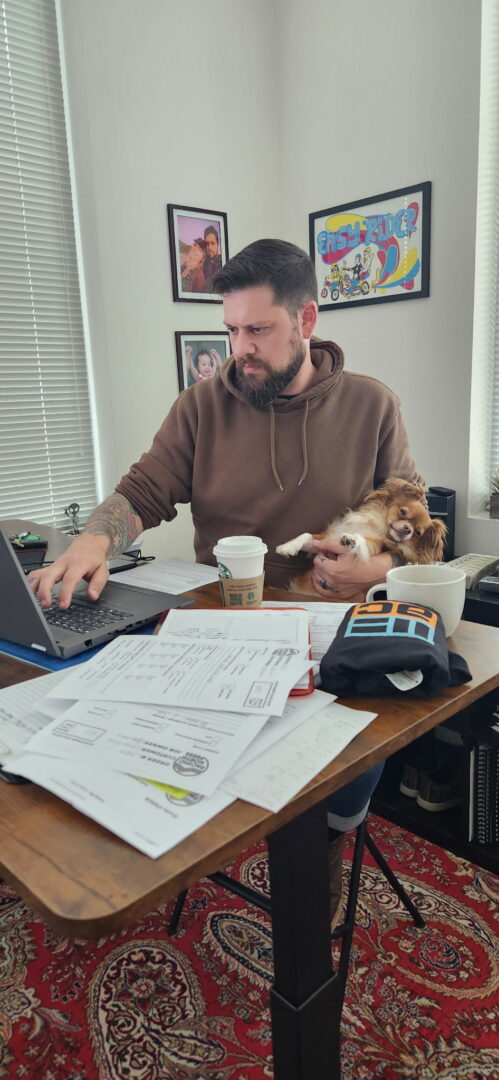
We recently connected with Matthew Mirpourian and have shared our conversation below.
Hi Matthew, thanks for sharing your insights with our community today. Part of your success, no doubt, is due to your work ethic and so we’d love if you could open up about where you got your work ethic from?
Necessity. As a young man with a relatively poor sense of direction, I looked at myself in my 900th $10/hour job and wondered what it was going to take to get anywhere. In the early 2000’s, Portland was a pretty easy place to live. Rent was around $200/mo all in, a month of groceries for one was about $50-60, and there was pretty low resistance getting around the city. Even so, watching some of my peers ascend in their careers while I worked dead-end entry-level jobs encouraged some deep introspection. What I eventually realized, while mopping a food cart at 4am, was that it was my level of effort that was holding me back. I wasn’t seizing any opportunities, I wasn’t making any goals, and I really had nothing I was working toward. So there I was, sitting on an art degree, without any relevant job history, and too much time had passed to go back to the university to lean on their job placement services. I was growing into being a nothing, and it was quite fitting in the city known as the place where young people go to retire.
At about the same time, a friend of mine had been gifted a printing press and knowing I had just finished my degree, he quickly asked for help. My first squeegee pull sealed the deal. After a somewhat challenging period figuring out how to get from concept to finished project, the satisfaction of seeing my first print, on fabric and looking clean and crisp was all it took. That moment marked a shift in how I approached what I do. I took ownership over my skills and knowledge, and started studying the smaller players in the industry as a starting trajectory. I became hungry for technical expertise and the business followed. I just couldn’t stop growing my skills and knowledge around print if I wanted to.
Before long, my wife and I had our child, and from there my sense of needing to accomplish a greater amount of work solidified. I woke up early, worked late, even on the weekends. I knew I had to keep going, and once I had ignited the passion for print, I knew I could.
Appreciate the insights and wisdom. Before we dig deeper and ask you about the skills that matter and more, maybe you can tell our readers about yourself?
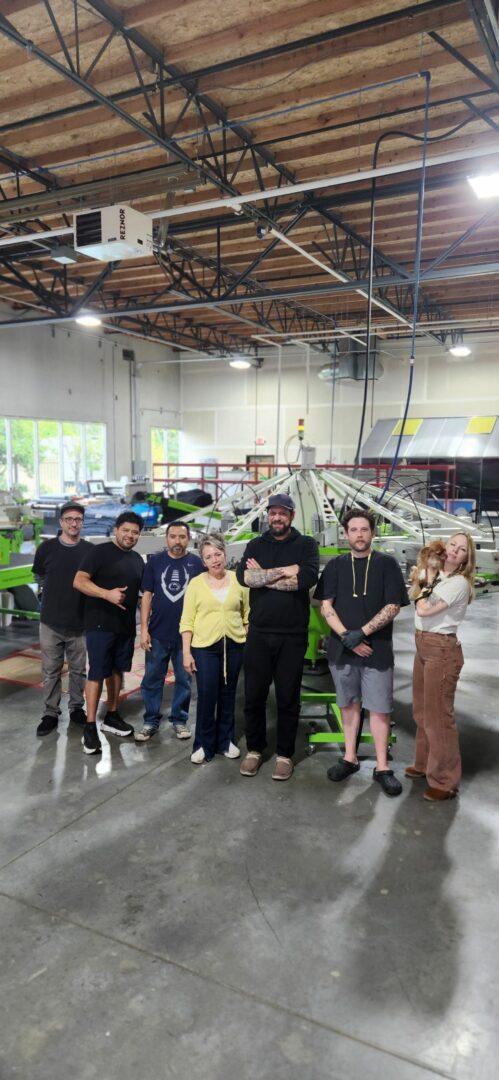
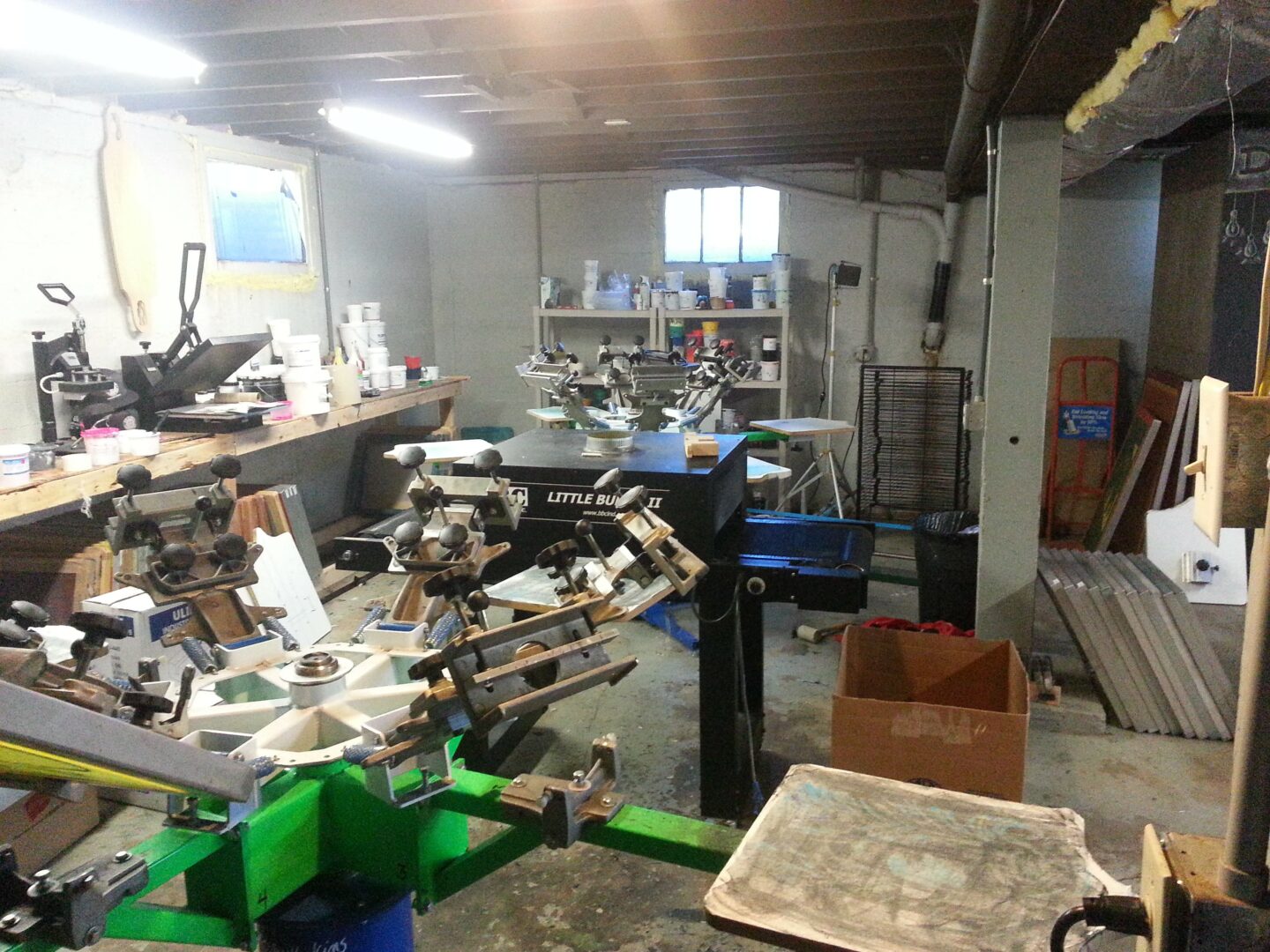
For the past 15 years, I’ve been at the helm of my Print Shop, that I, quite literally, built from the ground up. Starting in the basement of my old house turned into years of relationships built with businesses, artists, and organizations that spanned the country and sometimes the globe. The work has always been an interesting mix of creativity and problem-solving (especially after entering the industry with zero knowledge of the process), learning what makes design what it is and how to deconstruct it, to reconstruct it into the medium I work in.
What I find most exciting about the industry is the intersection of craftsmanship and technology. Despite the age of the practice of screen printing, today I find myself in a highly modernized environment to get the work done. From utilizing software stacks to machine automation, the production practices have evolved significantly even in the comparatively short tenure I’ve spent within it. Finding ways I can innovate while maintaining the integrity of a handmade craft has been something I’ve always found pride in.
That said, after many years of pushing through challenges I couldn’t have imagined prior to getting into it, including the highs and lows of entreprenuership, I’ve found myself at a crossroads. I know that I’ve built something meaningful and lasting, but I’ve realized that the freedom of time and personal fulfillment absolutely matter, and have taken a backseat in my life, to a singular passion. Three years ago, I thought that expanding my entrepreneurial world would be the solution to this, to push me into more of an advisory role and that the free time would come naturally. So naturally, I invested in and co-built a restaurant. Well, the free time and fulfillment didn’t follow, and I ended up dedicating even more time to both ventures.
So after a considerable try, I shifted focus to taking the skills I’ve developed and refined deeper into the industry I already work in. I woke up to the credentials I have earned, where previously I would have felt I was a bit lacking in skills because all I had done was run a print shop. But, I realized that the amount of time I’ve spent in r&d, production, business administration, hr, finances, and so on were real world qualifiers. What I was doing was very real, and very meaningful in the sense of a future career. I could take my industry knowledge and use it to gain the freedom I was hoping for but without a rigorous daily schedule of covering many facets of the business.
The biggest takeaway from this realization is that success isn’t always pushing forward, but maybe turning in another direction. My compass should point towards progress, but picking the right road matters far less than the fact that I’m moving forward in the right direction.
Looking back, what do you think were the three qualities, skills, or areas of knowledge that were most impactful in your journey? What advice do you have for folks who are early in their journey in terms of how they can best develop or improve on these?
Patience, Adaptability, and Tenacity. I can say this with absolute certainty.
Patience was probably the hardest for me. Learning to wait, understanding that most people do not work at the pace of an entrepreneur was very challenging. I needed various people to deliver elements of projects, information, assistance, and so on that generally didn’t happen when I needed. This leads to frustration, and losing composure with people you are trying to get to help you is generally a bad approach. When I was able to take a pause, and let those I needed work from to work, I was able to accept a reasonable timeline and take my focus off of tapping my foot, putting it where it needed to be.
Adaptability is essential. Assume that everything will go sideways. Markets shift, customer needs change, hurdles show up everywhere. Resisting change will stop you in your tracks. Just imagine how much work as we had known it has changed from 5 years ago, could we have imagined it would be as different as it is back then? We flowed with the changes and as a result, found an entirely new way to work with each other.
Tenacity is the glue that holds an entrepreneur together. Continuous improvement has been a mantra for me since the very beginning, but even my understanding of that has evolved. Early on, I was impatient, I wanted big change fast. This is actually very bad for those who were unprepared like me. I didn’t come from a background that had resources to seamlessly convert my ideas to realities, but even so, I had the expectation that I would. The stark confrontation I went up against was that the only way I was going to move forward was taking baby steps. And over 15 years, those steps accumulated into the miles I had hoped for. Make mistakes, learn from them, grow. The worst thing I could have done would have been to not try.

Thanks so much for sharing all these insights with us today. Before we go, is there a book that’s played in important role in your development?
Read Mike Michalowicz’s Profit First. It took me many years to understand that I did not need to set myself on fire to keep everyone else warm. Like many novice business owners, I believed that investing every dollar back into the business was the correct approach. But in reality, I was operating hand-to-mouth, with no margin for error or setbacks. Despite my passion and meaningful effort, I was setting myself up for failure.
This book outlines a familiar financial strategy and expands it into an articulated cash management plan. A concept I had never considered sits at the center of the method. Pay yourself first. Michalowicz reframes revenue into Expenses = Revenue – Profit. Profit is where owner pay is derived, and the owner must be paid first. This was mind-blowing to me. I am doing this for me, and I need to have a reason to keep standing up to the stress and pressures I faced.
The paradigm shift then was that my business needed to have a cash strategy, and it needed to be working for me. A big pool of cash in one account is dangerous — what’s beyond our base expenses can be a moving target. Do we need to repair a machine? Do we need to hire a temp? Do I need to cover COGs expenses upfront for this very large customer? Should I invest in something just because I’ve got the cash for it right now? The subjective part of spending money is clarified with the Profit First methodology, where intentional guardrails are established to prevent capital depletion and intentional spending takes precedence.
I wish I had read it earlier in my career, but I’m glad I did when I found it. It completely changed my approach and lent a level of stability to operating the business in a way I hadn’t been.
Contact Info:
- Website: https://pacificnorthpress.com
- Instagram: @pacificnorthpress
- Linkedin: https://www.linkedin.com/in/matthew-mirpourian-23793661/
so if you or someone you know deserves recognition please let us know here.