Alright – so today we’ve got the honor of introducing you to Michelle Thomas Richardson. We think you’ll enjoy our conversation, we’ve shared it below.
Michelle, first a big thank you for taking the time to share your thoughts and insights with us today. I’m sure many of our readers will benefit from your wisdom, and one of the areas where we think your insight might be most helpful is related to imposter syndrome. This is holding so many people back from reaching their true and highest potential – we’d love to hear about your journey and how you overcame imposter syndrome.
The short answer to tackling the feeling of imposter syndrome is to keep working. The more time spent working, the more comfortable you feel with titling yourself an artist. And eventually, you assume the role and it likely will become a defining part of who you are. Ultimately, if you believe that you are an artist, no one can take that away from you. When you are in doubt, take a look back at what you’ve accomplished and acknowledge your progress. There’s always more to do, but when you review where you were and where you are, you often find things make perfect sense and you are right where you need to be. It is easy to compare yourself to another, perhaps more established, artist but when you’re comparing someone who has many more years of experience, it really isn’t fair! Truly, comparing yourself to any artist is unfair; each artist’s path is so unique because their work is unique.
And, in the worst of cases, there is always at least one friend who you can text in the middle of the night with a random worry of self doubt who will gently remind you of everything you likely already knew but needed someone else to say to you. For me, these friends are the amazing artists I went to school with who I’ve stayed close with through the years. They are the core of my art community no matter where they may live now. Circling back to spending that time in the studio – one of the easiest ways to keep making artwork is to know you are working towards this dream alongside others, so keep in touch!
Thanks for sharing! So, before we get any further into our conversation, can you tell our readers a bit about yourself and what you’re working on?
Overall, my work today investigates perception of our lived environment(s) primarily through immersive installations. Influenced by architecture, space, art history, and more recently public art, I’ve made some interesting spatial connections, particularly noticing the time and history it holds. By embedding content that connects current events to historic events within a carefully considered installation space, my work is tapping into a more intimate, personal viewer space.
In recent years, I’ve been developing multiple series of smaller works that have become “playdough” for larger installations. The ideas and the materials not only lend themselves to repetition but are transferable and makeable into something else. For example, The Ruby Series (ongoing, initiated in 2018) began as a small drawing folded into a marquise gem shape. I continued to make these rubies: first, shown in various groupings; then, a grouping of 8 was reproduced and printed as editions for large scale installations; later, the shape was used as a tool to develop various laser cutting and sewn or stuffed patterns for Seeing Doubles (2023), an exhibition building on The Screen Series (ongoing, initiated in 2018). I am slowly building an iconography all my own, and I’m really excited to see how the continuation of that visual vocabulary progresses. Though most of my work is temporary and experiential, I hope some future installations may become permanent.
If you had to pick three qualities that are most important to develop, which three would you say matter most?
I think self-motivation is key to any studio practice. It goes back to spending time – the commitment to yourself and your work, and the willingness to continue. I think I’ve always had a feeling of never being “finished,” as in there is always more I could do. Or, by the time something is “finished” I have already seen 10 things that have spurred new ideas and I’ve mentally moved on though I certainly still enjoy sitting with the work that is installed. I think this continuation is something artists develop over time. The best suggestion I have for where to start would be continuing to review and reconsider your newly completed work (staying hungry, turning over new rocks) and prioritizing your studio over some other things from time to time. In reference to the latter, the work-life balance seems more like a sway for me in one direction when preparing for an exhibition and then the other after installation. A perfect balance all the time is a little bit of a lot of things, and it doesn’t really feel like you’re fully present for any of it. Further, the time away gives me breathing room to find new perspectives, new connections, etc. and bring that back to the studio as I begin the next work. So, perhaps another suggestion is to find your version of a true balance, allowing you to stay motivated in a sustainable way.
Being open is another essential quality for any artist: open to experimentation with new materials, techniques, or methods of working; open to new ideas and/or links in concept; open to new people and new friendships; even open to rejection and/or failure. I think I really learned this in grad school. I had to learn to let go of expectations and what I thought something should be. Instead, being open is giving myself permission to “mess it up” and really learn a new material and its capabilities. Not every work you make is meant to be shown – some works are just for you. It also means paying attention inside and outside the studio: if you’re too focused on your own plan for an artwork, you’ll miss something. Start with an idea, but look/watch/wait and be willing to let go of it for something better. I enjoy process so much I take pictures at various phases of development which actually then serves as a record for me to look back on later, too. Paying attention opens you up to stumbling upon new connections out in the world in the least likely of places and bringing it back to your studio. One of my favorite books is Seeing Is Forgetting the Name of the Thing One Sees: Expanded Edition by Lawrence Weschler.
Last, I would say developing your voice as a writer is important. That may seem strange to say as a visual artist, but writing is such a big part of the role. Good writing is a powerful tool to clarify artist statements, submit ideas for exhibition proposals or grants, and complete other applications. If you don’t feel very strong in this area, I’d suggest writing notes or making word lists, etc. that can help you intermittently write and hold onto those in-the-studio realizations. I also used to talk to myself in the car on long daily commutes to work through a statement out loud. Always read your work out loud before submitting! Bottom line: you can hire professionals for some things like quality photography or website assistance, but writing is something only you can do.
Who has been most helpful to you to overcome challenges or build and develop the essential skills, qualities or knowledge you needed to be successful?
Family has been the most helpful to me throughout school and my career thus far. There have been so many professors, colleagues, and friends who I have gleaned much from, but it is my family who has been key – the people who have been/are/will be there daily.
My parents laid the foundation for who I am today. I was given the confidence to be myself, inspired to work hard, encouraged to challenge myself, and taught how to communicate with authenticity. Education was a top priority in our home, and I am incredibly thankful to my parents for their commitment to that – simply invaluable. Further, it paved the way for me to become a life-long learner. When I was pursuing a BFA, they encouraged me to research MFA programs. At the time, I hadn’t even considered it and didn’t really think I was “good enough” to apply. I will always count myself extremely lucky to have completed grad school near family – their support during those three years was pivotal. Since school, they not only attend exhibitions but still offer support: without access to a school woodshop, my dad has shared tools from his workshop and helped me use his equipment when needed; and, my mom helped me sew a few things before I had a sewing machine, though I think I still would’ve needed her help as the projects were out of my league at the time!
Though I say that, no idea is “out of my league” to my husband Michael. A true partner, he has been my rock since I decided to pursue my BFA and is the reason I am able to make large scale work in the way that I am today. He was, in fact, the first person I talked to about changing majors in school and he was so supportive, all in. Through the many late nights over seven years of art school and beyond, the many random projects appearing across pantry doors or in walking spaces (I have gotten a few reality checks!), and the many piles of materials saved because I think I might use it, his sentiment has never wavered. Instead, he has helped me figure out how to make studio life sustainable. Since the day I graduated from UNT, Michael has ensured I always have a studio to call my own. He has been my assistant whether I planned to need help or not, by my side for each and every exhibition opening (local and not!), and around for all the ups and downs. He keeps me motivated by challenging me in ways that push me forward and by continuing to encouragingly ask when my next residency will be. Michael has helped me find the tools necessary to see my vision through whether it’s something for the studio, or figuring out how to use the local library laser cutter, where he spent hours completing cut files for an artwork of mine recently. Above all, he underscores the importance of my practice regularly and has made sure I have the time and space to continue with confidence. I am forever grateful to him for helping make this dream a reality.
Contact Info:
- Website: www.michellethomasrichardson.com
- Instagram: @mtrichardson.studio
- Facebook: Michelle Thomas Richardson
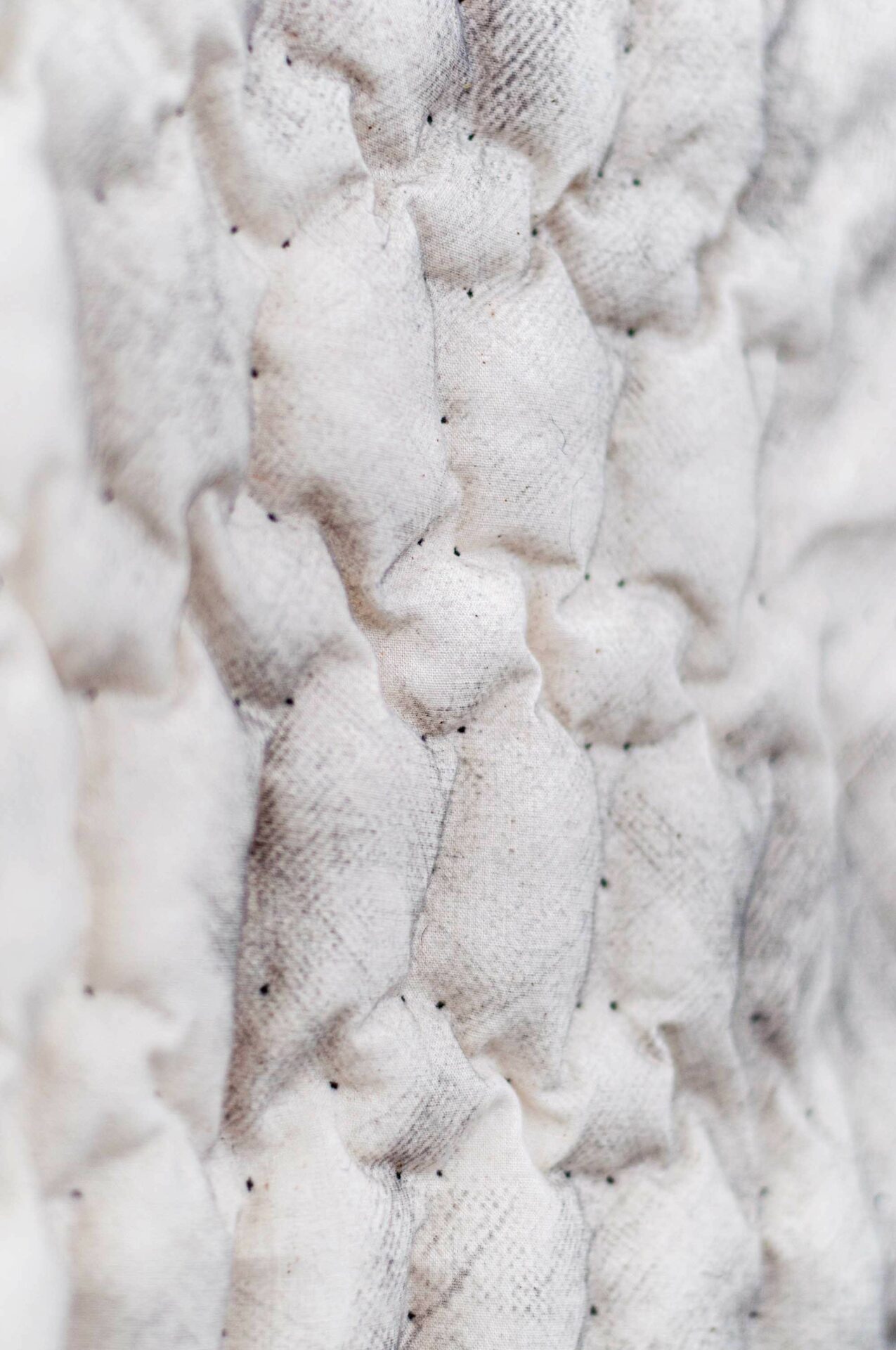
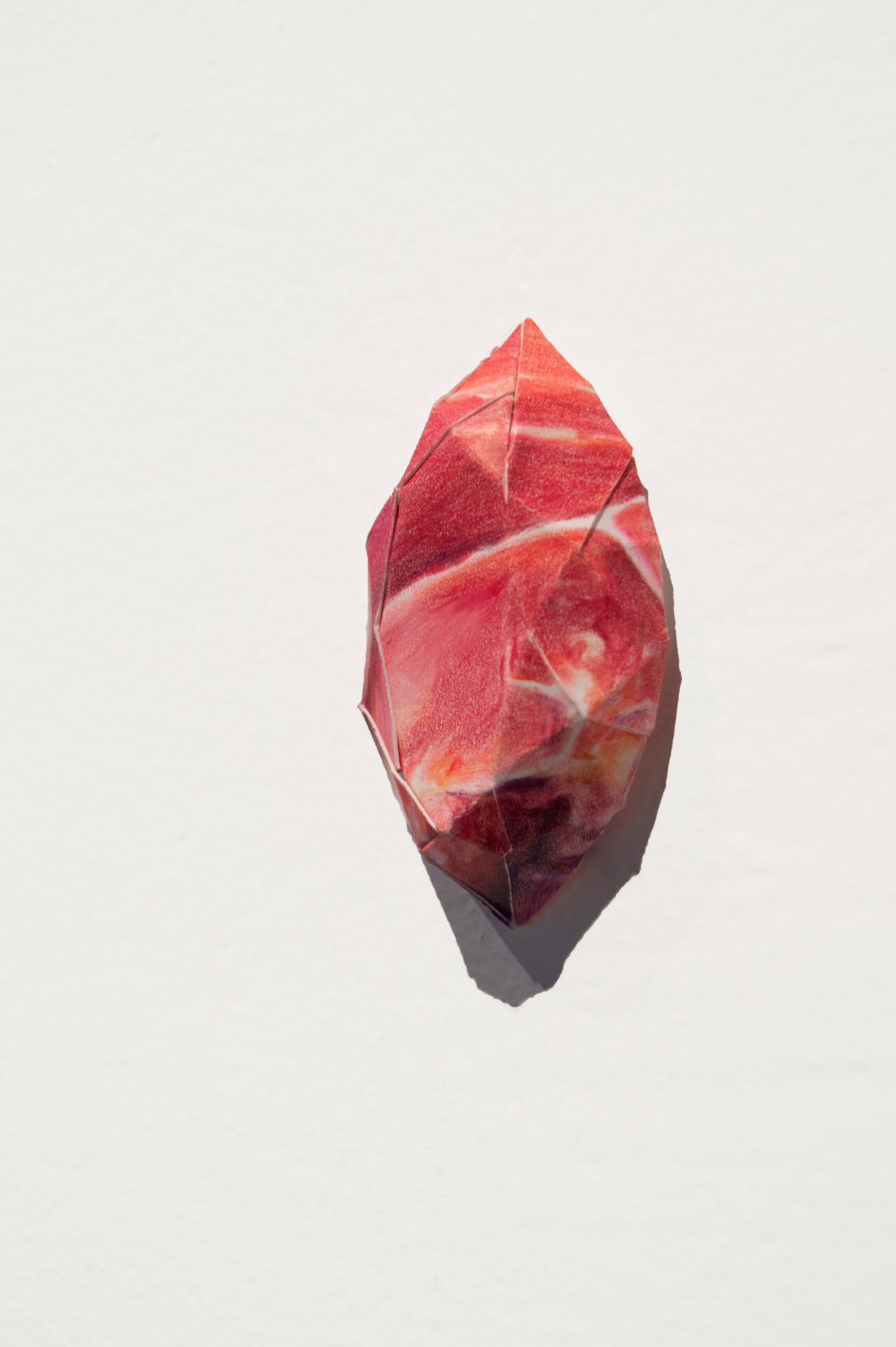

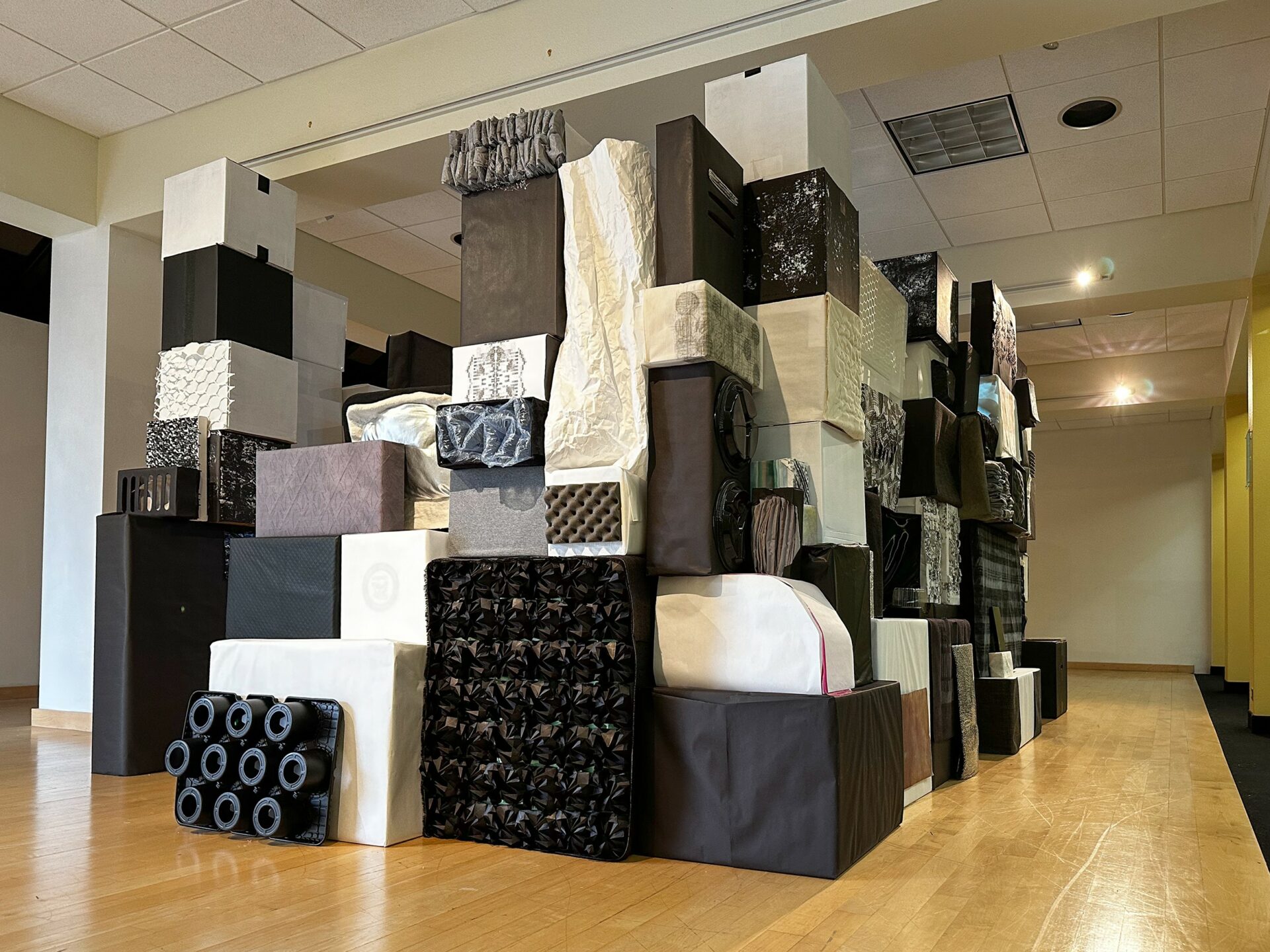
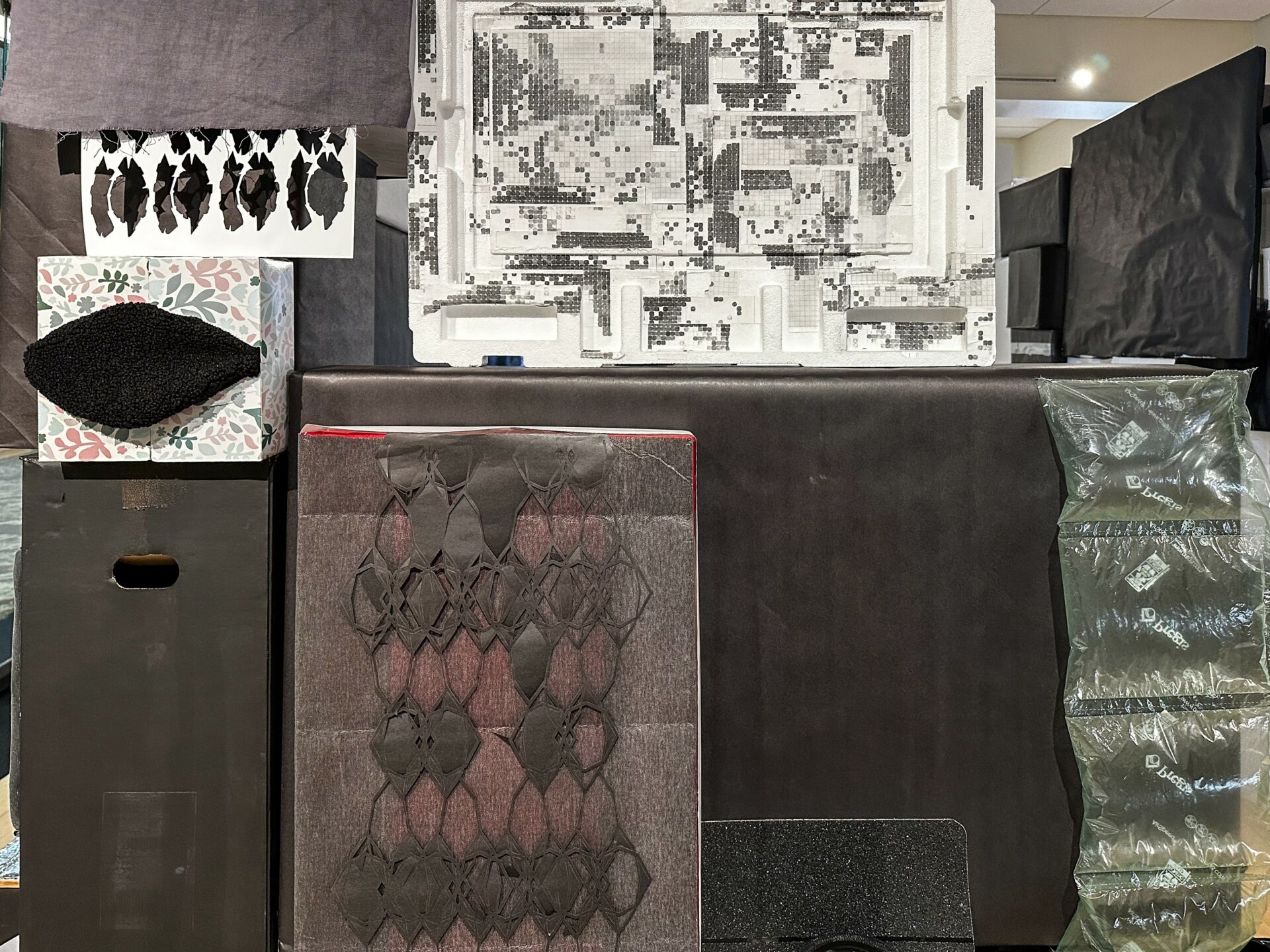
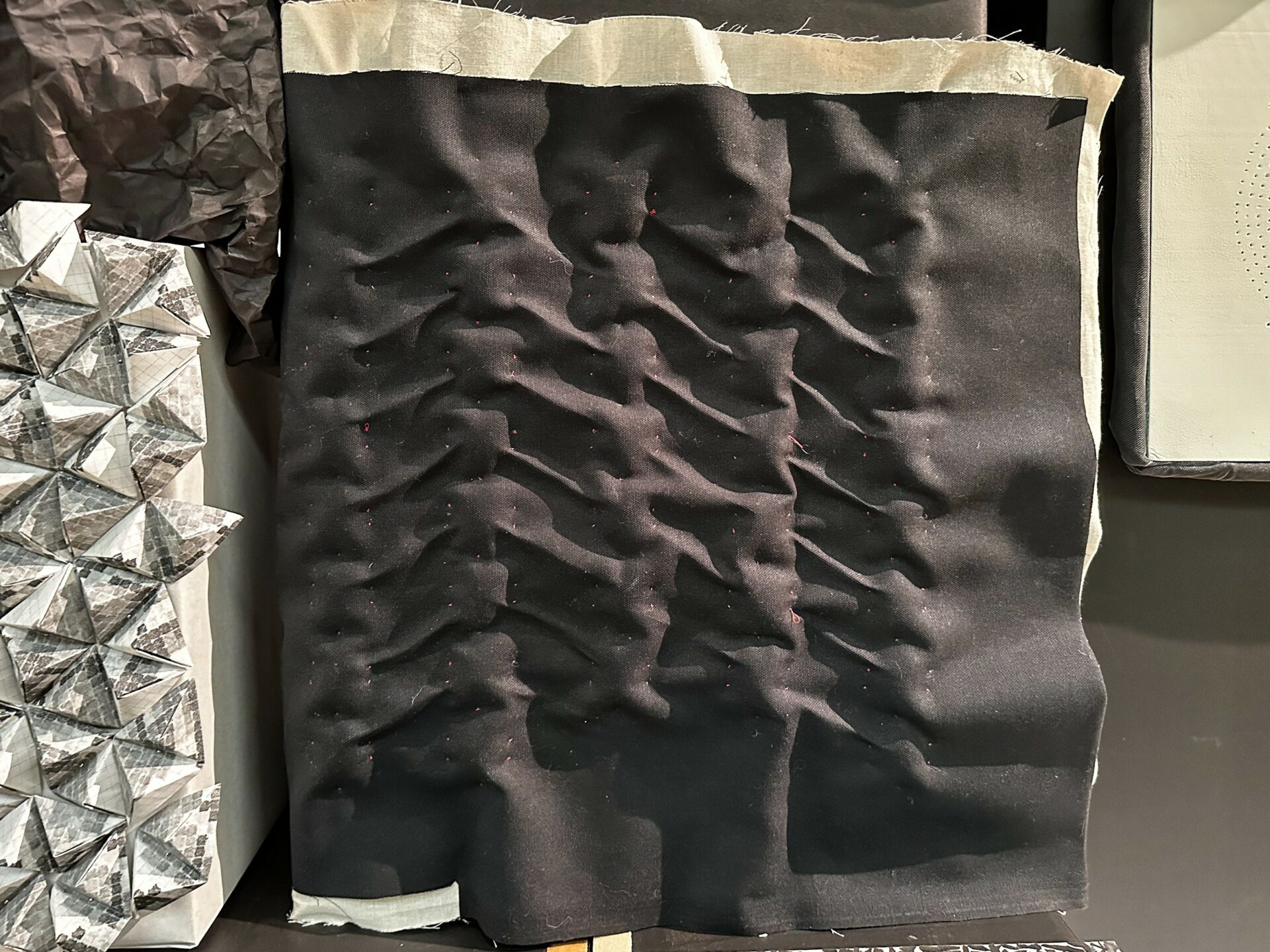


Image Credits
Images of Seeing Doubles by Chris Ireland (Images of The Ruby Series and When Time Stands Still by the artist)