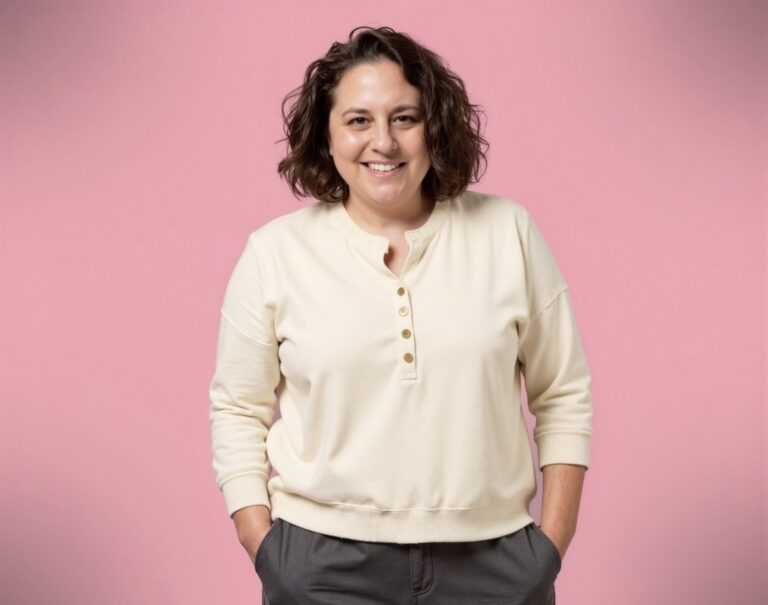
We recently connected with Michi Zaya and have shared our conversation below.
Michi, we’ve been so fortunate to work with so many incredible folks and one common thread we have seen is that those who have built amazing lives for themselves are also often the folks who are most generous. Where do you think your generosity comes from?
My mom loves Twix bars. As a child, I was a sensitive and shy kid who spent a lot of time hiding behind her or faking stomach aches just for her to come home early, which I’m sure frustrated her a bit. I noticed when she would put me before her own needs, and in response… I used to give every single Twix bar that came into my possession to her. There’s a chance that she just had a general enjoyment of the popular candy, but to me, it was a fundamental piece of information that Twix bars were the “bouquet of roses” kind of surprise I could offer (as an elementary school student with no income or allowance). I don’t think I ate one from ages 8-18, they all went to mom. In my adolescent mind, I wasn’t losing anything by forgoing something fun and delicious, I was earning the joy of sharing and making her happy. I was thankful for her.
Generosity has come naturally to me like this, where my gratitude for the people in my life motivates my ability to give generously. When seeing a punk concert in the back room of a bar, I remember ordering sparkling water with no frills, still in the can, for about five bucks. I tipped my bartender an additional five bucks. I’ve been behind a service counter before, and even though I didn’t frequent this bar, I didn’t know this bartender, I’d only really come for one of the acts in the show, I had a good time. I was grateful. I wanted to show 100% gratuity, and I had the extra five bucks, I’d just take the bus home. From my personal experience being a barista in the past, I know it can really mean a lot to be “seen” through the culture of gratuity (tipping). I want the people who do something even as simple as handing me a can from the fridge know that they are seen.
I think that a misconception about generosity is that you must have abundance in order to be generous. “Abundance” tends to be associated with money or material assets, but with some pause and reflection of personal values, I realized I had so much to give to the world beyond the stereotypical vision of generosity. Sure, I have a story about tipping someone 100% and giving away candy bars, but I also show up generously.
Working in the theater industry, you make many friends as well as many not-quite-friends. People can be sensitive. People can be inept. People can disappoint you and your friends. I try to value myself honestly when it comes to my work and my rates, but I’ve also met wonderful collaborators who I am willing to extend generosity to, whether it means volunteering for them or showing up for them to my best ability despite a small-to-non-existent budget. After a beloved director friend had a sound designer drop out on the first day of technical rehearsals at a college campus, I was more than happy to come by and program her sound cues. I’m not a sound designer, but I knew the program well enough in my own field (video) to make it work, and fast. She had been there for me all week due to a recent heartbreak and we love to commiserate about work drama together, so spending extra time with a good friend to help mitigate additional misery was no issue at all to me. I wasn’t busy anyway, and it wasn’t hard for me. She didn’t owe me anything at all.
Some might read these stories and think I’m a self-sacrificing people-pleaser. I challenge that by offering some key details: I want to do these things, I don’t lose anything meaningful by doing so, and I would never over-extend myself to the point of causing harm to me or others. There are millions of candy bars I’ll never eat and billions of currency that will never be mine to spend. I don’t feel the need to spend what I do have solely on myself, because why are we here on a planet full of neighbors, friends, and lovers if not to spend our time and other resources together?
At the end of the day, I’m grateful to be alive and not alone. I’ve struggled with mental illness that has made it difficult to feel that gratitude and has made me feel like the loneliest person in the world. In those low moments, it has been the generosity and kindness of others that has kept me going. No one has given me an excess of money or time to save me, but the soup when I’m sick, the phone calls when I’m struggling, and encouragement and affirmation of love have made a world of difference to me. So if I can give back, I will.

Thanks for sharing that. So, before we get any further into our conversation, can you tell our readers a bit about yourself and what you’re working on?
What I tend to write for intros or bios is “storyteller of all trades”. My focus is in theatre, specifically Queer Asian American theatre in NYC. While this isn’t the only type of story I tell, it is where I am most drawn to and most active in my work. I have had the immense privilege of directing all-Asian casts for Pride Month two years in a row, and I’ve recently designed projections for bilingual work, translating language and character for Did You Eat? (밥 먹었니?) by Zoë Kim.
I love live theatre. As a performer, director, designer, audience member- it’s magic to me no matter what role I’m fulfilling. Something about being in shared space, collective breath, invisible but palpable tension that live performance draws out of every person in the room; it reminds me of what it is to be alive.
My specialty is in story. I love to work with actors to help draw out even the subtle specificities of what their character is carrying into a scene. Ever since I was a child, I loved to play make-believe and having it be a career is incredible. Finding the “moment” with an actor is especially rewarding, whether it’s the shift from love into betrayal, rage into forgiveness, or the reveal of an intention that was hinted at throughout.
When I perform, I get to do this for an individual storyline of a character. I think and overthink about my character’s thoughts, feelings, appetite, and favorite color, smell, memory, season to the point that by the time I have to perform, it’s no longer in my head but just raw reaction and muscle memory.
As a designer, my mind shifts into a visual environment of approaching the best way to support existing storytelling. I never want to distract the audience, but of course don’t want to be ignored by them. To me, design is an extension of what I could talk about forever: communication. How do I communicate what is happening through visuals?
I’ve gotten into arguments with theatre peers about whether our work is important or not. Ultimately, it’s usually “just a play” when our lives feel busy and overwhelming. However, as a deeply sensitive person who feels intensely, laughs loudly, cries often, and loves fully… each time you sit in the audience to watch a live performance, you have formed a relationship with everyone the space. The performer makes you feel something, and believe me, they feel something in return. The sentimentality of it is that you spent time with living human beings and experienced a journey together. Which to me, is important.
My work can always be found on my website, michizaya.com. I try to be good about updating my Upcoming Work page, but ah! I’m human. As I write this, I’ve been rehearsing for a show of bilingual Asian artists sharing our cultures with community (Tongues, directed by Yibin Wang), and will be designing another bilingual show at Queens College (KISS, by Guillermo Calderon, directed by Tara Ahmadinejad). My personal projects are in early stages of development with themes of compassion, healing, and confronting personal biases,
If you had to pick three qualities that are most important to develop, which three would you say matter most?
1. Learn to Debate (like a student).
People think debate is for argumentative and angry people. I challenge that with sharing my experience of being a high-school debate club president who competed internationally, including World Schools Debating Championships. More than anything, debate taught me how to structure a thought, support it, and potentially argue against it as well.
I attribute my open-mindedness and ability to understand complex issues to my time as a competitive debater. When it’s as formal as competition, you set aside any potential personal (ad-hominem) attacks and focus on the substance, or the content, of what is being said. I don’t think I’ve become a stubborn person, but actually someone willing to concede when I hear a strong case. It is better to admit you don’t know enough rather than argue blindly.
I’m also grateful for the skill it has given me in fact-checking. Please fact-check before you stand by something. Go even deeper. Who paid for the study? What else has the author written? What did the rest of the interview cover? Context is everything. Nuance is important. In order to participate in a debate, you have to know what you are talking about. People have to understand you. You have to be prepared to be questioned and ask questions.
2. Be Brave (and awkward).
Some of my best decisions in my career have been around introducing myself to someone I did not know and wanted to know. Little acts of bravery and embracing that I might be awkward while staying honest, earnest, and un-expecting have led me to wonderful connections and friendships. Most of the time, the people you talk to once were similarly shy and brand-new.
3. Don’t Talk Shit.
Pardon my language, but you never really know who is connected to who. There is a difference between venting frustrations and harmful gossip. Colleagues can be frustrated together but stay respectful. Gossip sows distrust. Instead of spending energy and time on what or whom you dislike, spend your energy uplifting what you admire. This will not go unnoticed and every so often, the culture of reciprocity comes back around to you.
Before we go, any advice you can share with people who are feeling overwhelmed?
The best thing I have learned to do when overwhelmed is ask for help. On minor things and major things. To start small: a phone call. So many people have told me “I’m here for you, reach out” and for years I took this as a polite thing people say to be friendly. Yet, sometimes being the person who is on the phone call and offers the support is as meaningful as receiving the support. You would be surprised at the weight it takes off your shoulders and how often someone can relate or even help solve the sources of overwhelm.
On a larger scale: I’ve learned to hire an assistant when I’ve taken on too much work. Usually a trusted friend, who I hand over my emails and calendar to for about a month. I ask them to “work” for about 6 hours a week (or less), 2 hours every other day. They answer my emails, schedule my meetings, fill out my calendar, remind me about birthdays, and sometimes fill out a spreadsheet. The investment in support has always been worth it. Initially, I felt like “oh but only really important and rich people have assistants”, but really, it’s like hiring a babysitter for your inbox during a busy time. Take necessary precautions, but when you find good support, it is worth it.
Contact Info:
- Website: https://michizaya.com
- Instagram: michi.zaya

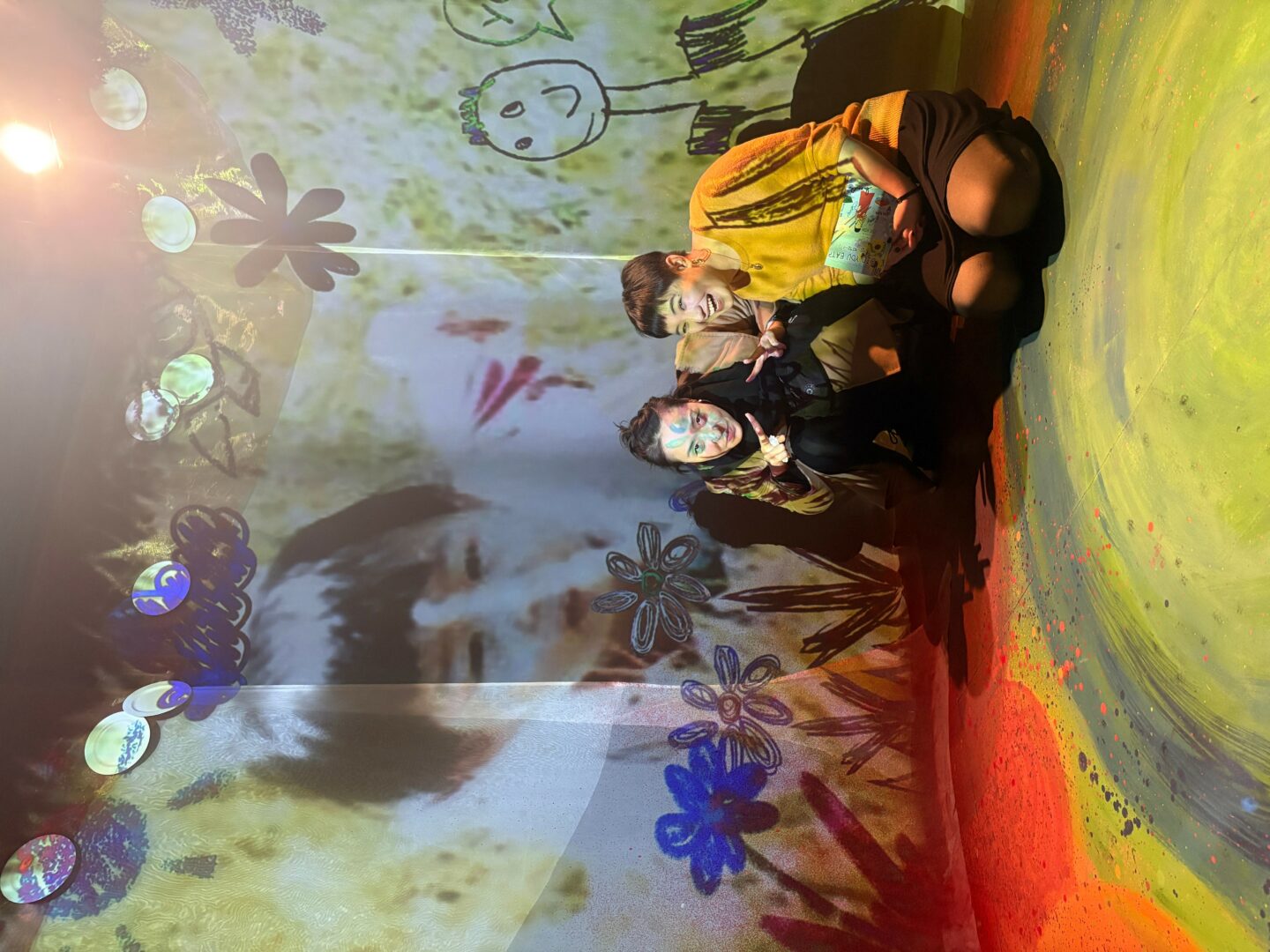
Image Credits
Federica Borlenghi, Joanna Leigh
so if you or someone you know deserves recognition please let us know here.