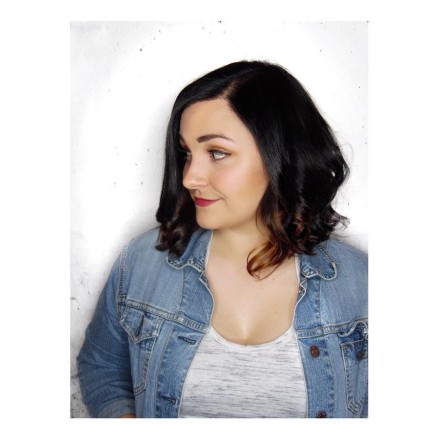
Alright – so today we’ve got the honor of introducing you to Mollie Jackman. We think you’ll enjoy our conversation, we’ve shared it below.
Mollie, we are so deeply grateful to you for opening up about your journey with mental health in the hopes that it can help someone who might be going through something similar. Can you talk to us about your mental health journey and how you overcame or persisted despite any issues? For readers, please note this is not medical advice, we are not doctors, you should always consult professionals for advice and that this is merely one person sharing their story and experience.
At 32 years old, I now recognize that I’ve had anxiety pretty much my whole life. I can recall standing in line to go inside from recess in elementary school, buttoning and unbuttoning the top button of my dress on repeat — which I now recognize as a coping mechanism to release anxious energy. The challenge was that I didn’t know what anxiety was until college. I remember having my first panic attack in my dorm room freshman year. It was the middle of the night and I still had the mindset that I didn’t need anyone’s help with anything, so I struggled through it on the futon in our room without even waking up my roommate. Even then, I never wanted to take medication and was adamant that I could get through it on my own, because after all, this was something I considered to be a fundamental part of who I was. (I still think that, but these days I’m finding much healthier ways to deal with it and have drastically changed my opinions on mental health medications.) When the tables really turned for me, though, it was 2018. I had just lost a good friend to a completely unexpected brain aneurysm, and was not coping well. I got in a car accident because my depression and anxiety had me feeling so distracted, and I knew for the first time that I really needed help if I was going to feel better. So I started taking my first SSRI and began going to therapy right around the time I went back to school to get my MFA in poetry.
Throughout this entire process, one thing that’s never changed about me is that I’ve always been willing and open about sharing my mental health struggles. After years of telling people about my struggles with mental health to mixed reactions, I finally started noticing that other people around me were starting to go to therapy, and some even thanked me for talking about it. I think it’s always given me a sense of purpose, the hope that me sharing my journey and struggles could help someone else and do my very small part to break down the stigmas around mental health issues.
The truth is, it’s massively challenging. I still have days when it’s hard for me to get out of bed. But I’ve always been self-motivated, I’ve always felt like I have some larger purpose and something to prove, and I think that’s a big factor when it comes to how I’ve persisted despite those challenges.
Let’s take a small detour – maybe you can share a bit about yourself before we dive back into some of the other questions we had for you?
I’ve wanted to be a writer since before I even knew how to write. There are home videos floating around of me wearing sunglasses with the lenses punched out, scribbling random swirls onto a little notepad. I remember doing this while I accompanied my mom to my little sister’s dance practice and being deeply offended when another mom commented about how cute it was that I was pretending to write. Firstly, I have never wanted to be cute. And secondly, I was REALLY writing, damn it! I got into poetry early in high school when an English teacher introduced our class to SLAM and showed us a video of Taylor Mali reciting “What Teachers Make.” From that point on, I carried this black and white notebook everywhere with me for years until I filled it up with quotes, poems, and all kinds of inspiration. I still look back to that notebook for ideas on occasion, or just as a reminder about how far I’ve come. I went to college for creative writing, and after 7 years and 3 transfers, I finally graduated with my BA only to realize that a bachelor’s in creative writing wasn’t really enough to get a job in the field. So I went back to get my MFA online while I was working as a mortgage closing specialist and then an apartment manager.
I was managing a student housing complex when Covid-19 hit, and I’ve always suffered from health anxiety, but this was different. As the first cases started to hit our town, I was trapped in a literal glass box office around tons of students, many of whom thought it was funny to pretend to cough as they walked through on their way to their units. I had gotten a job offer for a copywriting gig just before the pandemic, and my anxiety became so bad that I couldn’t finish out my 2 weeks notice at the apartment complex.
Those experiences, mixed with the trauma of losing my close friend just before this all happened, really impacted my work throughout my MFA. During my master’s program, I studied a lot of Asian poetry, learning about forms I’d never heard of (our poetry education here in the US is embarrassingly limited), and ended up being heavily inspired by Thai traditions, as well as classic mythology. It led me to create my first collection, which I’m in the process of publishing right now! It’s an illustrated poetry book called Ornithomancy. You can find it on Kickstarter (http://kck.st/3P4XhDY) until the end of October, or on my website after the Kickstarter ends. (https://mjackmancreative.com/ornithomancy-an-illustrated-book-of-poetry/)
There is so much advice out there about all the different skills and qualities folks need to develop in order to succeed in today’s highly competitive environment and often it can feel overwhelming. So, if we had to break it down to just the three that matter most, which three skills or qualities would you focus on?
I think a quality that’s been incredibly important has been resilience. And I think we need to adjust our thought process about what exactly that means. We often think of resilience as the ability to bounce back and maintain optimism in the face of adversity — but we forget about a whole part of the process, which is getting through the tough times in the first place. If you have a depression episode and can’t get out of bed or brush your hair for months, but 16 weeks later you find the energy to get a haircut, get dressed and go get coffee with a friend, that’s resilient. There shouldn’t be this expectation of immediacy. I think that mindset has helped me out a lot, giving myself grace in the moment knowing that I WILL get through to the other side. When it comes to skills, communication is so important, especially when dealing with mental health. We go through things as neurodivergent people that sometimes influence the way we act or speak to others, and if we can communicate what we’re going through and take ownership of that, the quality of our relationships will be so much better.
I’ve also gained a lot of knowledge about spiritual practices that’s helped me feel grounded. I remember discovering the hashtag #witchesofinstagram a few years before the pandemic, and feeling like I had finally found the missing piece in my life. I did a ton of research and found practices that I connected with, and ever since I began those practices I feel so much more stable and connected with the universe. I think finding something you believe in, or something that makes you feel more connected with the universe, God, or whatever you have faith in, is more important than it often gets credit for.
Is there a particular challenge you are currently facing?
Creatives are generally faced with a higher rate of mental illness — and studies have actually shown that female poets in particular are more affected than other writers. I think this leads us to believe that in order to succeed in the field, we have to let our mental health rule us. Where will we get our ideas if not from intrusive thoughts and swirling anxious worries? How will we see the future? I worried for a long time that if I treated my depression and anxiety with medication, I would lose my creative spark. So when I started taking medication during my MFA program, my goal was to stop writing because I felt like I had to, and start writing on purpose. It was a hard thing to learn/unlearn and I’m still trying to do it. Ideas don’t always come as easily. My whole life, I wrote when I felt something bubbling up inside me, something that needed to come out. These days, I find myself calmly observing and searching for meaning everywhere. And in fact, it’s the opposite of what I always worried about. Not having a constant river of intrusive thoughts to pick through for material has taught me to connect with the world around me in new ways, to look for inspiration outside myself. It’s hard work, and it takes a lot of practice, but I think I’ve become a much better writer for it.
Contact Info:
- Website: https://mjackmancreative.com/
- Instagram: @molliepockets
- Facebook: https://www.facebook.com/mollie.e.jackman/
- Linkedin: https://www.linkedin.com/in/mejackman/
- Other: https://www.tiktok.com/@molliepockets
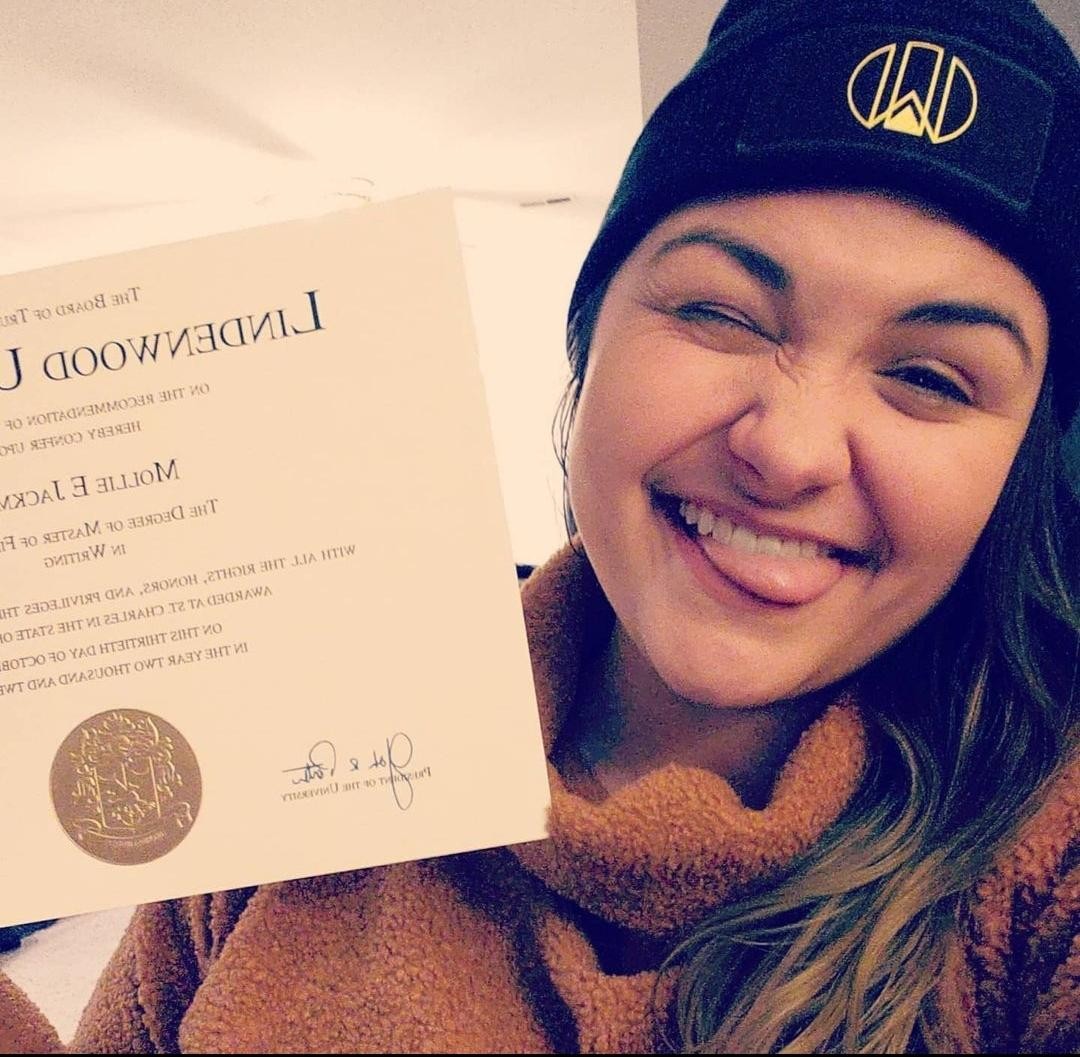
Image Credits
Amy Hemeyer