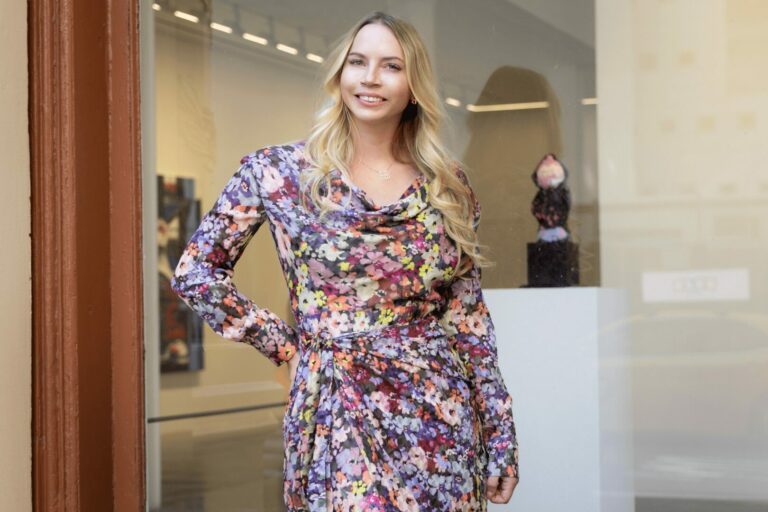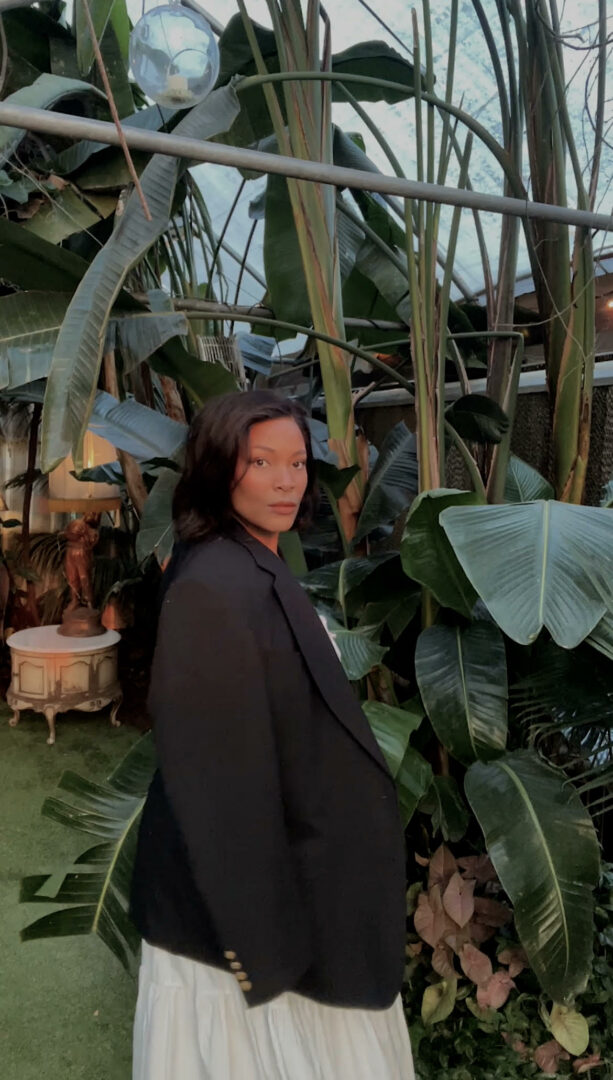
We recently connected with Monet Bush and have shared our conversation below.
Monet , so great to have you on the platform and excited to have you share your wisdom with our community today. Communication skills often play a powerful role in our ability to be effective and so we’d love to hear about how you developed your communication skills.
For a long time, I believed communication was about clarity — saying the right words, explaining thoroughly, and being easy to understand. What I eventually learned is that communication is rarely about what is said. It is about what is received.
I began noticing that many of the problems founders brought to me as “branding issues” were not design problems at all. They were interpretation problems. The founder knew exactly who they were and what they stood for, but their audience was meeting a completely different version of them. The disconnect wasn’t talent or effort — it was translation.
That realization didn’t come only from business. It came from personal experiences where I understood how deeply a person can be misinterpreted even when they are trying to be clear. I became interested in the space between intention and perception — how two people can look at the same message and walk away with entirely different meanings.
Over time, I stopped thinking of Earth & Olive as a design studio and began to see it as a stewardship practice. Our role is not simply to create visual identity, but to protect meaning. We help founders articulate who they are in a way that remains recognizable even as their company grows, gains attention, or changes scale.
Effective communication, to me, is not about speaking louder or more often. It is about alignment — making sure what is true internally is what is understood externally. When that alignment exists, brands feel stable. When it does not, even very successful companies feel chaotic.
Much of my work now is helping people feel accurately seen by the audience they are trying to serve. That requires listening far more than talking. It requires restraint. And often, it requires removing what is unnecessary so the real signal can finally be recognized.
I think of communication less as expression and more as preservation. When done well, it allows a person or a company to grow without losing itself. That is ultimately the work we do at Earth & Olive.

Great, so let’s take a few minutes and cover your story. What should folks know about you and what you do?
Earth & Olive is a brand stewardship practice. We work with founders and legacy-minded companies who care deeply about what their work means, but often struggle to translate that meaning into something the public can recognize. Many organizations grow quickly and become visible before they become understood. When that happens, they start reacting — changing messaging, redesigning constantly, chasing trends — not because they lack direction, but because they were never interpreted correctly in the first place.
My work sits in that gap between identity and perception.
Rather than approaching branding as decoration or marketing, we approach it as alignment. We spend a great deal of time listening — not only to what a founder says about their company, but how they think about responsibility, longevity, and the kind of reputation they want to carry over time. From there, we create structures that allow the company to grow without losing recognizability. The goal is not visibility for its own sake. The goal is stability.
What excites me most is helping people feel accurately represented by their own public presence. Many founders are thoughtful and intentional privately, but the moment they become visible, their work becomes simplified or misread. When the outward expression finally reflects the inward reality, they operate differently. Decisions become easier, relationships become clearer, and growth stops feeling chaotic.
In this season, Earth & Olive operates primarily through referral and invitation. We have found our work is most effective within ongoing stewardship relationships rather than one-time engagements, because continuity protects a brand’s meaning over time. Creating an identity is only the beginning; without thoughtful guidance as it grows, even a well-built brand can gradually lose recognizability. Our role is to help ensure it remains coherent, familiar, and true to its origin as it evolves. The work is quieter than traditional marketing, but more enduring. Our aim is to help the right people recognize a company immediately — and for that recognition to remain consistent years later.
If you had to pick three qualities that are most important to develop, which three would you say matter most?
Looking back, the qualities that shaped my path were less about drive and more about perception.
The first was learning to listen without immediately solving.
Early in my career, I believed value came from producing ideas quickly. Over time, I realized most people already carry the answer to what they are building, but it is buried under urgency, outside opinions, or the pressure to appear certain. Careful listening reveals patterns — what a person repeats, what they hesitate to say, and what they consistently return to. Many of the most effective decisions I’ve made came not from speaking first, but from understanding what was actually being asked beneath the surface.
For someone early in their journey, I would suggest developing patience with uncertainty. You do not have to react to every opportunity or every piece of advice. Often clarity appears when you allow something to remain unanswered a little longer.
The second was discernment.
Not every opportunity moves you toward your work. Some only move you toward activity. It took time to understand that growth and alignment are not the same thing. Saying yes widely can build experience, but saying yes selectively builds identity.My work improved the moment I stopped trying to be useful to everyone and instead focused on where there was genuine alignment and shared understanding. I realized good work doesn’t come from convincing; it comes from mutual recognition.
For those starting out, pay attention to what drains your attention even when it seems beneficial. Energy is often a more reliable indicator than logic when determining fit.
The third was restraint.
In creative fields, there is a strong pull to continually add — more visuals, more messaging, more presence. Yet what makes a brand recognizable is often what is left unchanged. I learned that stability creates trust. When something remains coherent over time, people relax around it. That principle applies as much to a career as it does to a company.
My advice is to allow your work to repeat before you force it to reinvent. Consistency is not a lack of growth; it is what allows growth to be noticed.

Do you think it’s better to go all in on our strengths or to try to be more well-rounded by investing effort on improving areas you aren’t as strong in?
I’ve come to believe depth matters more than breadth.
Early in any path there is a natural instinct to become well-rounded — to say yes often, learn quickly, and prove capability in many directions. That stage has value because it builds awareness. But at a certain point, growth begins to depend on something different: consistency. A person or a company becomes recognizable not because they can do everything, but because they are understood for something specific.
In my work, I’ve watched many founders become less clear as they become more successful. Opportunities expand, audiences grow, and naturally they begin adapting to each new expectation. Nothing they do is wrong, yet over time the original signal weakens. They gain reach but lose definition. I’ve learned that trust is built through continuity — people relax around what they can recognize.
I learned this personally as well. There were seasons where I tried to correct every weakness at once, and my work felt scattered. Over time I realized that when you remain anchored in your real strengths, they mature. What once looked like limitation begins to read as identity. The noise settles, and people no longer need an explanation to understand what you do — they simply recognize it.
For that reason, I believe it is better to refine strengths than to constantly correct perceived weaknesses. Weaknesses often reveal where our work was never meant to live. Strengths reveal the contribution we are actually responsible for. When we repeatedly return to that contribution, our work compounds instead of scattering.
Being well-rounded can make us capable. Being consistent makes us trustworthy. Over time, trust becomes more valuable than versatility.
Contact Info:
- Website: https://www.earthandolive.co/
- Instagram: https://www.instagram.com/earthandolive/
so if you or someone you know deserves recognition please let us know here.